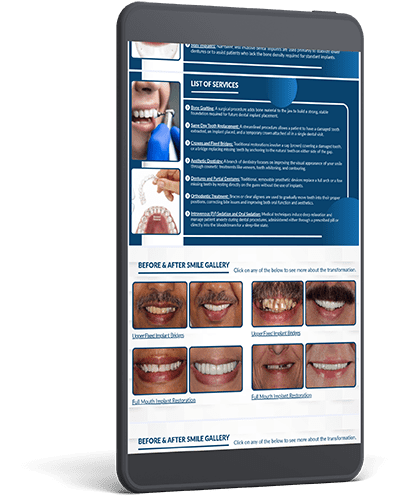

Because of the cost, having a healthy, beautiful smile may seem out of reach for some people, but with the right third party financing options, it can be a reality!
Unlike with other types of implant prostheses (knee replacements, hip replacements) that are predominantly paid for by medical insurance, many people who want and need dental implants are most often deterred by the expense. It has been our experience that cost is THE BIGGEST deterrent when it comes to not getting treatment. Especially for people with not so great or even bad credit. While financing may seem impossible for some people, we have found that many times, with some diligent work, there are often options. Sometimes, you just need to do a little digging!
We are here to help you explore financing options that will allow you to stop putting off your dental needs and get the smile you can feel good about.
Here are a few ways we’ve found that have helped other patients get the treatment they need, without having to put it off and save for a long time, while suffering with the inability to chew or smile.
“BUT, DOESN’T MY DENTAL INSURANCE COVER THIS?”
Even the best of coverage has a modest annual maximum; usually $1,000-$2,000/year. This is typically just a small portion of the cost. With this said, if you do have dental insurance, we will be happy to electronically file your claim(s) on your behalf. After all, any help is better than no help at all! The question is, “how to finance whatever they don’t cover?” Let’s explore some options.
DIFFERENT TYPES OF LOANS
It is possible to get dental loans with bad credit, but it’s not always easy to find an offer with decent terms or reasonable approval requirements. The best way to get a loan with bad credit is to get a personal loan. There are secured and unsecured loans.
- Unsecured loans are the standard, but with bad credit, they are usually more difficult to get based on the risk potential; and often have extremely high interest rates.
- Secured loans are easier to be approved for because they provide the lender with collateral to help ensure repayment.
- Use the equity in your home: We have had patients obtain financing for their dental treatment through a variety of ways, using their mortgage equity as collateral. This type of loan is for homeowners who have acquired some equity in their home. The bank gives them access to a portion of the equity they have acquired in their existing mortgage, which they use to pay for their needed treatment, and uses their home as collateral. So, where a traditional unsecured loan isn’t an option, switching over to this, a home equity loan, or maybe a cash-out refinancing can be an option as long as you’re up-to-date with your payments. Good deals for these loans often come from local banks or credit unions. These are good for projects and procedures where large amounts of money are needed at one time. Interest rates are typically less than other types of credit based loans.
- 401 K Loans: These are great, too, because you pay the interest back to yourself.
- 0% APR Credit Cards: You don’t necessarily have to take out a loan to pay for dental work, even if you can’t afford to pay it in cash. Depending on how big the expense is, you might be able to put it on a credit card – preferably one with an introductory 0% APR. You won’t be able to qualify for one of these cards with bad credit. But if you have a relative or friend who can qualify, they might be generous enough to add you as an authorized user.
- Ask your current credit card company for a 0% balance transfer, or a low interest, longer repayment length balance transfer (often has a 1.0-1.9% rate). Even if this option doesn’t appear any place on your statement or online, call to inquire.
- HSA (Health Spending Account)s or FSA (Flexible Spending Accounts). You may want to check with your employer about your company’s Flexible Spending Account policy, if this is offered. This policy is made up of funds deducted from your paycheck that can be used throughout the year on a debit card from your insurance company.
There are also some online lenders that do offer loans specifically for dental procedures and advertise bad credit acceptance. But they tend to either have very high APRs or not provide much information about their terms. Your best bet is getting a personal loan if you are able.
There are several 3rd party financing options available with flexible payment options, with varying rates and terms, depending on things like credit history, employment history and income.
HERE ARE A FEW OPTIONS:
NERDWALLET:
 |
NerdWallet’s Best 0% APR and Low Interest Credit Cards of June 2024. Wells Fargo Reflect℠ Card: Best for Longest 0% intro APR period; Chase Freedom Unlimited®: Best for 0% intro period and …
|
Cherry https://www.carecredit.
 |
Prefer to pay over time? We accept third‑party financing through Cherry, giving you simple, flexible payment plans that fit your budget. Apply in minutes, review your options, and—if approved—check out today with predictable monthly payments. Learn more and apply with Cherry. Financing is provided by Cherry; approval and terms are determined by the lender. |
CARE CREDIT:
 |
Apply for the CareCredit healthcare credit card to manage your healthcare financing needs. Applying is easy. Just fill out the short CareCredit application for an instant credit decision. Once approved, start using your CareCredit card at over 225,000 locations nationwide.
|
LENDING CLUB:
|
Credit terms will depend upon the applicant’s credit score and other key financing characteristics. These include but are not limited to: The amount financed, loan term length, and the applicant’s credit usage and history, as well as the applicant’s selected service provider.
|
Additionally, we offer staged treatment that can split up treatment into two-four segments. This helps make it affordable if you need to use some type of financing but cannot get the full amount.
We can help you explore financing options to make achieving the smile of your dreams a reality.
To discuss which options will work best for you, call us today at 214-956-9100. Or, just send us a CONTACT FORM and we’ll call you.
We are happy to help.
Frequently Asked Questions
Why is cost such a major deterrent for getting dental implants?
Unlike knee or hip replacements that are mostly covered by medical insurance, most people must pay out-of-pocket for dental implants, so the expense becomes the biggest reason people delay or avoid treatment.
Does my dental insurance cover the cost of dental implants?
Dental insurance usually only contributes a small portion, typically $1,000-$2,000 per year. We are happy to file your claims electronically, but most patients still need to finance the remaining balance.
Can I get financing even if I have bad credit?
Yes. While unsecured loans may be harder to qualify for and have high interest rates, there are secured loans, home equity loans, 401K loans and other options that can still work for patients with lower credit scores.
What is the difference between an unsecured loan and a secured loan?
Unsecured loans don’t require collateral but are harder to get and often more expensive with bad credit. Secured loans use an asset like home equity as collateral and are usually easier to get approved for with better interest rates.
Is using home equity an option to pay for dental treatment?
Yes. Some patients have used a home equity loan or cash-out refinance to fund treatment. Interest rates are often lower and these loans work well when large amounts of funds are needed at once.
Are 0% APR credit cards a good option to pay for dental implants?
They can be. Some cards offer 12-18 months of no interest. If you don’t qualify, a friend or family member might be able to add you as an authorized user, which can help access a better offer.
Do third-party financing companies like Cherry, CareCredit and Lending Club have flexible payment plans?
Yes. Options vary based on credit, employment and income. Some programs offer 6 months no interest and others extend payments up to 60 months with interest.
Do you offer staged treatment to help with affordability?
Yes. We can design treatment in 2-4 phases to make costs more manageable and allow patients to finance smaller portions at a time.