If you are missing all or most of your teeth in one jaw, the main alternatives to All-on-4 are fixed implant bridges, removable snap-on implant dentures, and traditional complete dentures. Before choosing any of them, it is worth asking whether some of your natural teeth can be saved.
All-on-4 often involves reducing the jawbone to make room for a hybrid prosthesis that replaces both teeth and gum tissue. Fixed implant bridges usually need much less bone removal, and they look, feel and clean more like natural teeth.
The best choice depends on your jawbone, your bite, your lifestyle and your budget. A clinical exam with a 3D cone beam CT (CBCT) scan is the only accurate way to know which options are open to you.
Comparing the 4 Full-Arch OptionsFull-arch options at a glance
| Option | Fixed or removable | Implants per arch | Bone removal | Covers the palate | Daily cleaning | Relative cost |
|---|---|---|---|---|---|---|
| • Fixed implant bridges | • Fixed | • 6–8, confirm | • Little or none | • No | • Brush and floss like natural teeth | • Highest |
| • All-on-4 (hybrid denture) | • Fixed; only a dentist can remove it | • 4–6 | • Often significant | • No | • Brush in place and clean under the bridge | • High |
| • Snap-on implant denture | • Removable | • 2–4 (4 preferred) | • Minimal | • Often, on the upper | • Take out and clean daily | • Lowest of the implant options |
| • Complete denture | • Removable | • None | • None | • Yes, on the upper | • Take out and clean daily | • Lowest |
Want the detail? Download our All-on-4 vs. implant bridges comparison chart (PDF).
First Question: Do All Your Teeth Need to Come Out?
Many dental practices extract every tooth to make room for full-arch implants such as All-on-4 or All-on-X, even when several healthy teeth remain. At The Dental Implant Center, we believe good teeth are often still worth keeping.
Before recommending any full-arch treatment, we check whether any of your natural teeth can be saved. If they can’t, or you are already missing them, we present every viable option so you understand the trade-offs before making a permanent decision.
1. Fixed Implant Bridges (Segmented Bridges)
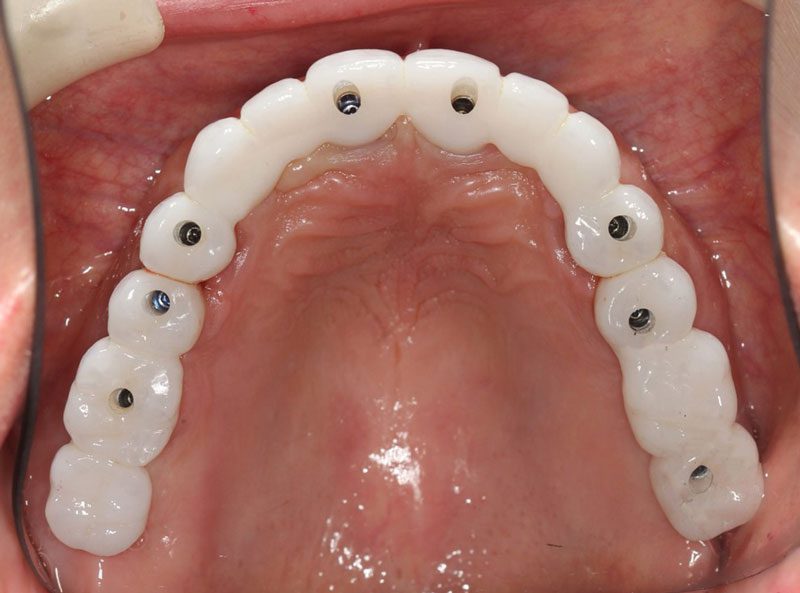
Fixed implant bridges are two, three or four separate, non-removable bridges attached directly to dental implants. Similar designs are marketed online as “3-on-6.” Only a dentist can remove them, and you clean them just like bridges on natural teeth.
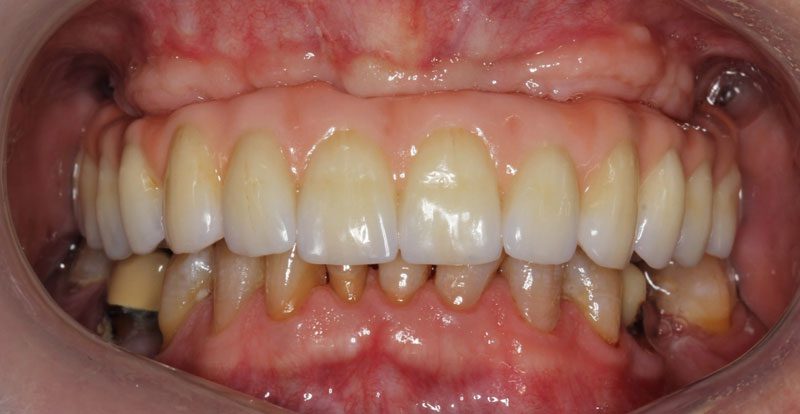
Because they replace only the teeth, the result is classed as FP1 or FP2:
- FP1: replaces only the natural tooth crowns. No pink gum material is needed.
- FP2: slightly longer teeth to make up for some bone loss. Still no pink gum material.
Advantages over All-on-4:
- Much less bone removal, often none
- Look, feel and function like natural teeth
- Little or no change to speech
- Nothing covers the palate
- No unnatural contours or areas that can’t be cleaned
- No angle-correction abutments, which are not always friendly to bone and gum tissue
- Usually no pink porcelain at the gumline
The trade-offs: this option needs enough healthy bone at more implant sites, and some patients need bone grafting first. It is usually the highest investment of the four options. Learn more about fixed implant bridges.
Best for: patients who want the closest match to natural teeth and have enough bone, or are willing to have grafting.
Less suited to: patients with severe bone loss who can’t have grafts, or those on a strict budget.

FP1 (Replaces just the teeth, no pink)

FP2 (Slightly longer teeth, but no pink)
2. All-on-4 (Hybrid Prosthesis)
All-on-4 is a full-arch, denture-type prosthesis screwed onto four implants, sometimes five or six depending on your anatomy. Its technical names are “hybrid” or “fixed-detachable,” and it is often marketed as “Teeth-in-a-Day.”
A dentist can remove the prosthesis, but the patient cannot. It is made either of a titanium frame with acrylic teeth or of zirconia. Done properly, with the right materials, All-on-4 is highly aesthetic, functional and comfortable.
Teeth can break if the material is wrong for the patient, or if the patient has a strong bite, clenches or grinds. Its popularity and profit margin also attract many under-qualified providers, so the surgeon’s training and track record matter. Learn more about fixed dentures and All-on-4.
Best for: patients who need all teeth replaced, have bone loss, and want fixed teeth without extensive bone grafting.
Less suited to: patients who want individual segmented bridges, clench or grind heavily, or want to preserve as much jawbone as possible.

3. Removable Snap-On Implant Denture (Overdenture)
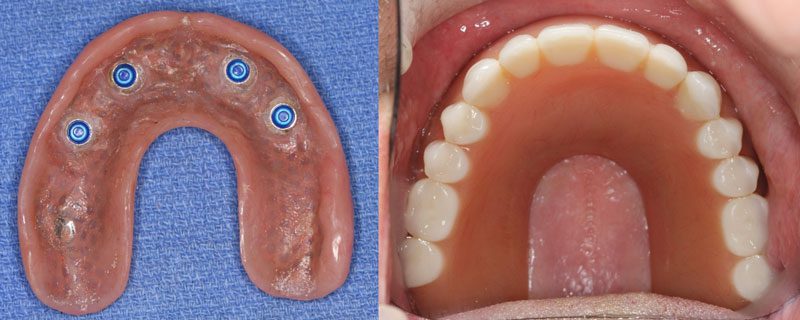
A snap-on implant denture, or overdenture, is a removable denture that clips securely onto dental implants. It can be held by as few as two implants, but four are preferable for stability.
You take it out daily for cleaning. The attachment snaps come in seven strengths, so we can adjust how firmly it holds at any time. It is the least expensive implant-supported option.
The downsides: the denture is large, and the attachment inserts wear out. They need replacing every 3 to 18 months, at a cost of about $100 to $200. Learn more about removable implant dentures.
Best for: patients on a budget who want much better stability than traditional dentures and don’t mind removing their teeth.
Less suited to: patients who want permanent, non-removable teeth, or who dislike the bulk of a denture.
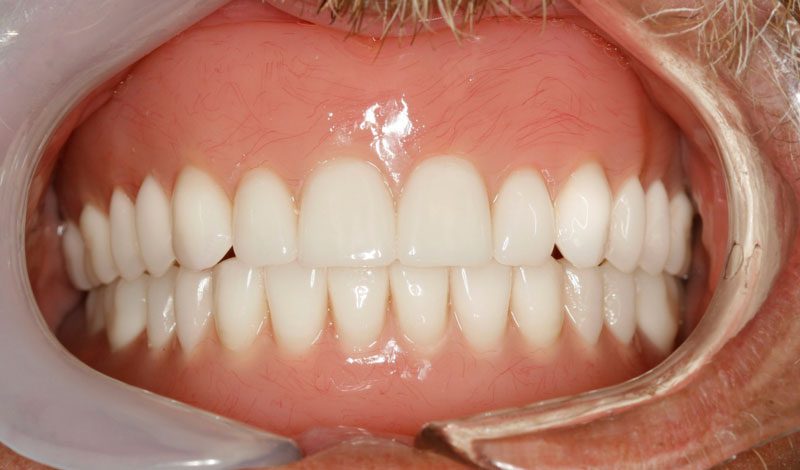
4. Complete Dentures (No Implants)
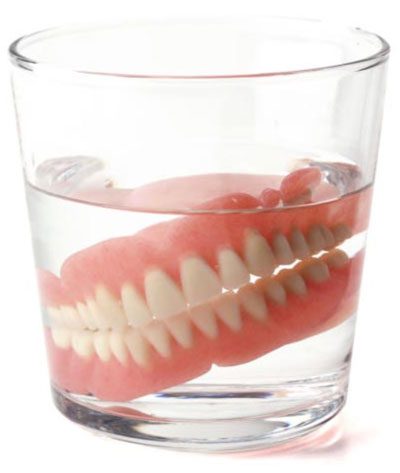
Complete dentures are traditional removable false teeth that rest on the gums with no implant support. Nothing holds them in place.
Because they are not anchored, complete dentures move during eating, speaking and laughing. They also don’t stimulate the jawbone, so the bone slowly shrinks and the dentures loosen over time.
They are the least ideal option for chewing. However, they remain a valid choice when there isn’t enough bone for implants or when budget rules implants out. Learn more about dentures.
Best for: patients who can’t safely have implant surgery, lack jawbone, or need the most affordable full-arch replacement.
Less suited to: patients who want a strong bite, chewing stability, and long-term jawbone preservation.
How to Choose
- You still have healthy teeth: ask whether they can be kept before agreeing to full extraction.
- You have good bone and want the most natural result: fixed implant bridges.
- You have bone loss and want fixed teeth: All-on-4, with materials matched to your bite.
- You want implant stability at a lower cost, or prefer removable teeth: a snap-on implant denture on four implants.
- You can’t have surgery: complete dentures, with the option of adding implants later.
A 3D CBCT scan shows your bone volume and where implants can go, so it settles which of these options you qualify for.
What Each Option Costs
Every patient’s jawbone is different, so accurate quotes require an individual treatment plan. Here is how the four options compare in cost:
- Fixed implant bridges: the highest investment, because each bridge is custom-made and more implants are usually needed.
- All-on-4 (hybrid): a moderate-to-high investment. It generally costs less than segmented bridges because it uses fewer implants and a single-piece prosthesis.
- Snap-on implant denture: a more affordable middle ground. Budget about $200 every 3 to 18 months to replace the attachment inserts.
- Complete dentures: the lowest cost, with no implant surgery or implant components.
Why Patients Choose The Dental Implant Center
The Dental Implant Center has been in business for more than 30 years. Our practice is double board-certified in Prosthodontics and Implantology.
Our doctors, Dr. David McFadden, Dr. Daniel Tan and Dr. Andrew Lim, have placed more than 10,000 implants and performed more than 3,500 IV sedations. We hold a 5-star rating from more than 500 patient reviews. See real patient results in our smile gallery.
Schedule Your Free Consultation
Ready to explore your full-arch options? Schedule a free consultation with our team, or call (214) 956-9100. We’ll take a 3D CBCT scan, answer your questions, and help you choose the best path for your smile.
Frequently Asked Questions
What are the alternatives to All-on-4?
The main alternatives to All-on-4 are fixed implant bridges, removable snap-on implant dentures, and traditional complete dentures. Some patients can also keep healthy natural teeth instead of extracting them. The best option depends on your jawbone, bite and budget.
Is there anything better than All-on-4?
For patients with enough bone, fixed implant bridges are often a better choice. They need much less bone removal, look, feel and function more like natural teeth, and don't use pink gum material. When bone loss is significant, All-on-4 may be the better fit.
What is the difference between All-on-4 and fixed implant bridges?
All-on-4 is a single connected prosthesis that replaces teeth and gums, often after bone reduction. Fixed implant bridges are two to four separate bridges attached to implants. Bridges preserve more jawbone and are cleaned like natural teeth.
Is 3-on-6 the same as fixed implant bridges?
3-on-6 is a marketing name for one type of fixed implant bridge: three bridges on six implants. We plan the number of bridges and implants around your anatomy rather than a fixed formula.
What do FP1 and FP2 mean?
FP1 and FP2 are dental classifications for fixed implant teeth that replace only the teeth, without pink artificial gums. FP1 matches the size of natural tooth crowns. FP2 uses slightly longer teeth to make up for some bone loss.
What is the cheapest alternative to All-on-4?
Traditional complete dentures are the cheapest alternative to All-on-4, because they need no implants or implant surgery. If you want implants, a removable snap-on implant denture is the most affordable implant-supported option.
How many implants does a snap-on denture need?
A snap-on implant denture can be held by as few as two implants. Four implants are preferable, because they give noticeably better stability and retention.
Do I have to have all my teeth pulled?
Not always. Some practices extract every tooth to make room for All-on-4, but we believe healthy teeth are often worth keeping. We always check whether your natural teeth can be saved first.
What are the downsides of All-on-4?
All-on-4 often needs bone reduction and pink gum material, and it relies on angled abutments. Teeth can break if the material is wrong for your bite, especially if you clench or grind. It also needs special flossing or a water flosser to clean underneath.
Can I switch from dentures to fixed implant teeth?
Often, yes. Years of denture wear can shrink the jawbone, so we start with a 3D CBCT scan to measure your bone. If bone is lacking, grafting may be needed first, or another option may fit better.
When are complete dentures still the right choice?
Complete dentures are the right choice when there isn't enough jawbone for implants and grafting isn't possible, or when surgery isn't advisable. They are also a valid option when budget rules implants out. Implants can often be added later.