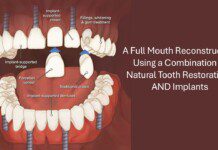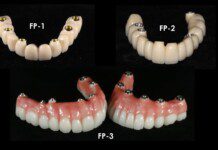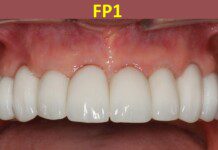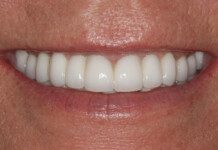

We often get phone calls from people asking a wide array of dental questions. One recent caller to our office said she wanted a consultation for either veneers or implants.
The two treatments are so vastly different, yet we get calls like this often. Many people are unfamiliar with dental terminology and can easily confuse different treatment terms they’ve heard others talk about. This lady was pretty sure she needed implants!
After asking a few questions, we learned that the reason she thought this – was because of a conversation she’d had with a coworker about his new smile. He had had just had a major dental implant reconstruction and when he came into the office with a new, beautiful smile, she complimented him on it. He merely said “I got dental implants.” Not understanding all the different dental terms and not diving deep into detailed questions about what he had done and why, it’s easy to see why she might have just though, “Wow! He got dental implants and now his smile is amazing! I want that!”
>>>>>>>>>>>>>>She did schedule a consultation and when she came in, her teeth were perfectly healthy, and all she needed was some minor esthetic improvements. She did NOT need dental implants. She had some minor cosmetic issues that were corrected with porcelain veneers on her front teeth. A lot less invasive and a lot less expensive!
>>>>>>>>>>>>>>These are both popular treatments and get a lot of attention, but they are for different needs; comparing them is like comparing apples and oranges.
In a nutshell: Veneers are a cosmetic way to make front teeth look pretty, while dental implants are titanium posts inserted into the jaw bone used as anchors to replace missing teeth.
What Are Veneers?
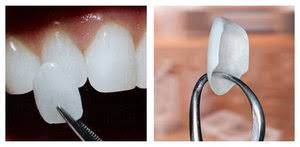
Definition and Description of Dental Veneers
Dental veneers are ultra-thin shells made from materials such as porcelain or zirconia, designed to adhere to the front surface of the teeth. Porcelain is a more popular choice among dentists because of their superior esthetics; they mimic the natural translucency of teeth and are an excellent choice for front teeth where esthetics are paramount. These veneers are crafted individually for each patient, ensuring a precise fit and natural appearance. The process involves removing a small amount of enamel from the front of the tooth surface to accommodate the veneer, which is then bonded using a special adhesive. Veneers are primarily used to enhance the cosmetic appearance of teeth, providing a quick solution for a radiant smile.
Ideal Scenarios for Choosing Veneers
Veneers are particularly beneficial for individuals with:
• Discolored Teeth: Stains from beverages, smoking, or medications that do not respond to traditional whitening treatments.
• Chipped or Worn Teeth: Minor chips, cracks, or wear due to grinding can be effectively concealed with veneers.
• Misaligned or Uneven Teeth: Slight misalignments or unevenly shaped teeth can be masked to create a uniform appearance.
• Gaps Between Teeth: Veneers can close small gaps without the need for braces or orthodontics.
• Desire for a Perfect Smile: Individuals seeking a quick cosmetic makeover for a more symmetrical and aesthetically pleasing smile.
What Are Dental Implants?
What Are Dental Implants?
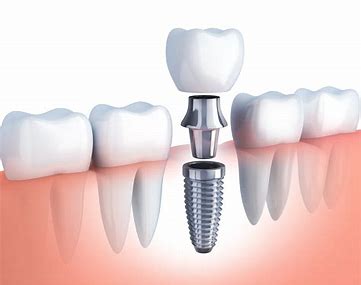
Definition and Description of Dental Implants
Dental implants are the best solution for replacing missing teeth. A dental implant is a titanium post that is surgically embedded into the jawbone. This post acts as a stable root for the artificial tooth (or teeth), with a crown (or bridge) placed on top to complete the restoration. The titanium post integrates with the bone through a process called osseointegration, ensuring a secure and long-lasting fit. Implants mimic the function and appearance of natural teeth, making them an excellent option for replacing missing teeth’s aesthetics and functionality.
Ideal Scenarios for Choosing Implants
Implants are ideal for individuals who:
• Have Missing Teeth: Whether due to injury, decay, or extraction, implants can replace one or multiple missing teeth.
• Desire Permanent Solutions: Implants offer a long-term solution with the potential to last a lifetime with proper care.
• Need to Restore Full Functionality: Implants provide the ability to chew and speak without restrictions, similar to natural teeth.
• Maintain Jawbone Health: Implants prevent bone loss by stimulating the jawbone, preserving facial structure and health.
• Good Oral and General Health: Suitable candidates include those with healthy gums and sufficient bone density to support the implant.
Conclusion
Now that you know the difference between these two dental treatments, you’ll better understand what terms to use when consulting a dentist for care!
>>>>>>>>>>>>>>If you’re looking to have either of these procedures, (or another tooth restoration or replacement option) come see us for a complementary consultation. As Prosthodontists, we are the specialists to see for these treatment options. (You can learn more about the specialty of Prosthodontics here).
Frequently Asked Questions
What is the main difference between dental veneers and dental implants?
Veneers are thin cosmetic shells applied to existing teeth to improve their appearance, while implants are titanium posts surgically placed in the jawbone that act as artificial tooth roots and replace missing teeth entirely.
When would a dentist recommend implants instead of veneers?
If one or more teeth are missing, severely damaged or not salvageable, implants are recommended because they restore both root and crown and prevent bone loss; veneers are only suitable when you still have healthy tooth structure to bond to.
Are veneers suitable for replacing missing teeth?
No — veneers cannot replace missing teeth because they require an existing tooth structure to adhere to; missing teeth must be replaced via implants, bridges or dentures.
How long does the treatment process take for veneers versus implants?
Veneers can often be completed in two or three visits over a few weeks, whereas implant treatment may require surgical placement, a healing/osseointegration period of several months, and then placement of the final crown.
What are the cost and longevity differences between veneers and implants?
Veneers are generally less expensive up-front but may need replacing after about 10-15 years, whereas implants cost more initially but can last decades, often a lifetime with proper care.
Is the implant procedure more invasive than getting veneers?
Yes — implants are a surgical procedure involving placement of a post into the jawbone and a healing period, whereas veneers involve minimal preparation of the tooth surface and are far less invasive.
Can veneers and implants be used together?
Yes — in comprehensive smile-makeover cases a dentist may use implants to replace missing teeth and then place veneers on remaining natural teeth to achieve an even, aesthetic result.
What should I consider when choosing between veneers and implants?
You should consider your oral health (whether you have missing or damaged teeth), aesthetic goals, timeline, budget, bone and gum condition, and how long you want the solution to last — a professional consultation is key.