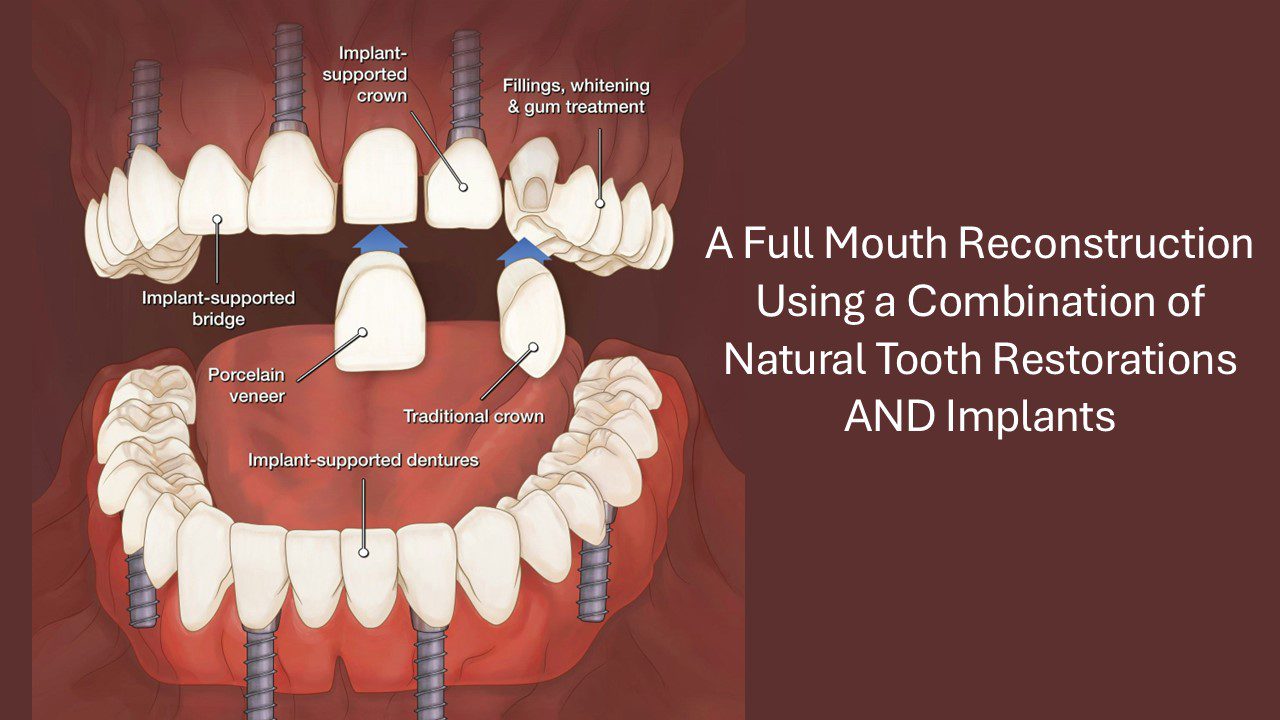
 Full mouth reconstruction is a coordinated treatment plan that rebuilds, restores, or replaces teeth throughout the mouth to improve oral health, chewing function, comfort, and appearance. Unlike full mouth dental implant treatment, full mouth reconstruction does not automatically mean removing every tooth. Many treatment plans preserve healthy or predictably restorable natural teeth and use crowns, onlays, bridges, veneers, periodontal treatment, orthodontics, or selected dental implants only where they are needed.
The American College of Prosthodontists defines full mouth reconstruction as rebuilding and/or replacing the teeth while combining esthetics with restorative dentistry to improve oral health, function, and appearance. Because every patient begins with a different combination of teeth, restorations, bone support, bite relationships, and health considerations, there is no single standard procedure called a full mouth reconstruction.
How Is Full Mouth Reconstruction Different From Full Mouth Dental Implants?
Full mouth reconstruction is the broader treatment category; full mouth dental implants are one possible form of reconstruction. A natural-tooth reconstruction may restore many existing teeth while replacing only selected missing or nonrestorable teeth. A full mouth implant reconstruction generally replaces all teeth in one or both arches with an implant-supported prosthesis.
This distinction is important because patients sometimes assume that severe dental problems automatically require complete extraction. That is not always the case. The appropriate question is not simply, “Can this tooth be saved?” It is whether the tooth can remain healthy, functional, maintainable, and useful within the completed reconstruction.
At the Dental Implant Center, comprehensive services extend beyond implant replacement and include full mouth reconstruction, crowns, bridges, veneers, partial dentures, and complete dentures for adults with complex dental needs.
Who May Need A Full Mouth Reconstruction?
Full mouth reconstruction may be considered when problems affect many teeth or when several dental conditions must be treated together to create a stable result. A single damaged tooth usually does not require comprehensive reconstruction. The need arises when treating one tooth at a time would not adequately address the condition of the mouth as a whole.
Patients who may benefit include people with:
- Numerous broken, cracked, or severely worn teeth
- Multiple large or failing fillings and crowns
- Extensive tooth decay
- Missing teeth in several areas
- Advanced tooth wear from grinding, erosion, or an unstable bite
- A combination of natural teeth, old bridges, implants, and mismatched restorations
- Congenital or developmental dental conditions
- Significant changes in chewing function or tooth position
- Teeth with different levels of periodontal, structural, or restorative damage
The American College of Prosthodontists identifies broken teeth, failing restorations, decay, missing teeth, and severe wear among the conditions that may lead to comprehensive restorative treatment.
Can Natural Teeth Be Preserved During Full Mouth Reconstruction?
Yes. Preserving suitable natural teeth is often a central objective of full mouth reconstruction. The decision must be based on the prognosis of each tooth and its role within the complete treatment plan rather than on a blanket rule that every tooth must be saved or extracted.
A tooth may be considered for preservation when it has adequate periodontal support, sufficient healthy structure, manageable decay, acceptable position, and a predictable restorative path. Depending on the diagnosis, treatment may involve a filling, onlay, crown, root canal, periodontal therapy, orthodontic movement, or a combination of procedures.
A tooth may have a poor prognosis when it has an unrestorable fracture, severe loss of supporting bone, extensive decay below the gumline, persistent infection, or insufficient structure to support a durable restoration. Patients should receive a tooth-by-tooth explanation showing which teeth have favorable, questionable, or poor long-term prognoses.
What Treatments Can Be Included In Full Mouth Reconstruction?
A full mouth reconstruction combines the specific procedures required to create one coordinated functional and esthetic result. It is not necessary for every patient to receive every treatment listed below.
Possible components include:
- Crowns to restore weakened, fractured, heavily filled, or root-canal-treated teeth
- Onlays or partial-coverage restorations when less tooth reduction is appropriate
- Fixed bridges to replace selected missing teeth
- Dental implants to replace individual teeth or support larger restorations
- Fillings for areas of localized decay
- Root canal treatment when the pulp of a restorable tooth is diseased
- Periodontal therapy to improve gum and supporting-bone health
- Orthodontic treatment to reposition teeth before final restorations
- Veneers in selected esthetic areas
- Partial or complete dentures when removable treatment is appropriate
- Occlusal guards to help protect the completed reconstruction in patients who grind or clench
Crowns are restorations made to fit over prepared natural teeth or implants, while multiple implants may support a bridge or denture when several teeth are absent.
How Is The Treatment Plan Developed?
Full mouth reconstruction begins with diagnosis, not with choosing a material, brand, or advertised procedure. The clinician must understand why the existing dentition has deteriorated before rebuilding it. Otherwise, the same forces or disease processes may threaten the new restorations.
A comprehensive evaluation may include:
- A review of your dental concerns, treatment priorities, medical history, and medications
- Examination of every tooth, restoration, implant, and area of missing teeth
- Periodontal evaluation of the gums and supporting bone
- Photographs, radiographs, digital scans, and diagnostic models
- Assessment of tooth wear, grinding, jaw relationships, and restorative space
- Esthetic evaluation of tooth display, smile line, lip support, shade, and proportion
- A tooth-by-tooth prognosis and comparison of reasonable treatment alternatives
- A phased plan explaining provisional treatment, definitive restorations, maintenance, risks, and anticipated costs
Evidence-based dentistry combines scientific evidence with the patient’s medical and oral condition, the clinician’s expertise, and the patient’s needs and preferences.
Why Is The Bite Important In Full Mouth Reconstruction?
The upper and lower teeth must be designed to function together, so the bite is a central part of full mouth reconstruction planning. Teeth that look attractive but contact incorrectly may be uncomfortable, difficult to chew with, or vulnerable to excessive wear and fracture.
The prosthodontist evaluates how the jaws relate, where teeth contact, how much space is available for restorative materials, and whether tooth wear has changed the apparent height or position of the bite. In complex cases of severe wear, planning for the jaw relationship and restorative space accurately from the diagnostic stage to the final restorations is considered important to the reconstruction process.
Full mouth reconstruction should not, however, be promoted as a general cure for temporomandibular disorders. The National Institute of Dental and Craniofacial Research recommends caution with irreversible treatments that permanently alter the teeth, bite, or jaw joints when treating TMD because evidence for many such approaches is lacking.
What Is The Purpose Of Provisional Or Temporary Restorations?
Provisional restorations allow the patient and prosthodontist to evaluate the proposed function, appearance, speech, and comfort before the definitive restorations are completed. In a complex case, temporary teeth are not merely placeholders. They can serve as a working prototype of the final reconstruction.
During the provisional phase, the clinical team may evaluate:
- Tooth length and display
- Smile line and facial proportions
- Lip support
- Speech and pronunciation
- Chewing comfort
- Bite contacts
- Ability to clean around the restorations
- Patient preferences regarding shape and shade
Adjustments are usually easier to make during this stage than after definitive ceramics, crowns, bridges, or implant restorations have been fabricated. Patients should ask how long the provisional evaluation will last, what changes can be made, and how approval of the final design will be documented.
How Long Does Full Mouth Reconstruction Take?
The timeline may range from several appointments to many months because it depends on the number of procedures, the condition of the teeth and gums, healing requirements, and whether treatment is completed in phases. Sometimes, this can be done to spread the cost out over a longer period. A primarily tooth-supported reconstruction may progress differently from a case requiring extractions, periodontal therapy, orthodontics, grafting, or dental implants.
A treatment sequence may include:
- Diagnostic planning
- Control of active decay or infection
- Periodontal treatment
- Removal of teeth that cannot be maintained
- Orthodontic or surgical preparation when needed
- Placement of implants or transitional restorations
- Provisional reconstruction
- Evaluation and adjustment
- Delivery of definitive restorations
- Ongoing hygiene and maintenance
The written plan should identify which stages are expected, which stages depend on healing or reevaluation, and what the patient will wear between appointments. Exact timing cannot be determined without a clinical examination.
What Are The Possible Benefits Of Full Mouth Reconstruction?
The purpose of full mouth reconstruction is to create a healthier and more stable dental system—not simply to place crowns on every tooth. When properly indicated and planned, treatment may improve the ability to chew, replace missing teeth, protect weakened teeth, establish more appropriate tooth contacts, improve smile consistency, and make the mouth easier to maintain.
Potential goals include:
- Restoring damaged teeth
- Replacing teeth that cannot be saved
- Improving chewing efficiency
- Stabilizing a deteriorating bite
- Creating consistent tooth proportions and shade
- Improving speech affected by missing or damaged teeth
- Reducing repeated emergency treatment
- Coordinating old and new restorations into one plan
- Establishing a long-term maintenance strategy
The result remains dependent on diagnosis, biology, materials, patient health, hygiene, and ongoing professional care. No restoration should be described as permanent or maintenance-free.
What Are The Risks And Limitations?
Every full mouth reconstruction involves trade-offs, and preserving a tooth does not guarantee that it will never require additional treatment. Natural teeth can develop recurrent decay, periodontal disease, root fractures, endodontic problems, or structural failure. Crowns and bridges may chip, wear, loosen, or require replacement. Dental implants and implant restorations also require monitoring and may develop biological or mechanical complications.
Other considerations may include:
- Removal of healthy tooth structure for certain restorations
- Tooth sensitivity
- Possible future root canal treatment
- Gum recession or changes in tissue contours
- Fracture or wear of restorative materials
- Difficulty cleaning complex restorations
- Need for repair or replacement over time
- Adaptation to changes in tooth shape, bite, or speech
- Extended treatment time
- Financial commitment and continuing maintenance
The treatment plan should distinguish predictable risks from case-specific concerns and explain what alternatives exist if the patient declines or postpones comprehensive treatment.
How Much Does Full Mouth Reconstruction Cost?
There is no meaningful standard price for full mouth reconstruction because the term describes a customized plan rather than one procedure. The cost depends on how many teeth are treated, which teeth can be preserved, the number of crowns or bridges required, whether implants or surgery are involved, the restorative materials selected, laboratory requirements, provisional treatment, and the duration of care.
A useful written estimate should identify:
- Diagnostic and planning fees
- Treatment required before reconstruction
- Fees for each restorative or surgical phase
- Provisional restorations
- Definitive restorations
- Sedation, when applicable
- Follow-up adjustments
- Maintenance requirements
- Services that are not included
- Conditions that could change the estimate
Patients should compare treatment plans by diagnosis, design, materials, provider qualifications, maintenance expectations, and long-term prognosis—not by the final number alone.
Browse Our Smile Gallery
Who Should Perform A Full Mouth Reconstruction?
Full mouth reconstruction requires advanced coordination of diagnosis, tooth restoration, tooth replacement, esthetics, materials, and bite relationships. A prosthodontist is a dental specialist whose training focuses on restoring and replacing teeth and managing complex restorative and prosthetic conditions.
Prosthodontics is one of the 12 dental specialties recognized by the National Commission on Recognition of Dental Specialties and Certifying Boards. Prosthodontists receive advanced training involving crowns, bridges, dentures, esthetics, dental implants, and complex oral rehabilitation.
The Dental Implant Center is led by Dr. David McFadden, who is board-certified in both prosthodontics and implantology. The practice provides tooth-supported, removable, and implant-supported treatment for adults with advanced dental needs, allowing the treatment plan to be based on the patient’s diagnosis rather than on one predetermined procedure.
What Questions Should You Ask During A Consultation?
A complete consultation should explain what can be preserved, what must be replaced, what alternatives exist, and how the proposed reconstruction will be maintained.
Is Full Mouth Reconstruction Right For You?
Full mouth reconstruction may be appropriate when dental problems are extensive enough that the teeth, gums, bite, and missing-tooth spaces must be planned together. It should not be recommended merely because a patient wants whiter teeth or because one standardized treatment is convenient to deliver.
The best plan may preserve most natural teeth, combine natural teeth with selected implants, use removable treatment, or replace a failing dentition with full-arch implant restorations. The correct pathway depends on the prognosis of the teeth, the patient’s health, functional and esthetic priorities, maintenance ability, and informed preferences.
At the Dental Implant Center, the first objective of a comprehensive evaluation is to understand the condition of the entire mouth and explain the available treatment paths. The goal is not to fit every patient into the same procedure, but to develop a reconstruction that is appropriate for that individual.