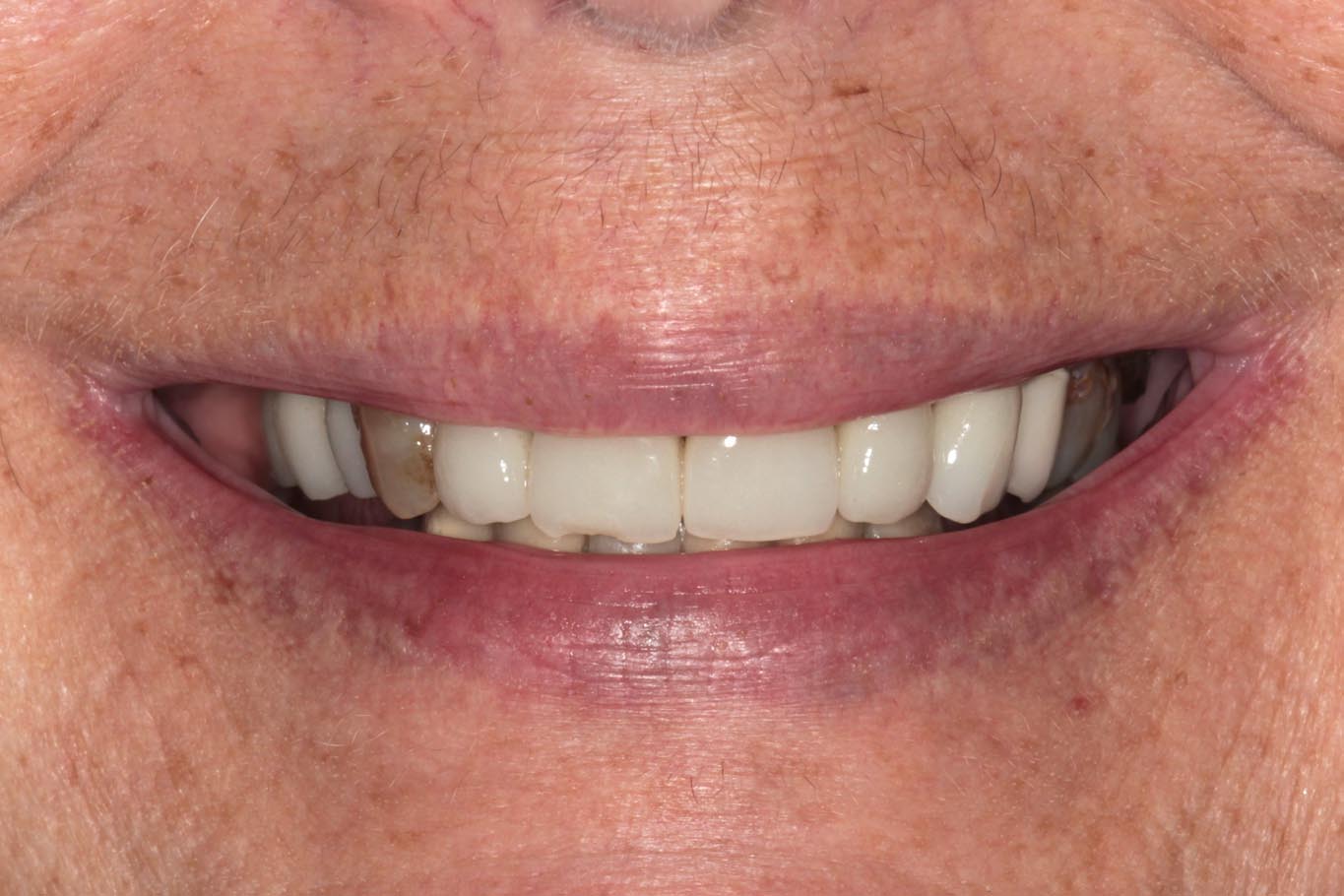
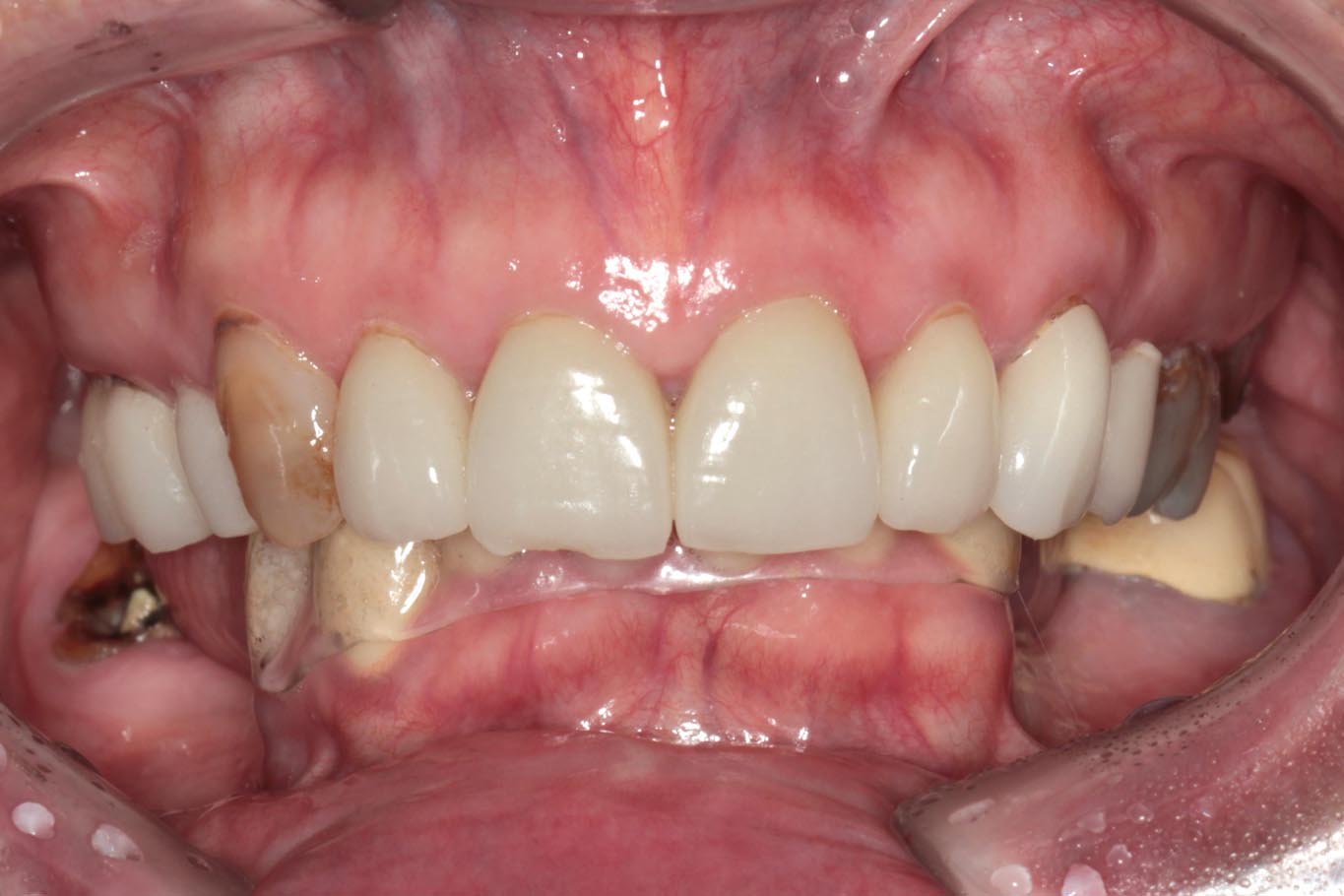
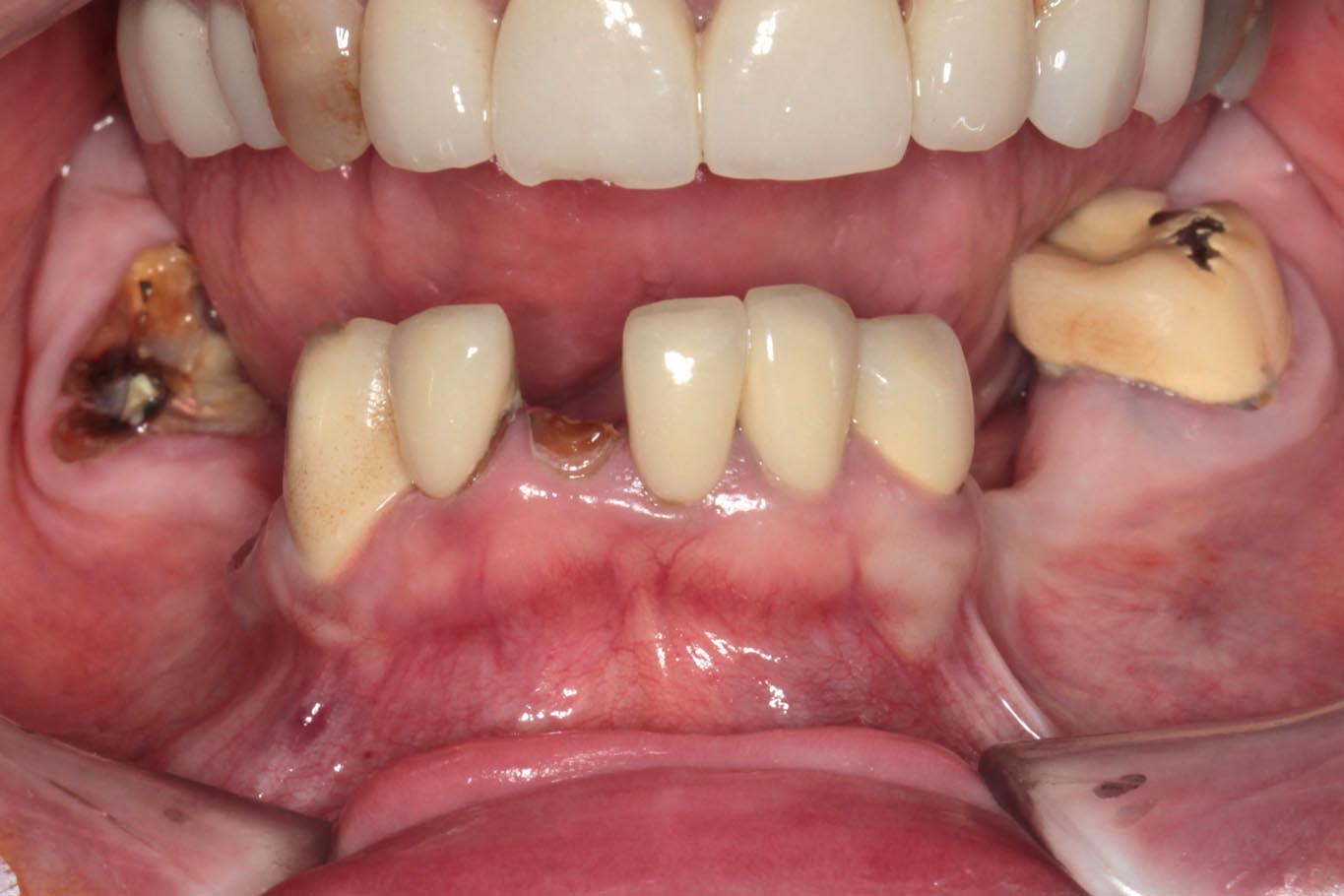
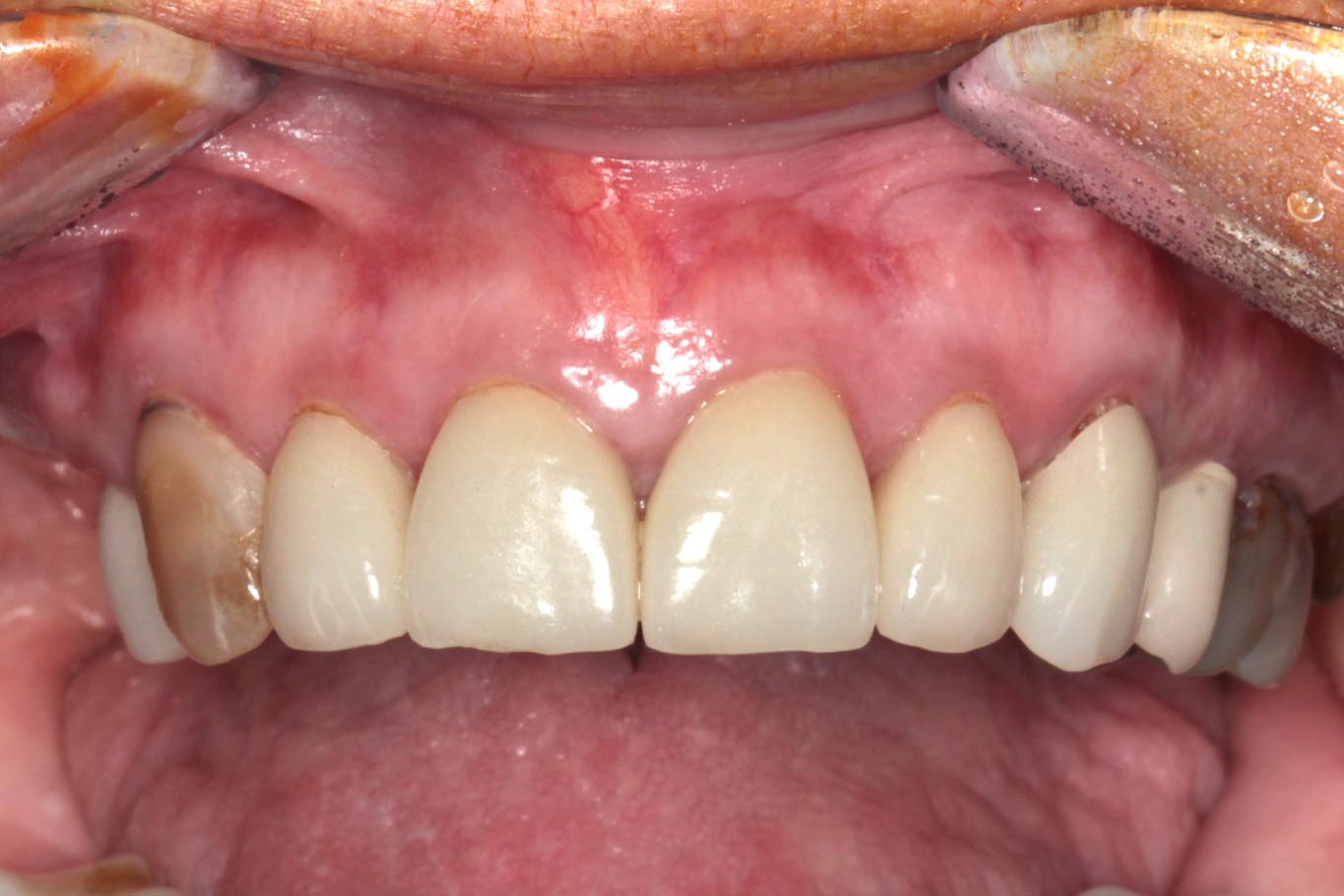
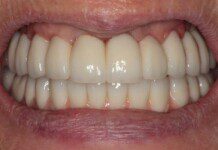
This patient came to us with a problem of severe decay due to xerostomia (dry mouth). She had extensive dental work in the past including multiple crowns but they were all starting to break down from recurrent decay.
This patient came to us with a problem of severe decay due to xerostomia (dry mouth). She had extensive dental work in the past including multiple crowns but they were all starting to break down from recurrent decay.
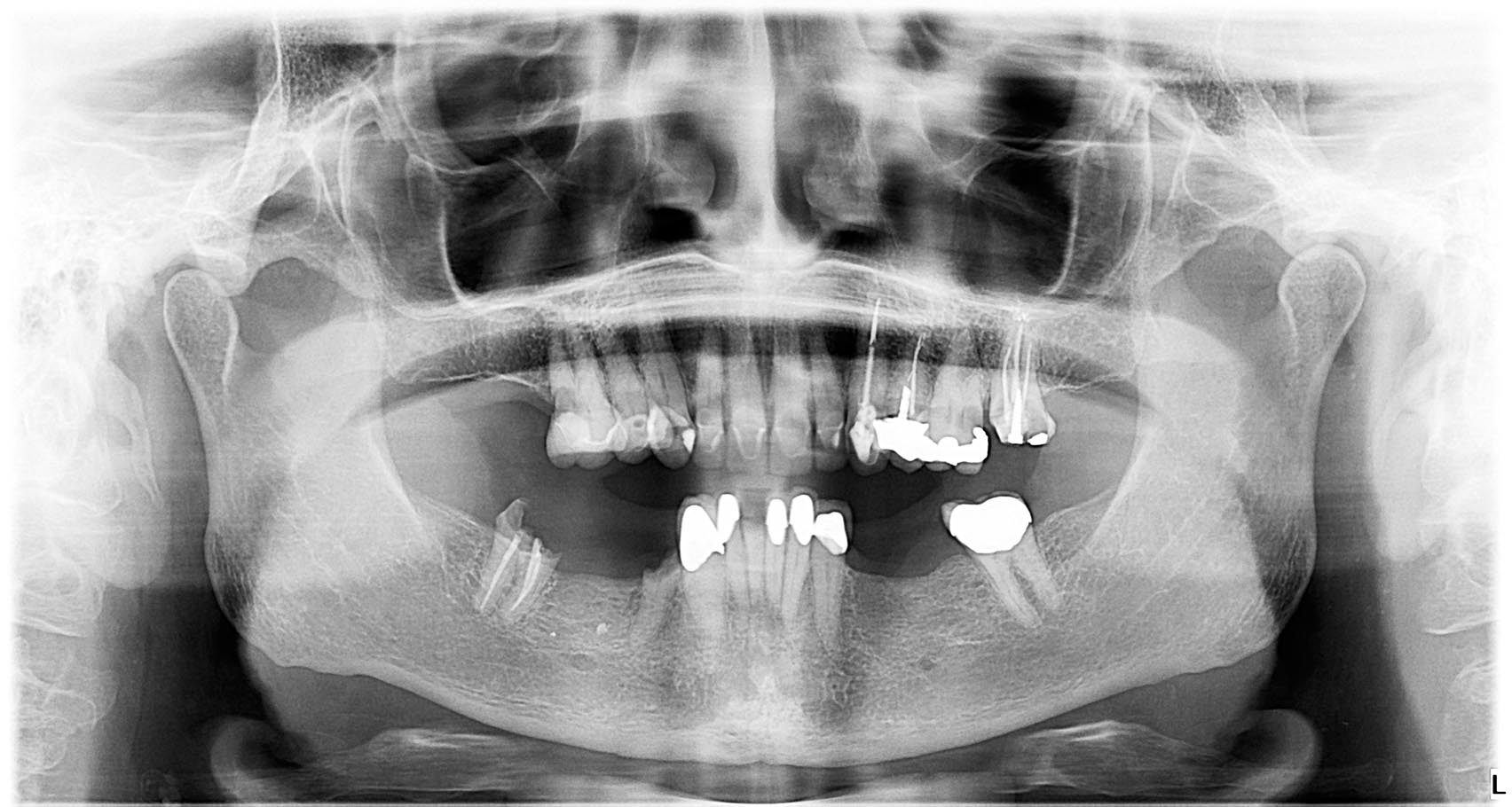
The panoramic radiograph shows multiple teeth with previous root canal and recurrent decay. Some teeth have even broken off due to the lack of tooth structure.
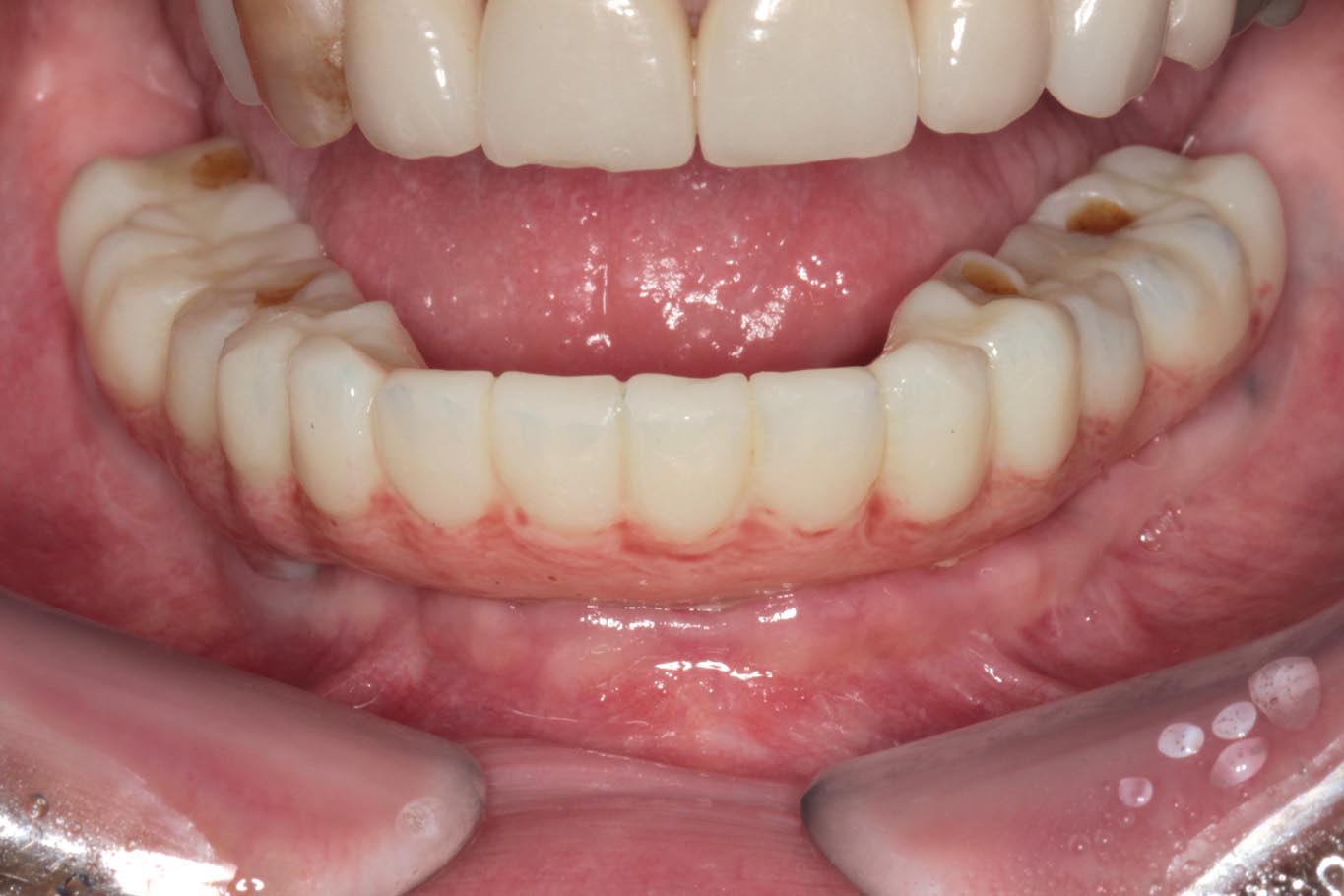
We started work on the lower jaw first. Teeth were extracted and implants were placed. Since we were able to get good primary stability on the implants, we were able to load the implants with a fixed provisional.
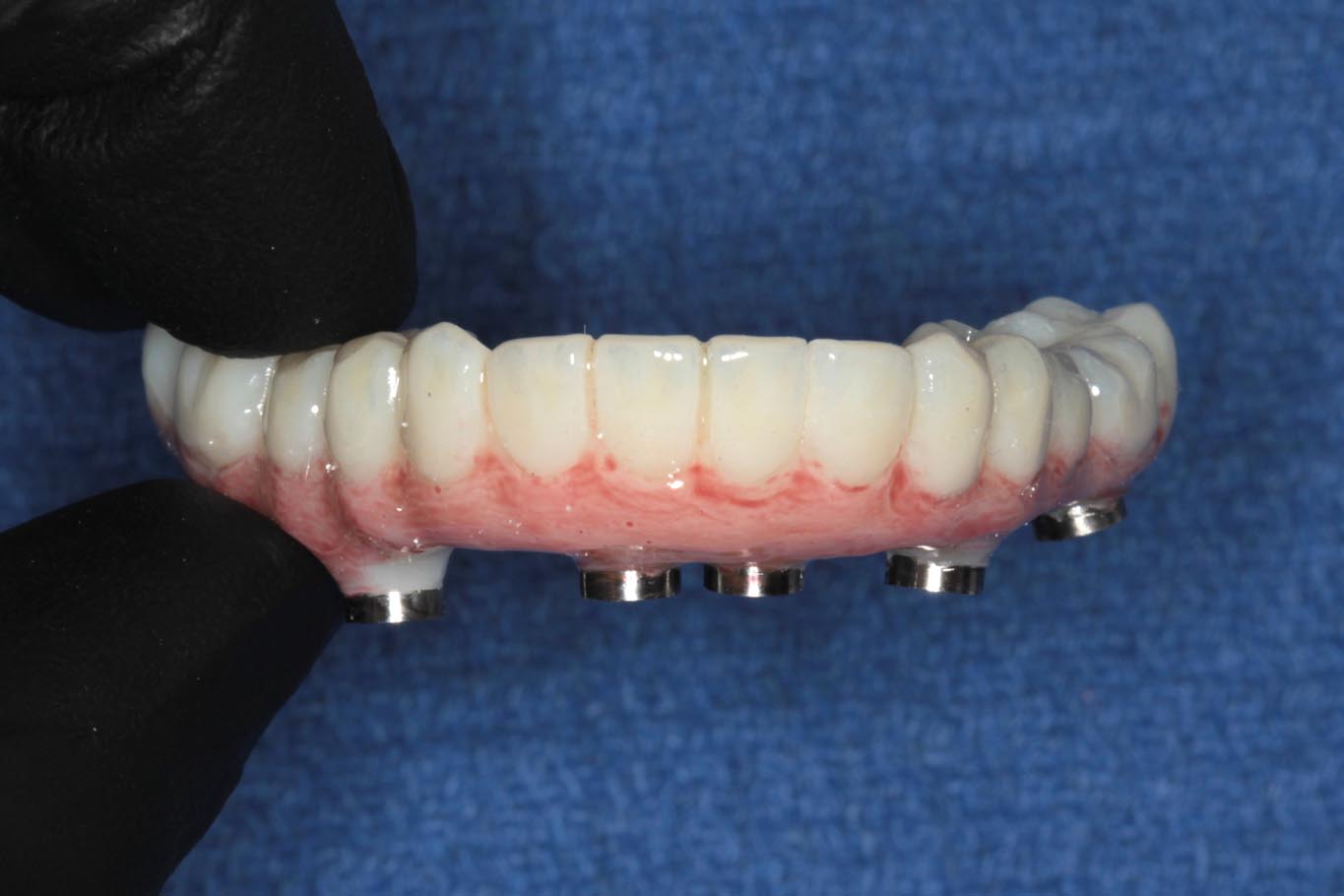
The provisional was made here in our dental office on the day of surgery. Cleansable, convex forms were used to ensure the tissues were shaped for maximum health and esthetics.
The provisional was made here in our dental office on the day of surgery. Cleansable, convex forms were used to ensure the tissues were shaped for maximum health and esthetics.
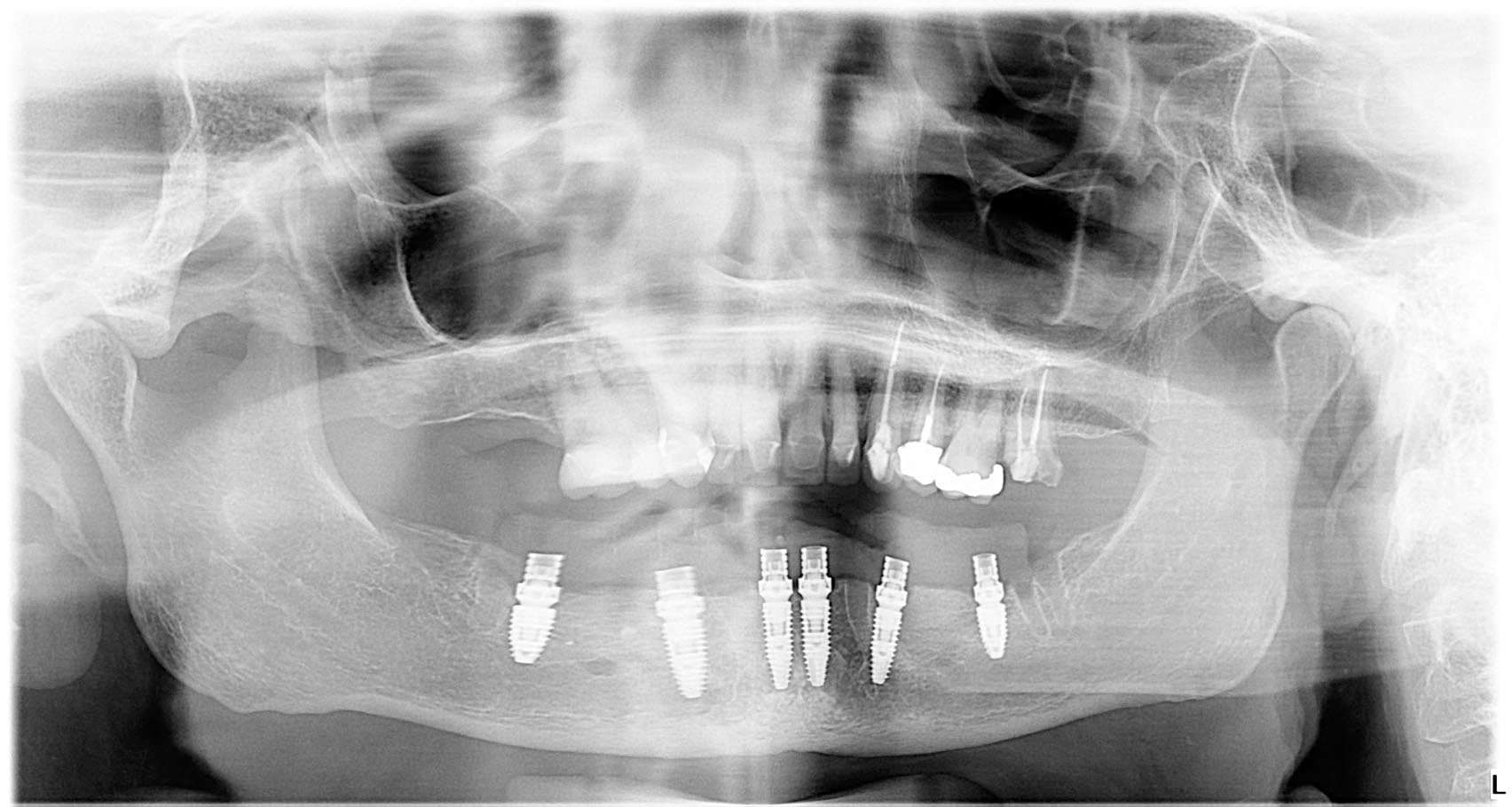
The radiograph shows well-placed implants in solid bone. They will be left to integrate for at least two months before we move on to the next step.
Three months after the surgery, the tissues healed beautifully. The patient was ready at this point to start work on the upper teeth.
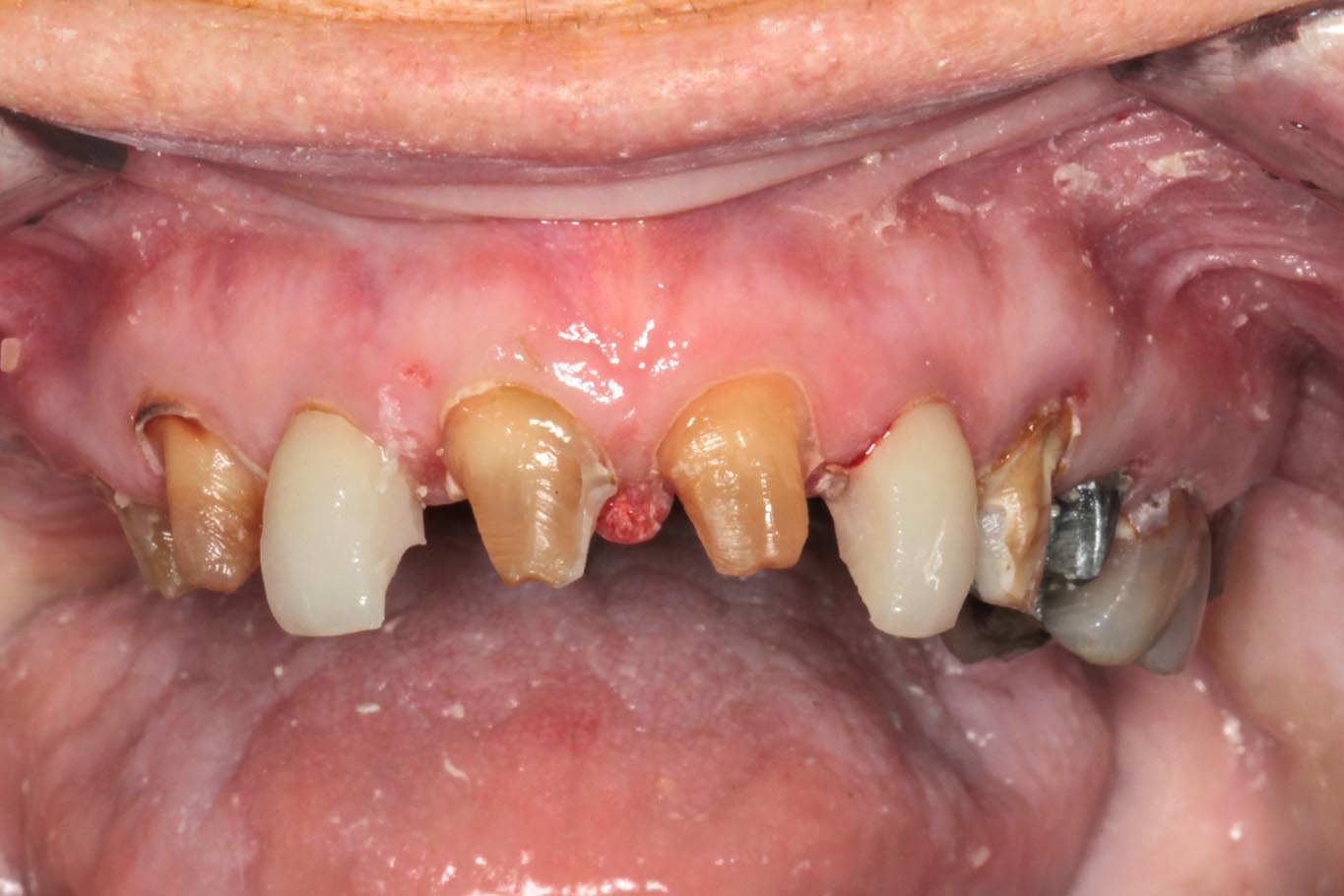
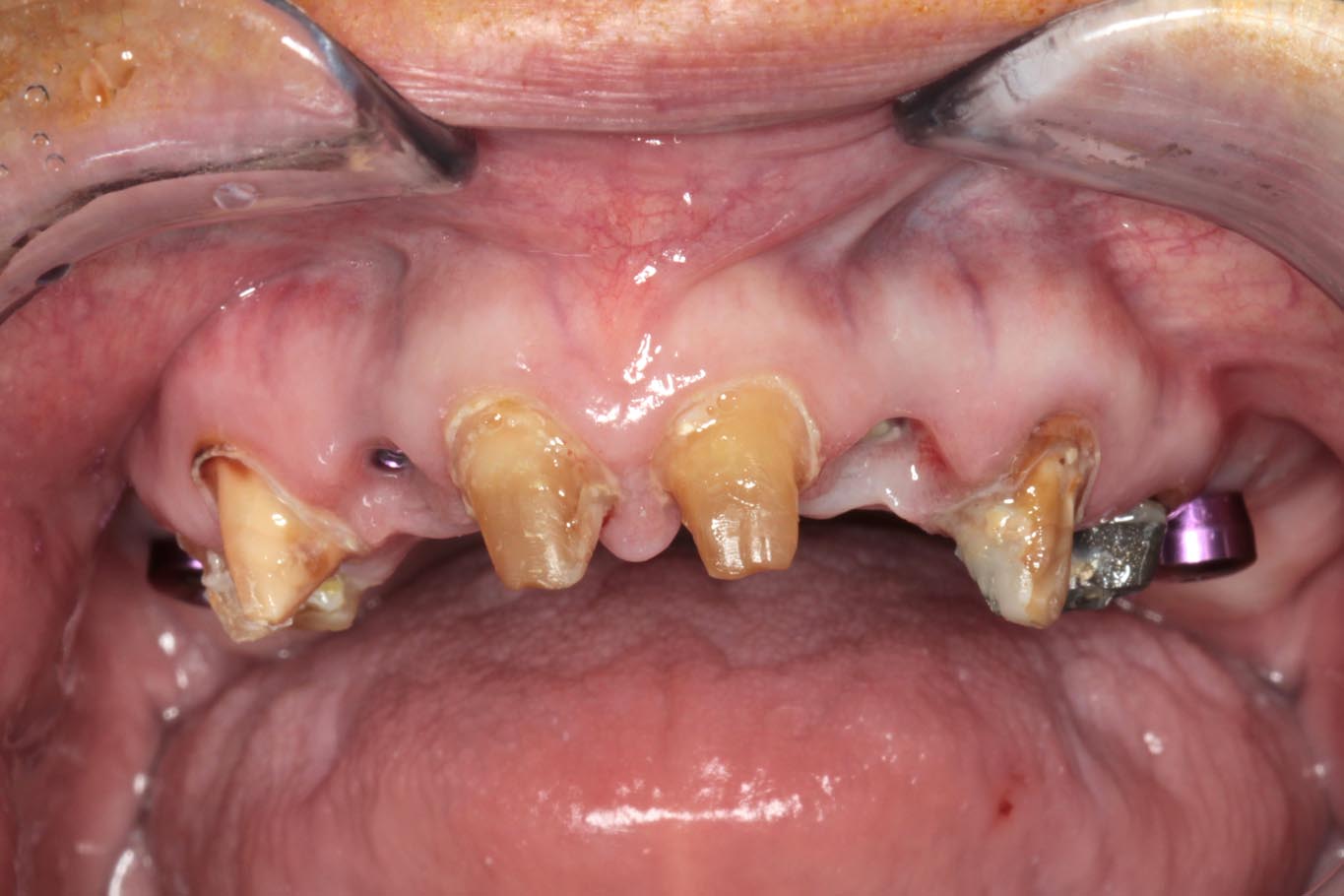
Strategic teeth were selected for this next part to help hold a fixed provisional. The old crowns were removed and the teeth were prepared to receive the prosthesis.
Strategic teeth were selected for this next part to help hold a fixed provisional. The old crowns were removed and the teeth were prepared to receive the prosthesis.
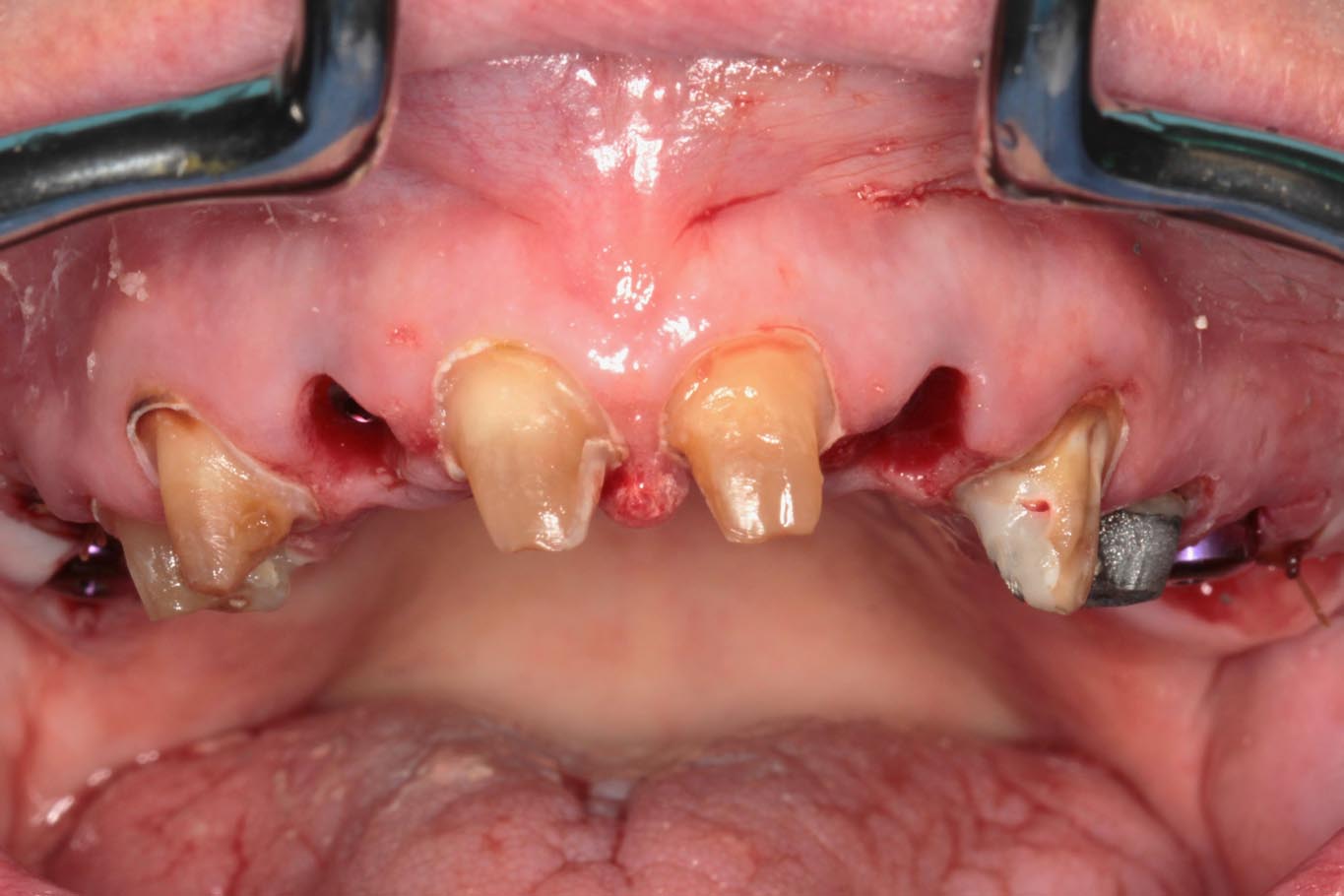
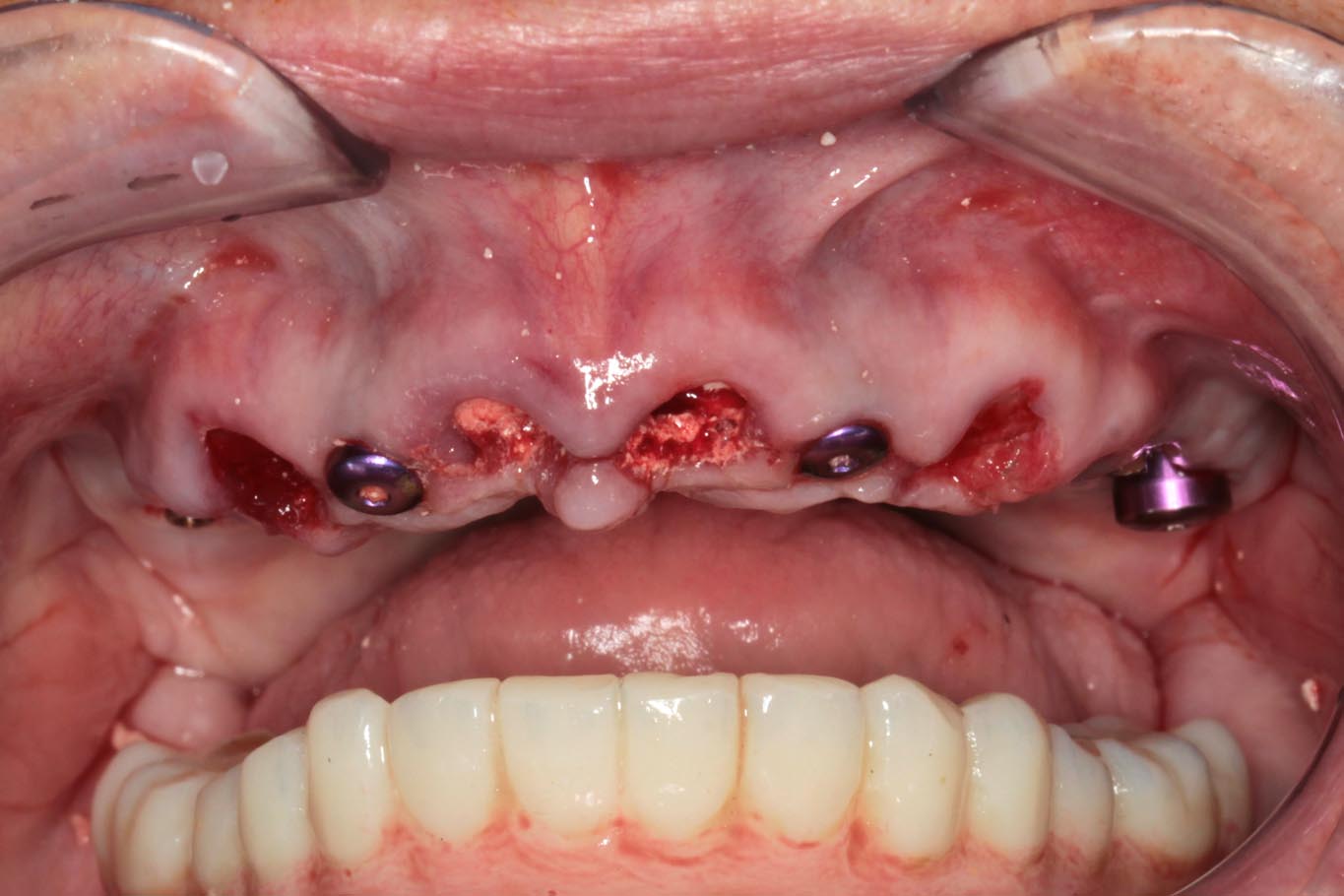
Teeth that were not involved in holding the provisional were then extracted and implants were placed. Since we were not able to get good primary stability at this point, the implants were not loaded.
A provisional was fabricated to rest on the natural teeth while the implants were given time to integrate with the bone.
A provisional was fabricated to rest on the natural teeth while the implants were given time to integrate with the bone.
The post operative radiograph shows the freshly placed implants and the teeth left behind to help hold the provisional. Once the implants have integrated, we will be able to remove the remaining teeth and complete the treatment.
Two weeks after surgery, tissues were healing very well. The patient was able to maintain good hygiene around the new prostheses.
Three months after the previous surgery, the implants have now integrated. The patient was able to move to the final phase of treatment and remove the remaining teeth.
Three months after the previous surgery, the implants have now integrated. The patient was able to move to the final phase of treatment and remove the remaining teeth.
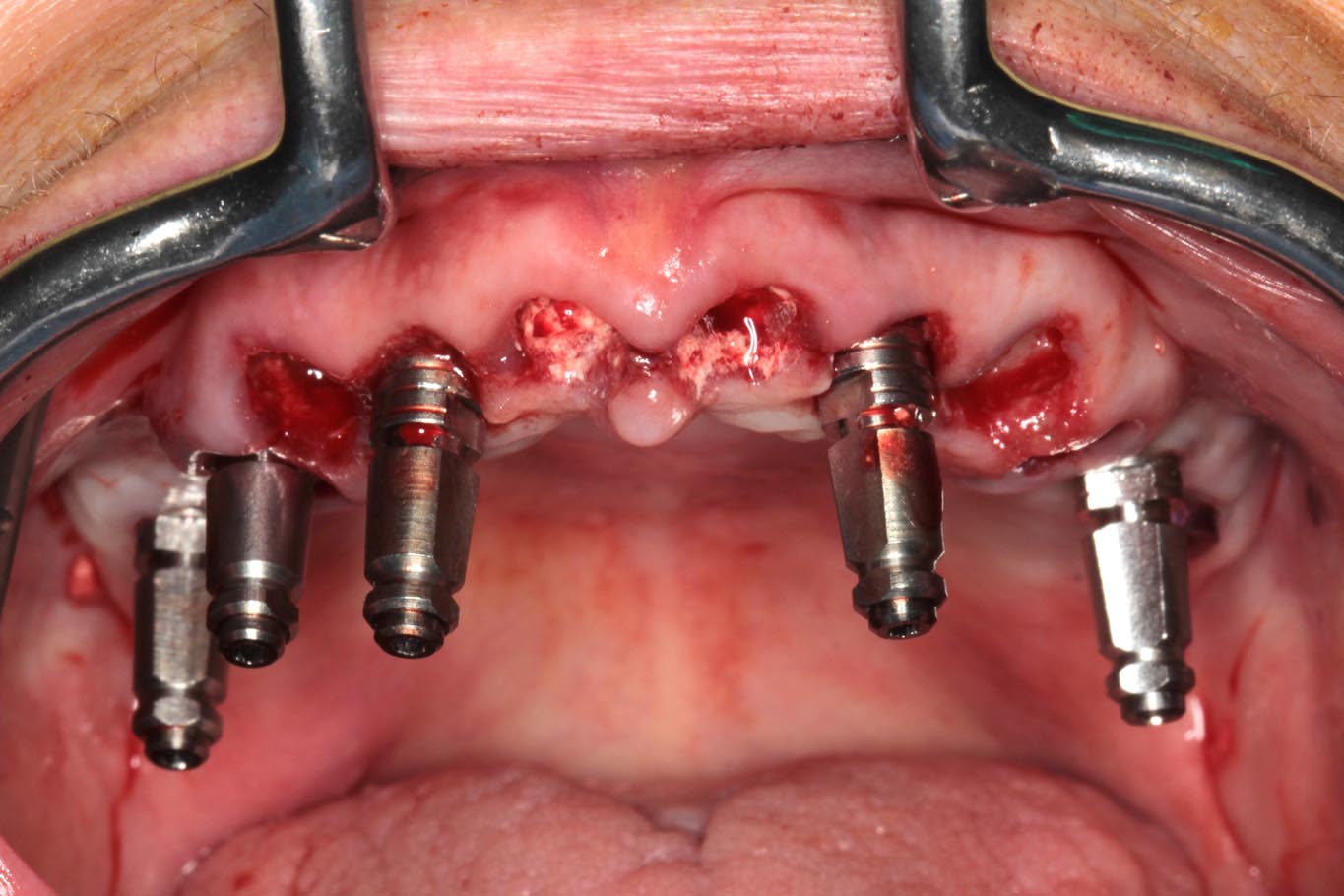
Additional implants were placed and the provisional could now be fabricated on the implants.
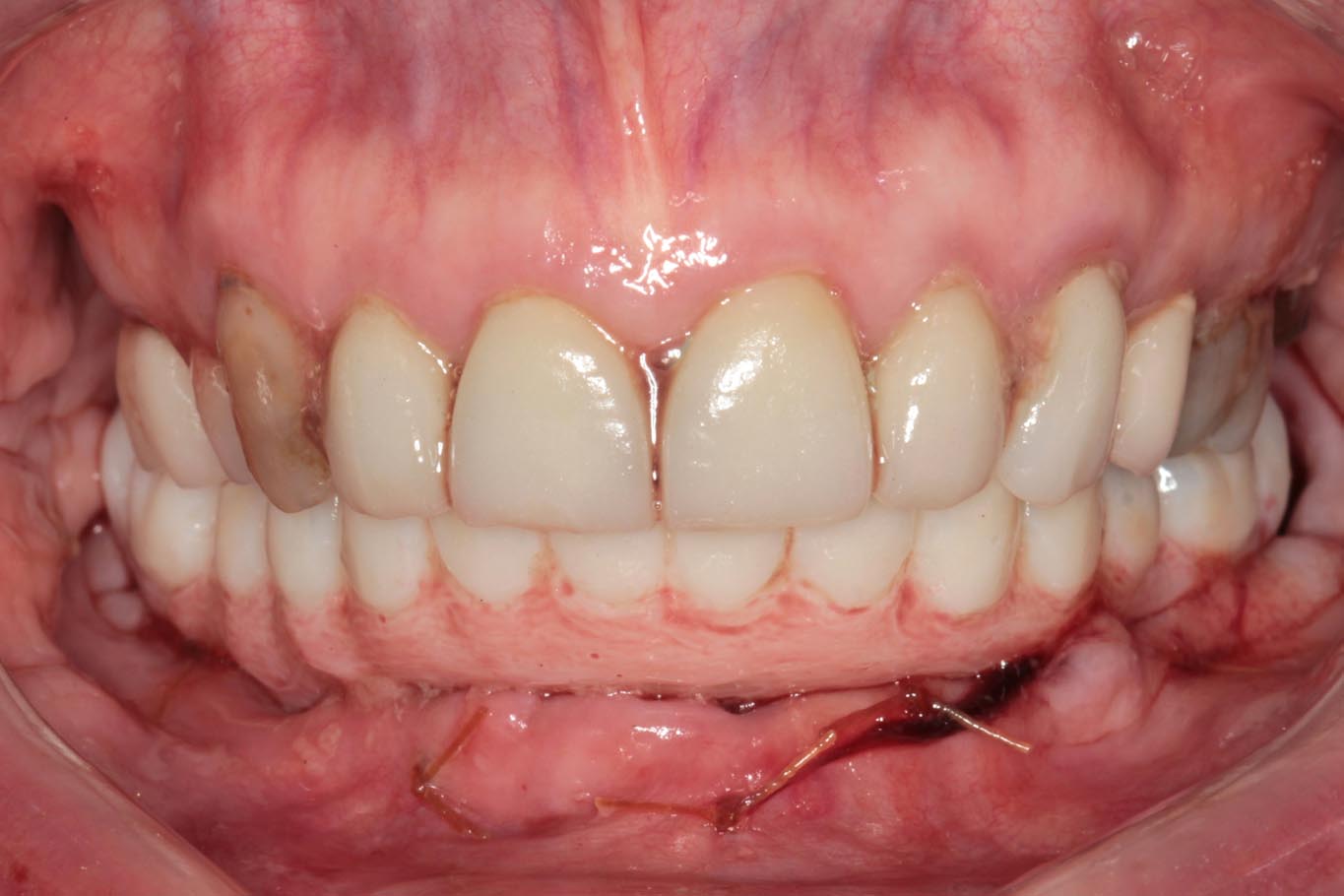
The new implant-retained provisional was fabricated and screwed to the implants. Again, smooth, convex contours were used to allow the patient to clean around it and to allow the tissues to heal well.
The new implant-retained provisional was fabricated and screwed to the implants. Again, smooth, convex contours were used to allow the patient to clean around it and to allow the tissues to heal well.
The radiograph shows all the implants in place. The canines were very large and firmly-rooted. Instead of trying to remove them and risk damaging the bone, they were cut down to the bone level and soft tissue was allowed to grow over them. This procedure is called root-banking.
Two weeks after the surgery, the patient has healed very well. Tissues are in excellent condition. We will allow the implants to integrate for a further two months before moving on to the final prosthetic phase.
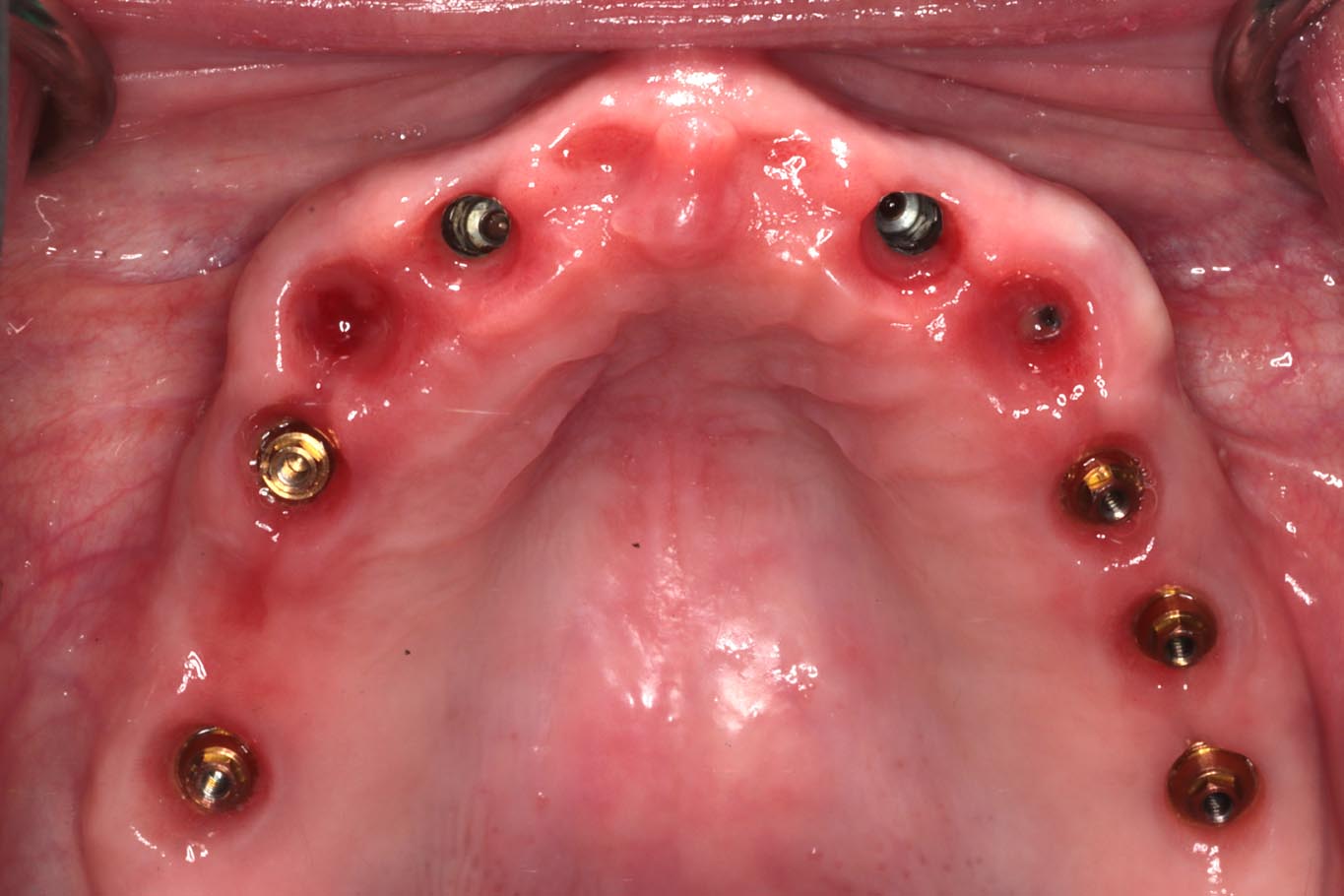
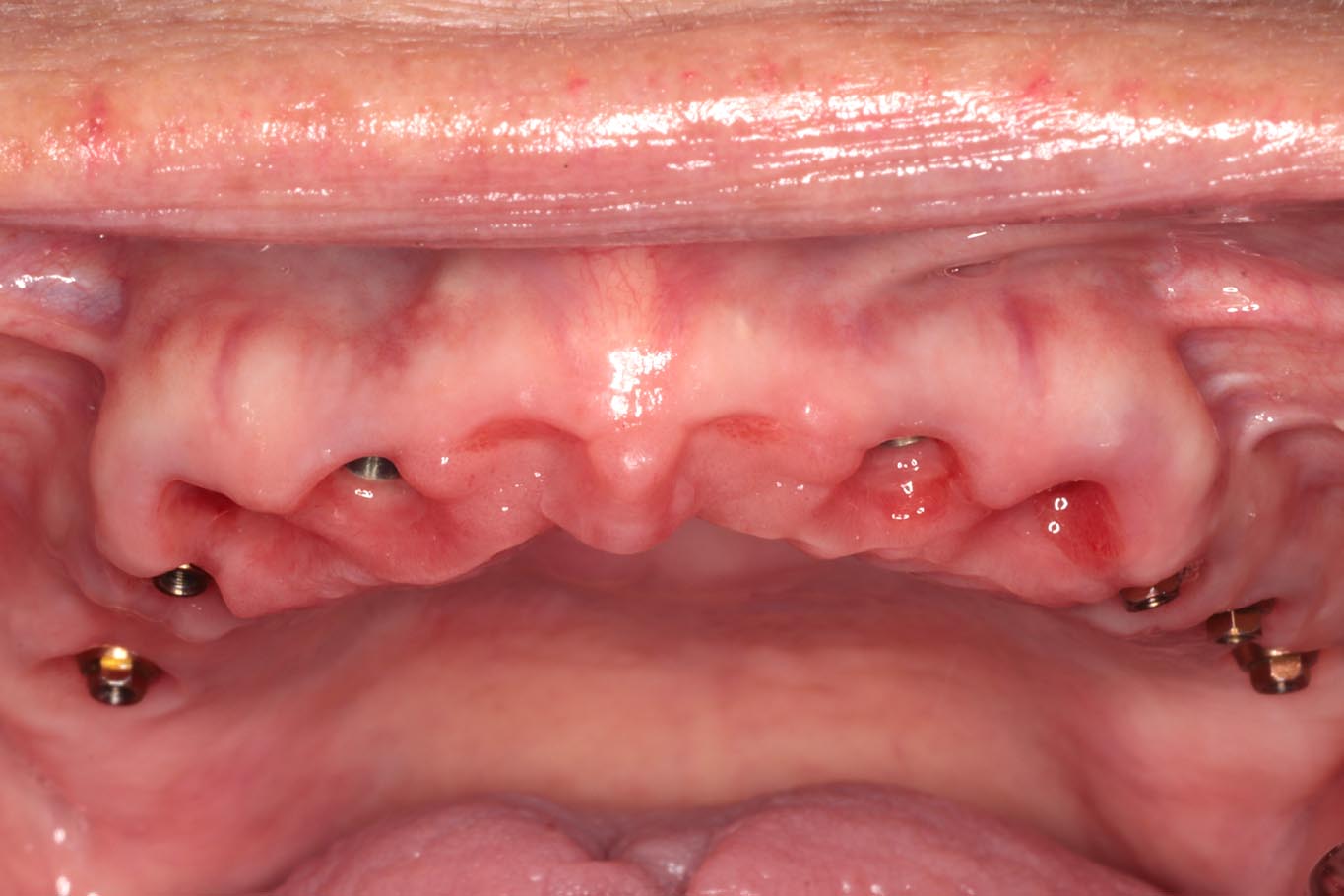
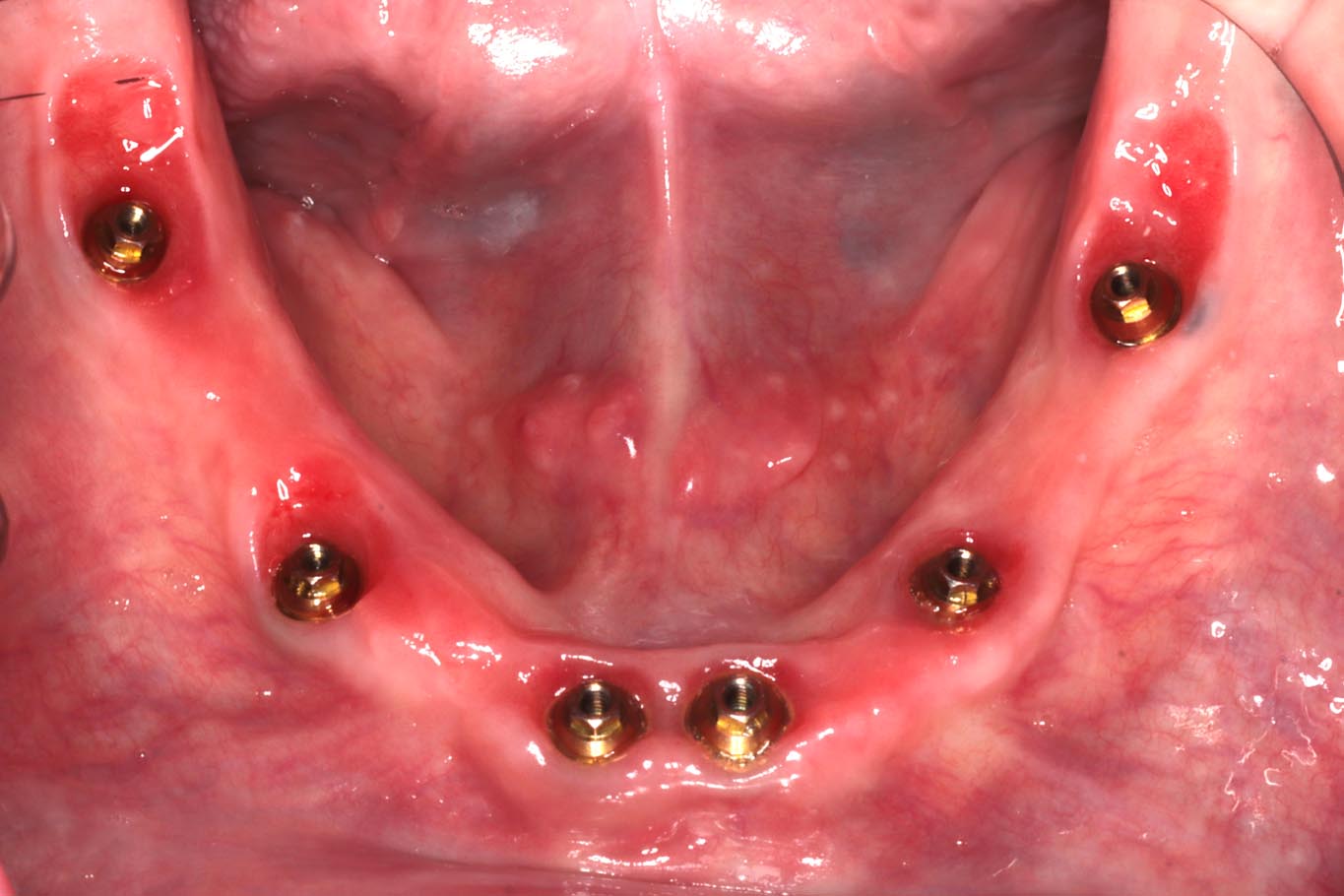
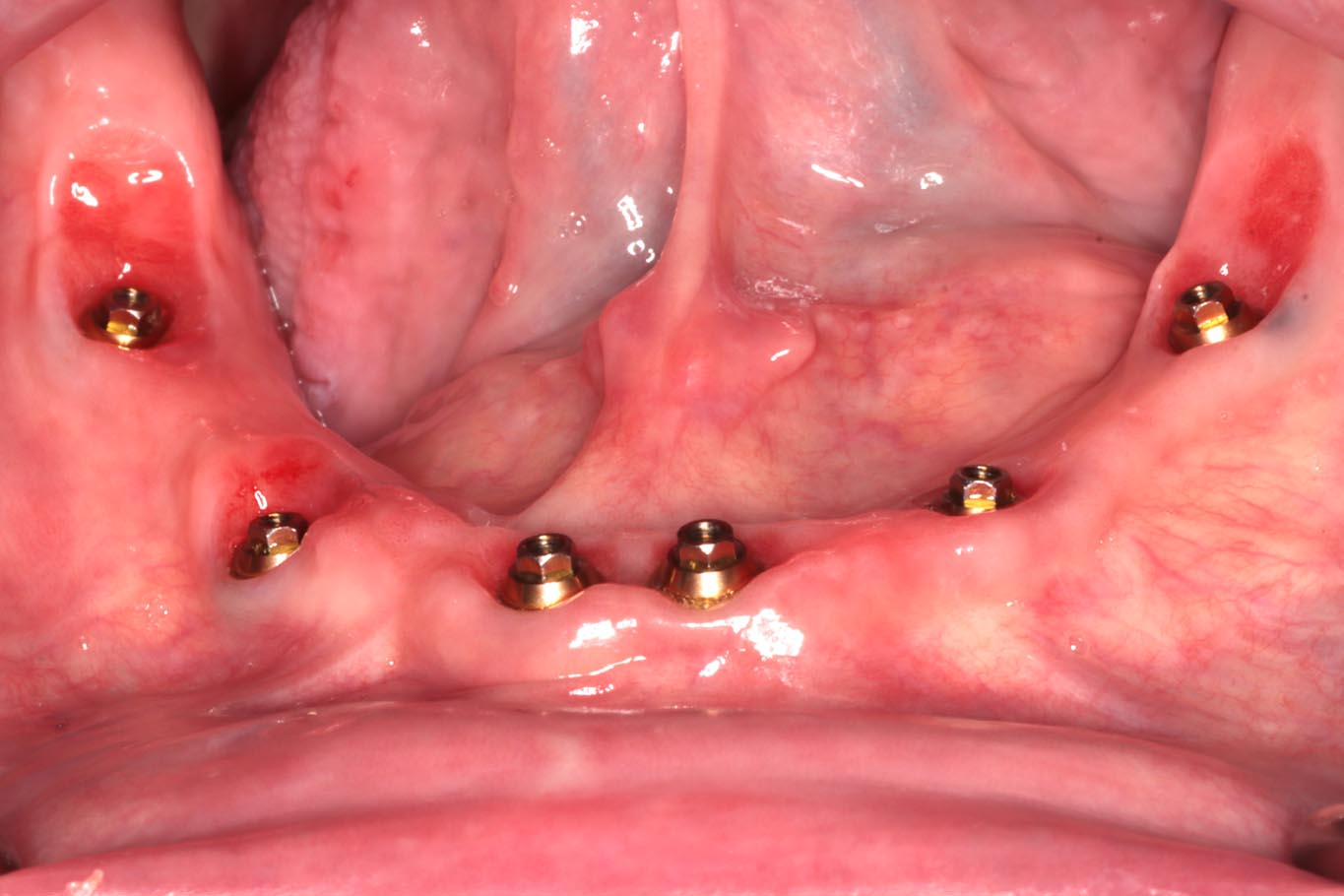
Three months after completion of all the surgeries, the patient was ready to start working on the definitive restorations.
Three months after completion of all the surgeries, the patient was ready to start working on the definitive restorations.
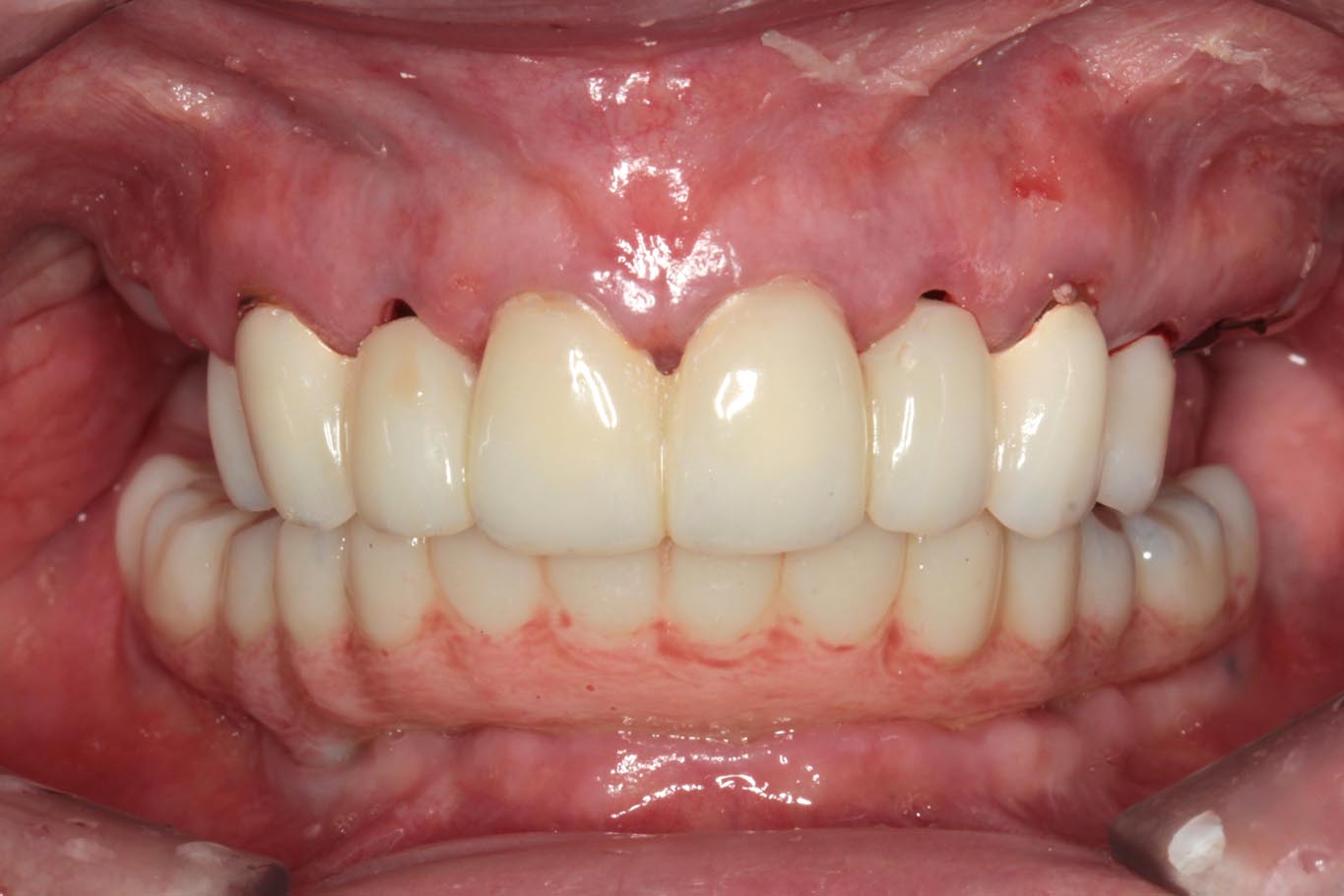
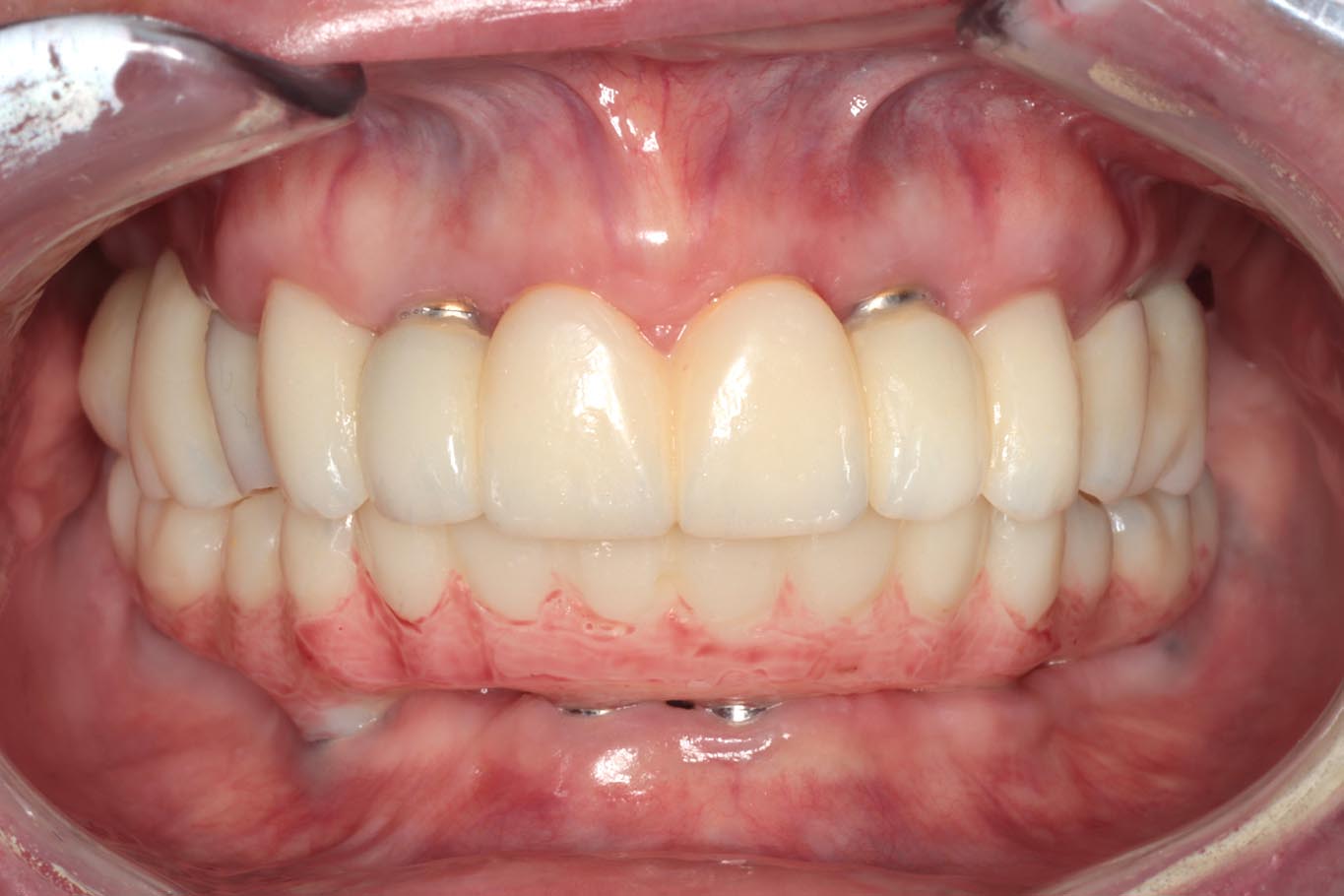
At this point, we can see that some areas have metal showing from the tissues settling down and retracting a little. This is one of the reasons it is important to allow for sufficient time after surgery and not to rush to the definitive restorations too soon. The metal showing here is part of the temporary cylinder and will not be present in the definitive restorations.
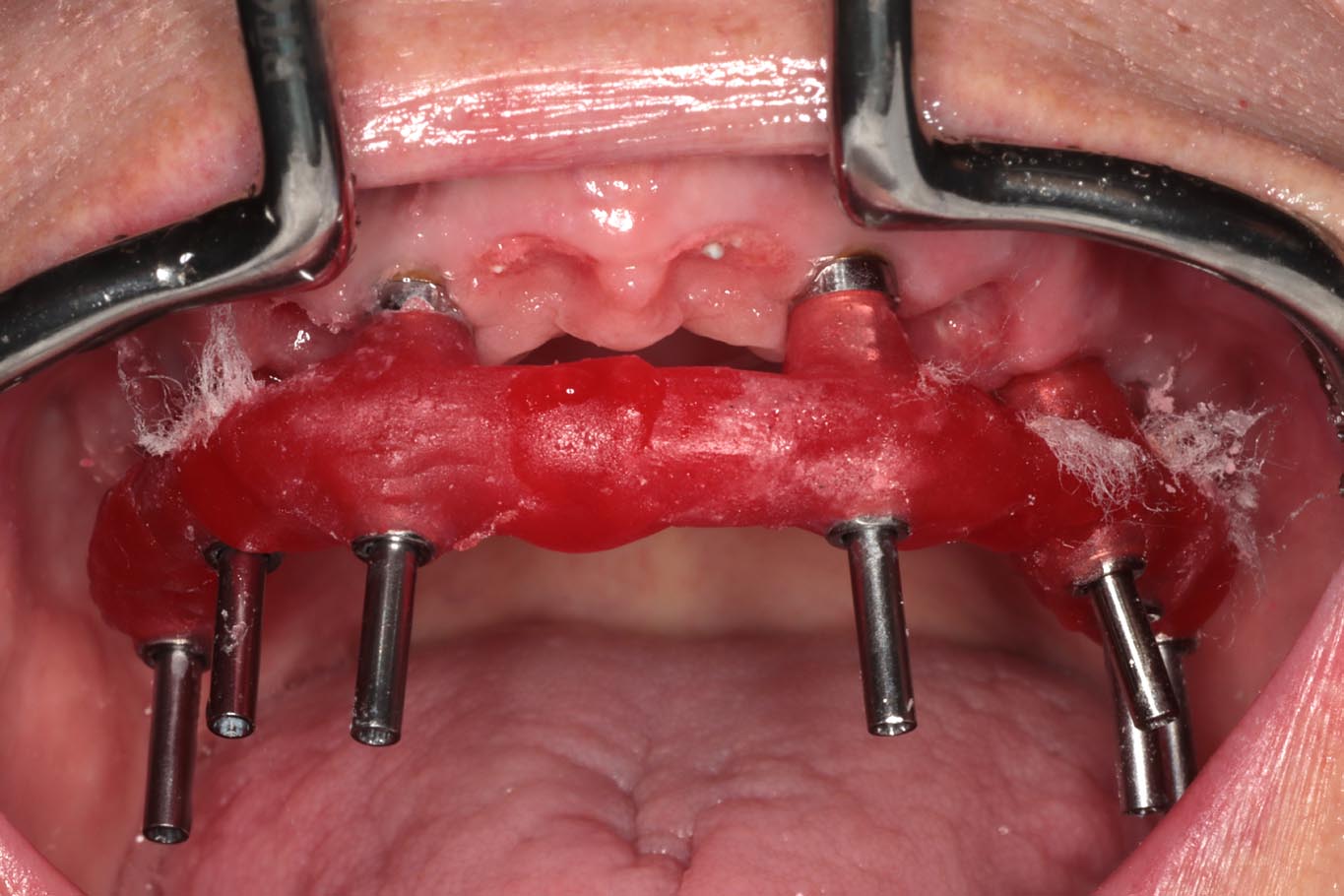
Final impressions were made using a verification jig. This ensures that we can fabricate accurate models so the definitive restorations can fit perfectly.
Final impressions were made using a verification jig. This ensures that we can fabricate accurate models so the definitive restorations can fit perfectly.
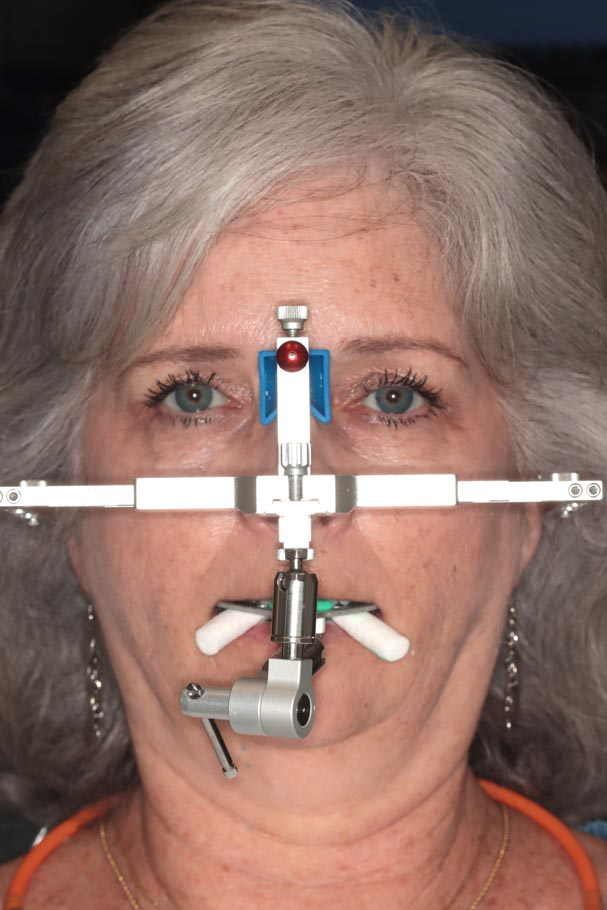
Measurements were made to ensure maximum accuracy in fabricating the definitive restorations. A facebow helps relate the casts to the articulator so the lab is able to visualize the how the prostheses will fit the patient.
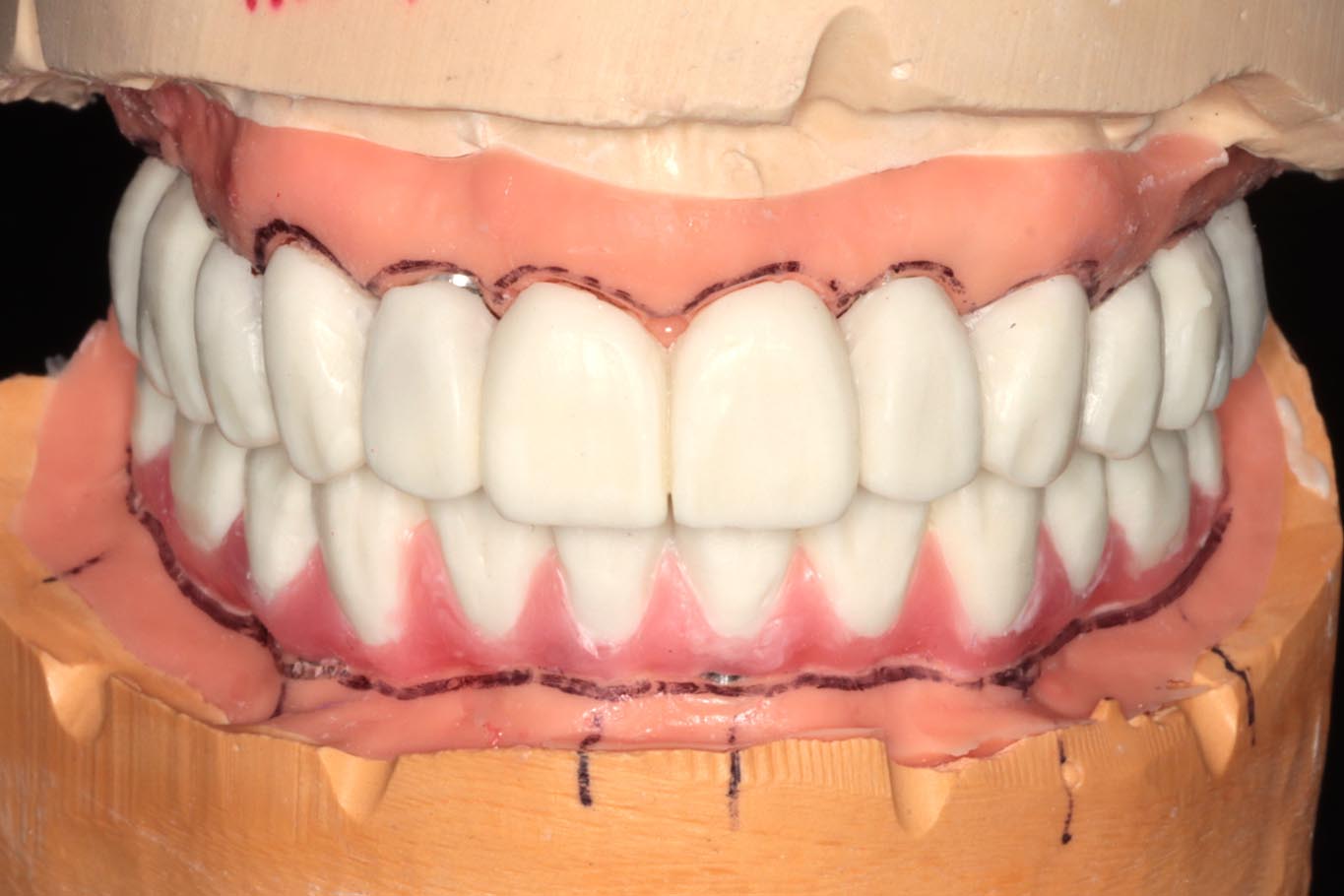
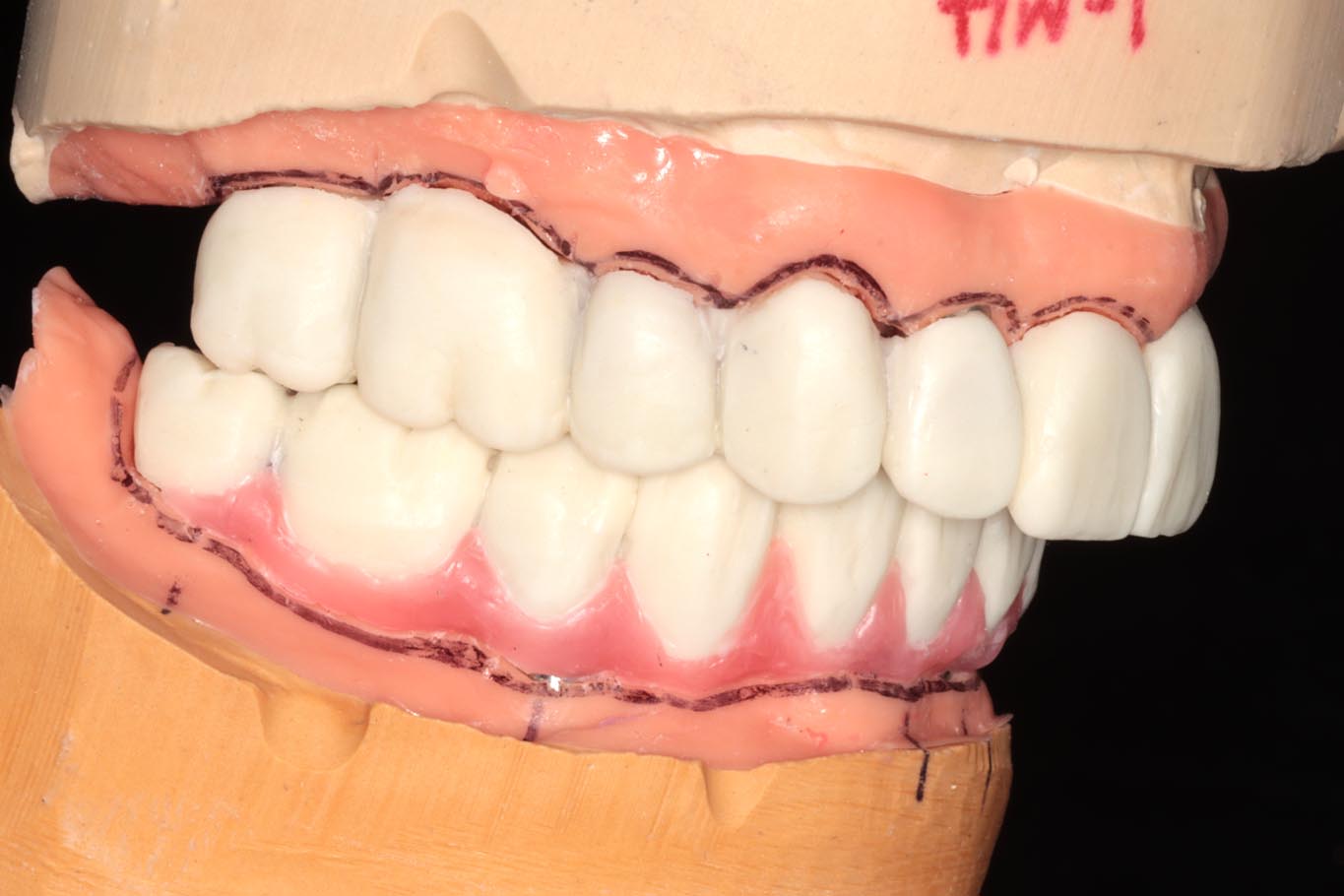
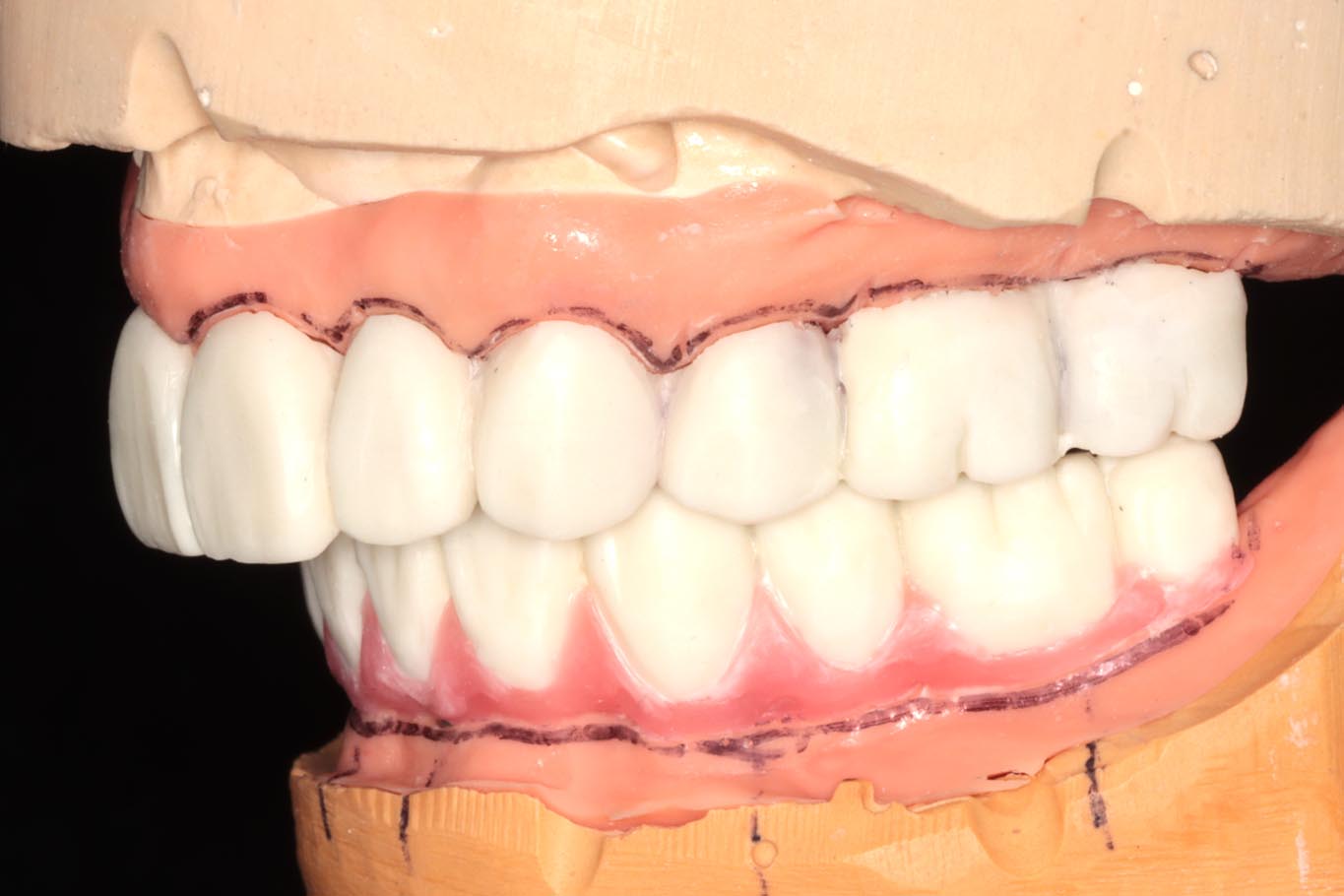
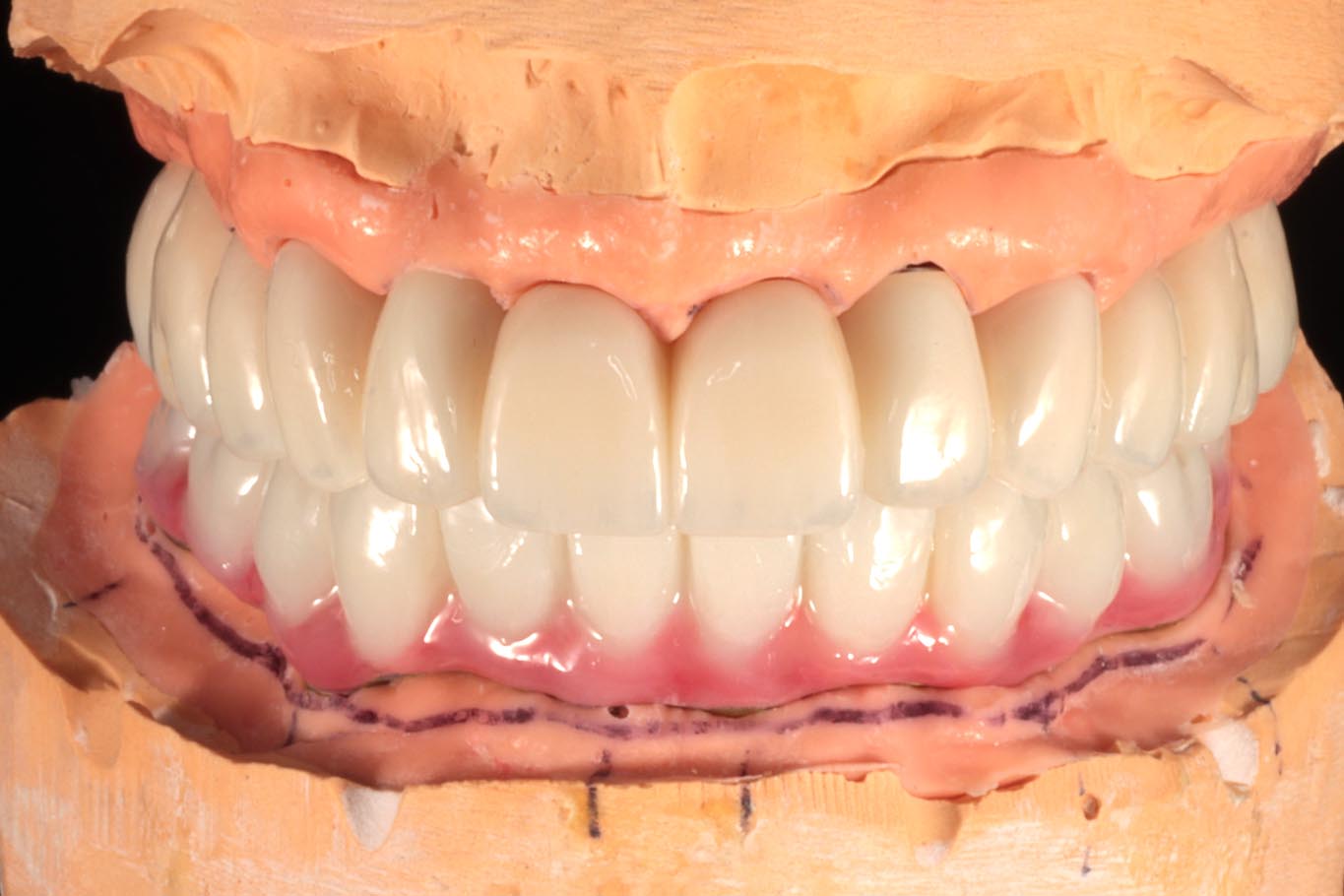
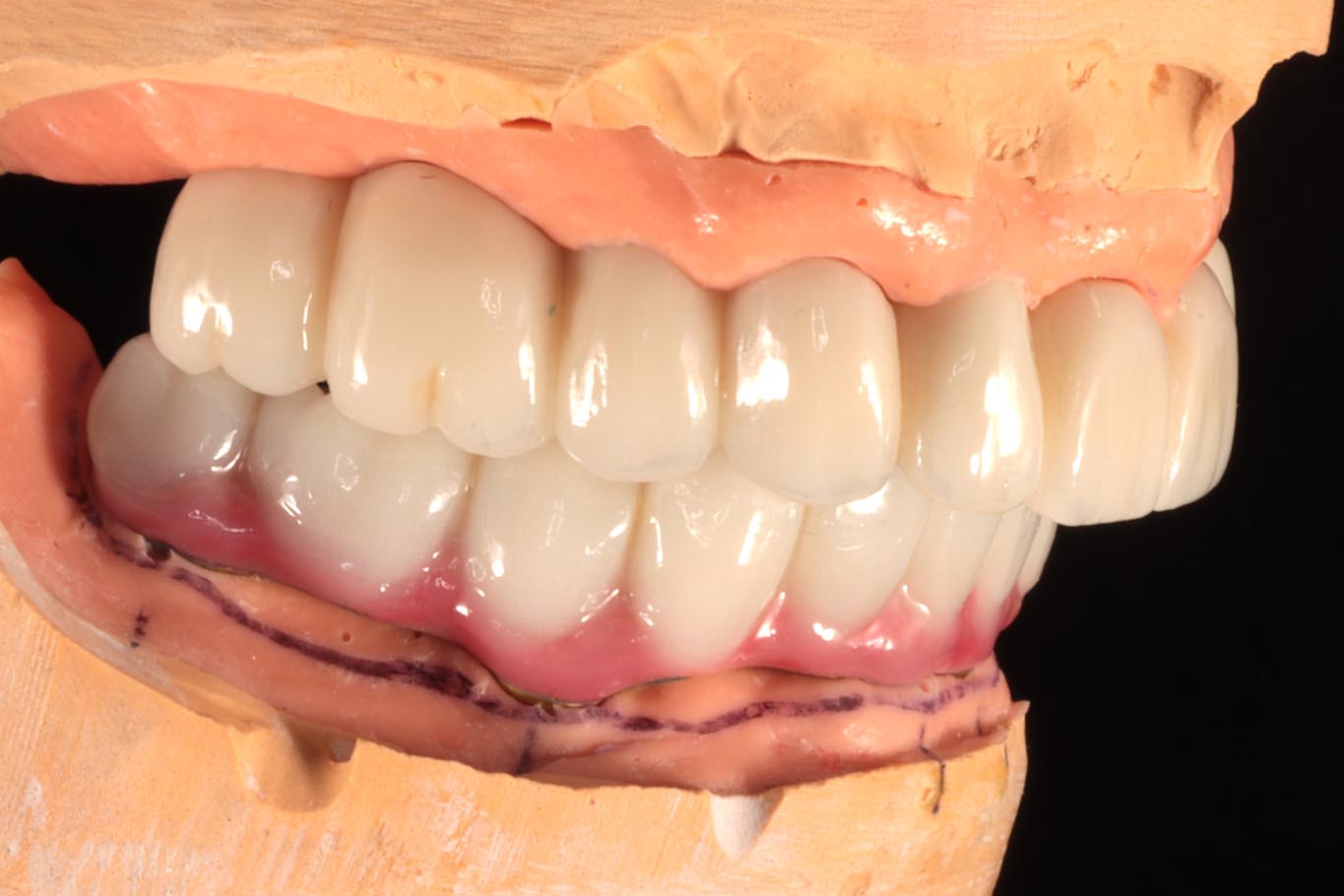
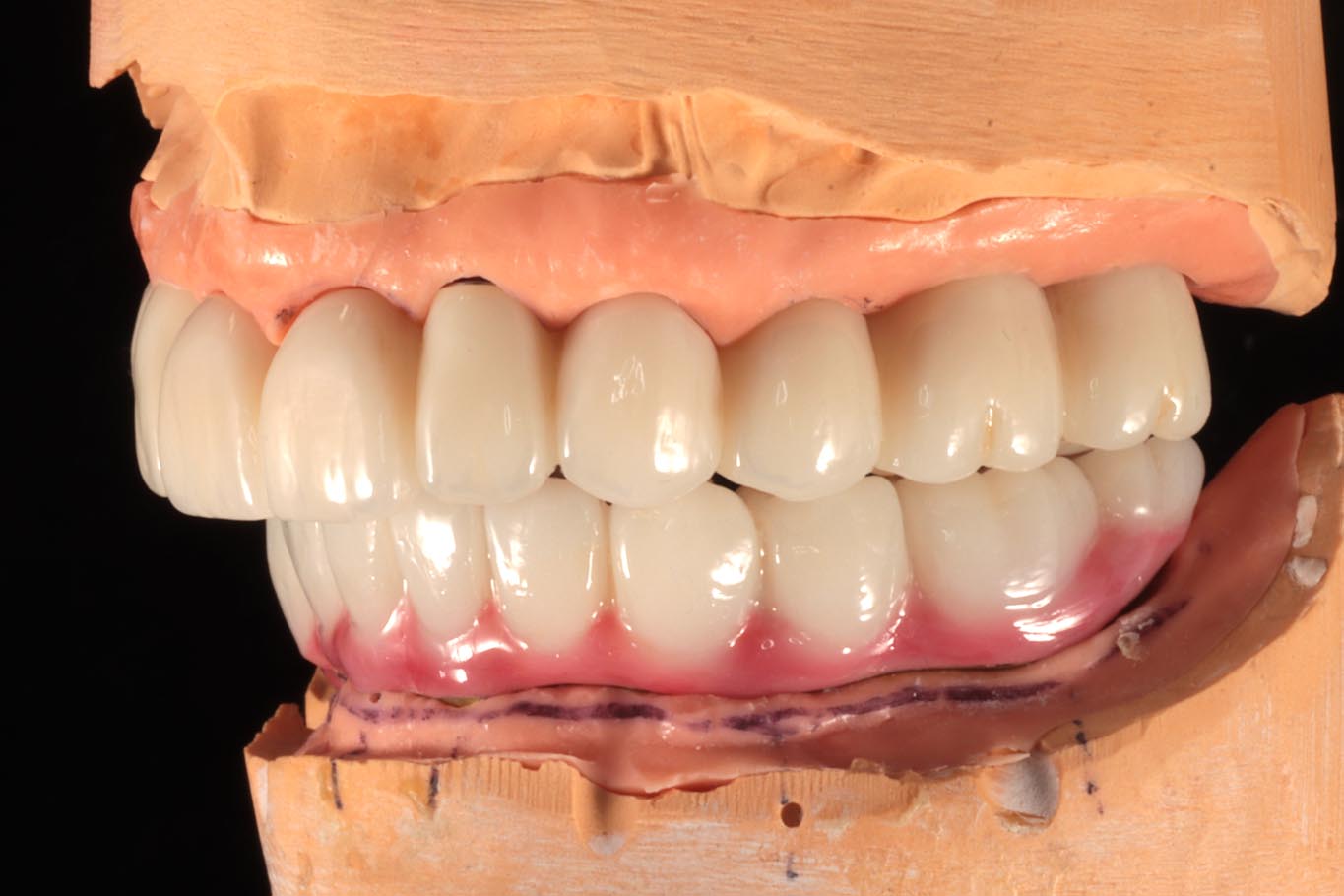
With all the recorded information, the lab was able to fabricate wax prototypes for us to try in. These mimic the shape of the definitive restorations perfectly. We want to be very particular at this stage as it allows us to make any final changes before the restorations are fabricated.
With all the recorded information, the lab was able to fabricate wax prototypes for us to try in. These mimic the shape of the definitive restorations perfectly. We want to be very particular at this stage as it allows us to make any final changes before the restorations are fabricated.
With all the recorded information, the lab was able to fabricate wax prototypes for us to try in. These mimic the shape of the definitive restorations perfectly. We want to be very particular at this stage as it allows us to make any final changes before the restorations are fabricated.
The prototypes were tested in the mouth to ensure we all loved the size, shape, and position of the teeth.
The prototypes were tested in the mouth to ensure we all loved the size, shape, and position of the teeth.
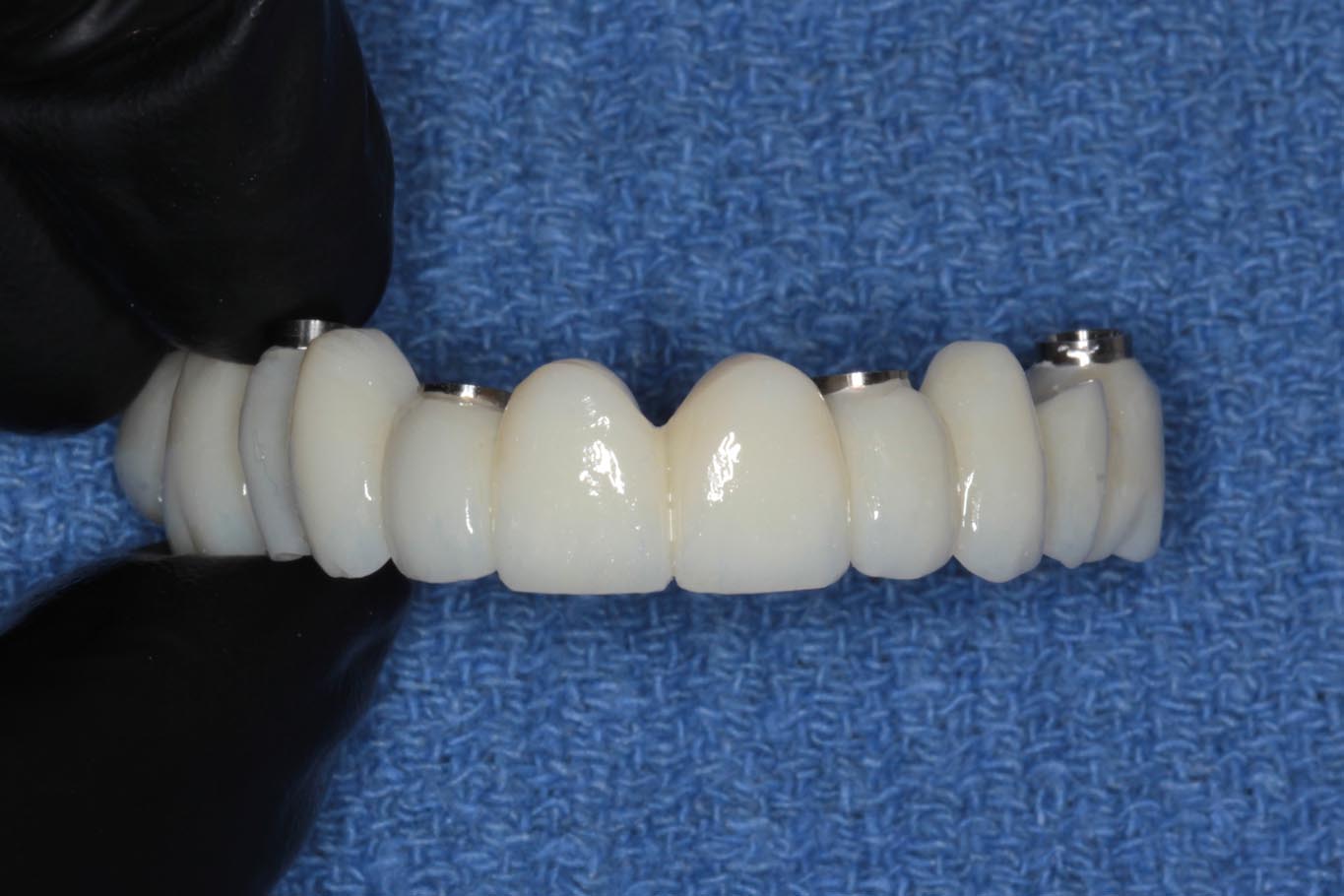
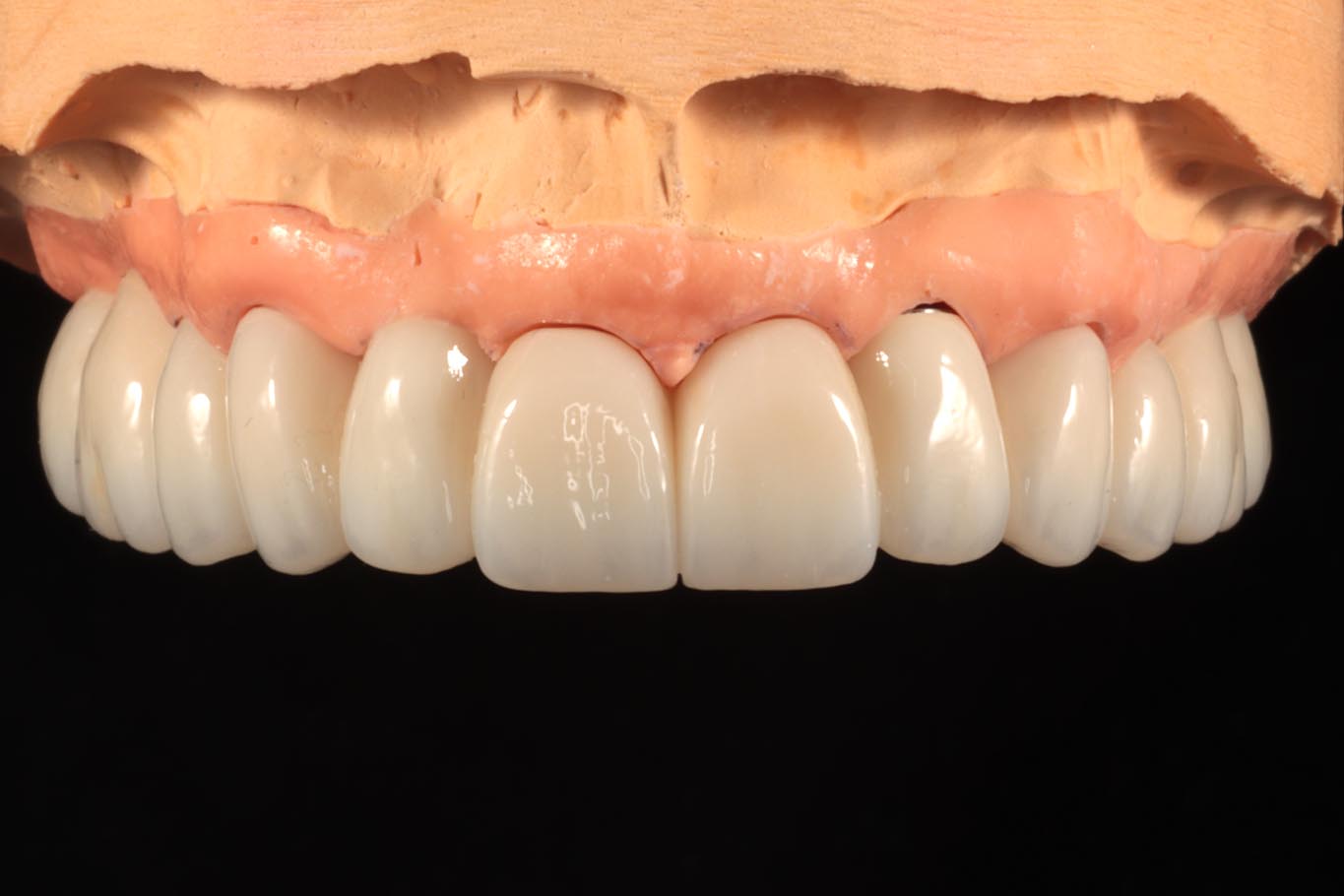
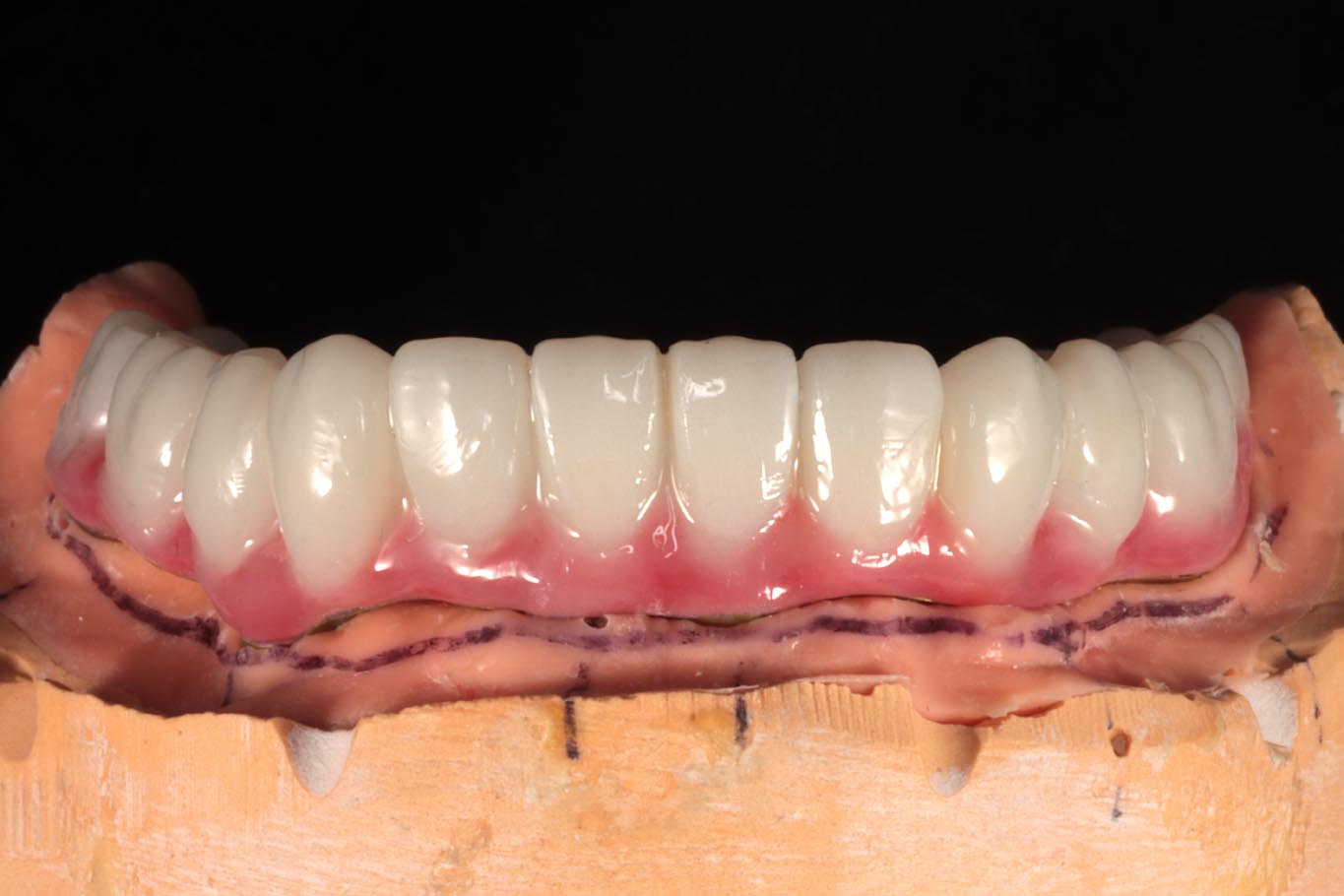
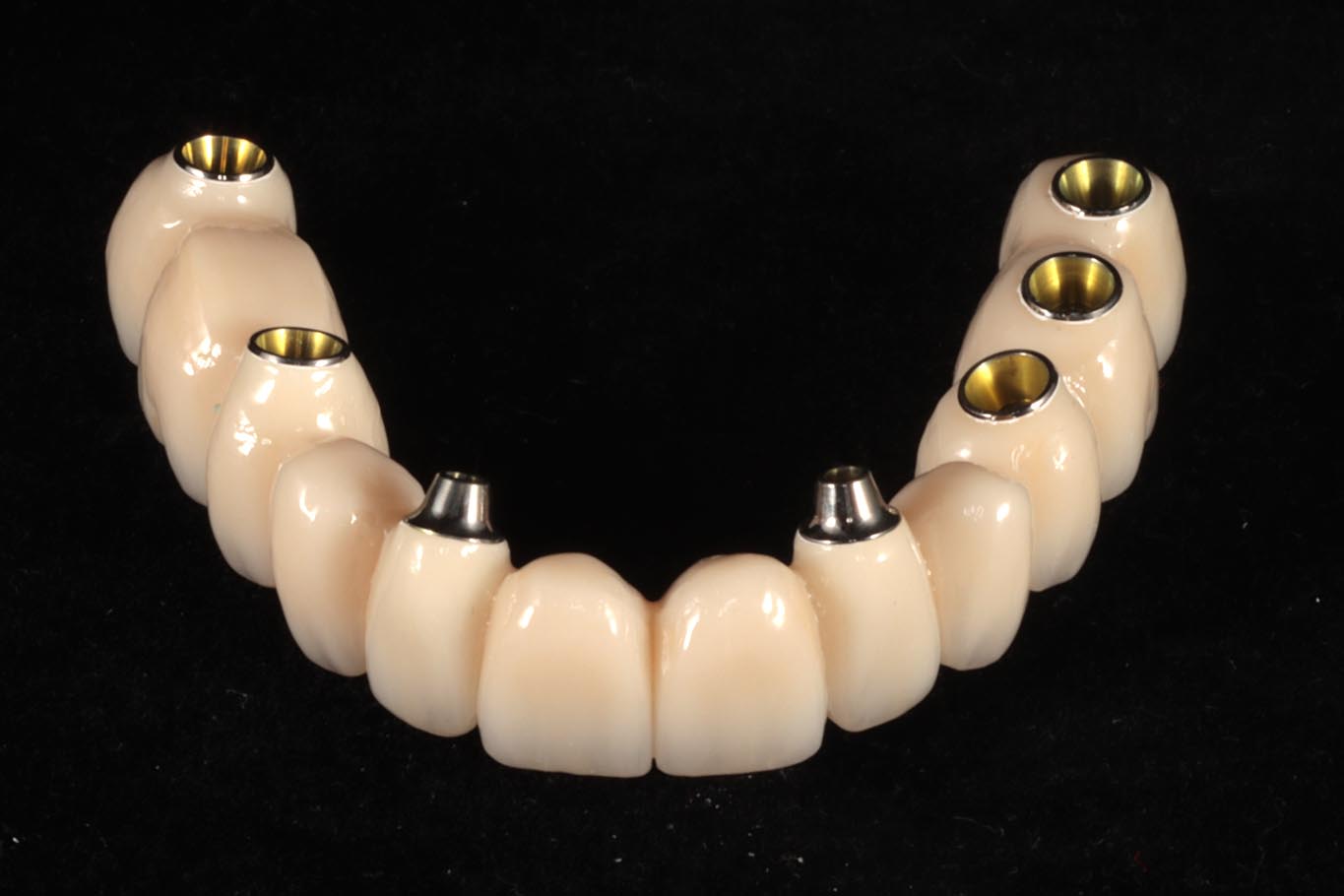
Once the final design was approved, the lab fabricated the definitive restorations. They were able to add a lot more character and definition at this stage, resulting in restorations that are beautiful and realistic.
Once the final design was approved, the lab fabricated the definitive restorations. They were able to add a lot more character and definition at this stage, resulting in restorations that are beautiful and realistic.
Once the final design was approved, the lab fabricated the definitive restorations. They were able to add a lot more character and definition at this stage, resulting in restorations that are beautiful and realistic.
Once the final design was approved, the lab fabricated the definitive restorations. They were able to add a lot more character and definition at this stage, resulting in restorations that are beautiful and realistic.
Once the final design was approved, the lab fabricated the definitive restorations. They were able to add a lot more character and definition at this stage, resulting in restorations that are beautiful and realistic.
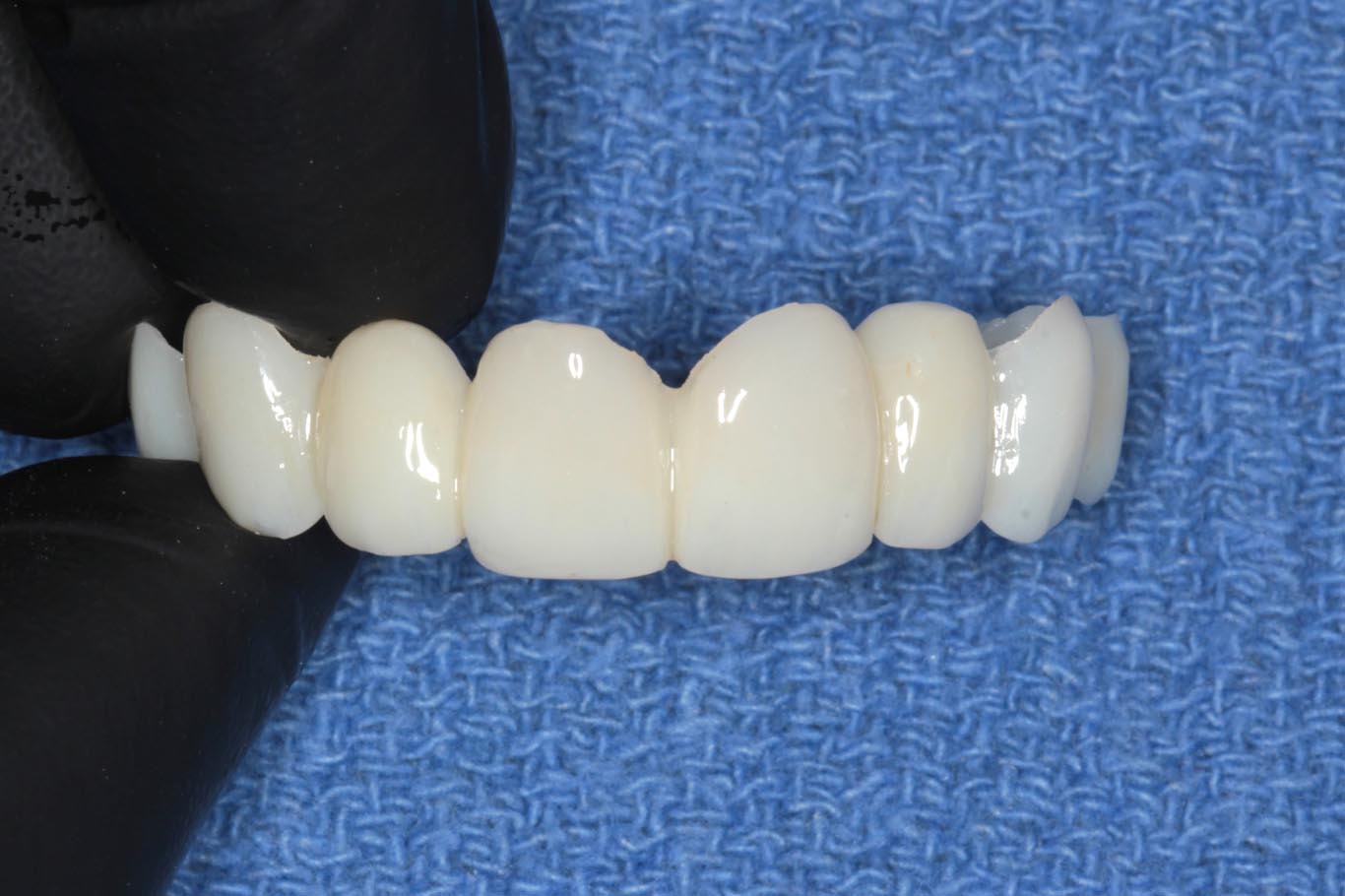
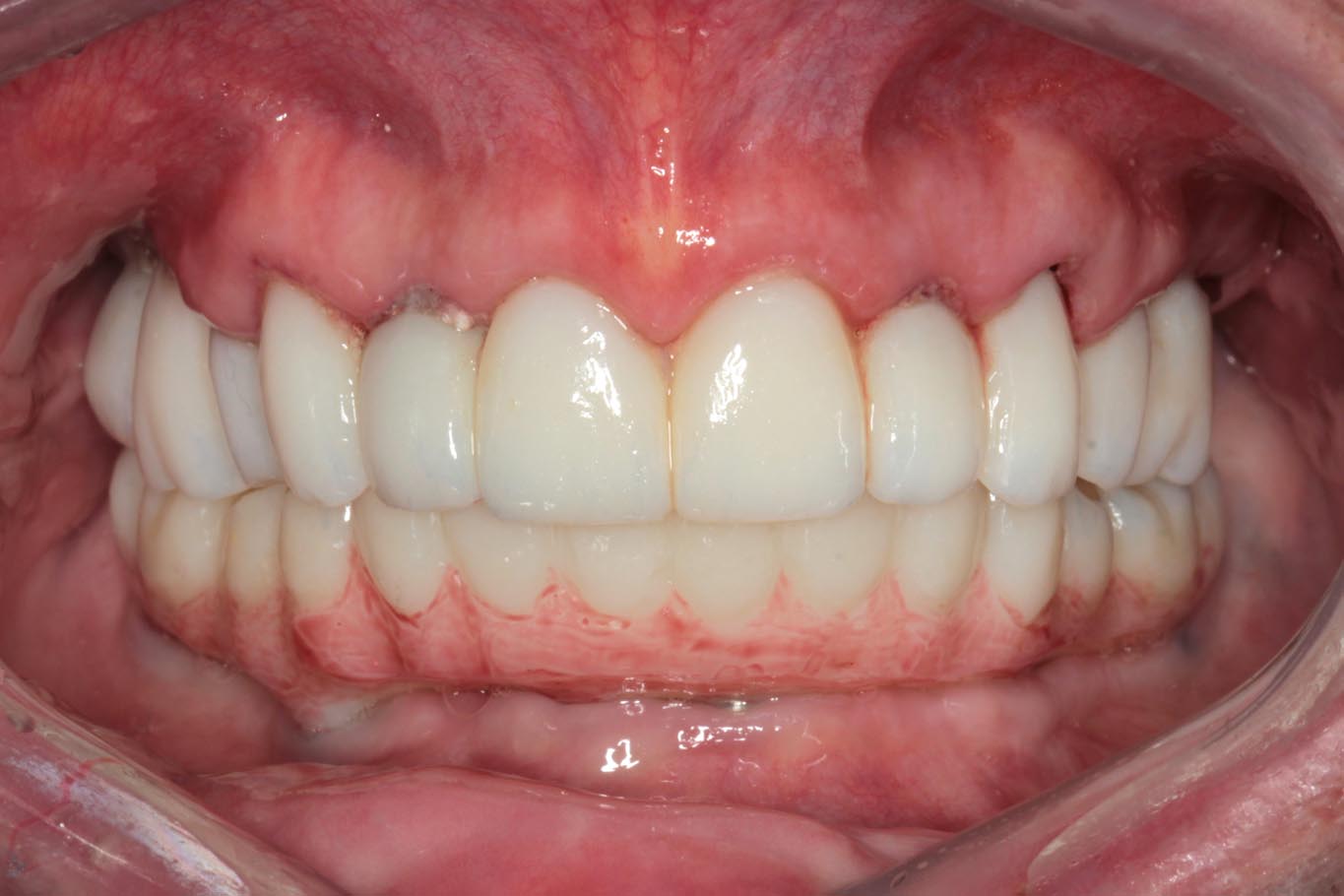
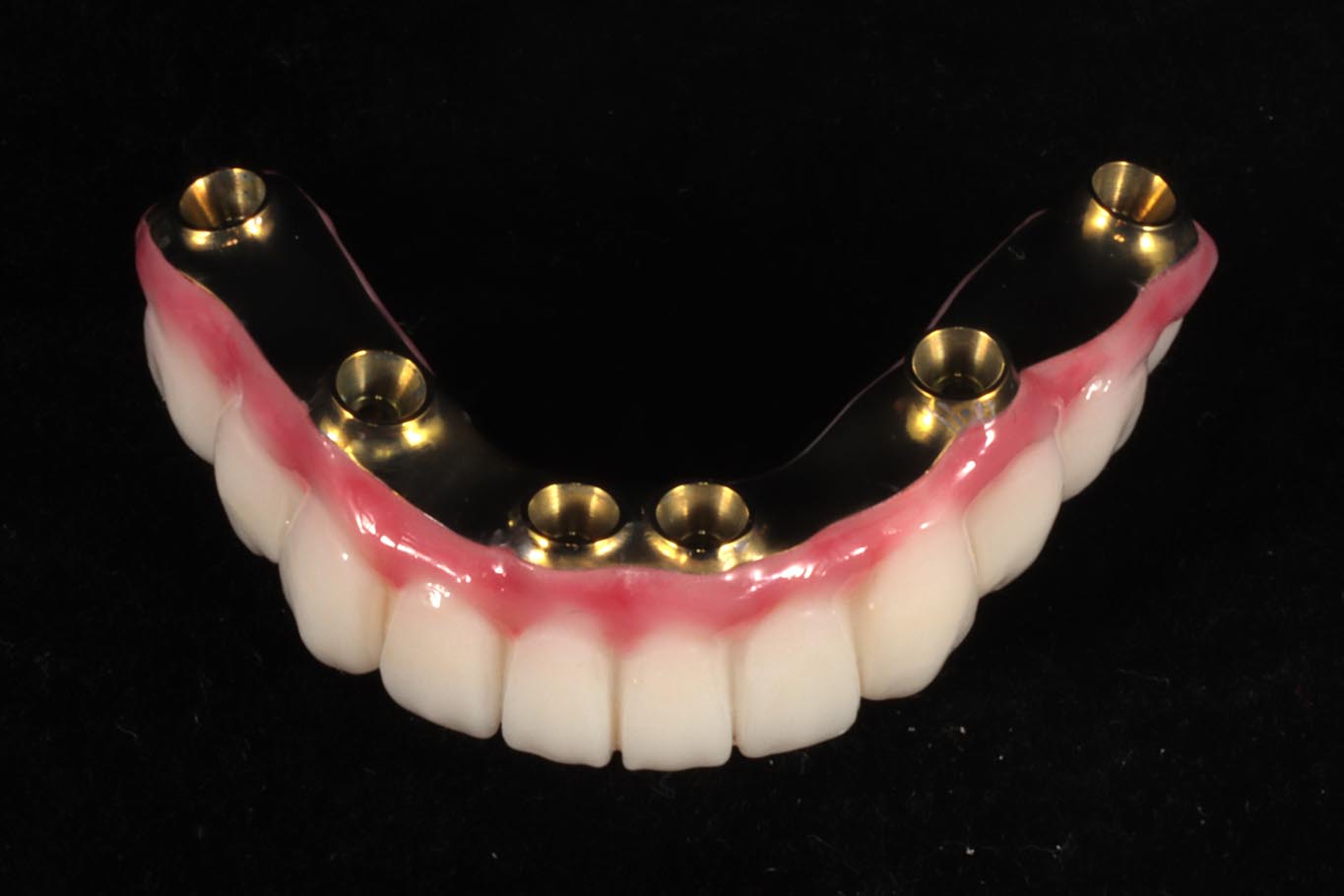
Special care was taken to ensure the tissue-fitting surfaces are smooth and convex. This ensures that any plaque that builds up here is easily removed with regular brushing and water-picking. Hygiene is important for long-term tissue health and implant success.
Special care was taken to ensure the tissue-fitting surfaces are smooth and convex. This ensures that any plaque that builds up here is easily removed with regular brushing and water-picking. Hygiene is important for long-term tissue health and implant success.
On the day of delivery, tissues were pink and healthy. The provisionals had helped to shape them perfectly to prepare them for the definitive restorations.
On the day of delivery, tissues were pink and healthy. The provisionals had helped to shape them perfectly to prepare them for the definitive restorations.
On the day of delivery, tissues were pink and healthy. The provisionals had helped to shape them perfectly to prepare them for the definitive restorations.
On the day of delivery, tissues were pink and healthy. The provisionals had helped to shape them perfectly to prepare them for the definitive restorations.
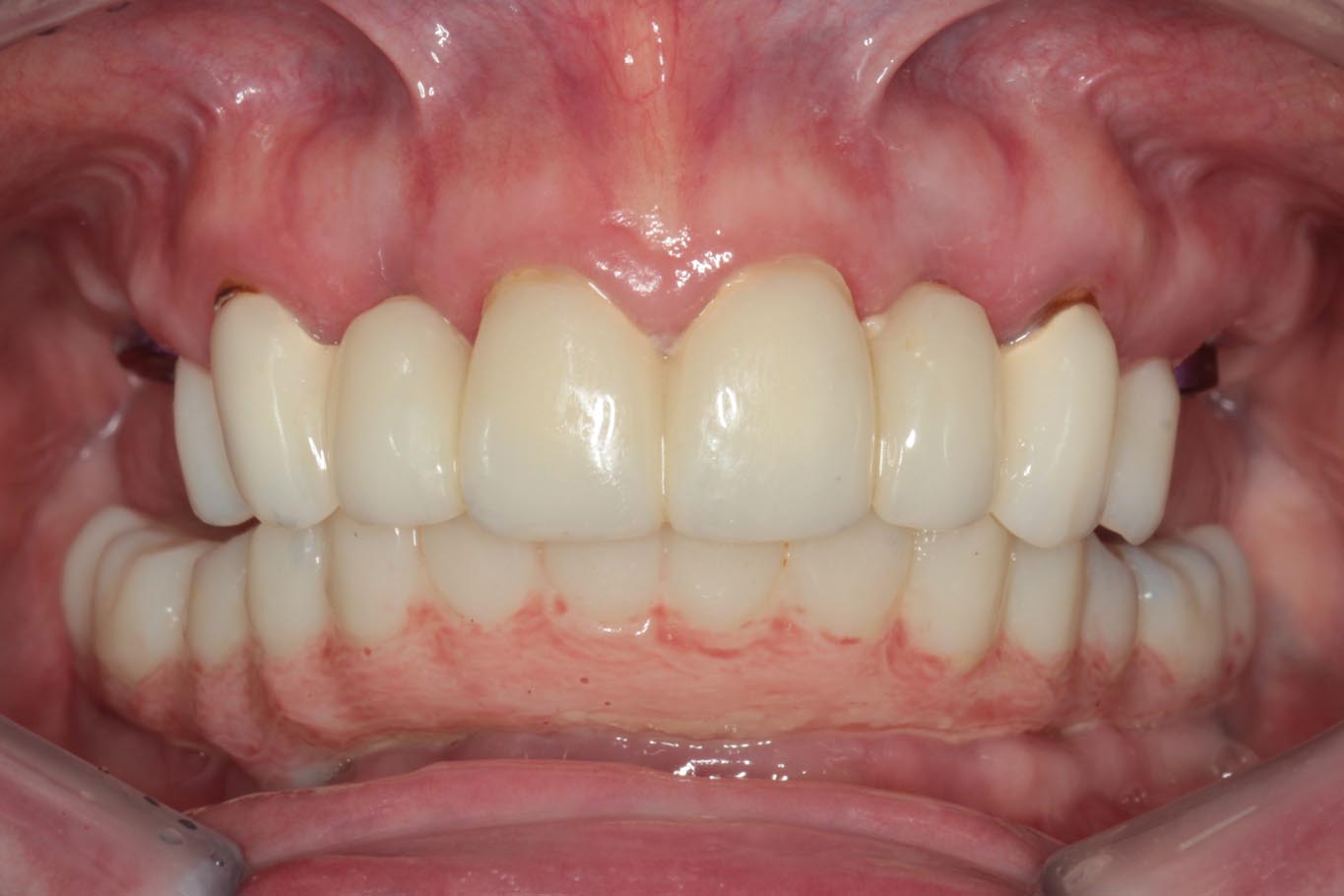
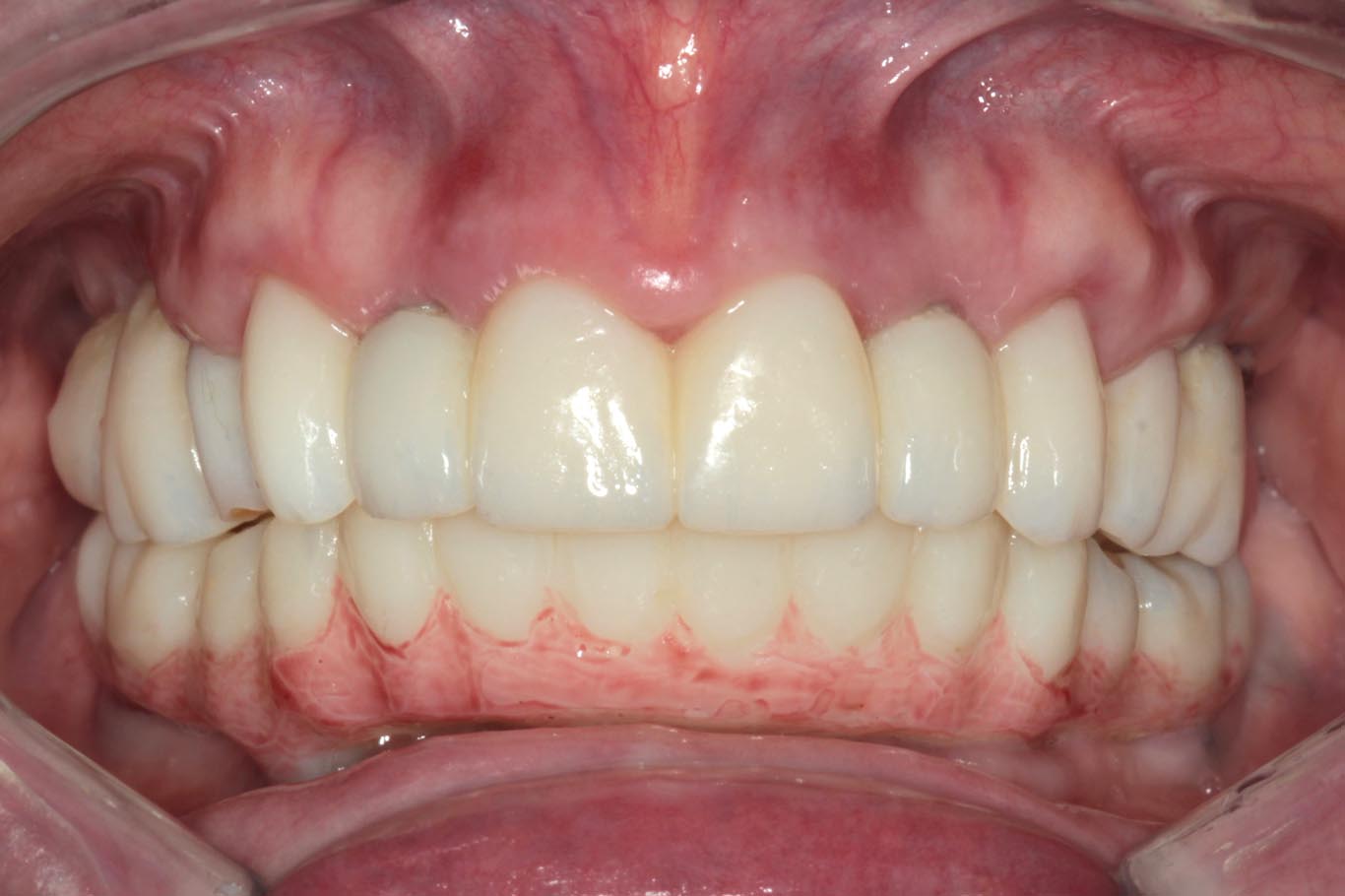
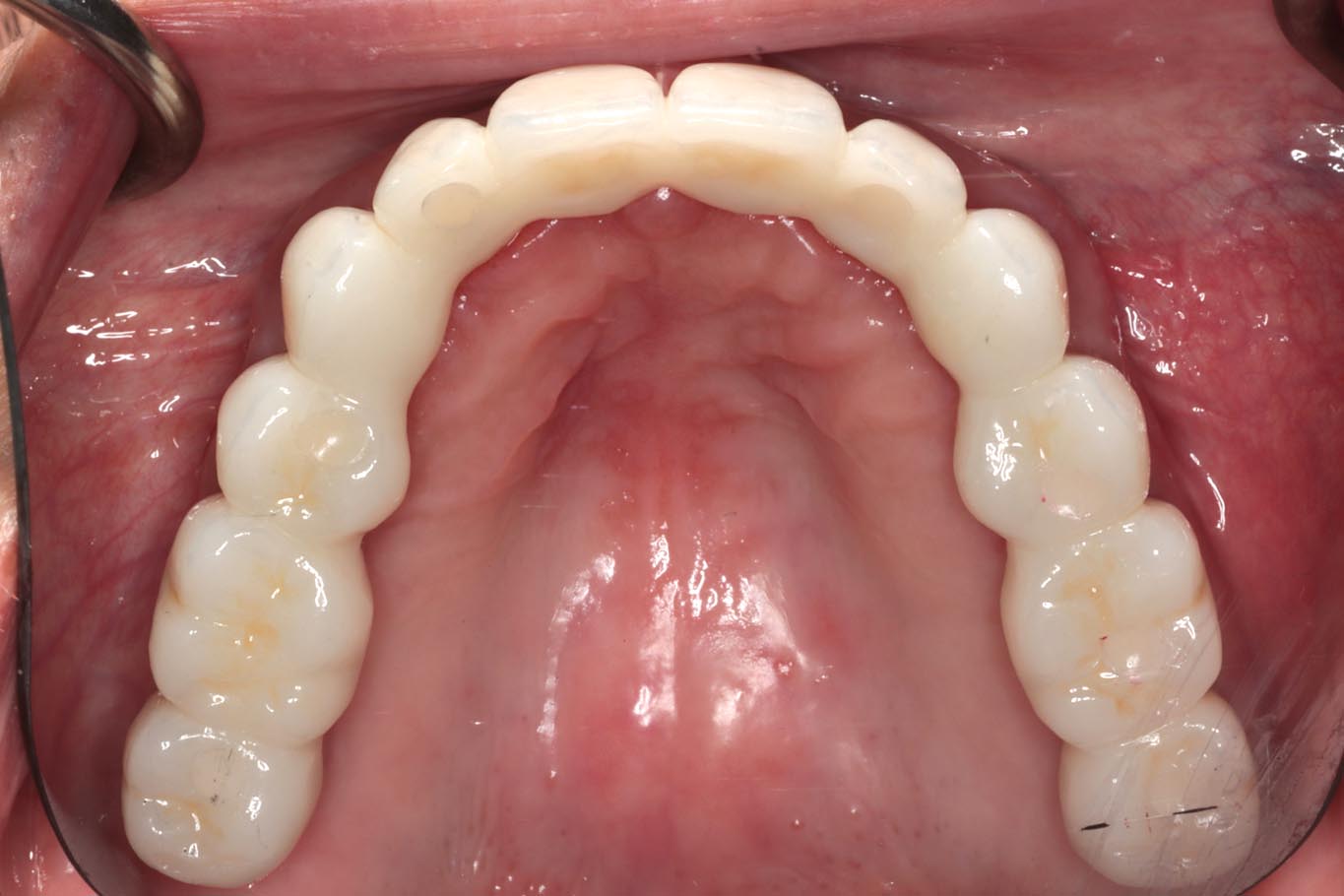
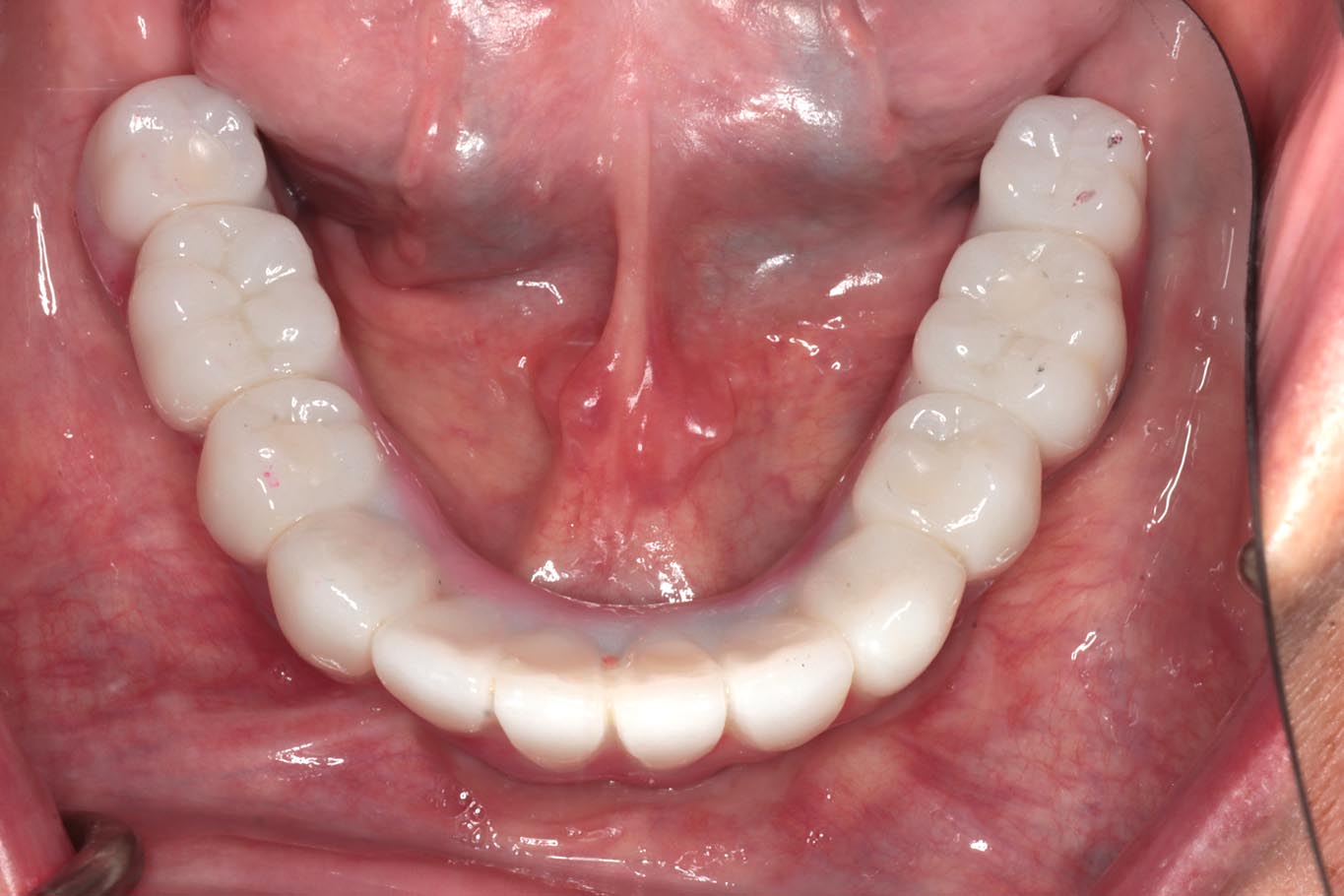
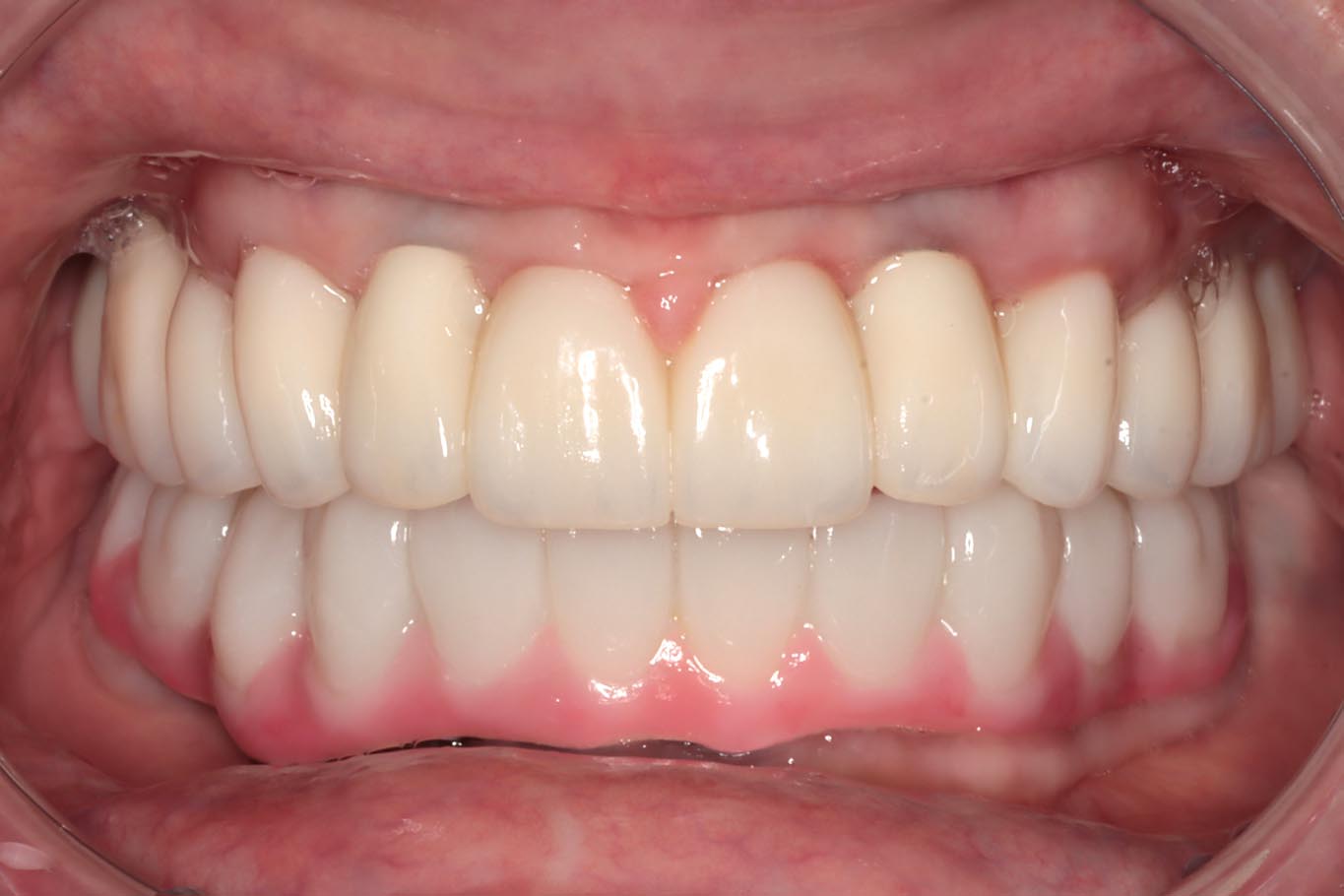
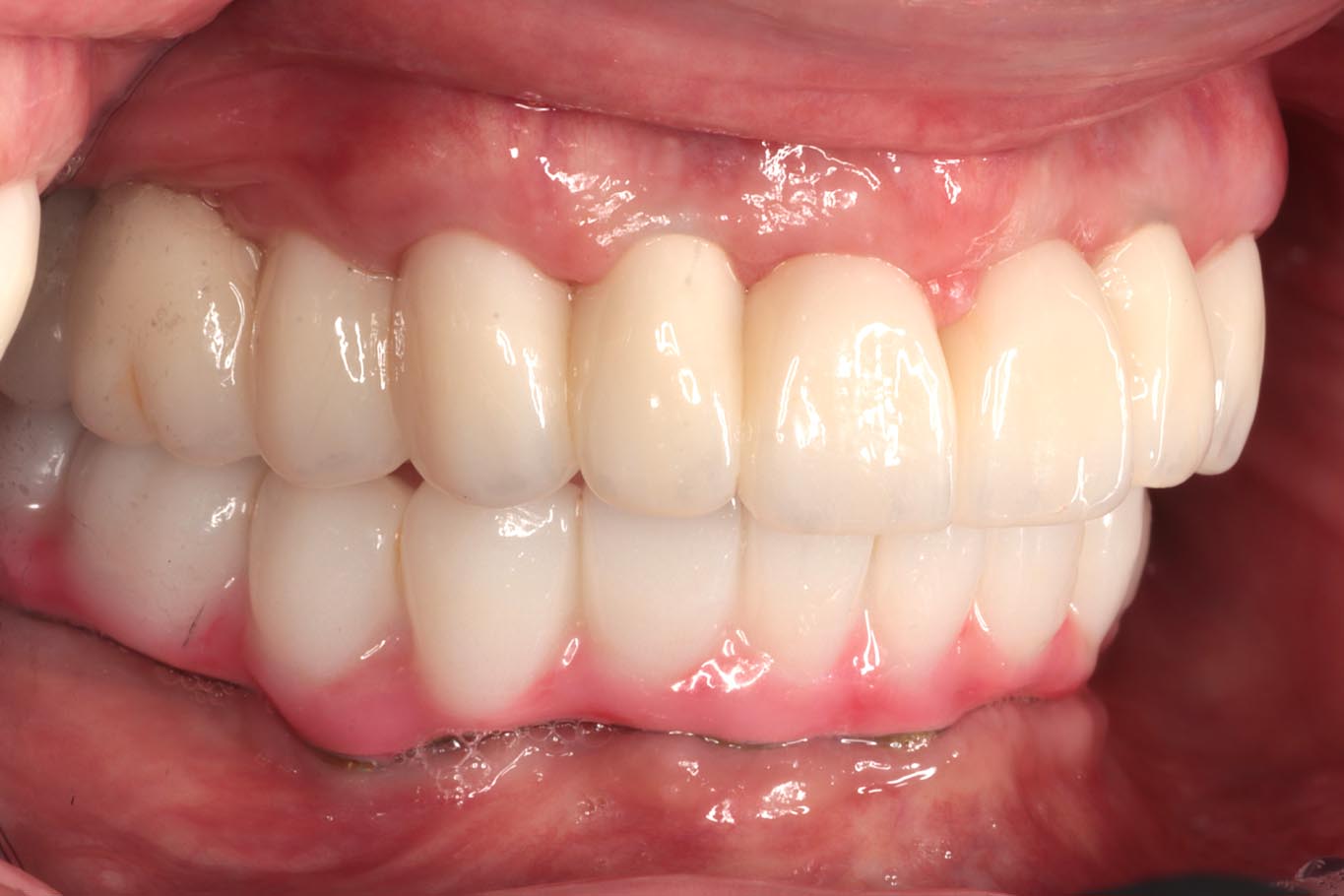
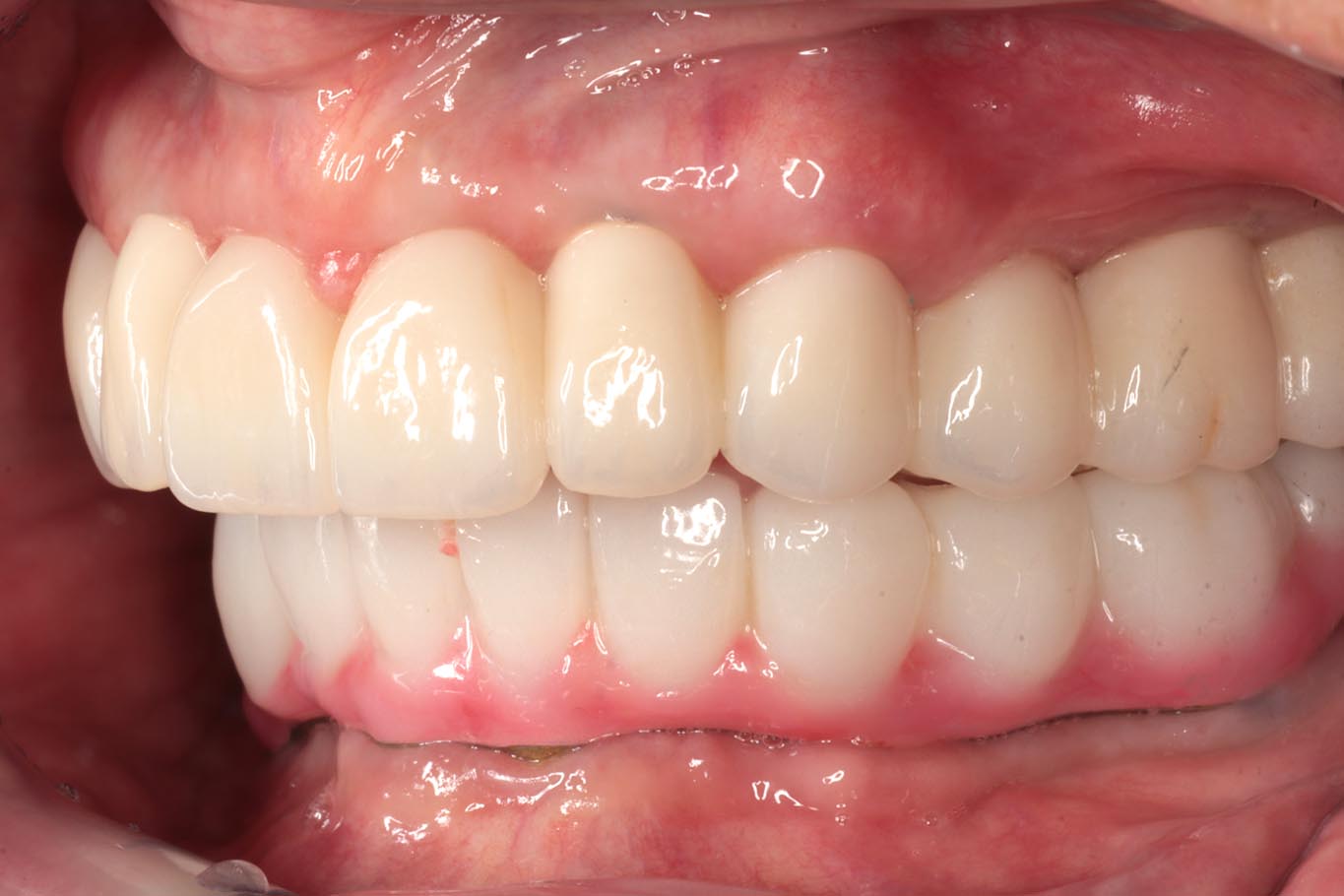
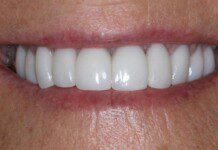
The definitive bridges were delivered, the bite was verified, and the screws were torqued down firmly. The final result is strong, functional, and esthetic restorations that will serve the patient well for years to come.
The definitive bridges were delivered, the bite was verified, and the screws were torqued down firmly. The final result is strong, functional, and esthetic restorations that will serve the patient well for years to come.
The definitive bridges were delivered, the bite was verified, and the screws were torqued down firmly. The final result is strong, functional, and esthetic restorations that will serve the patient well for years to come.
The definitive bridges were delivered, the bite was verified, and the screws were torqued down firmly. The final result is strong, functional, and esthetic restorations that will serve the patient well for years to come.
The definitive bridges were delivered, the bite was verified, and the screws were torqued down firmly. The final result is strong, functional, and esthetic restorations that will serve the patient well for years to come.
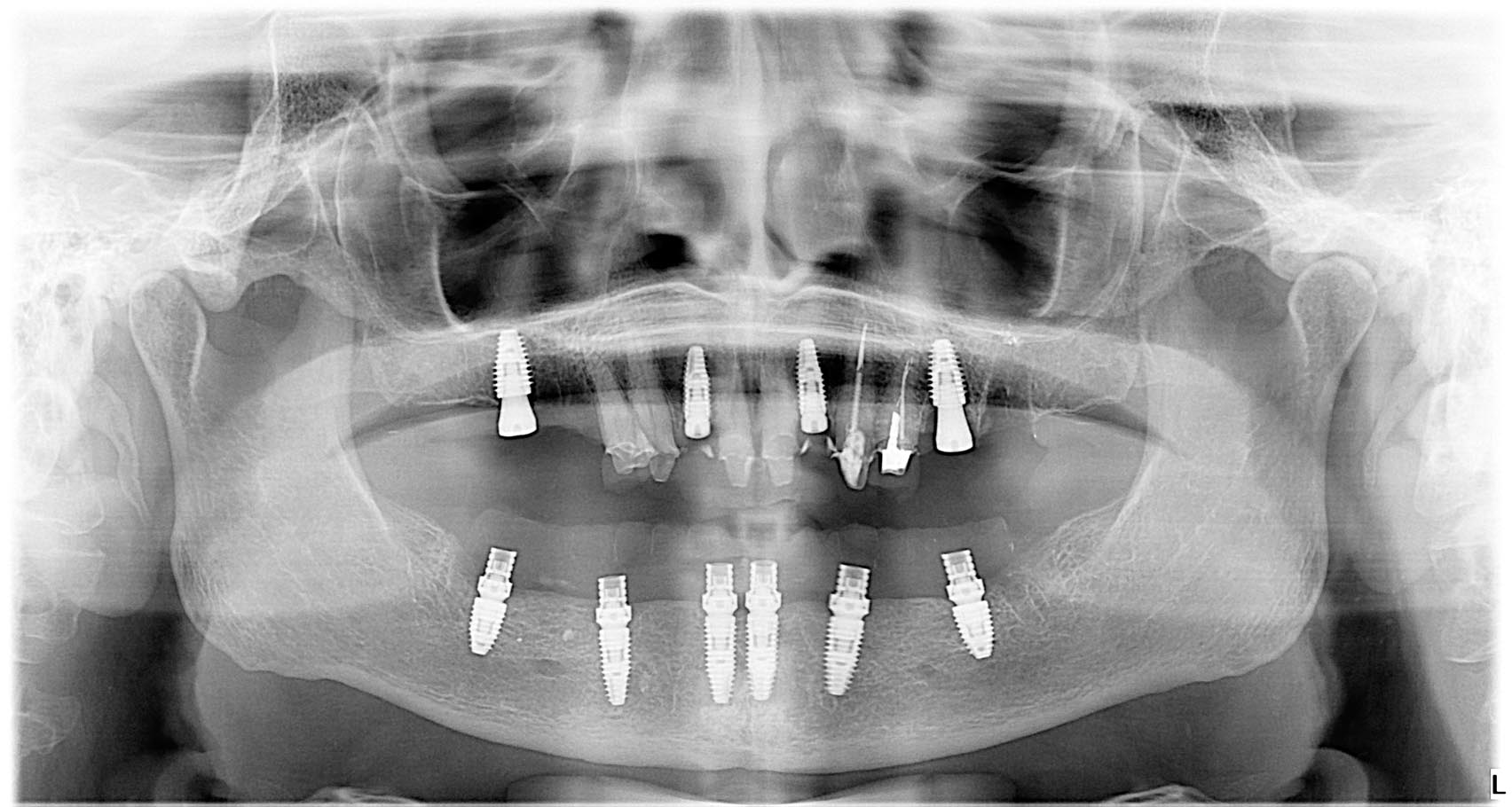
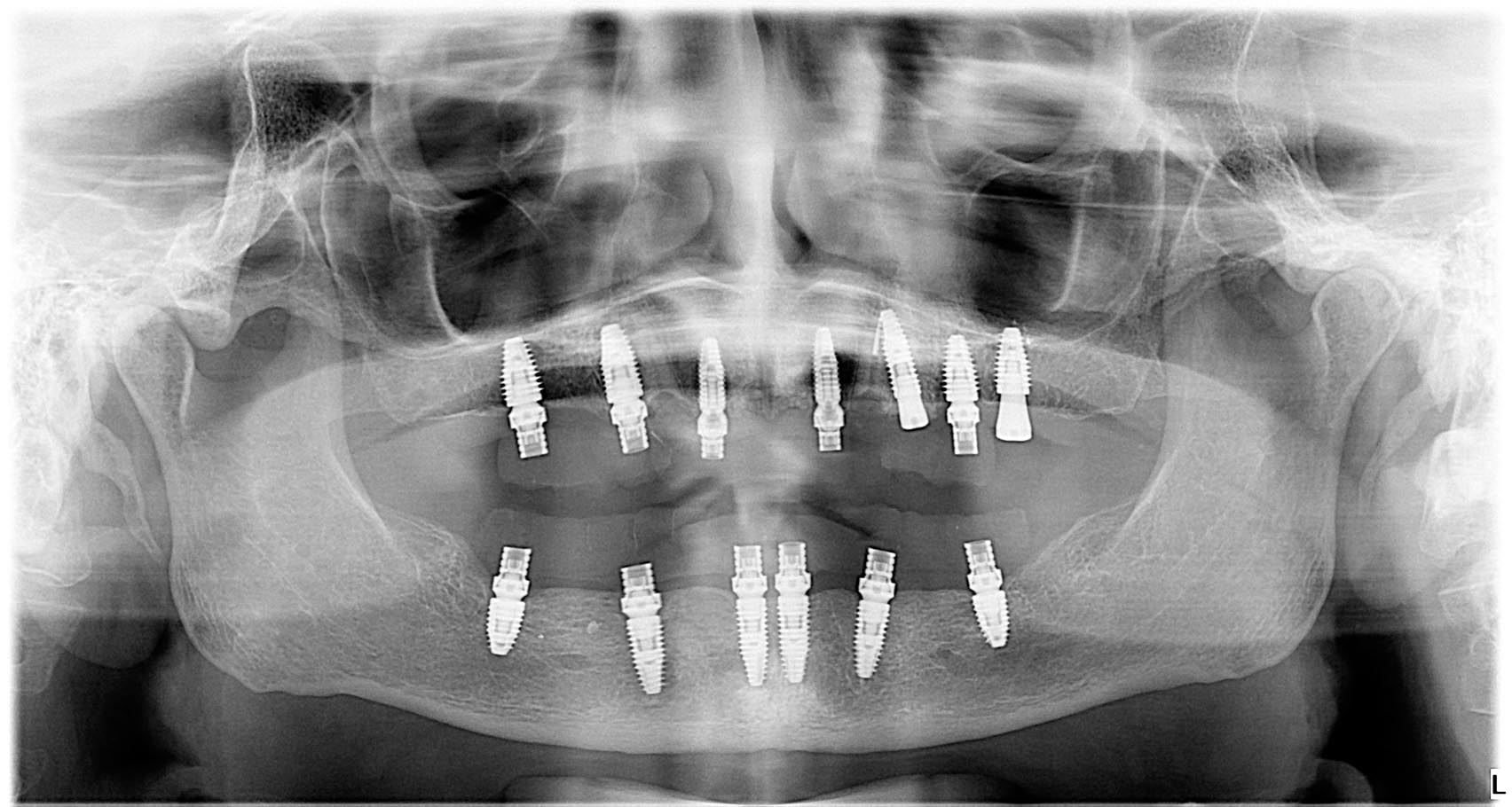
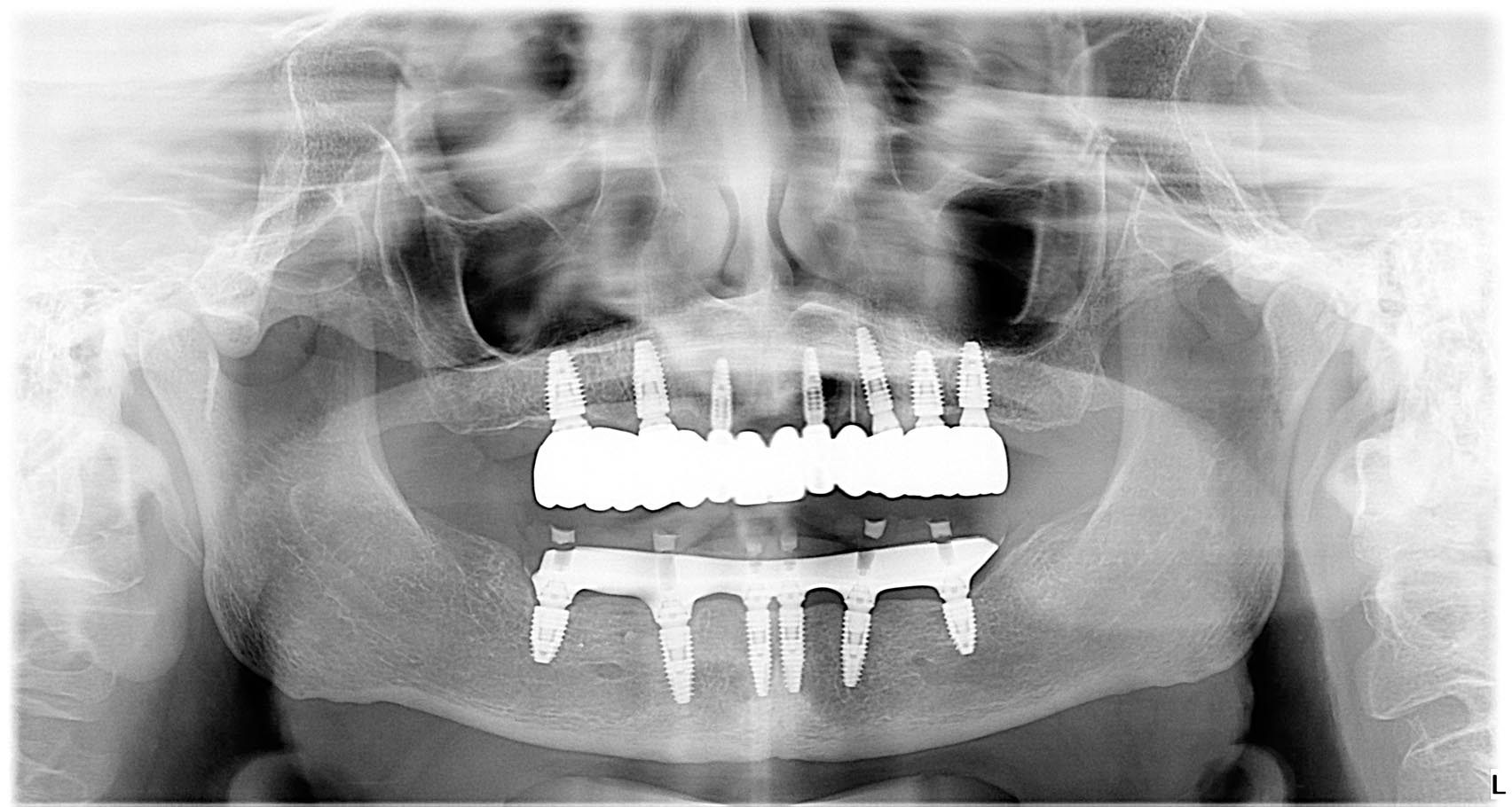
The final radiograph shows well-placed implants with good bone levels. The upper jaw has been restored with a full-arch zirconia restoration while the lower jaw has a titanium-acrylic restoration.
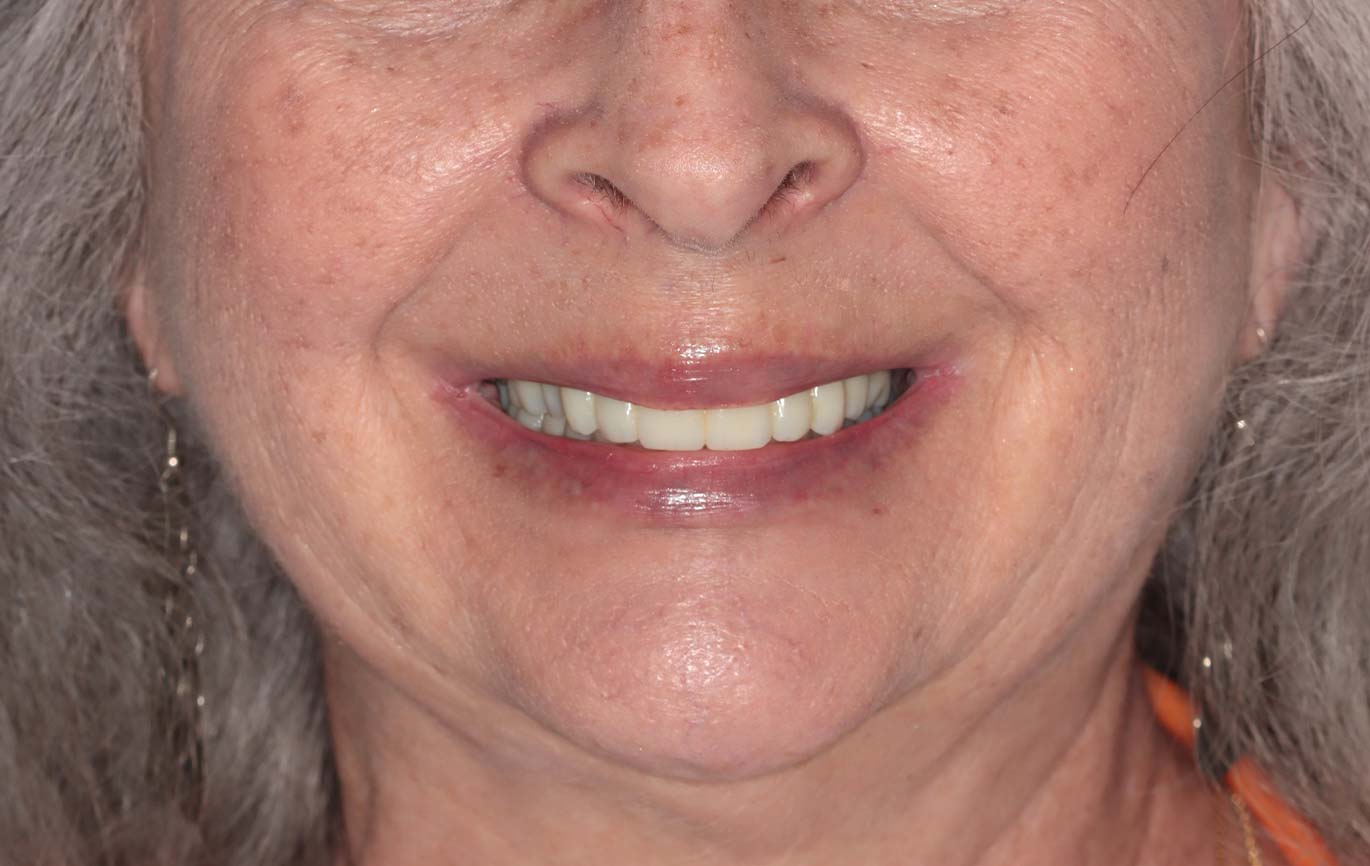
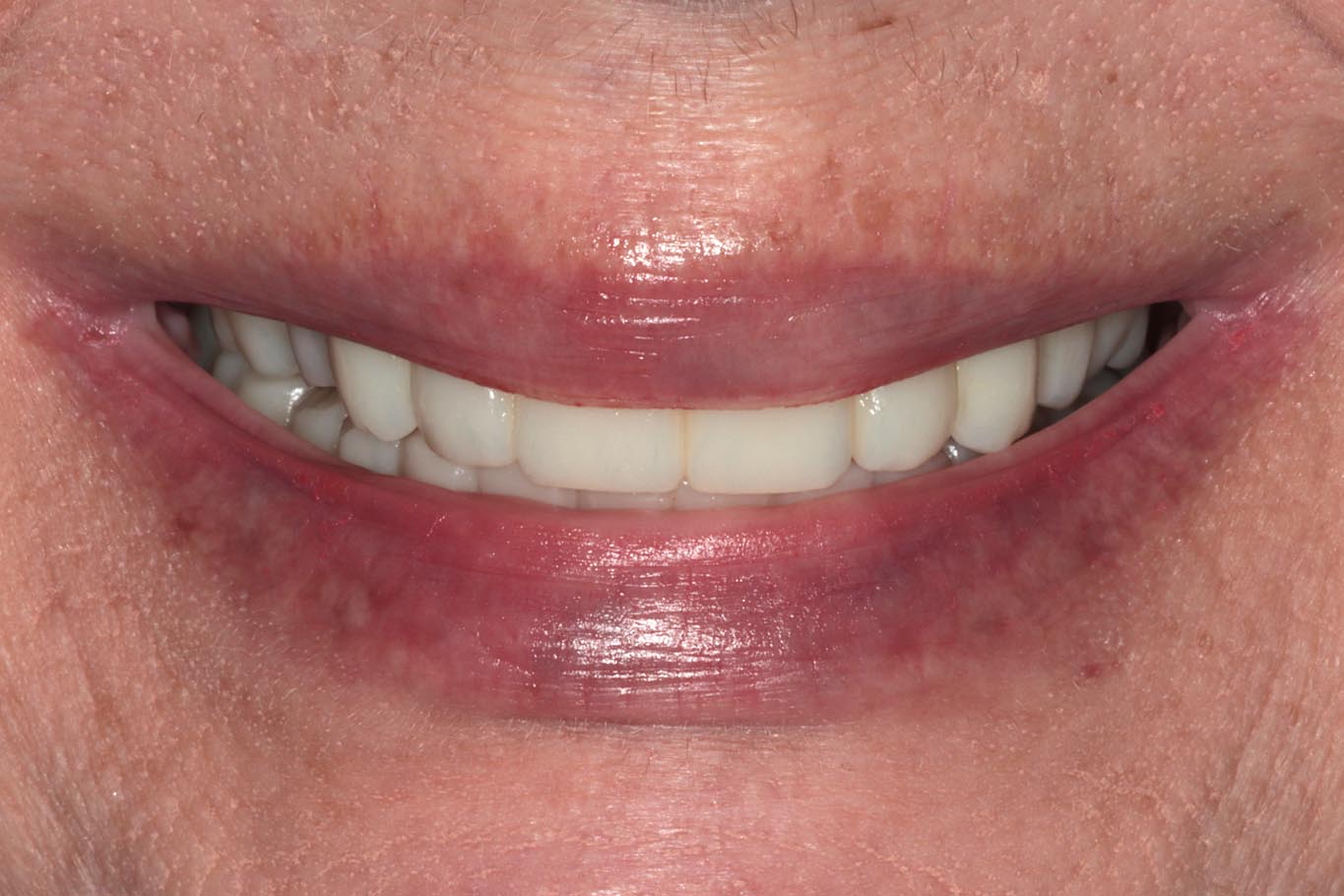
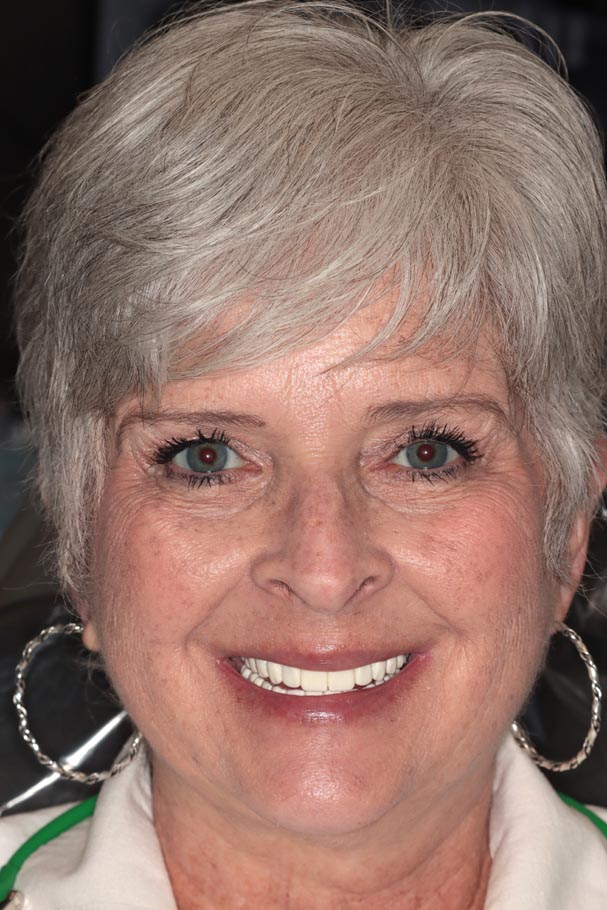
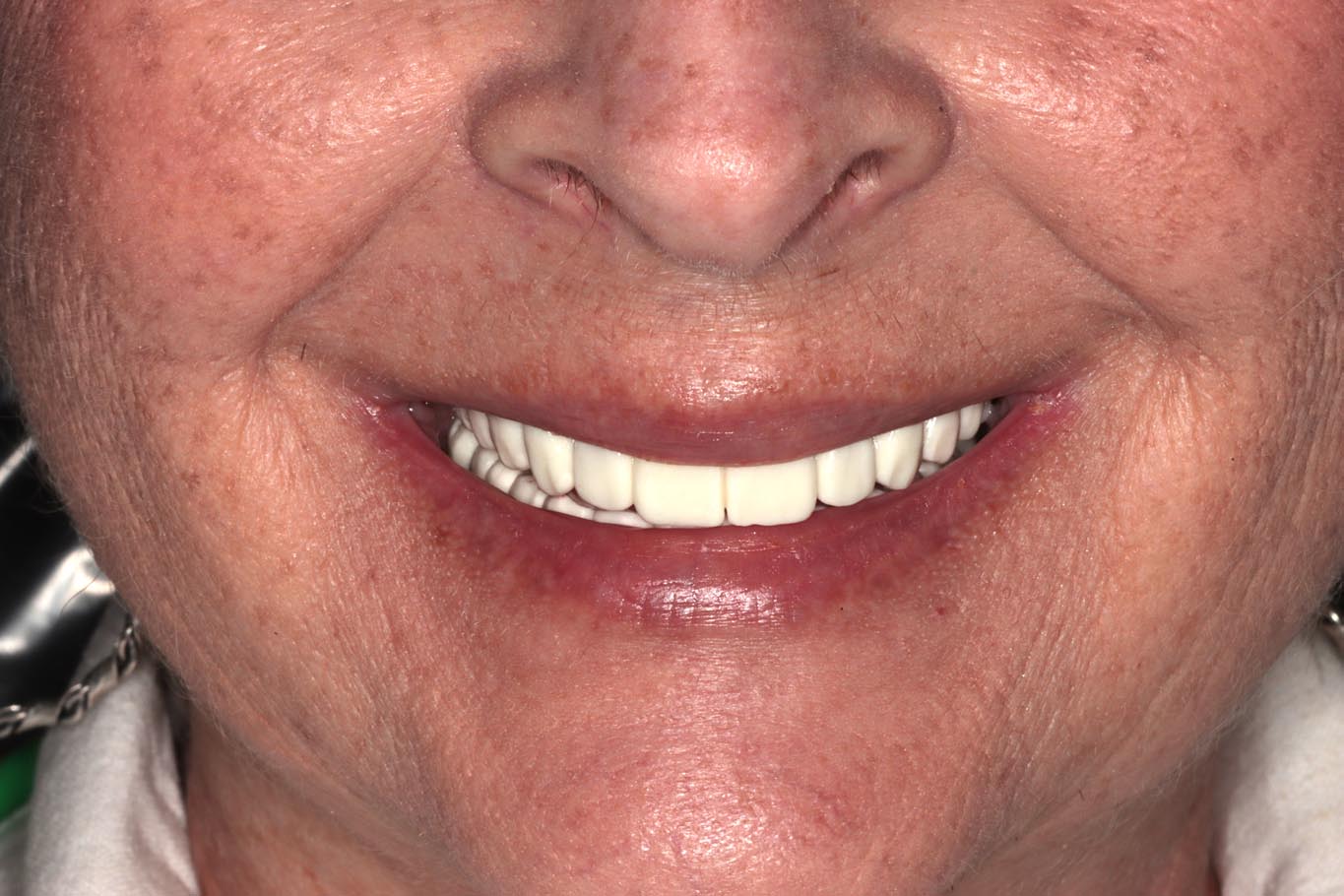
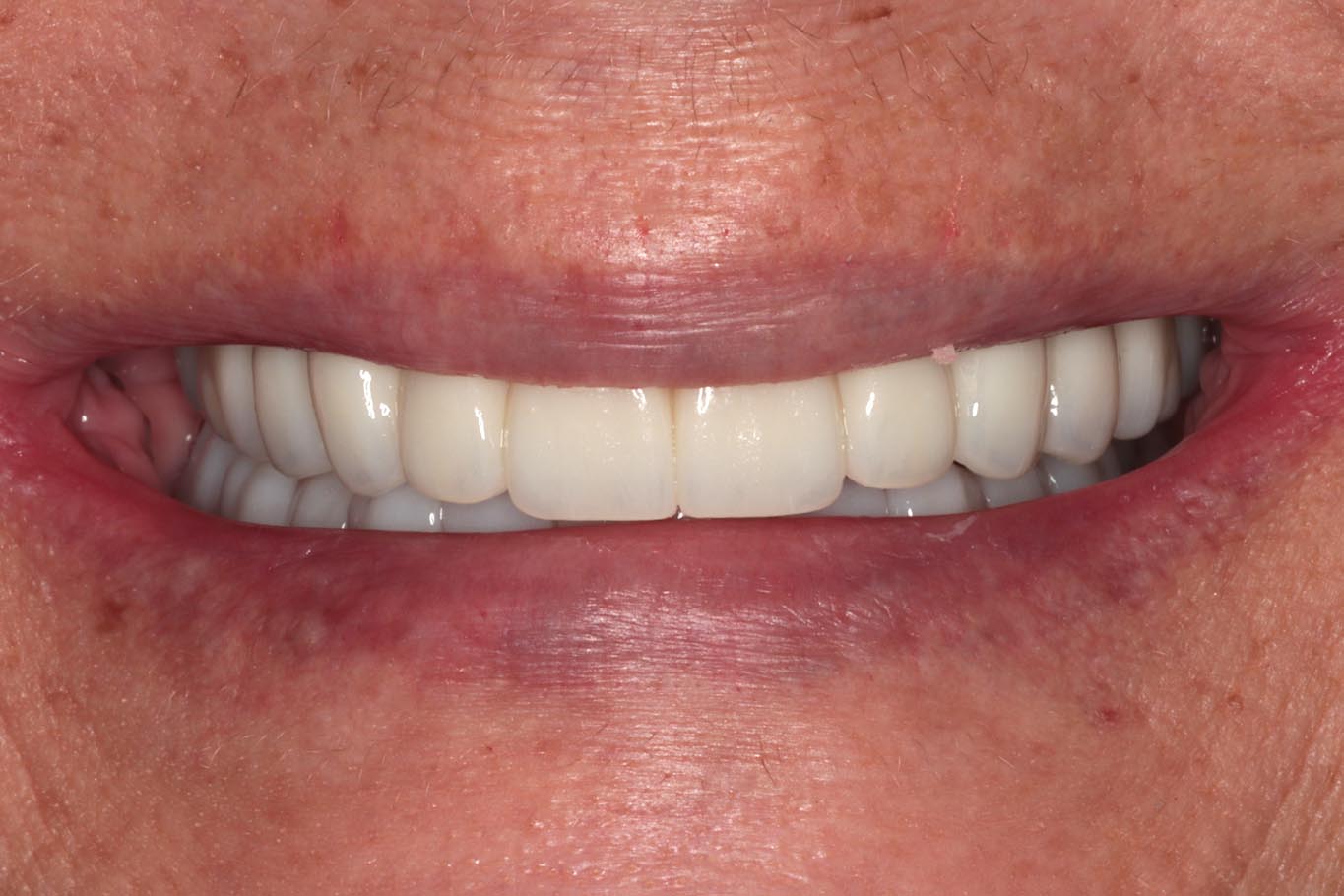
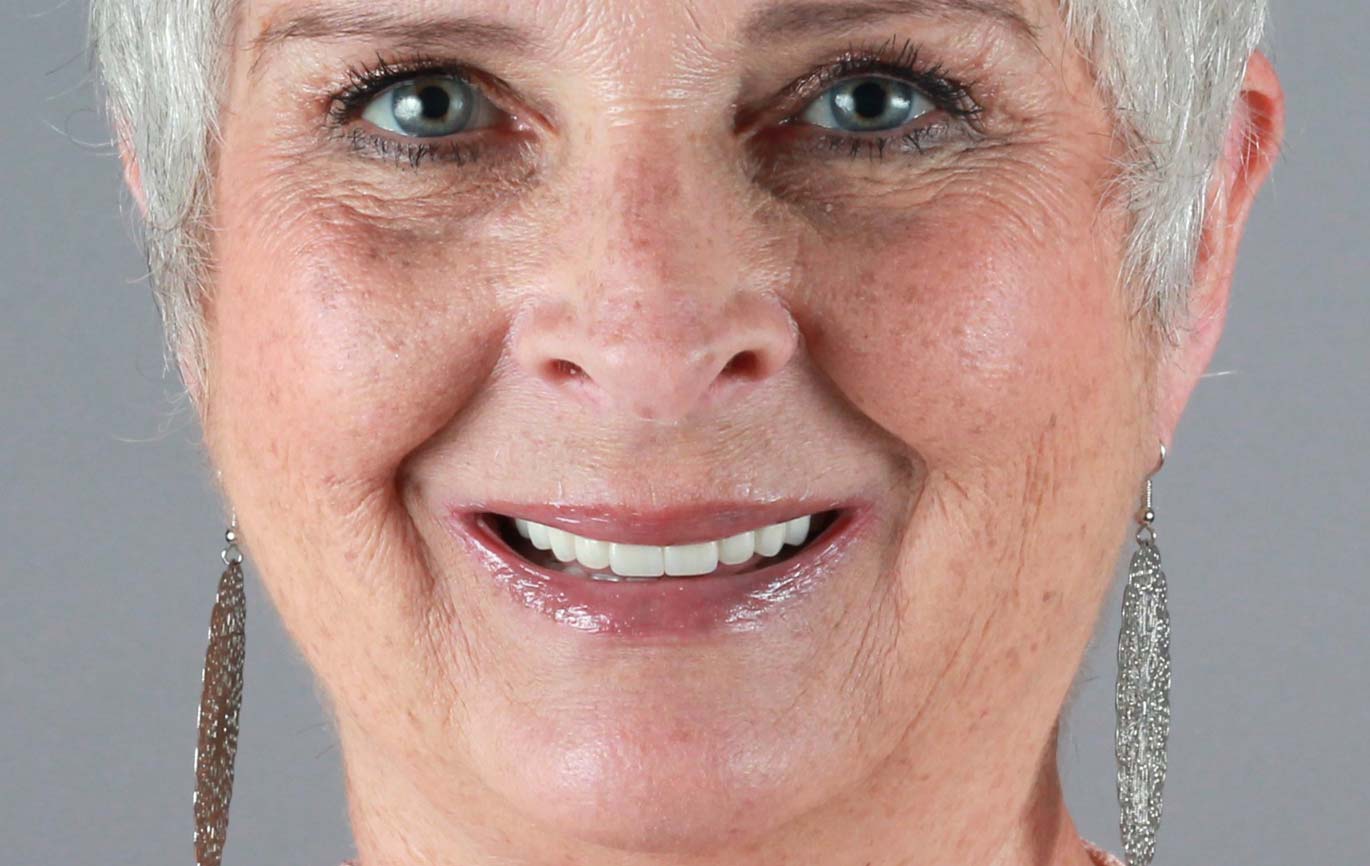
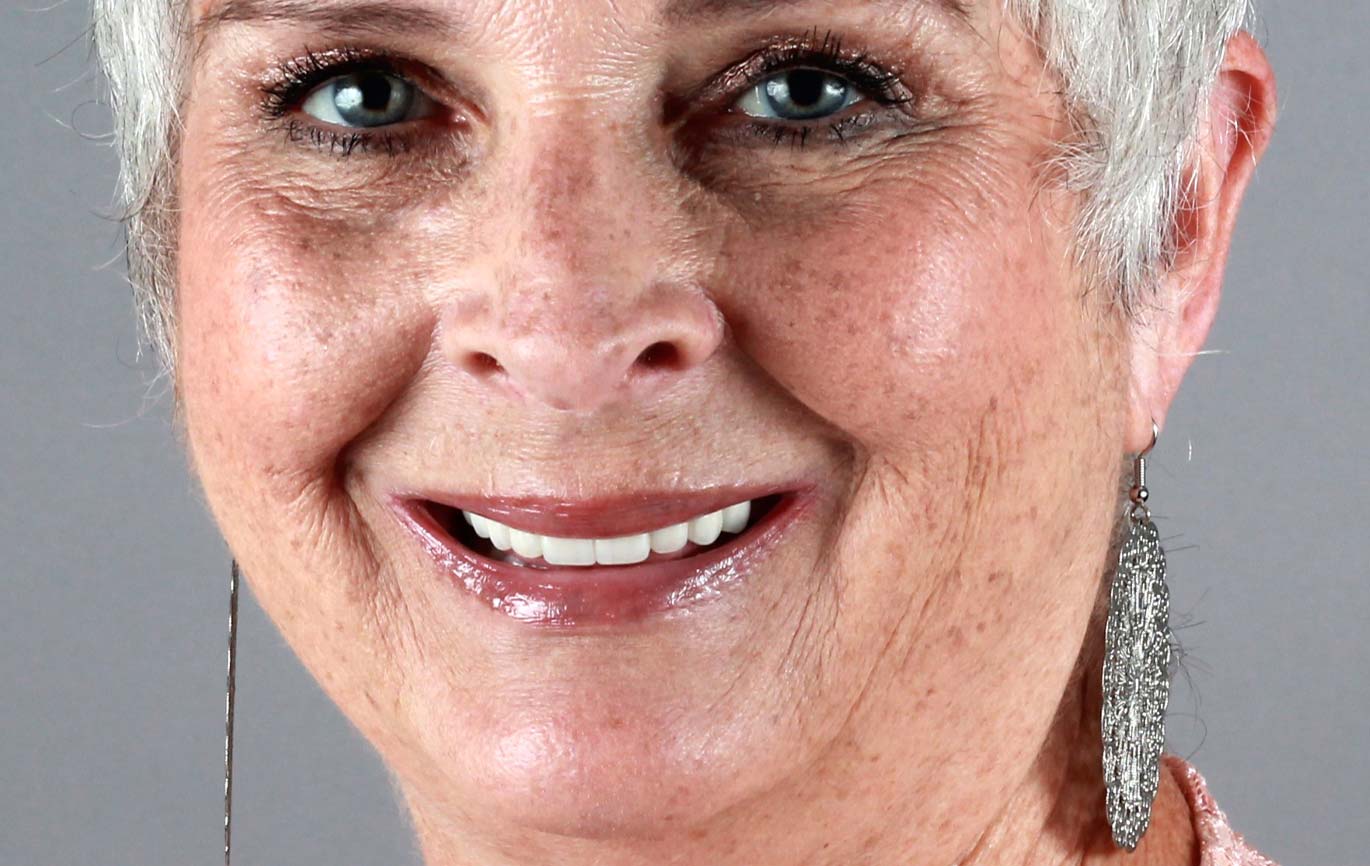
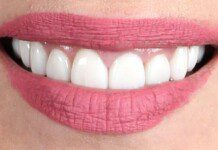
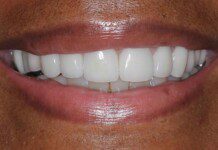
The patient was very happy with her new smile. She no longer has to worry about tooth decay and we can expect this new restoration to last her for many years to come.
The patient was very happy with her new smile. She no longer has to worry about tooth decay and we can expect this new restoration to last her for many years to come.
Contact us for a complimentary consultation to see if this is the right treatment for you!