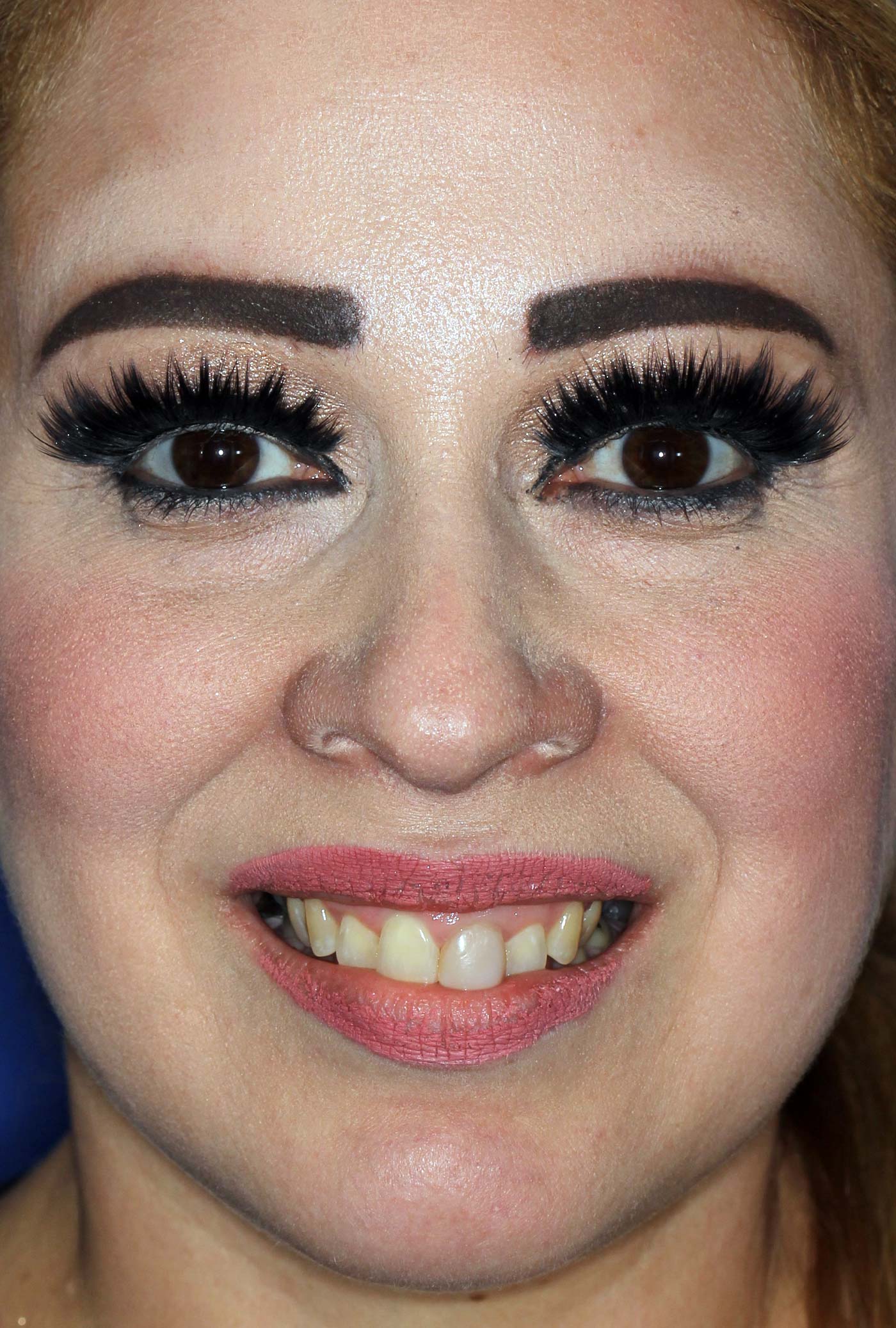
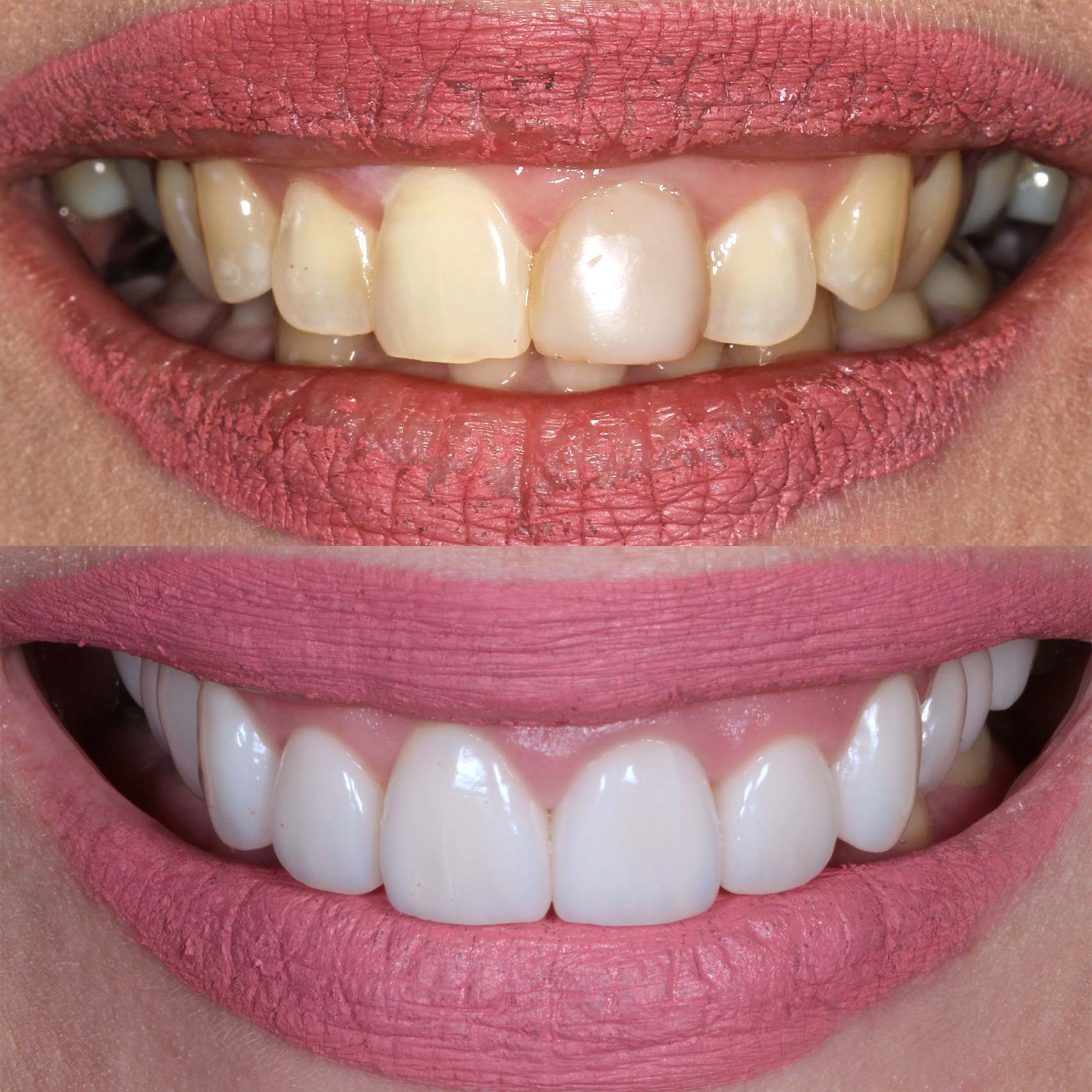
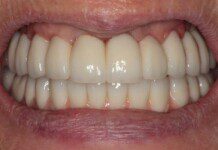
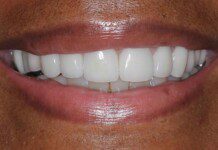
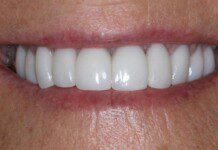
This patient did not like the way her smile looked. Her upper teeth were uneven and she had a large composite restoration that did not mask a discolored tooth very well.
We started with a little orthodontic movement to get the teeth in a better position. Bleaching was also done to improve the underlying tooth color.
We started with a little orthodontic movement to get the teeth in a better position. Bleaching was also done to improve the underlying tooth color.
We started with a little orthodontic movement to get the teeth in a better position. Bleaching was also done to improve the underlying tooth color.
The teeth were then prepared for veneers. A very thin layer of enamel was removed to make room for a porcelain laminate that will be bonded to the surface of the tooth. You can see how discolored the left central incisor was under the old composite restoration.
Provisionals (temporary restorations) are then fabricated and pressed onto the prepared teeth.
The provisionals are then modified until we are all satisfied with the way they look. In this case, they were shortened slightly to compliment the patient’s smile better.
The lab is then able to start fabricating beautiful, delicate veneers according to the design we decided on with the patient. They are checked for fit and function, to ensure they will match the patient perfectly.
The lab is then able to start fabricating beautiful, delicate veneers according to the design we decided on with the patient. They are checked for fit and function, to ensure they will match the patient perfectly.
The veneers are then bonded onto the teeth meticulously to ensure a good chemical bond between the ceramic and the underlying enamel. Clean, smooth contours ensure that the patient is able to maintain optimal hygiene around the tissues.
Two years later, you can still see how clean and beautiful the veneers are. Tissues are healthy and they are now part of the patient’s natural smile.
Two years later, you can still see how clean and beautiful the veneers are. Tissues are healthy and they are now part of the patient’s natural smile.
Two years later, you can still see how clean and beautiful the veneers are. Tissues are healthy and they are now part of the patient’s natural smile.
Two years later, you can still see how clean and beautiful the veneers are. Tissues are healthy and they are now part of the patient’s natural smile.