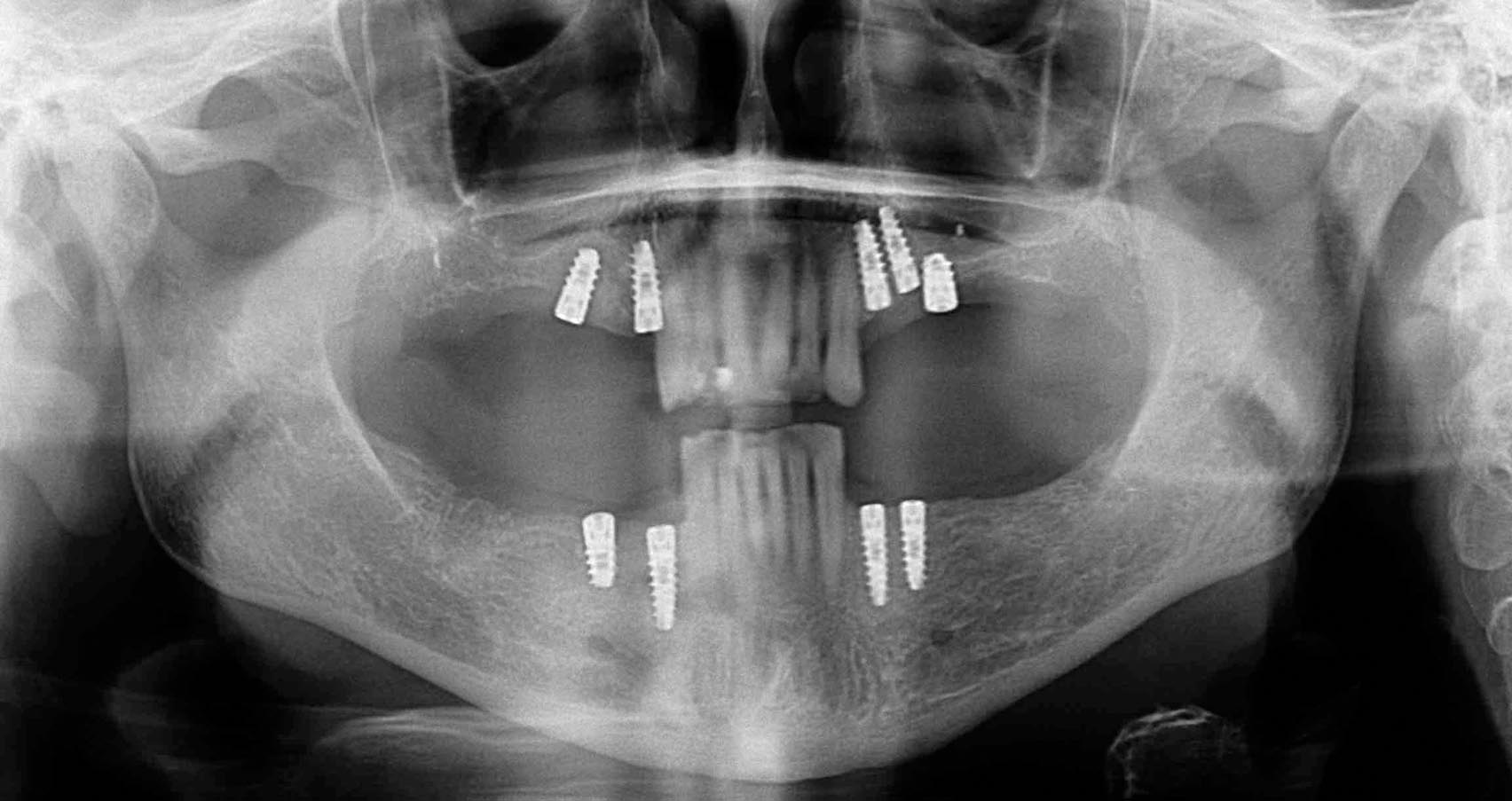
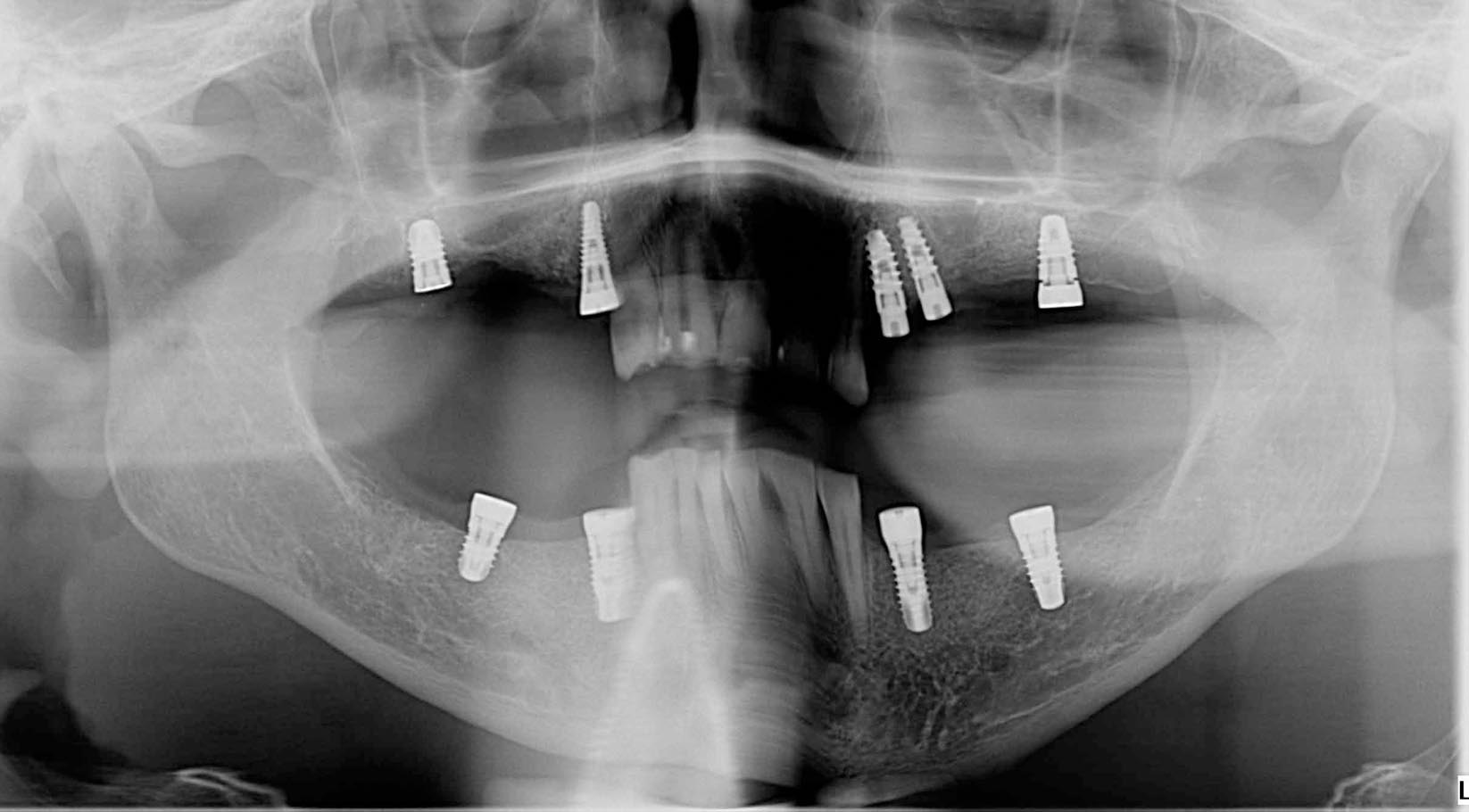
Pre-operative panoramic image with poorly placed implants in three quadrants
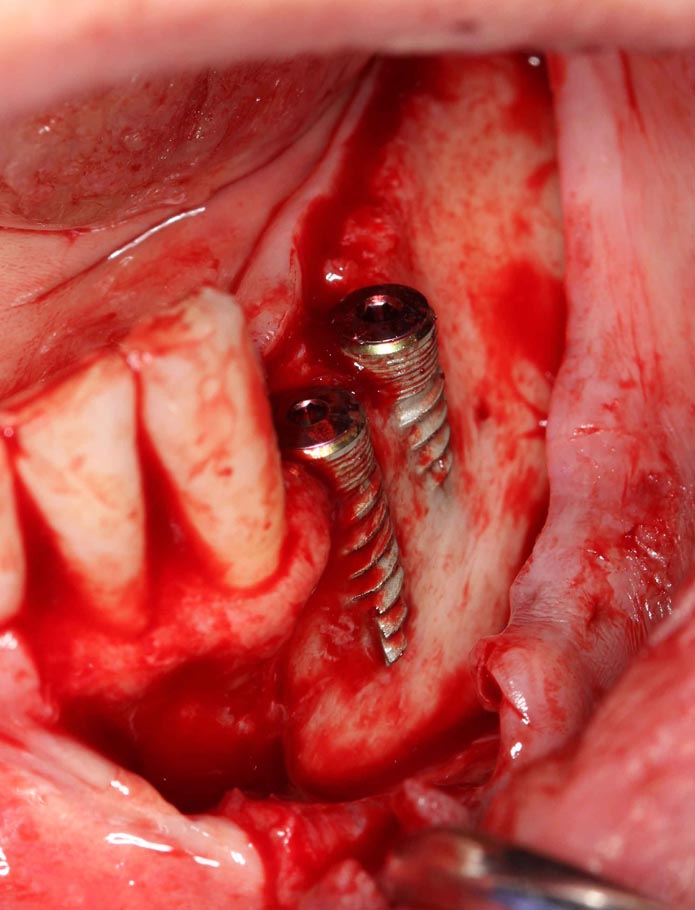
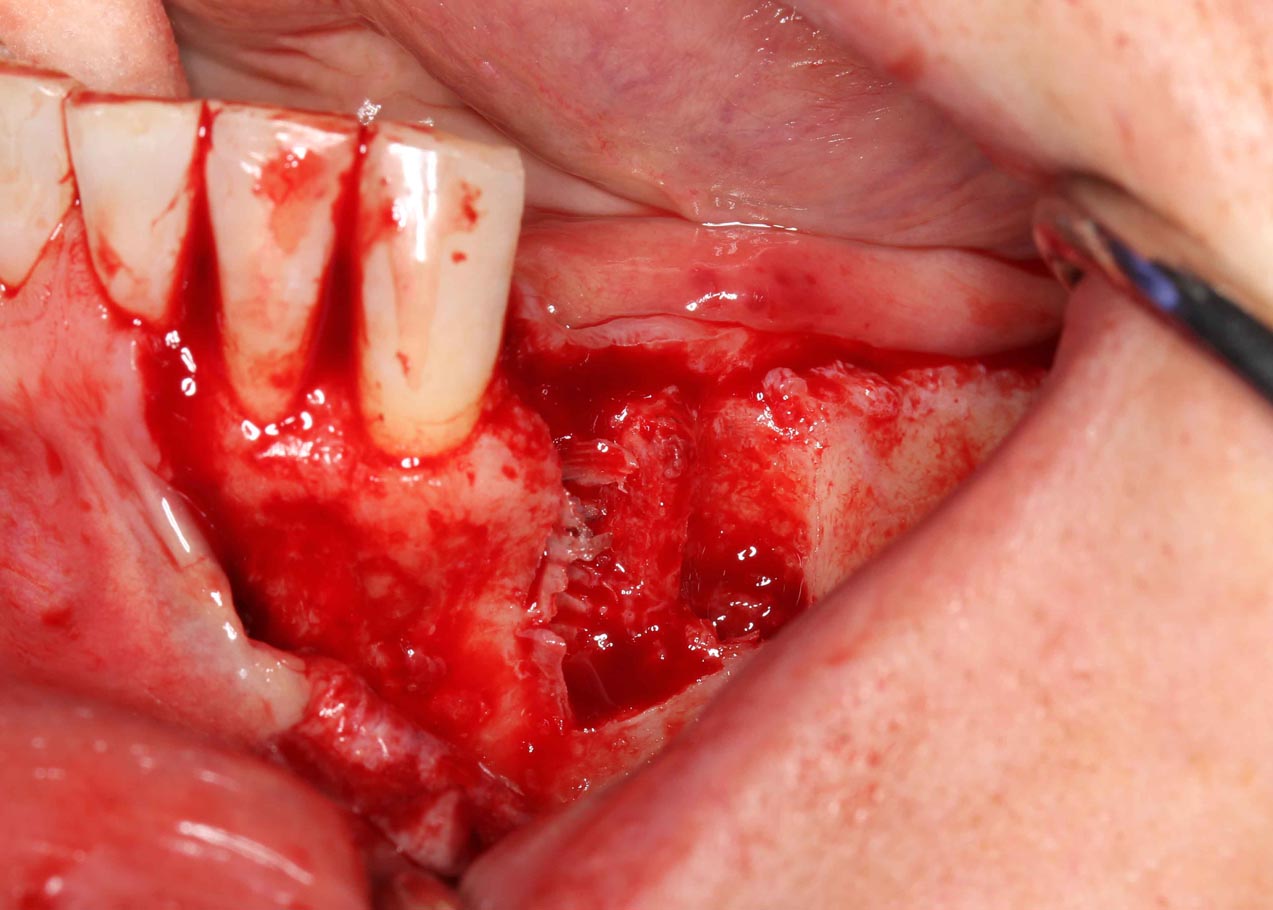
Intra-operative surgical left lower quadrant with implant threads exposed
Intra-operative left lower quadrant implants removed
Intra-operative left lower quadrant missing bone due to poor prior implant placement
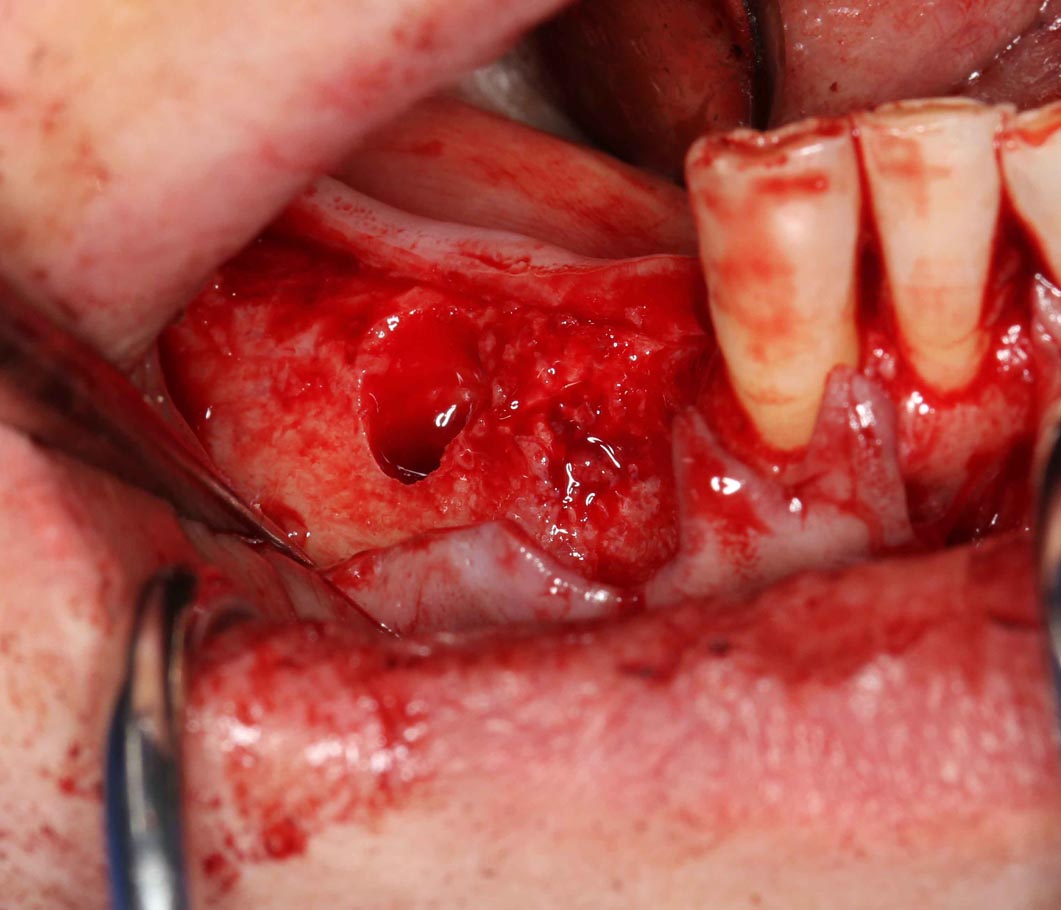
Intra-operative right lower quadrant implants poorly positioned
Intra-operative right lower quadrant implants removed, bone defect
7 of 10 implants poorly placed and removed at first surgery
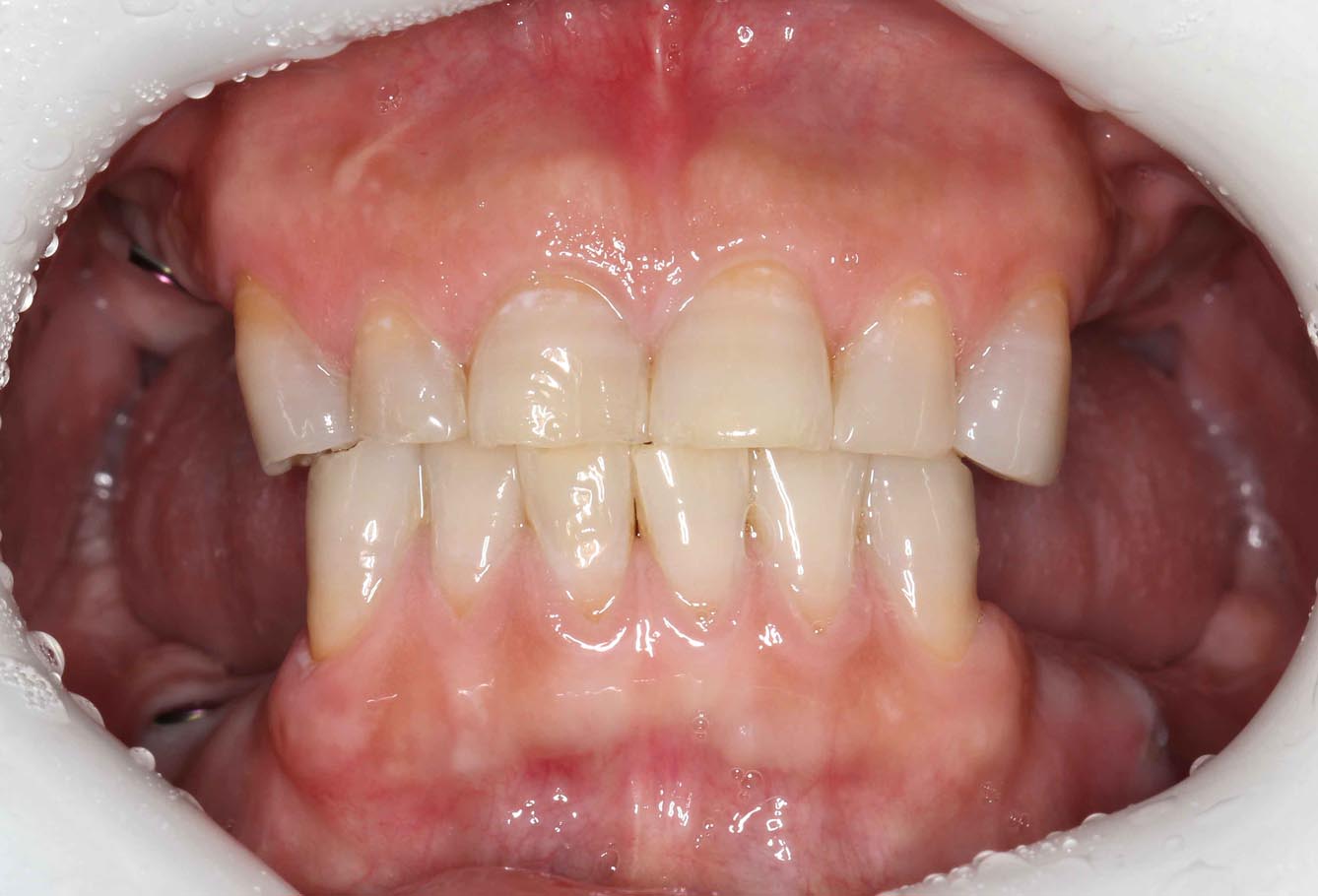
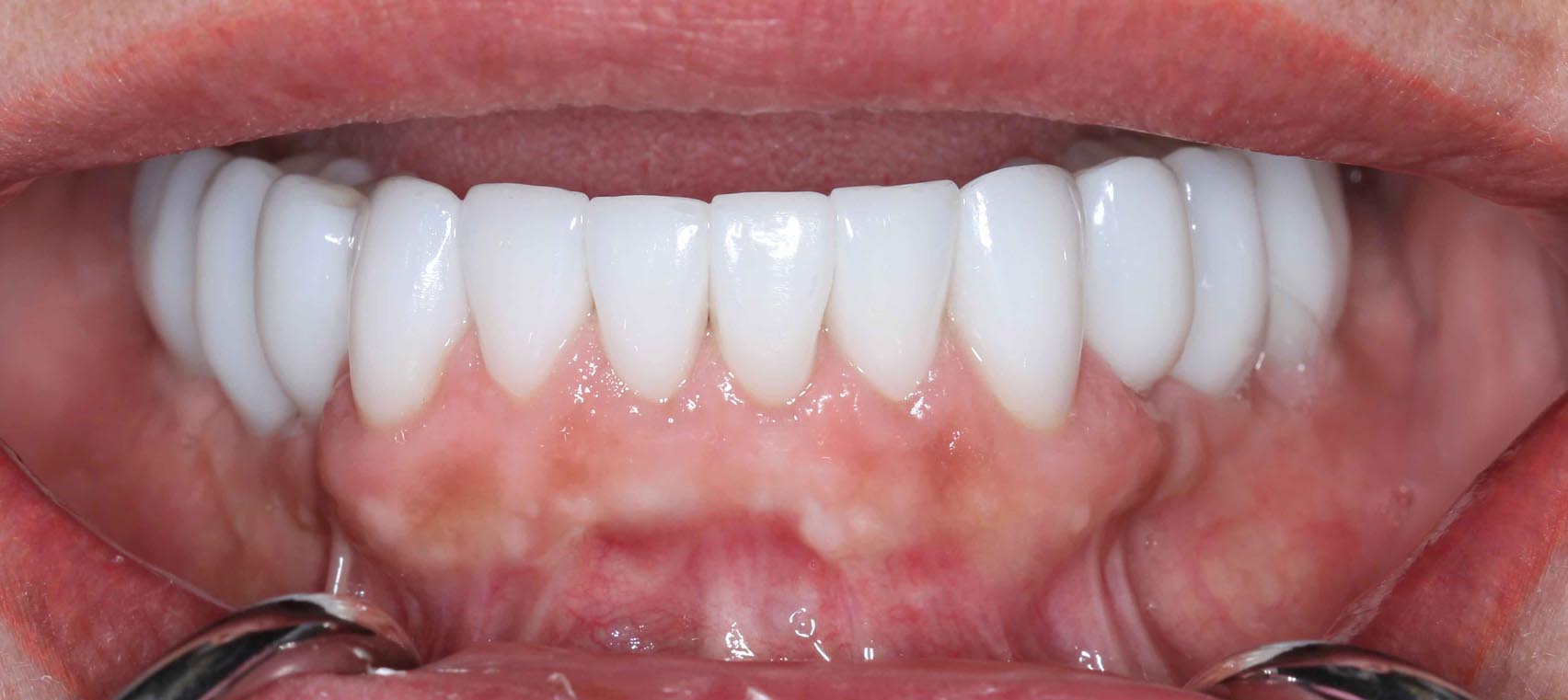
Lower arch, frontal view, post implant removal and bone grafts
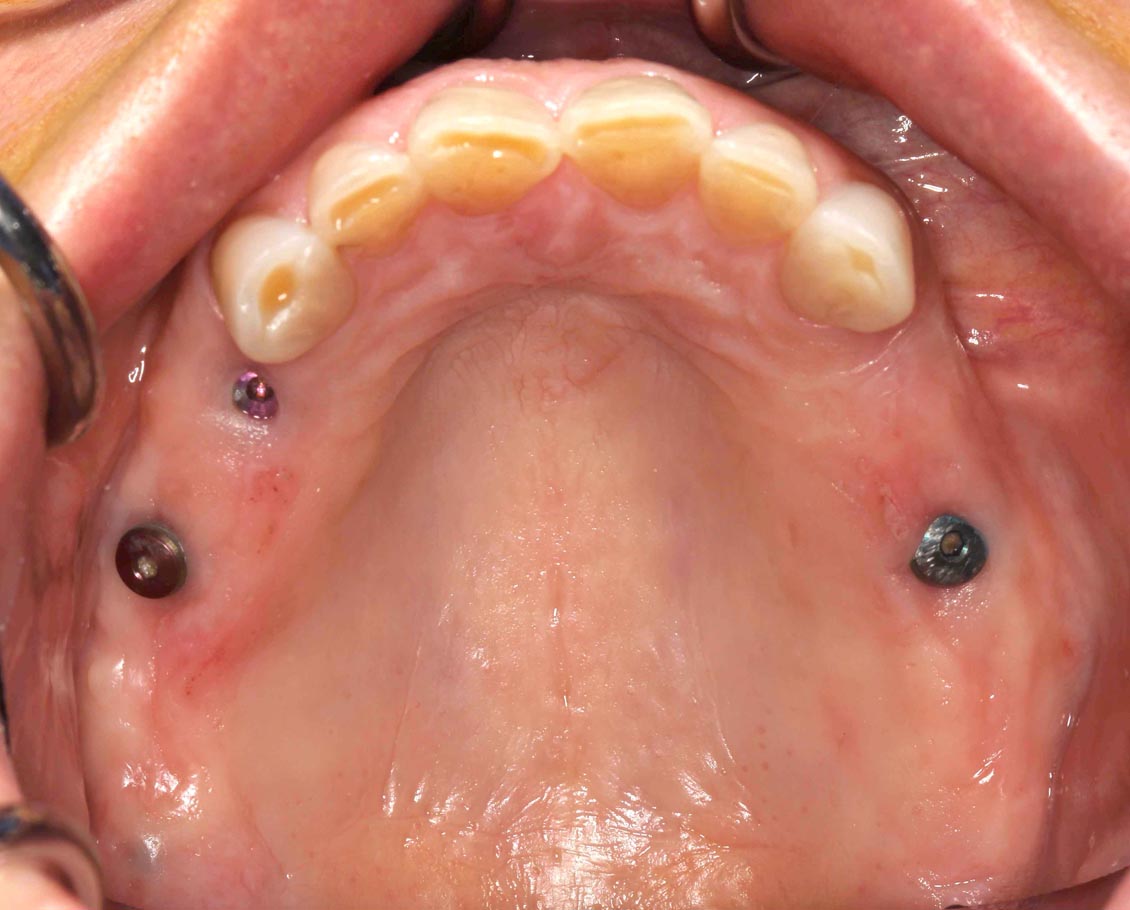
Upper arch, occlusal view, post implant removal and bone grafts
Frontal view, post implant removal and bone grafts
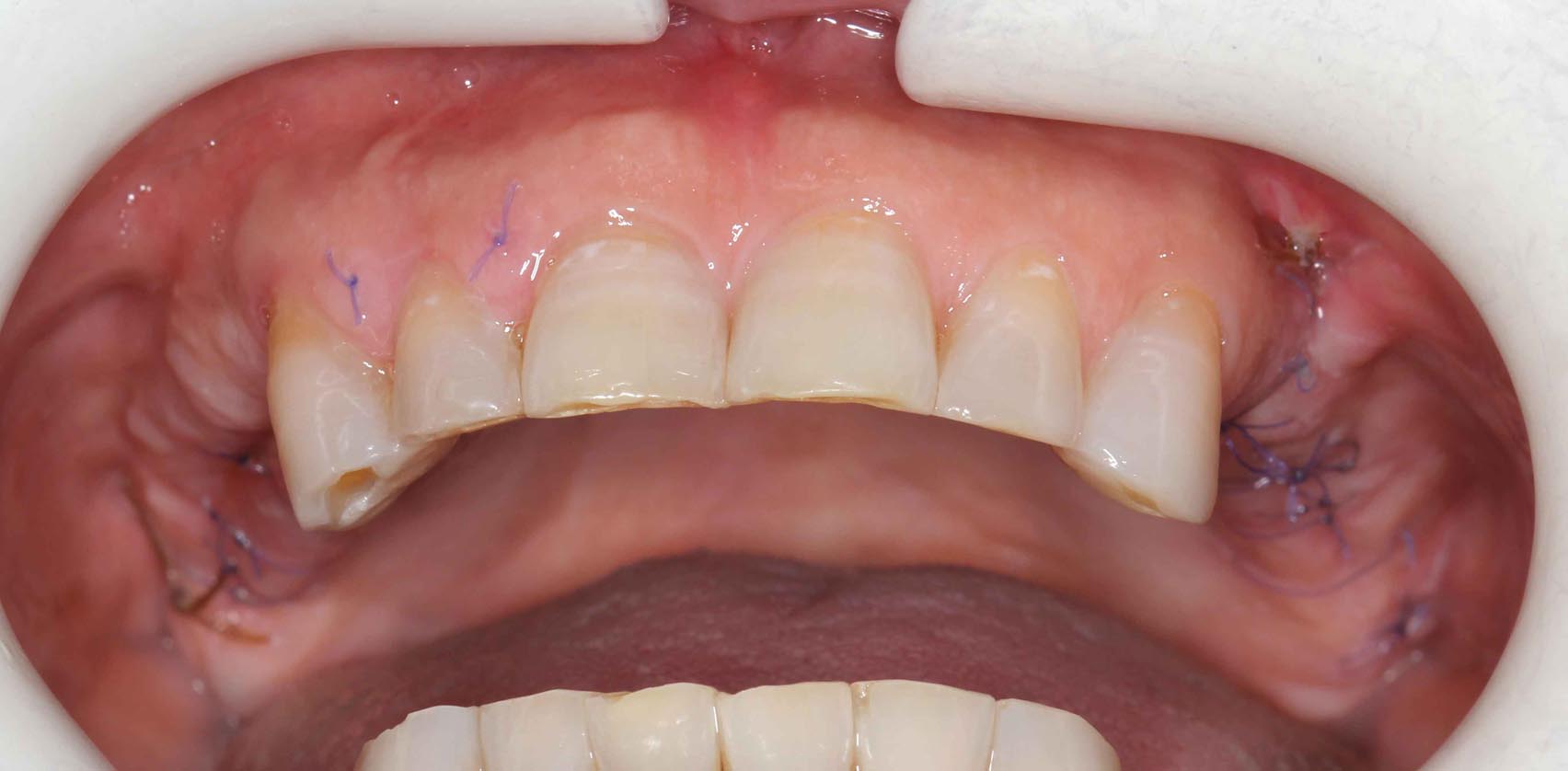
2 weeks, post- surgical, removal of implants and bone grafting, upper
Post- surgical panoramic image
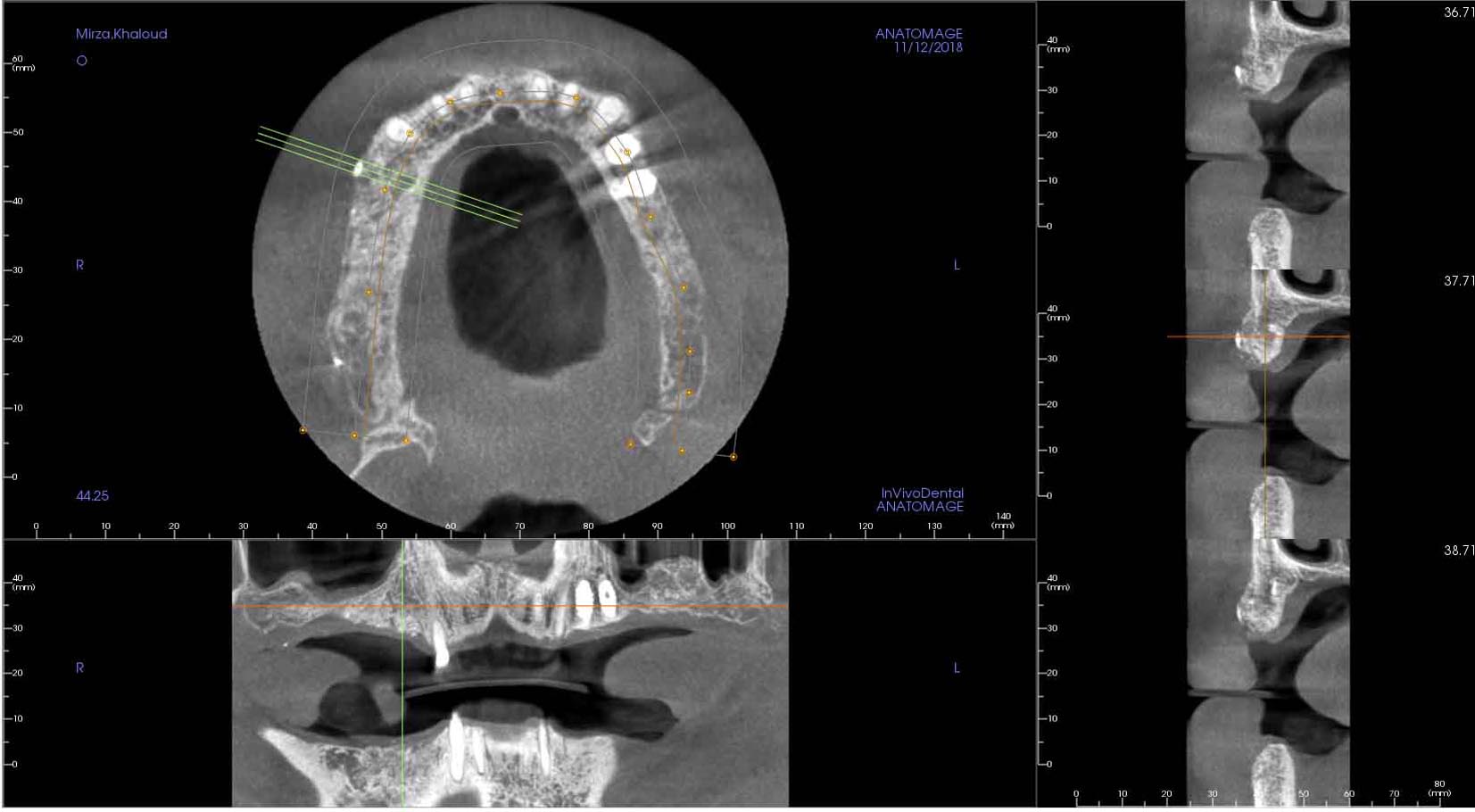
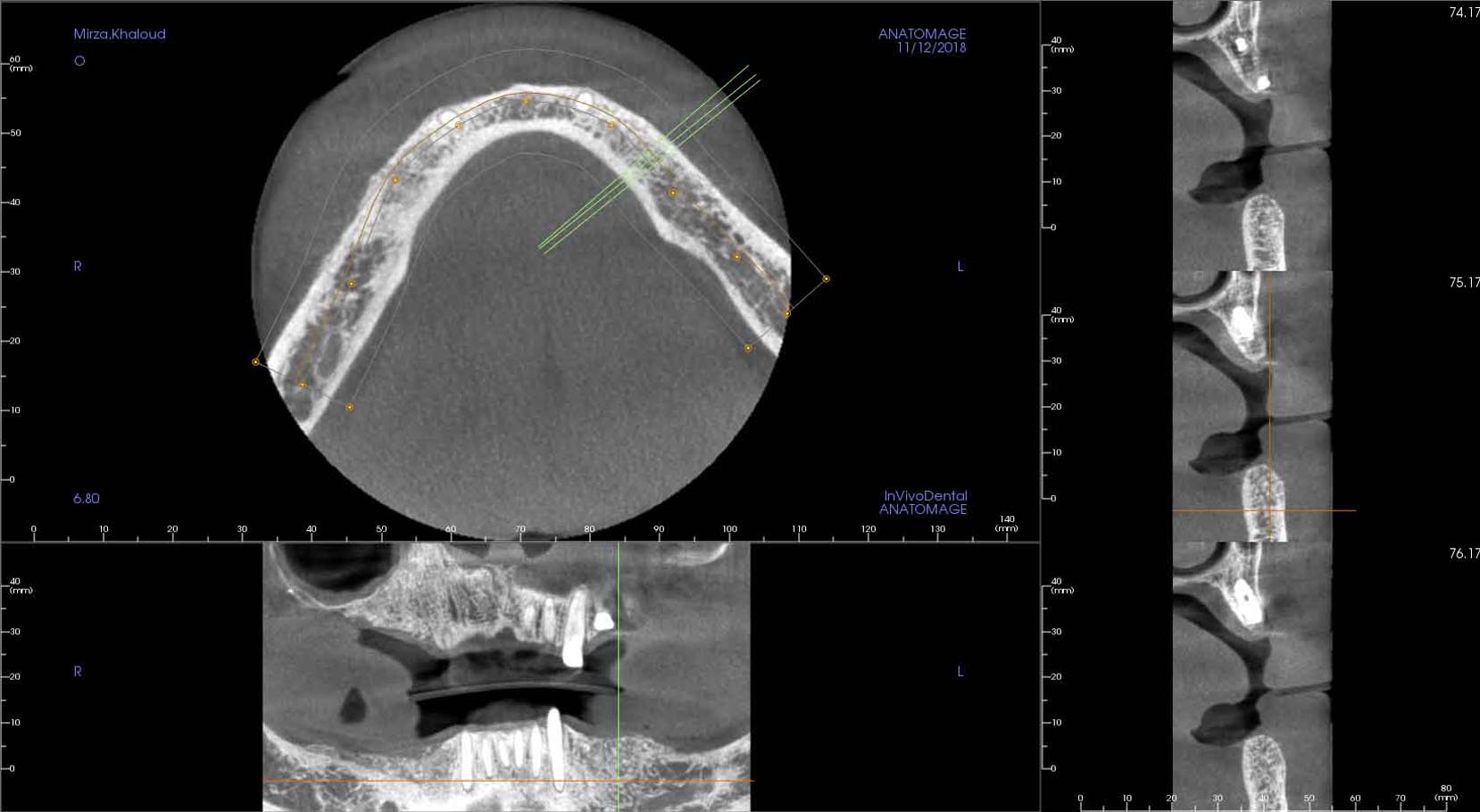
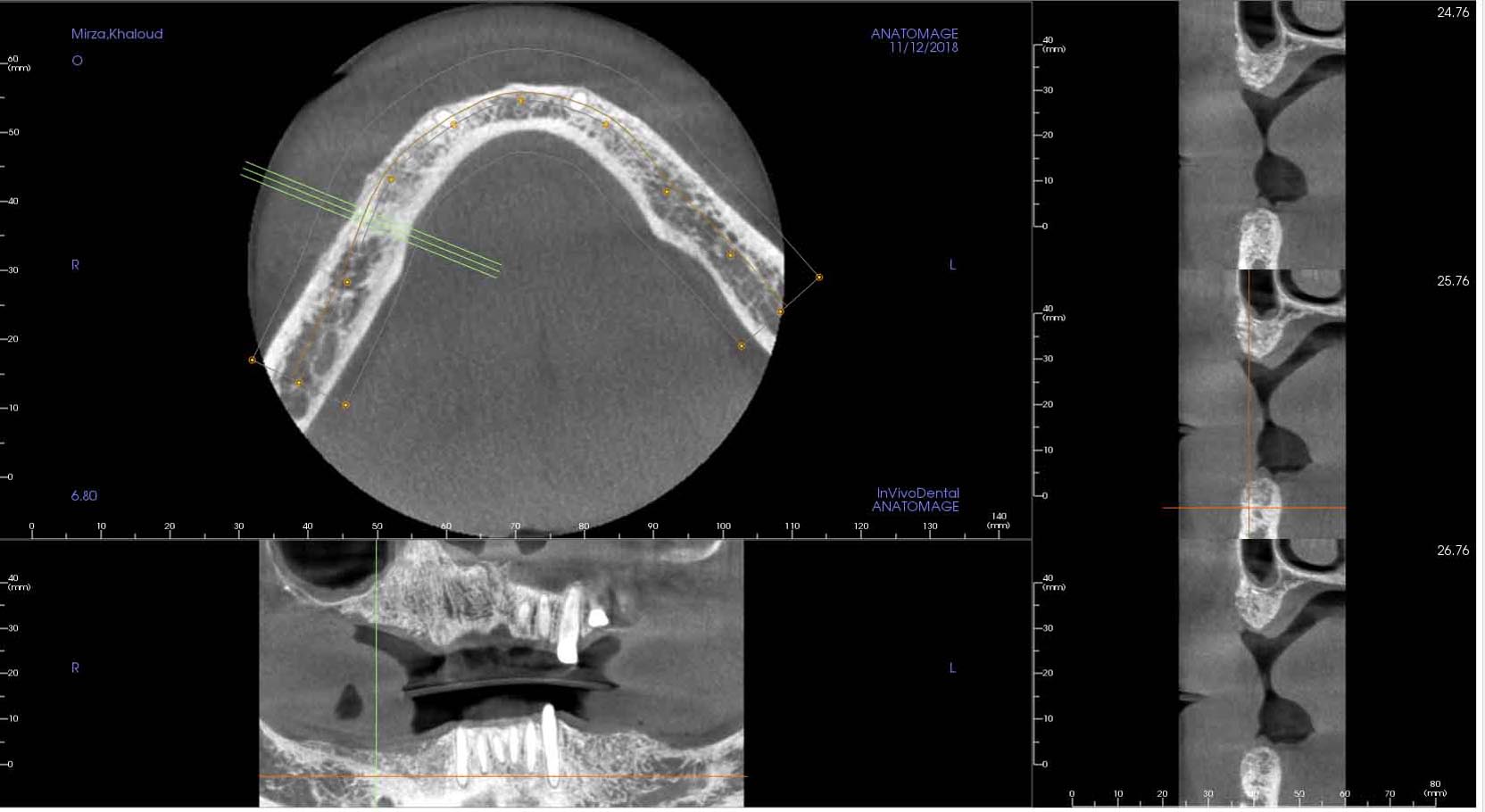
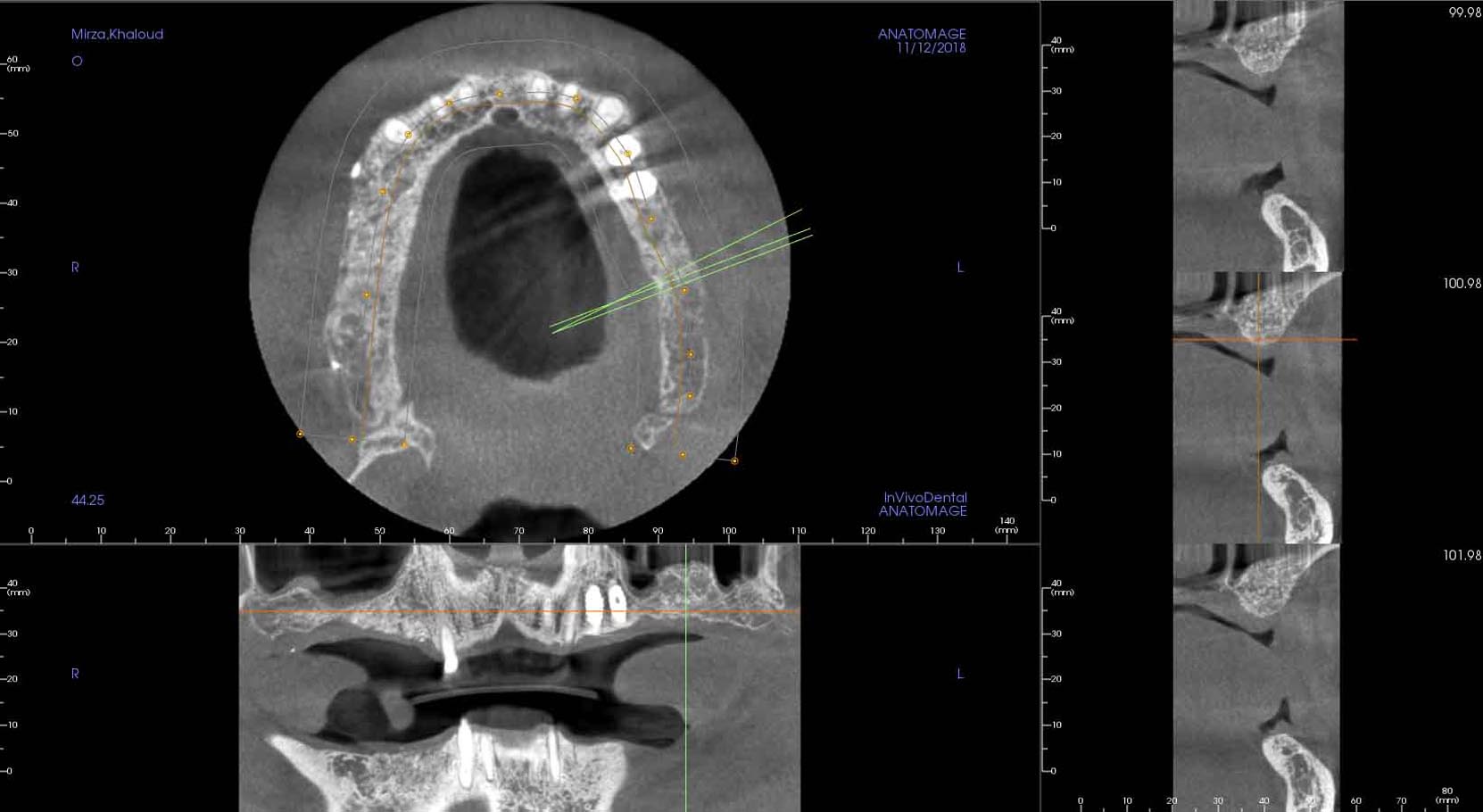
After five months of healing, a new CBCT scan is taken and reviewed. Bone graft yield is good, upper right
After five months of healing, a new CBCT scan is taken and reviewed. Bone graft yield is good, lower left
After five months of healing, a new CBCT scan is taken and reviewed. Bone graft yield is good, lower right
After five months of healing, a new CBCT scan is taken and reviewed. Sinus bone graft yield is good, upper left
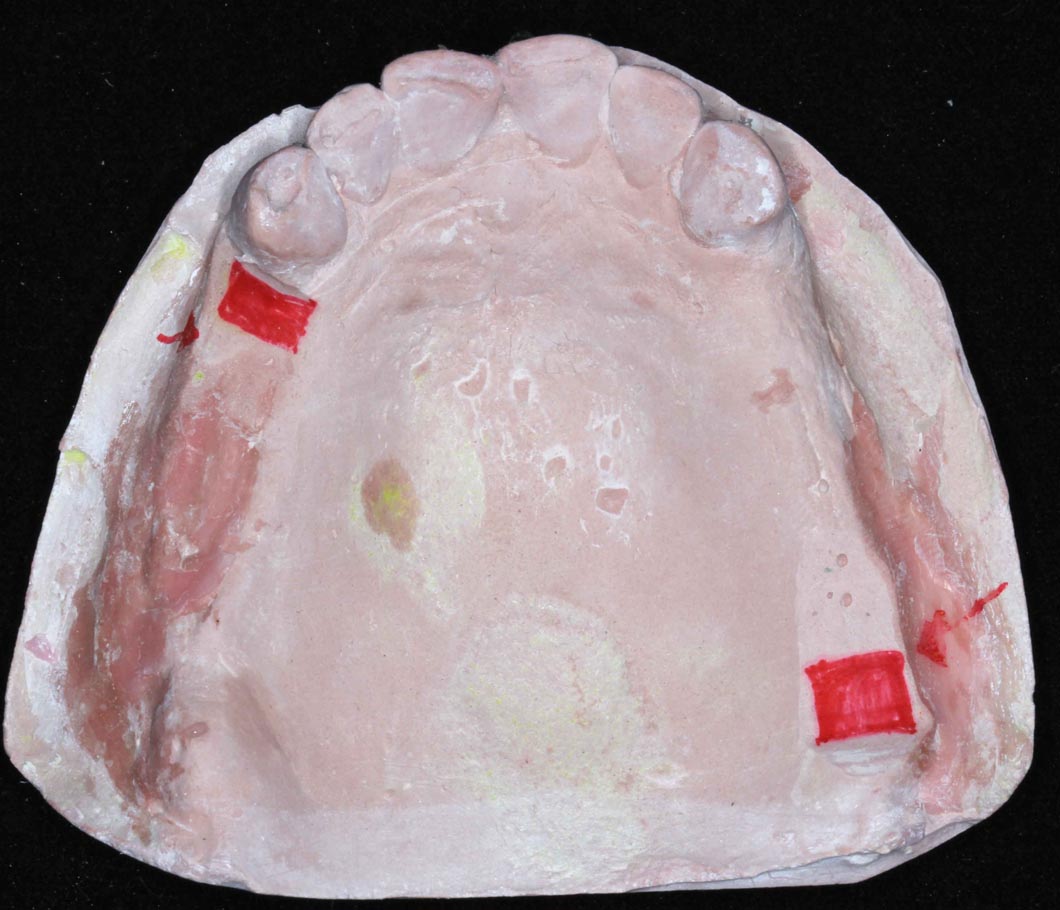
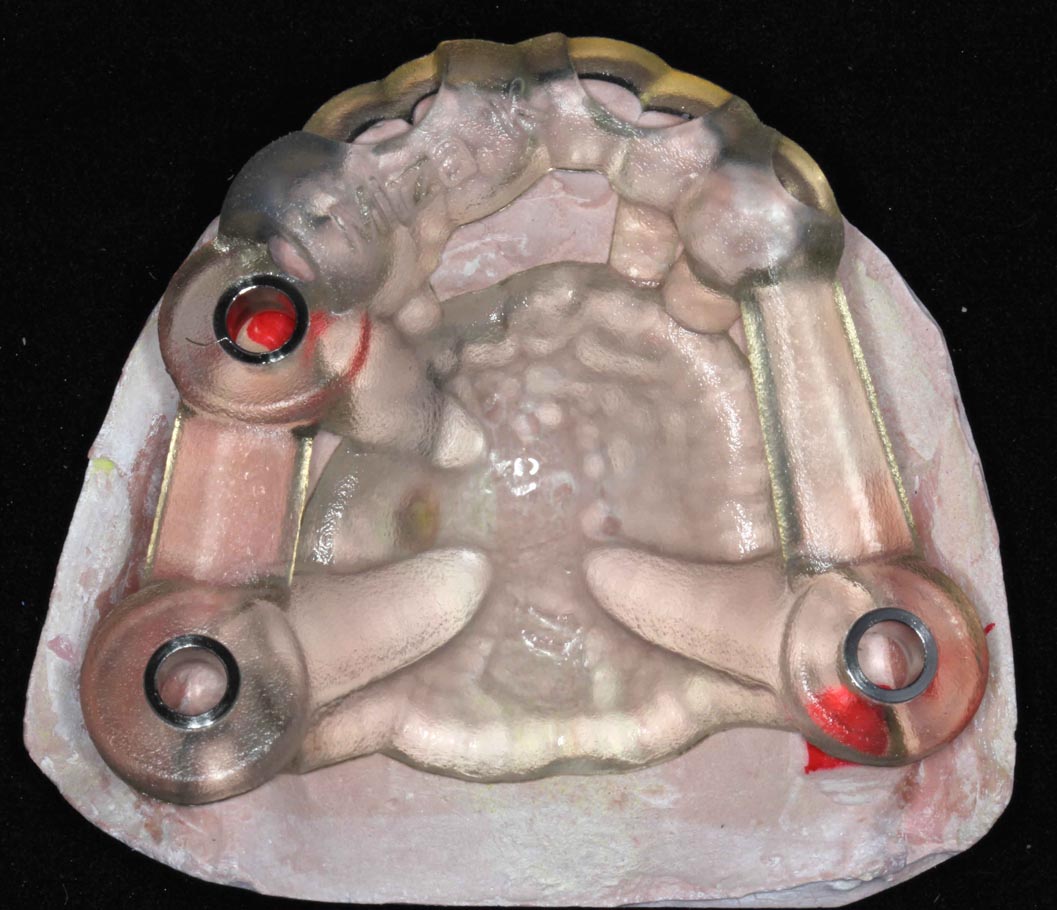
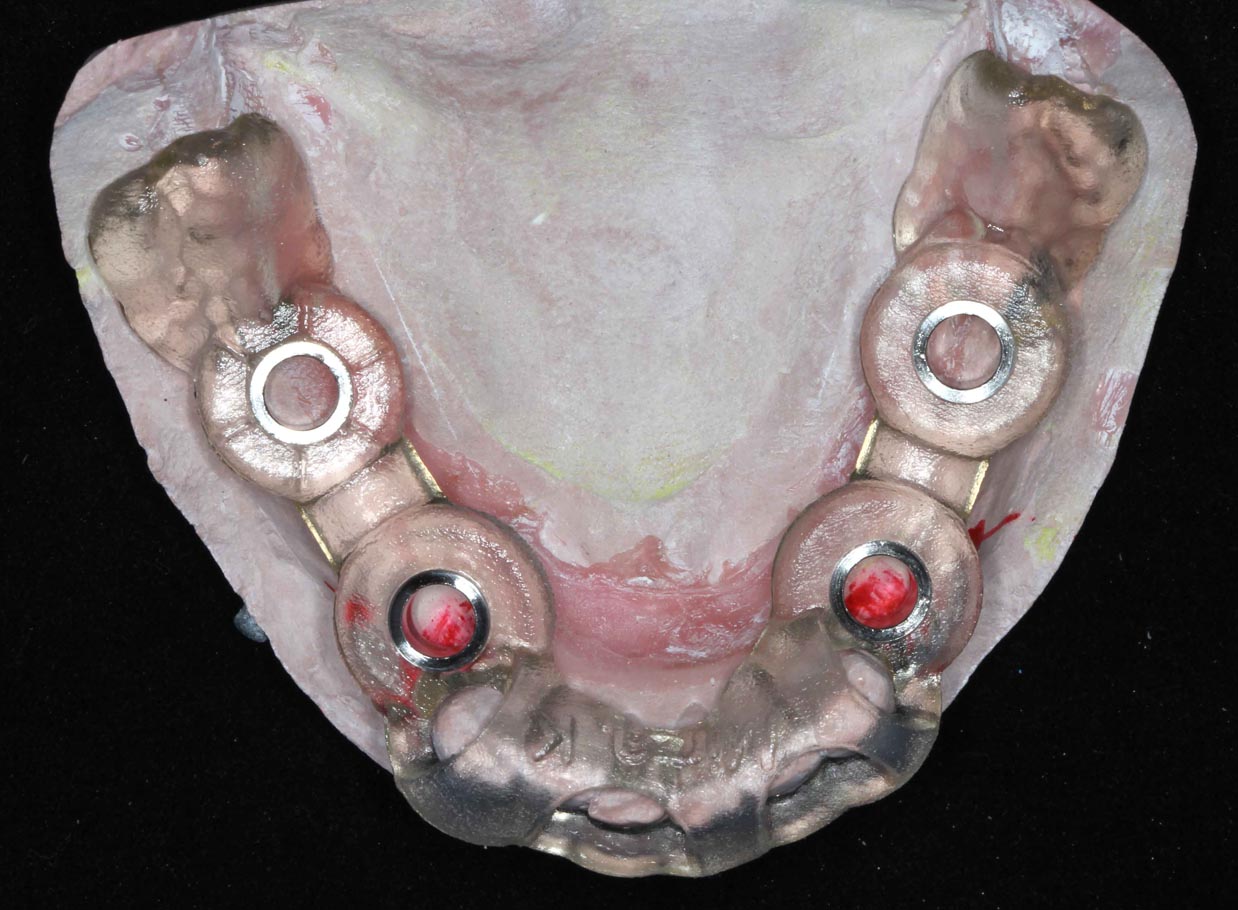
In preparation for the next implant surgery, impressions are made of both arches so that we can plan for “fully guided implant surgery”. Upper cast.
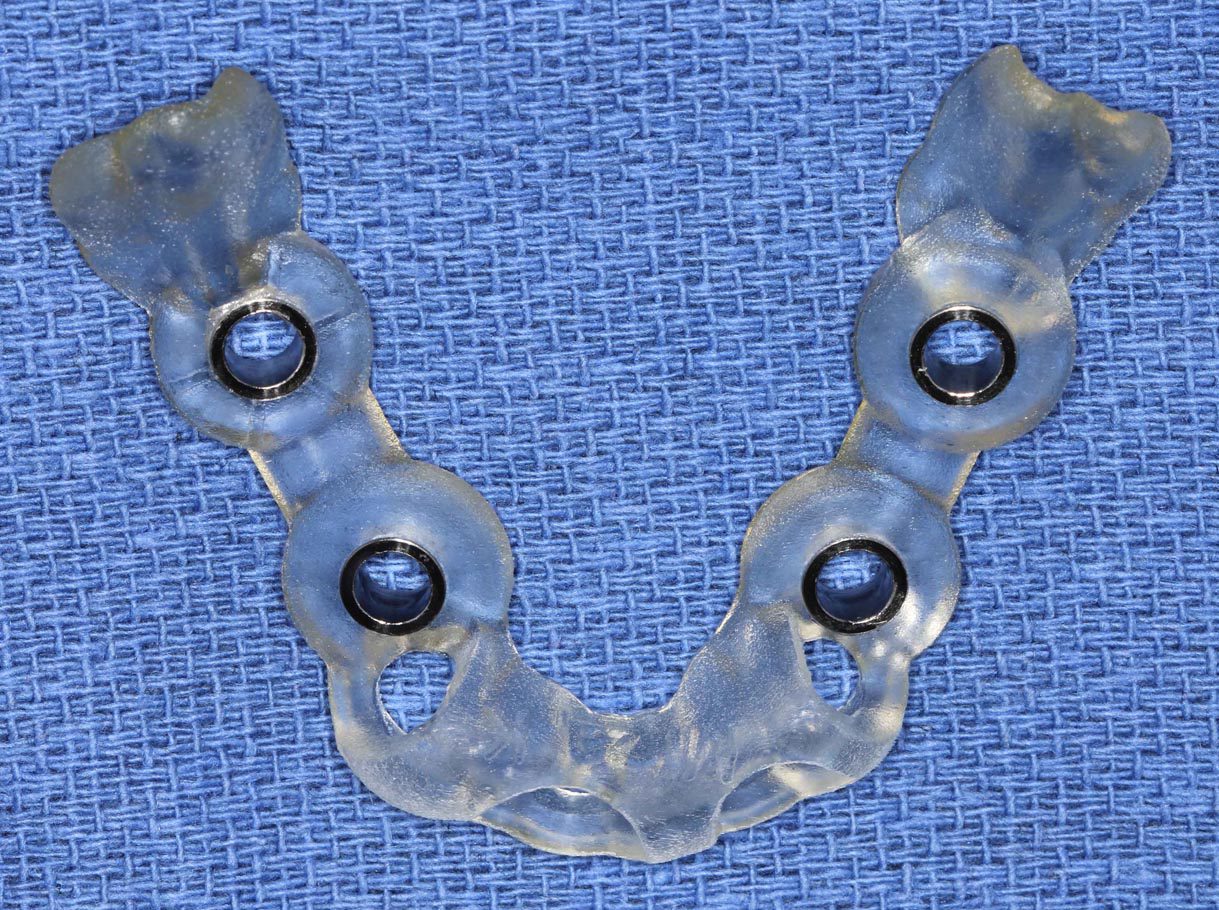
Upper implant guide with titanium sleeves to “guide” the implant placement, occlusal view. I use these when bone volume is reduced, proximity to adjacent teeth and/ or when working above the nerve.
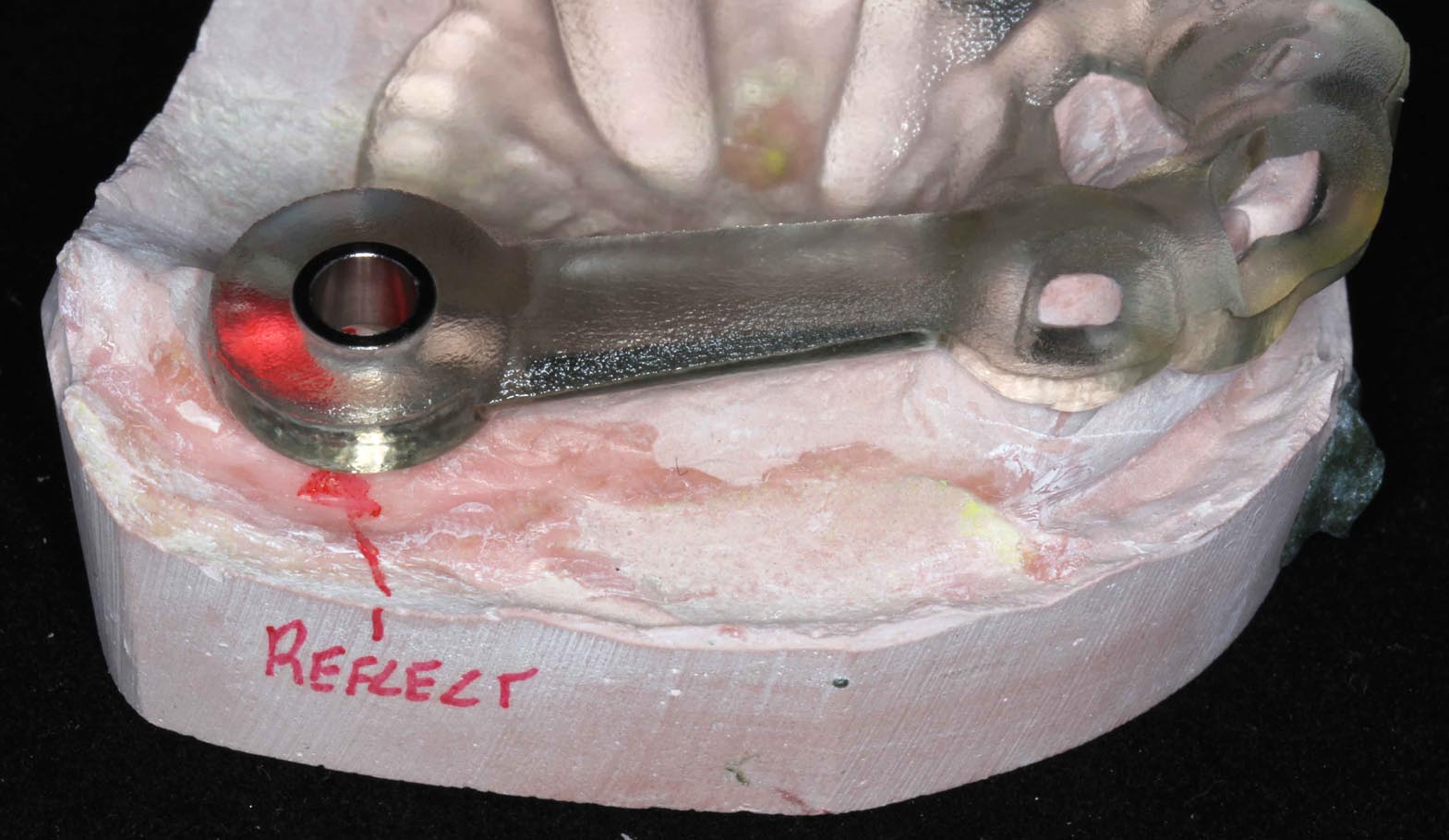
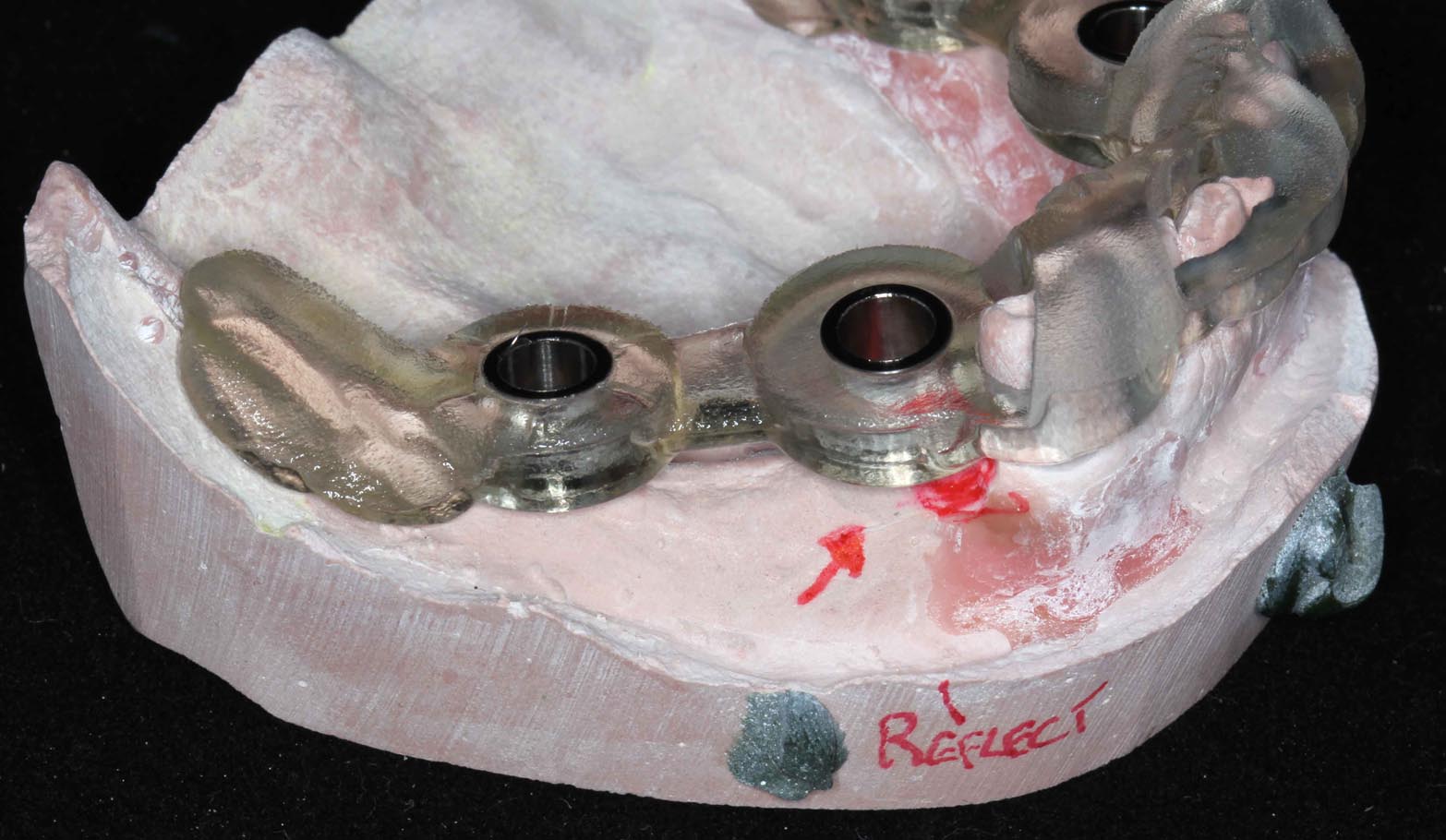
Upper implant guide with titanium sleeves to “guide” the implant placement, right side view
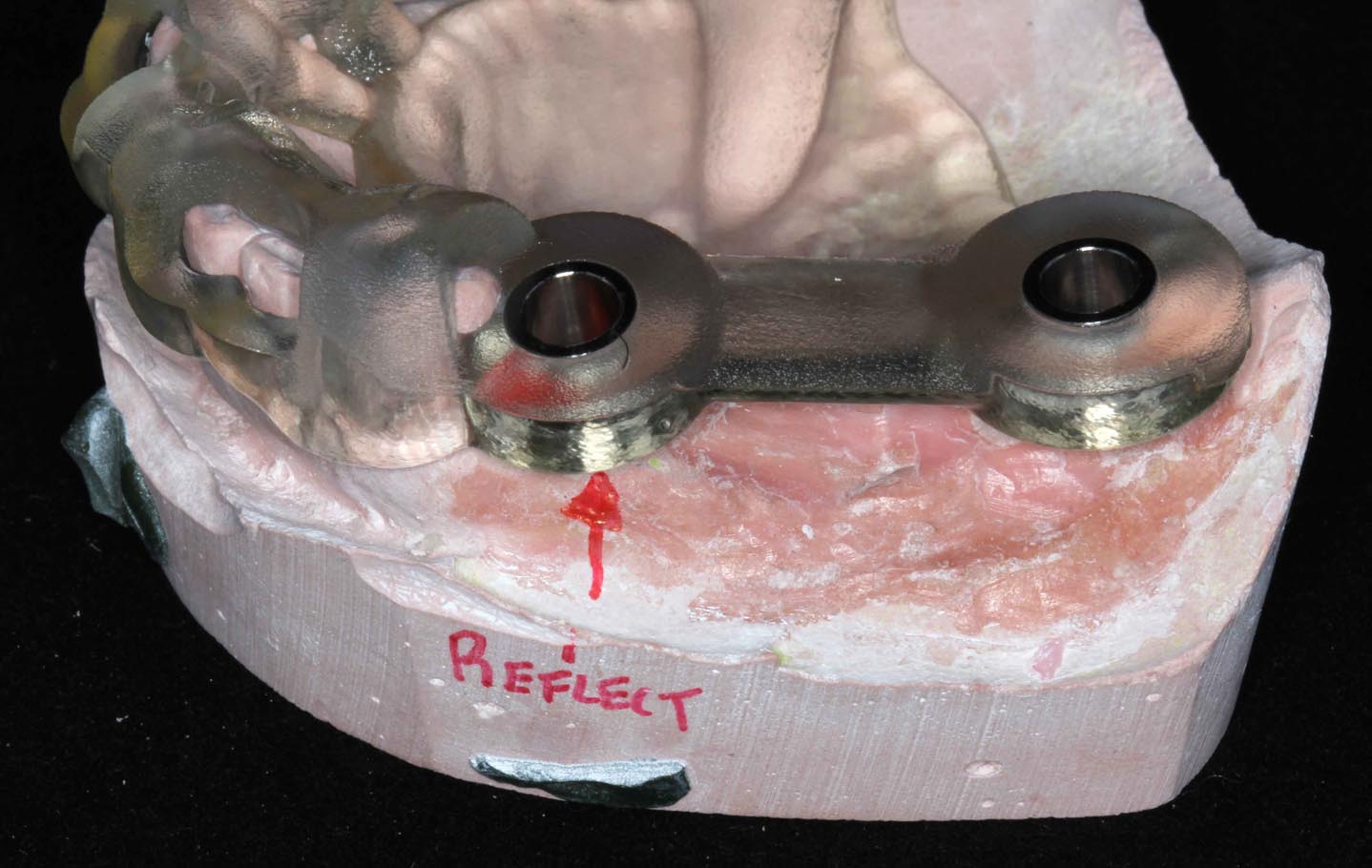
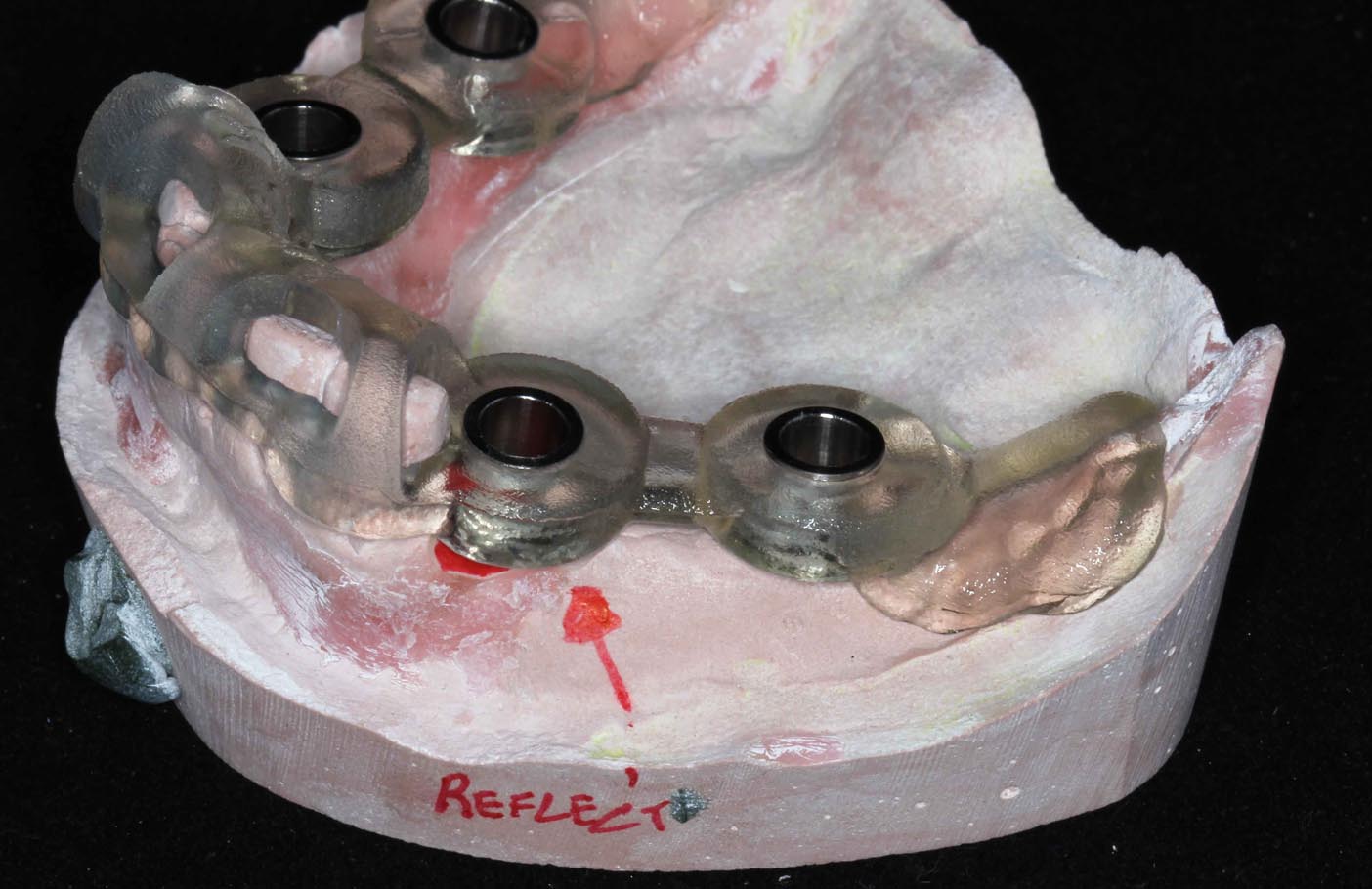
Upper implant guide with titanium sleeves to “guide” the implant placement, left side view
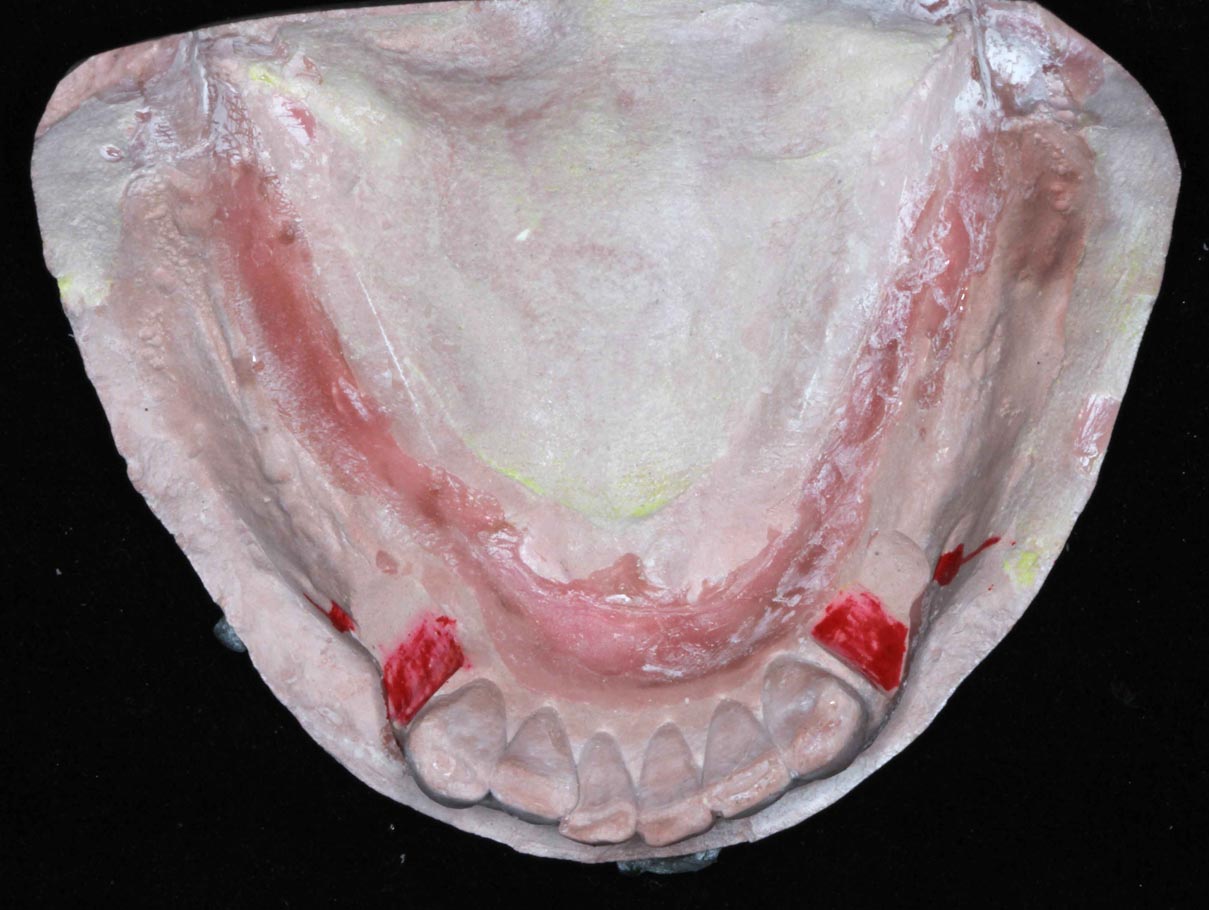
Lower cast for surgical guide
Lower implant guide with titanium sleeves to “guide” the implant placement, occlusal view
Lower implant guide with titanium sleeves to “guide” the implant placement, right side view
Lower implant guide with titanium sleeves to “guide” the implant placement, left side view
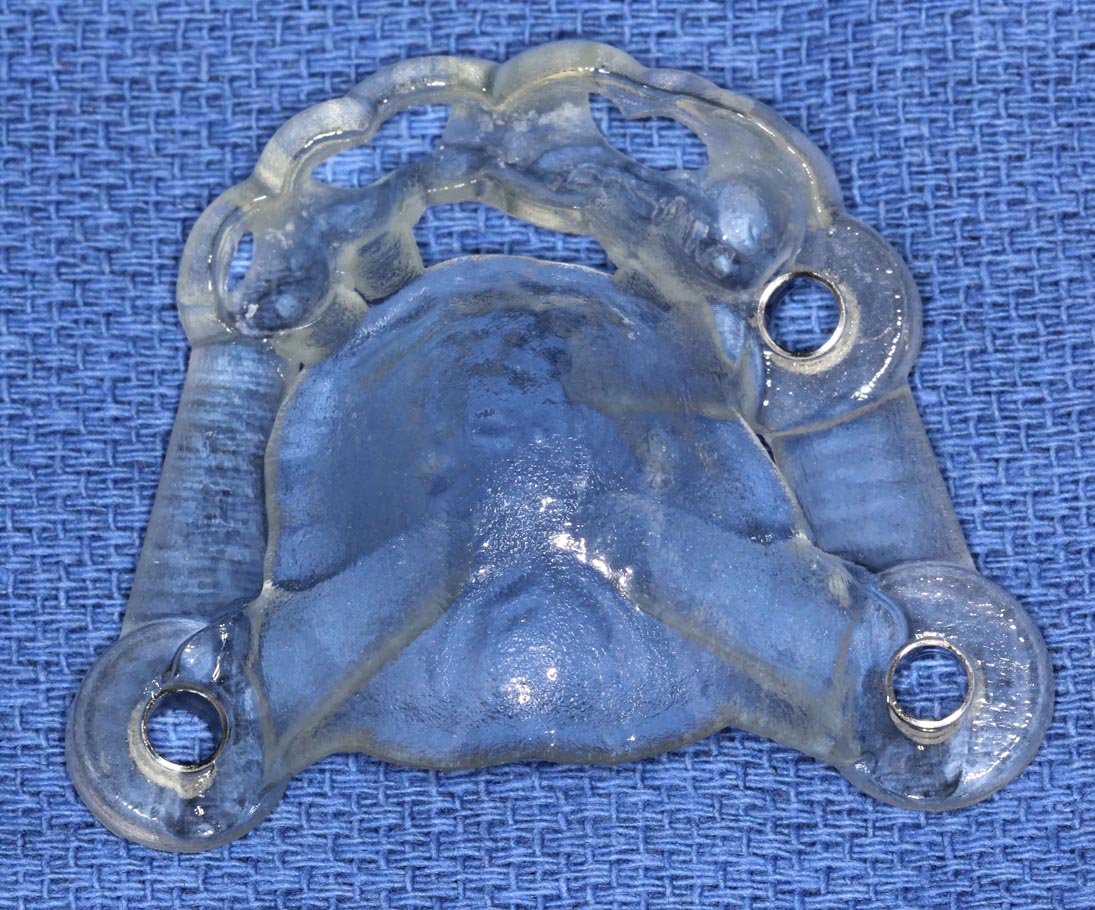
Upper guide off the cast
Lower guide off the cast
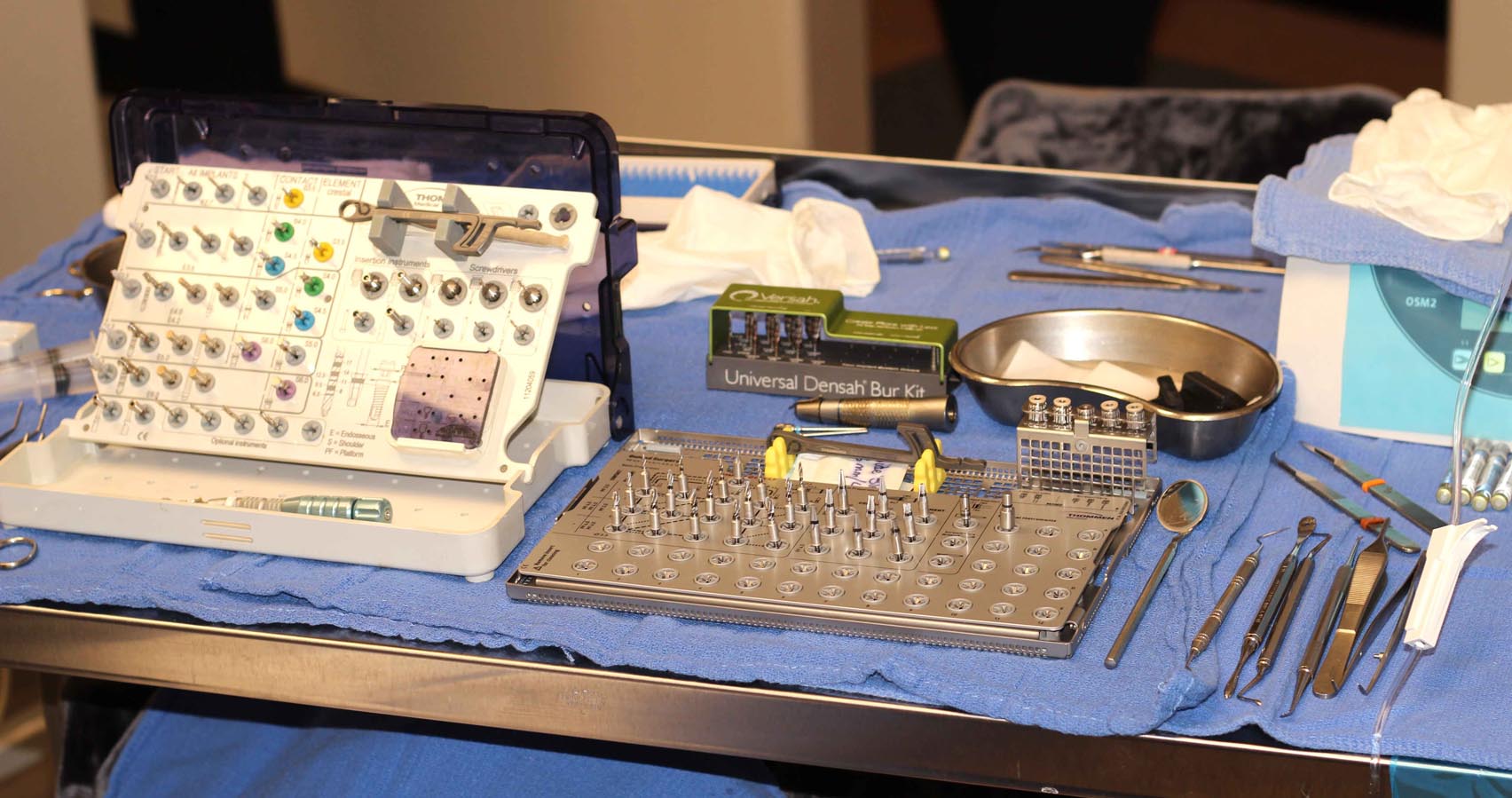
Instruments necessary for this surgery
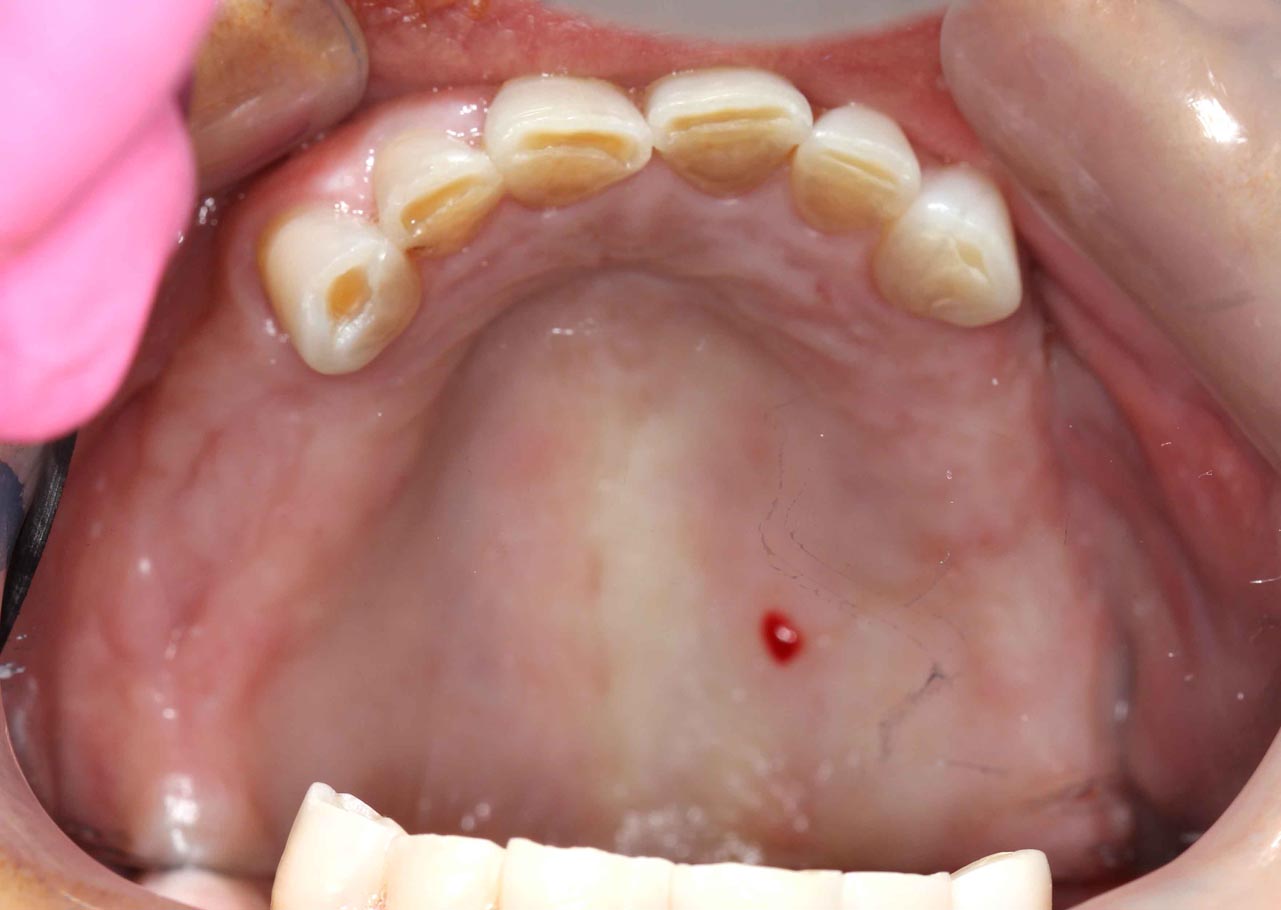
Upper arch, local anesthesia, pre-surgery
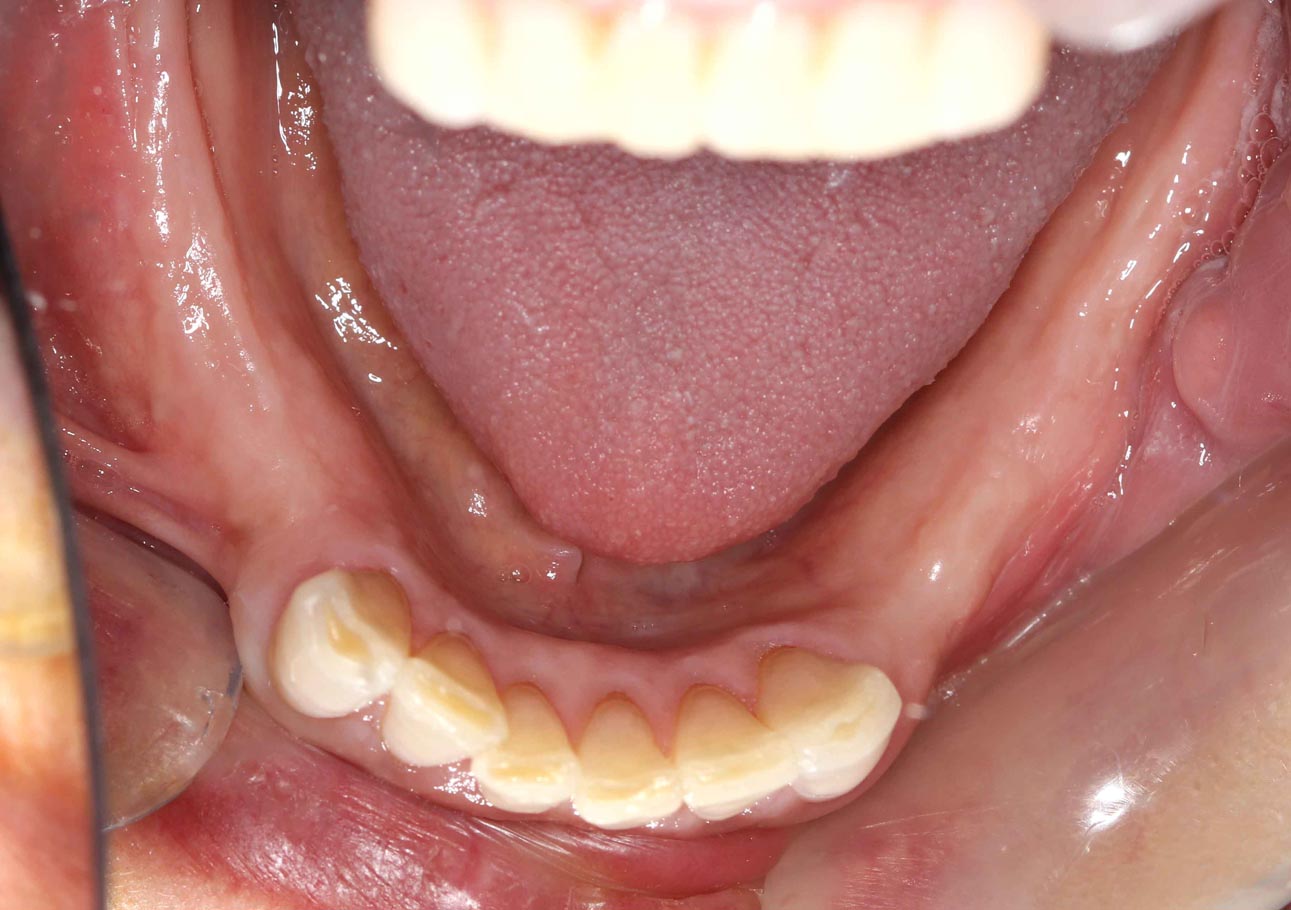
Lower arch, local anesthesia, pre-surgery
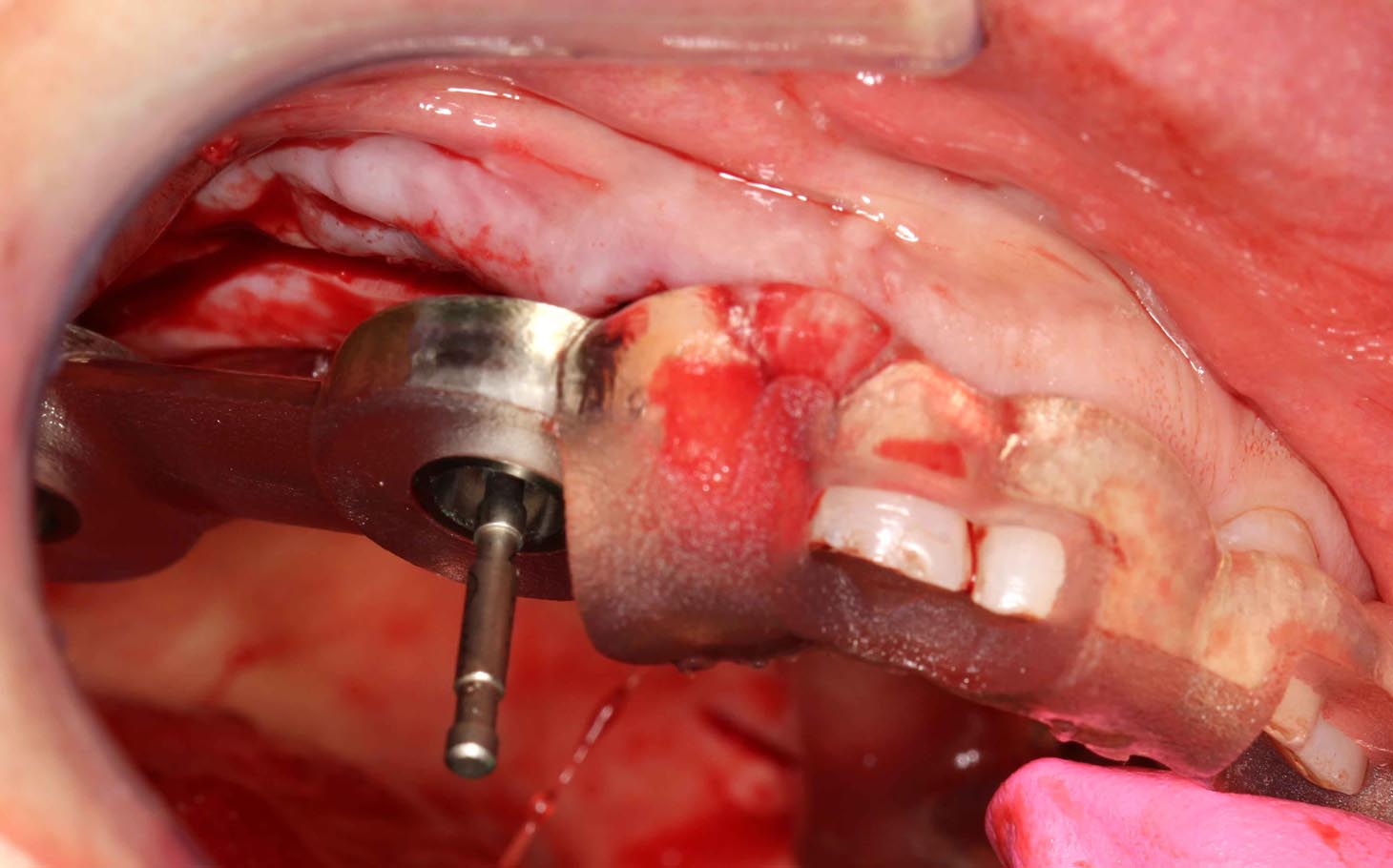
Upper guide in mouth for upper right implant placement
Upper right, two old implants that were serviceable, one new implant where the sinus graft was performed, six months earlier
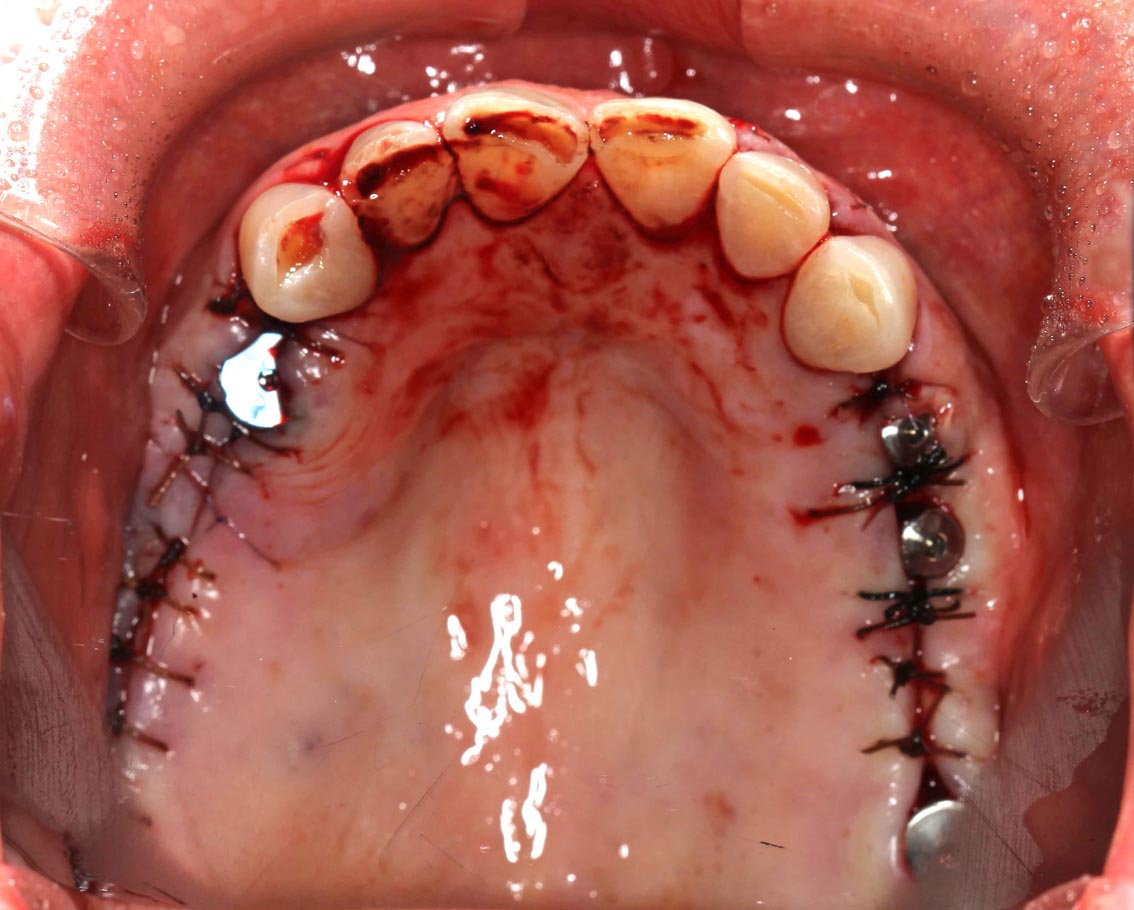
Upper arch, post- implant placement
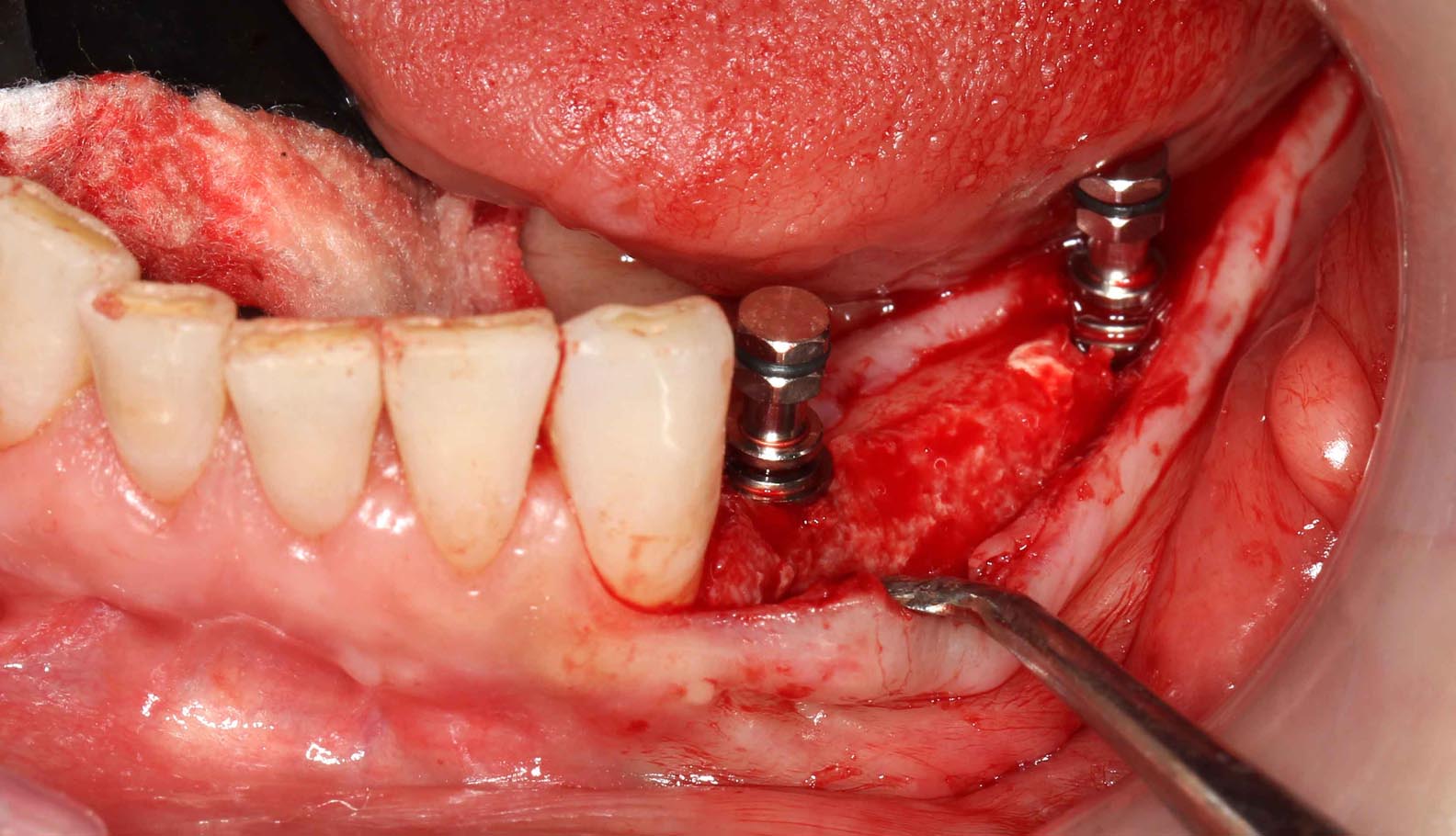
Lower left, implants in place. Note; full bone coverage of implants
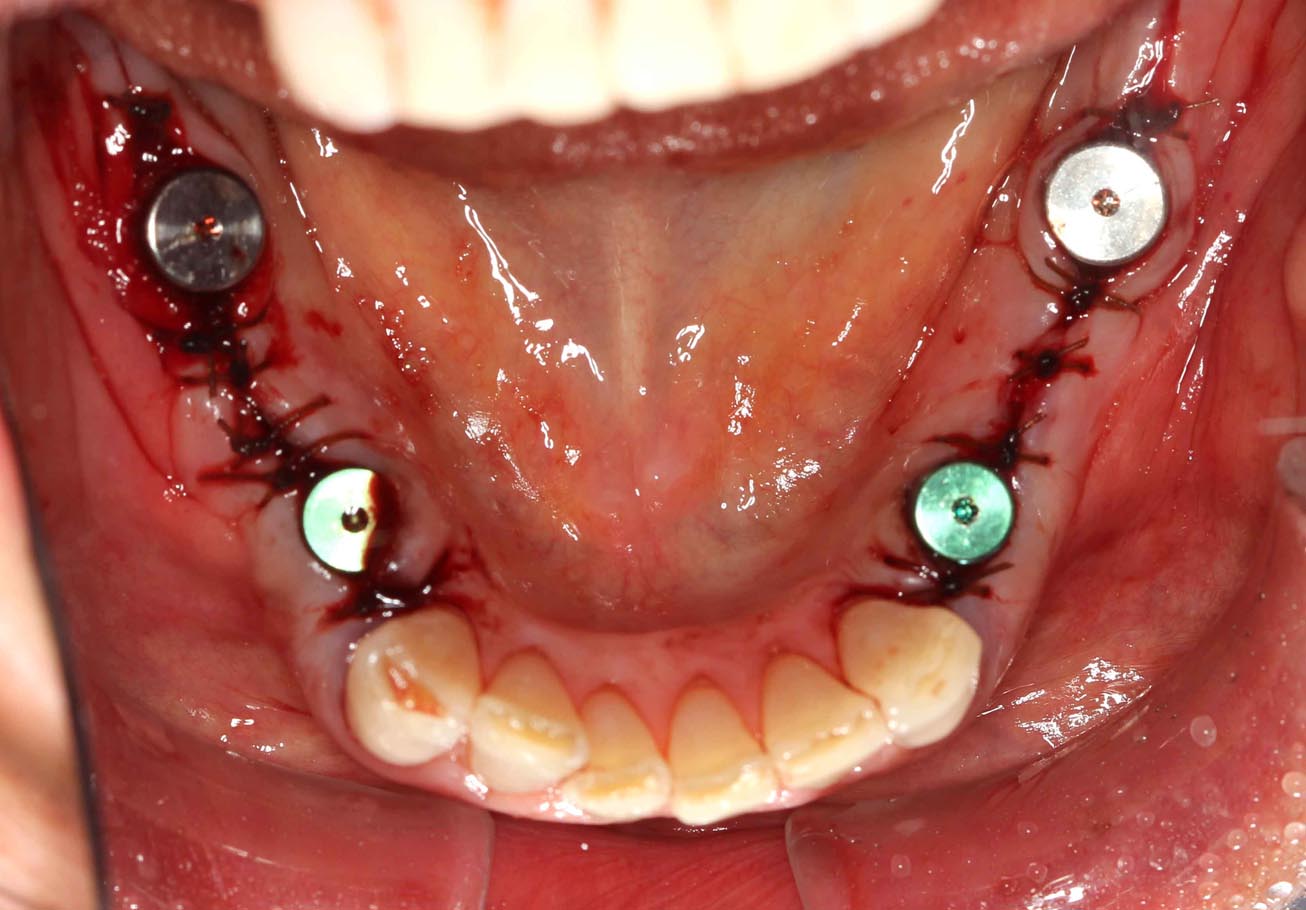
Lower arch, occlusal view, post implant placement
New implants placed, post-operative panoramic
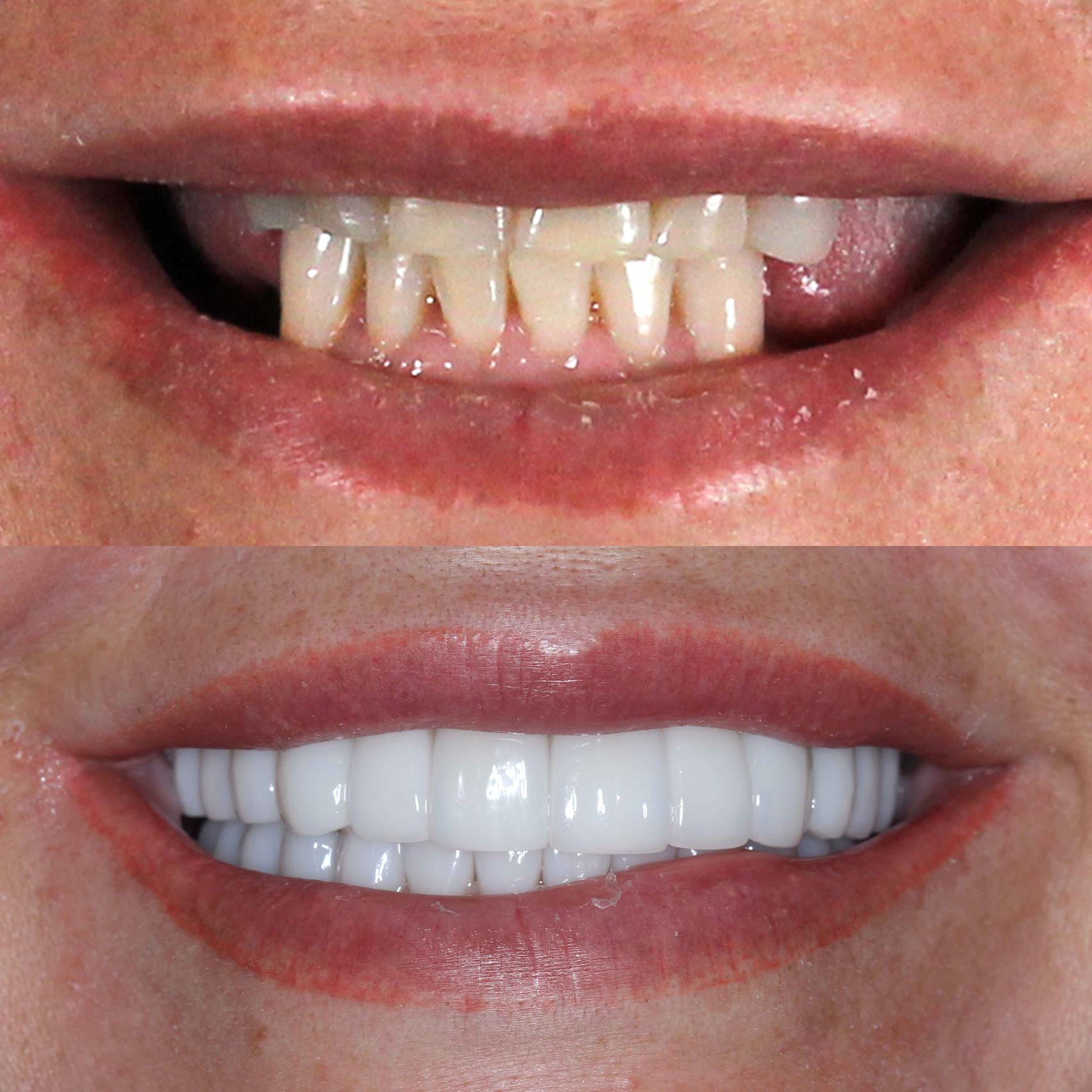
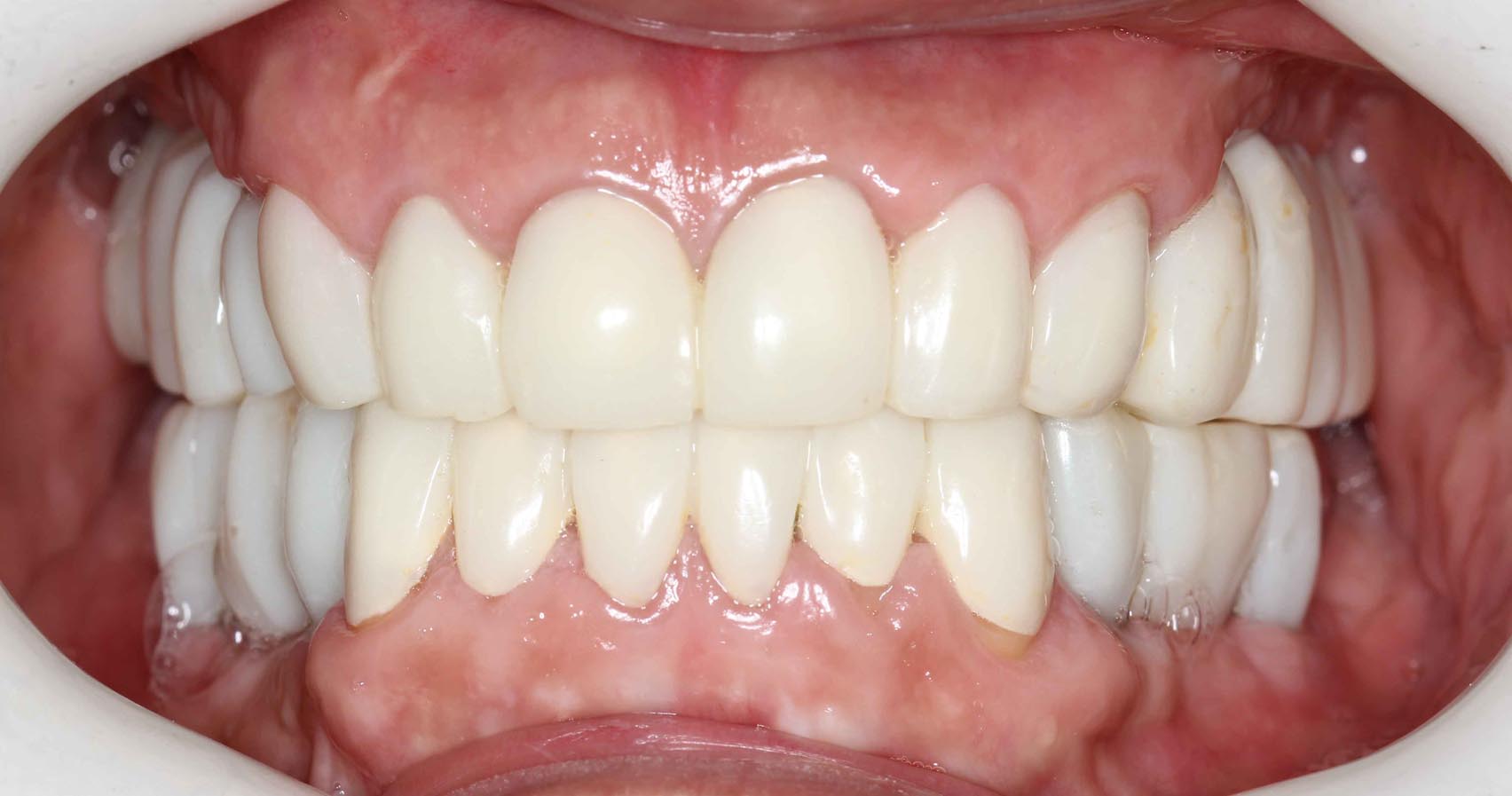
After three months of implant healing, provisional (temporary) restorations are placed on all teeth and all implants
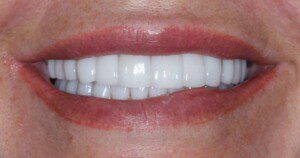
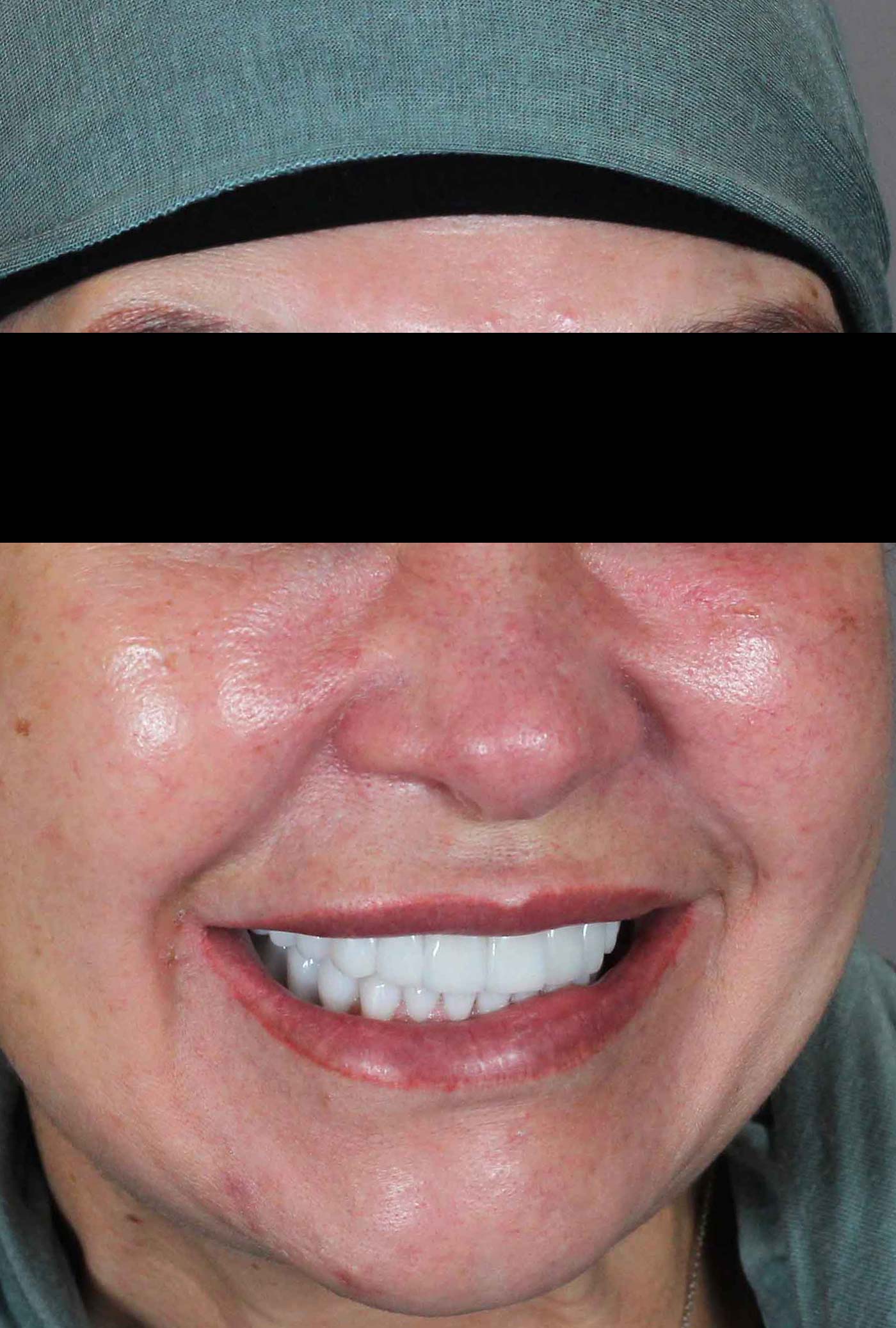
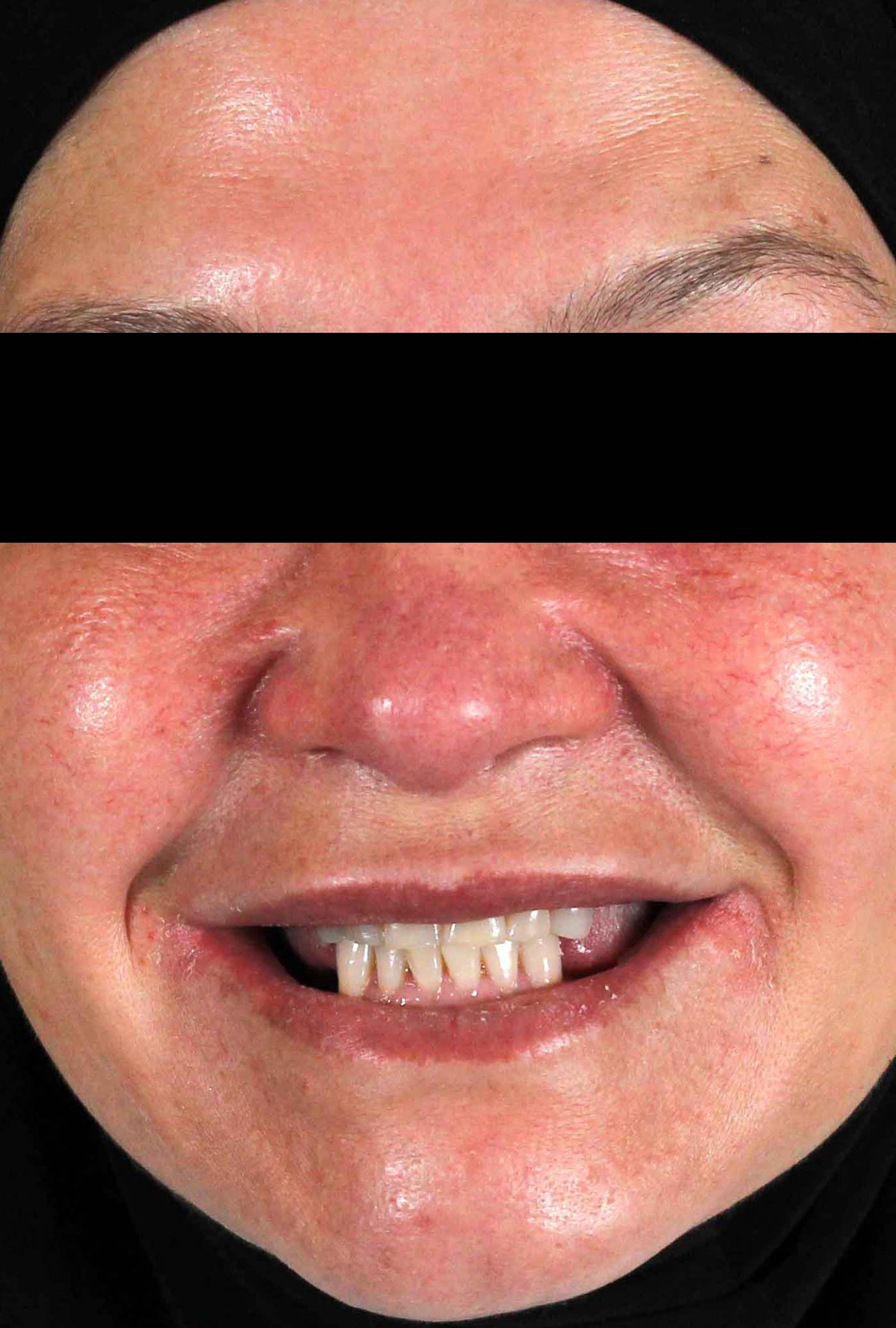
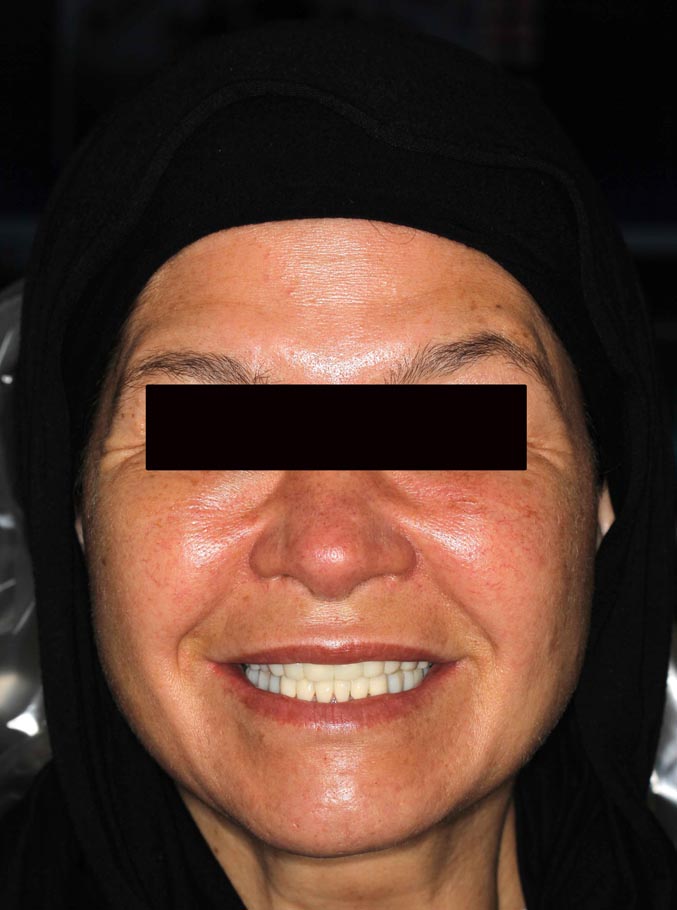
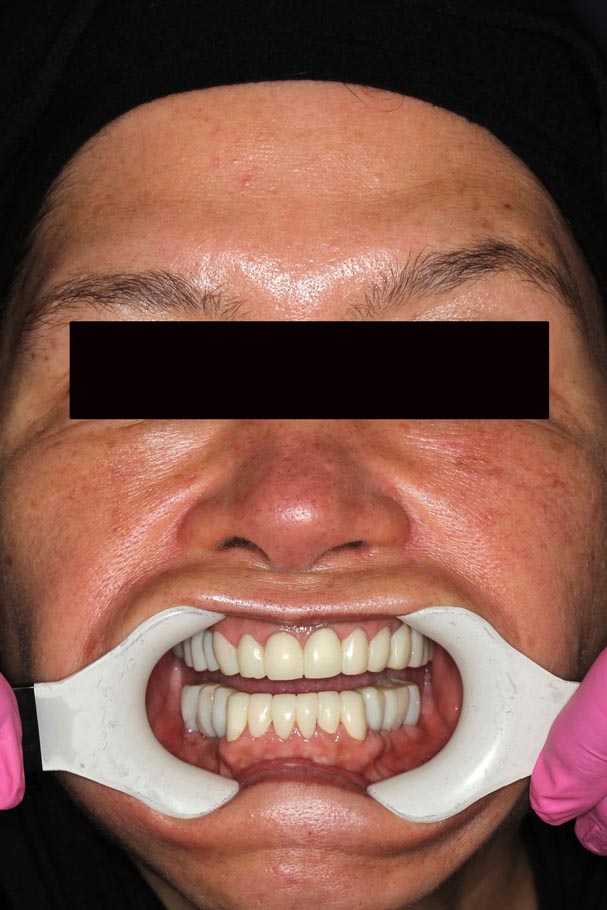
In preparation for final restorations, many photographs are taken to help the lab improve on temporary restorations: determine midline position and cant, length, color and shape. Full face, smile.
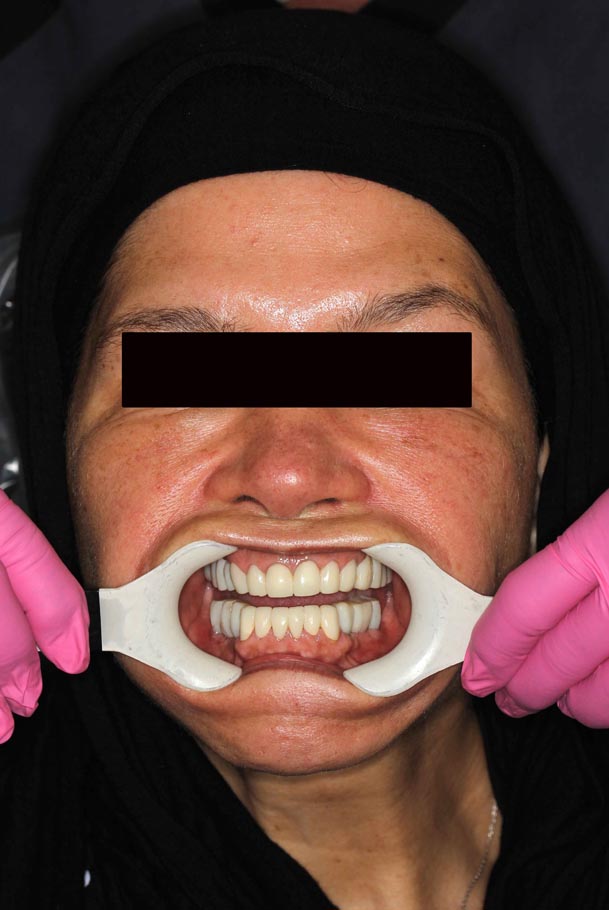
Full face, lips retracted, frontal
Close-up
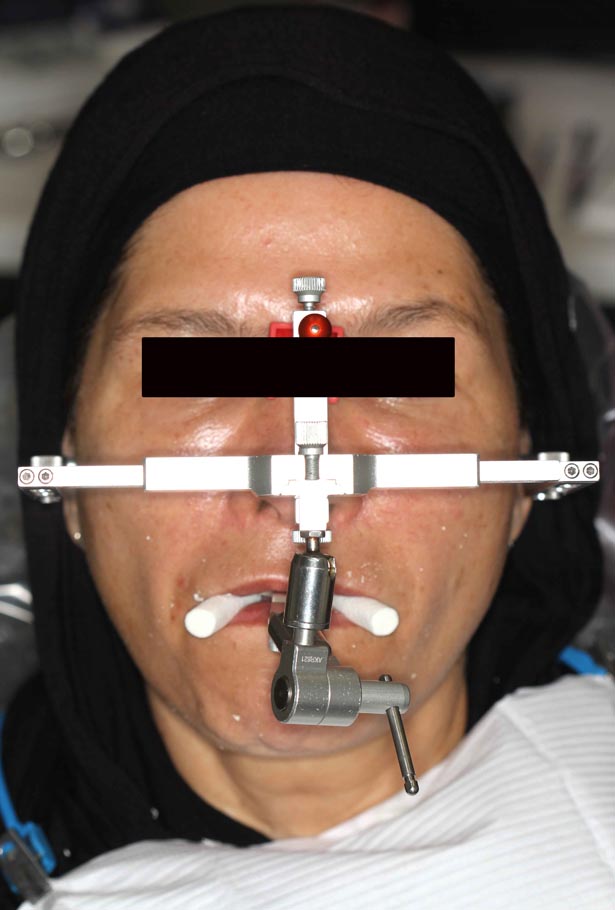
This is called a facebow transfer. It allows the lab to articulate the upper cast on an articulator with the same anatomy as the patient’s skull.
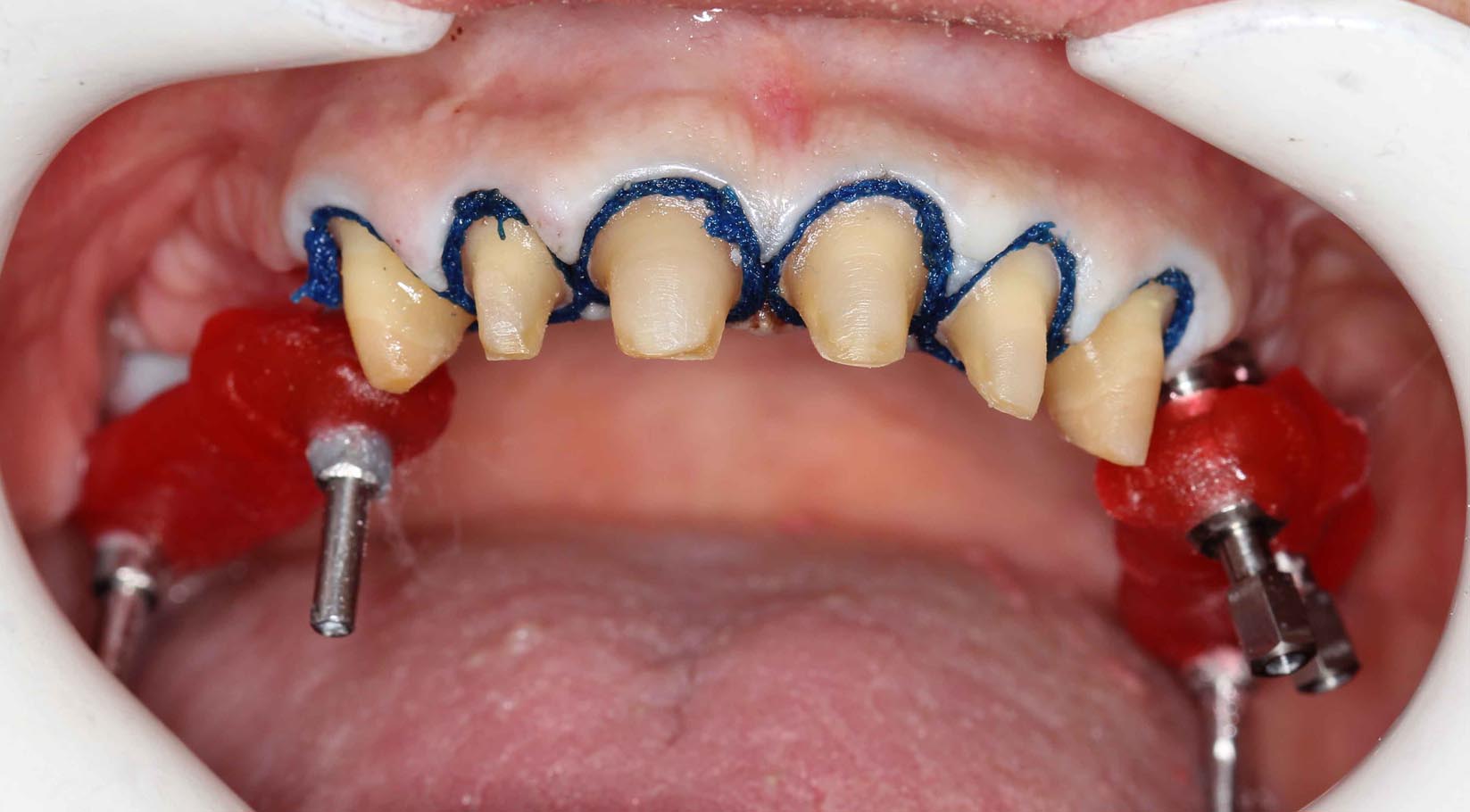
Upper tooth preparation, implant impression copings ready for final impression. This may be the most difficult, most important part of the procedure.
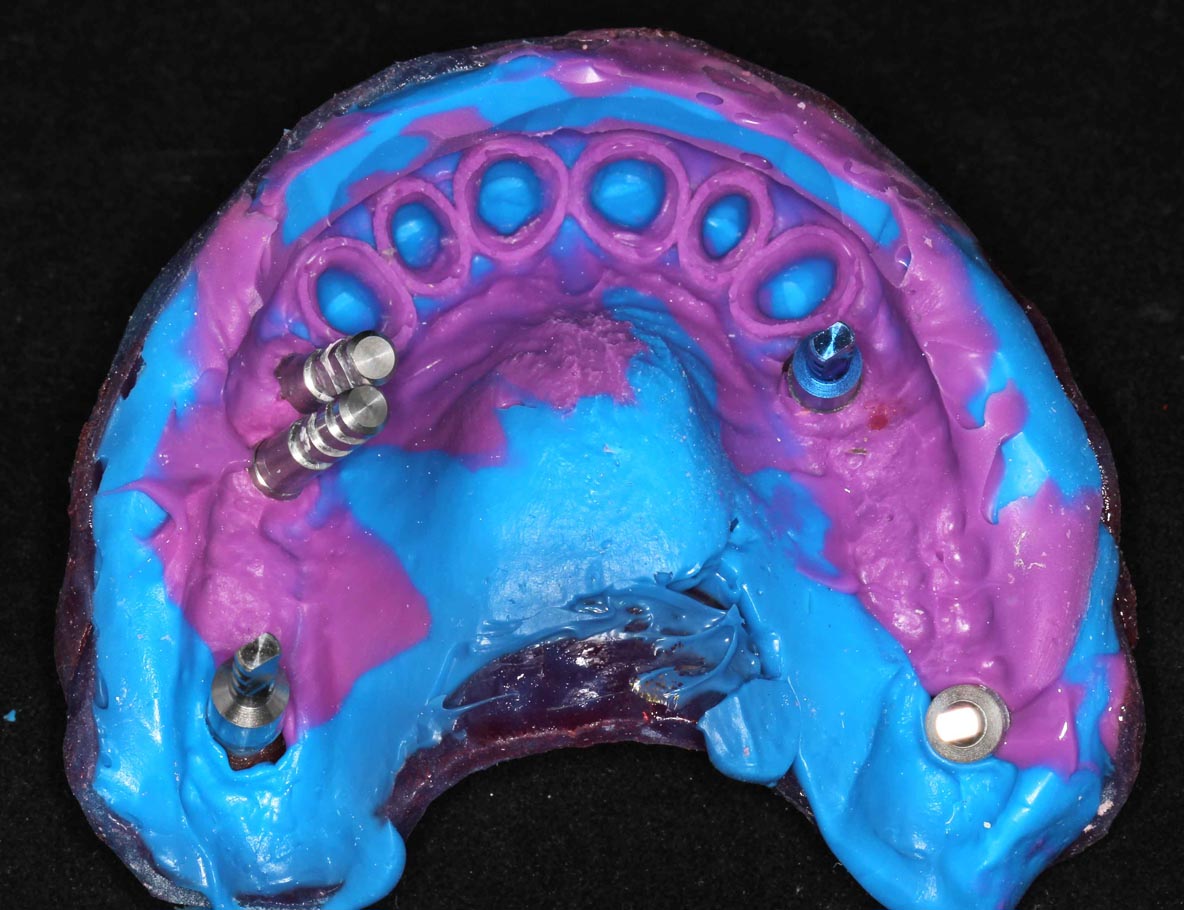
Upper final impression
Upper final impression with implant analogs (they are laboratory replicas of the implants. They capture position and “timing” of the implants.
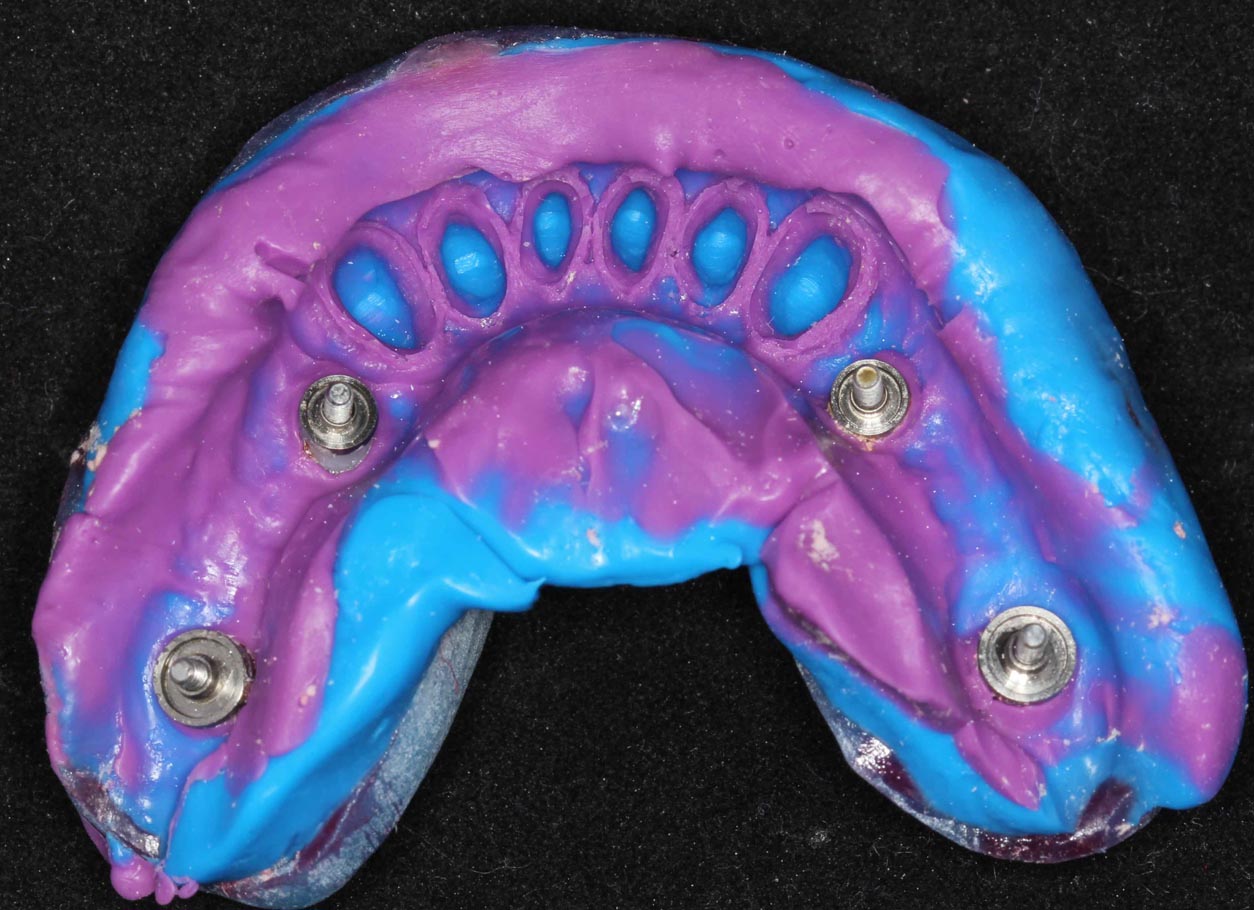
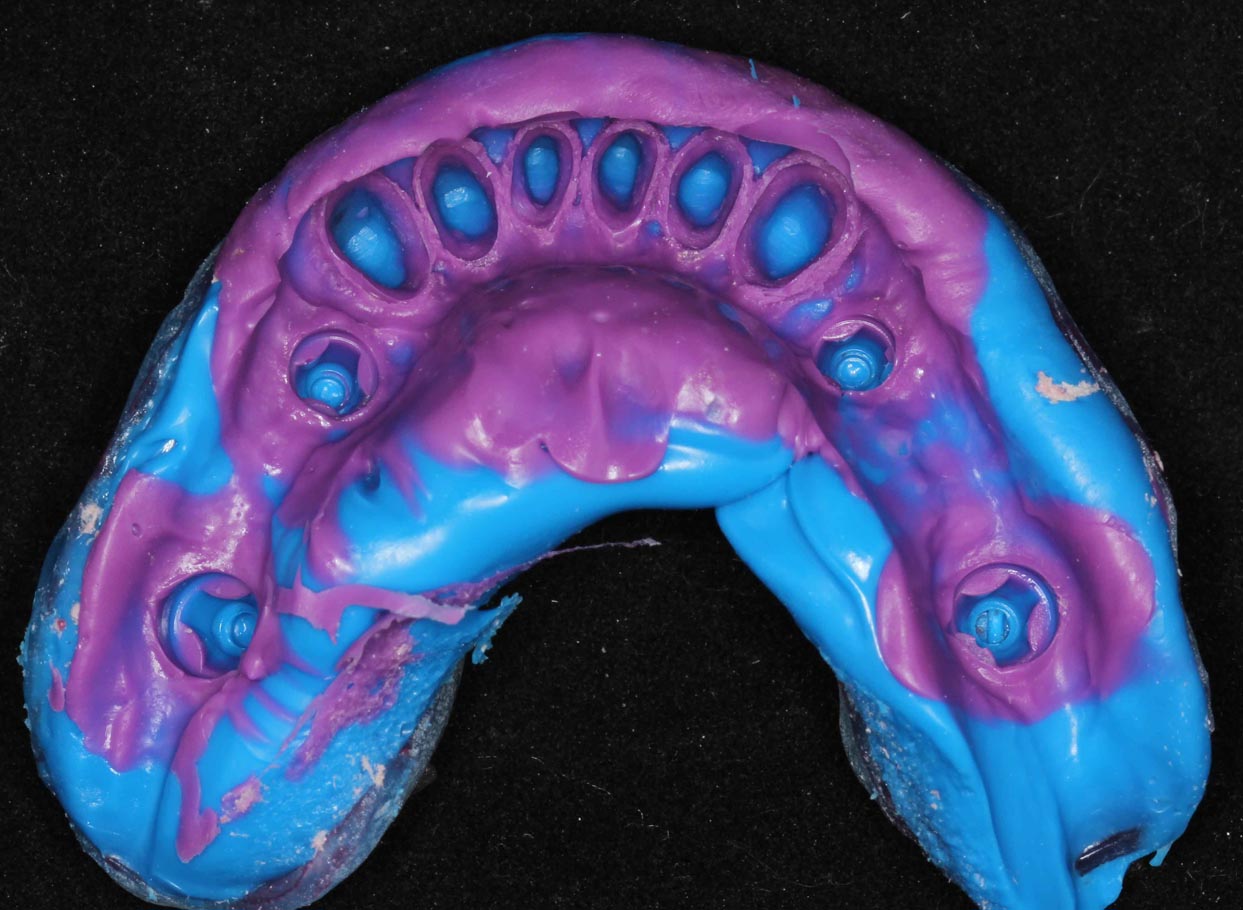
Lower final impression with non-repositionable copings
Lower final impression with repositionable copings
Lower final impression with analogs in place
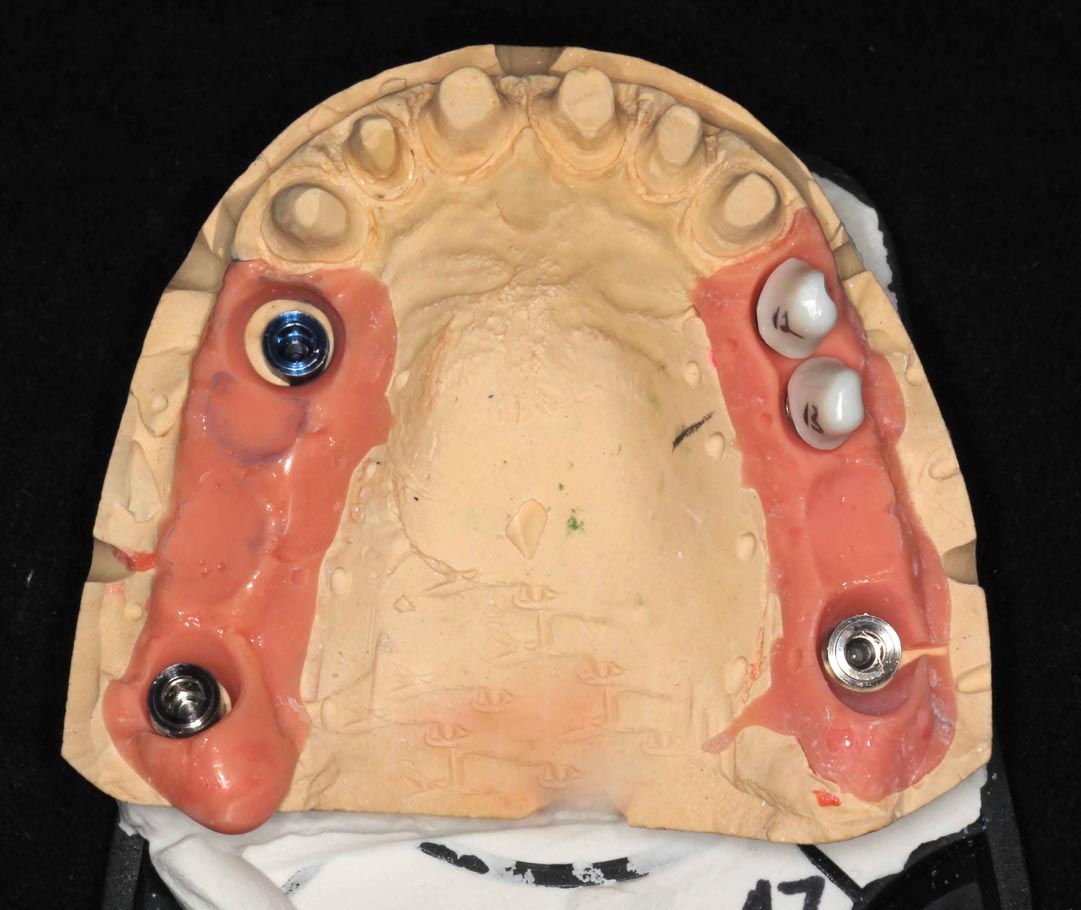
Upper master cast, occlusal view
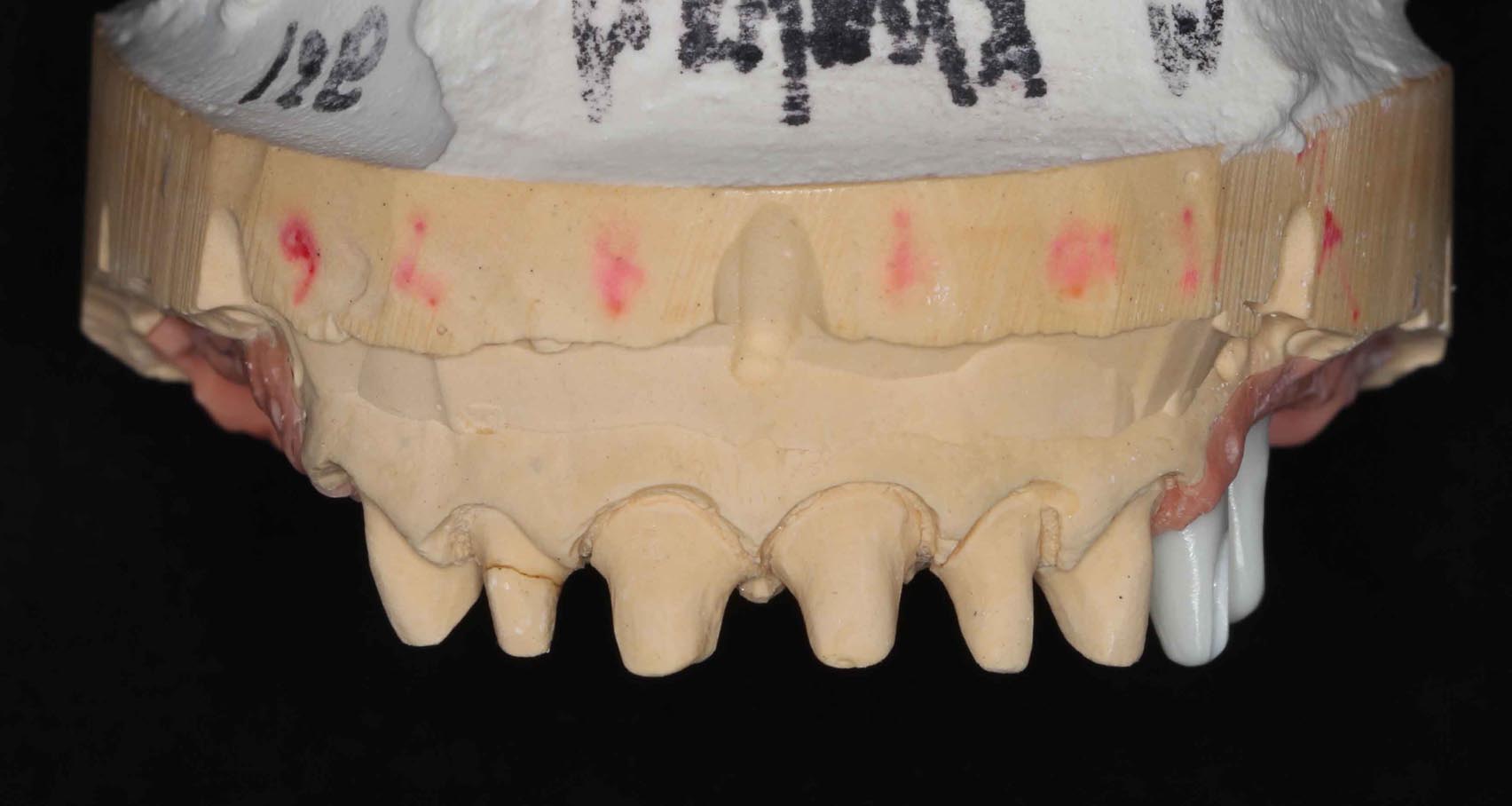
Upper master cast, frontal view
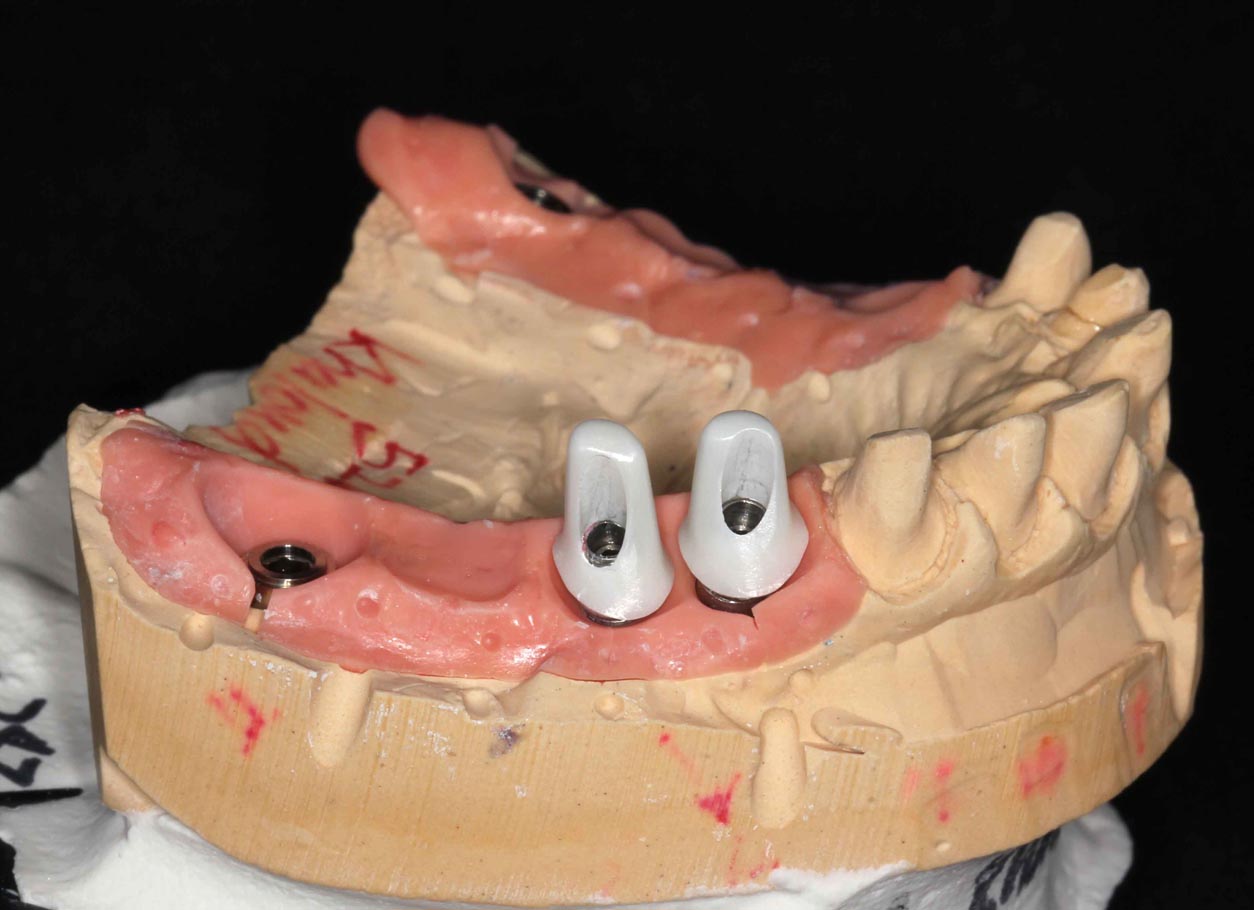
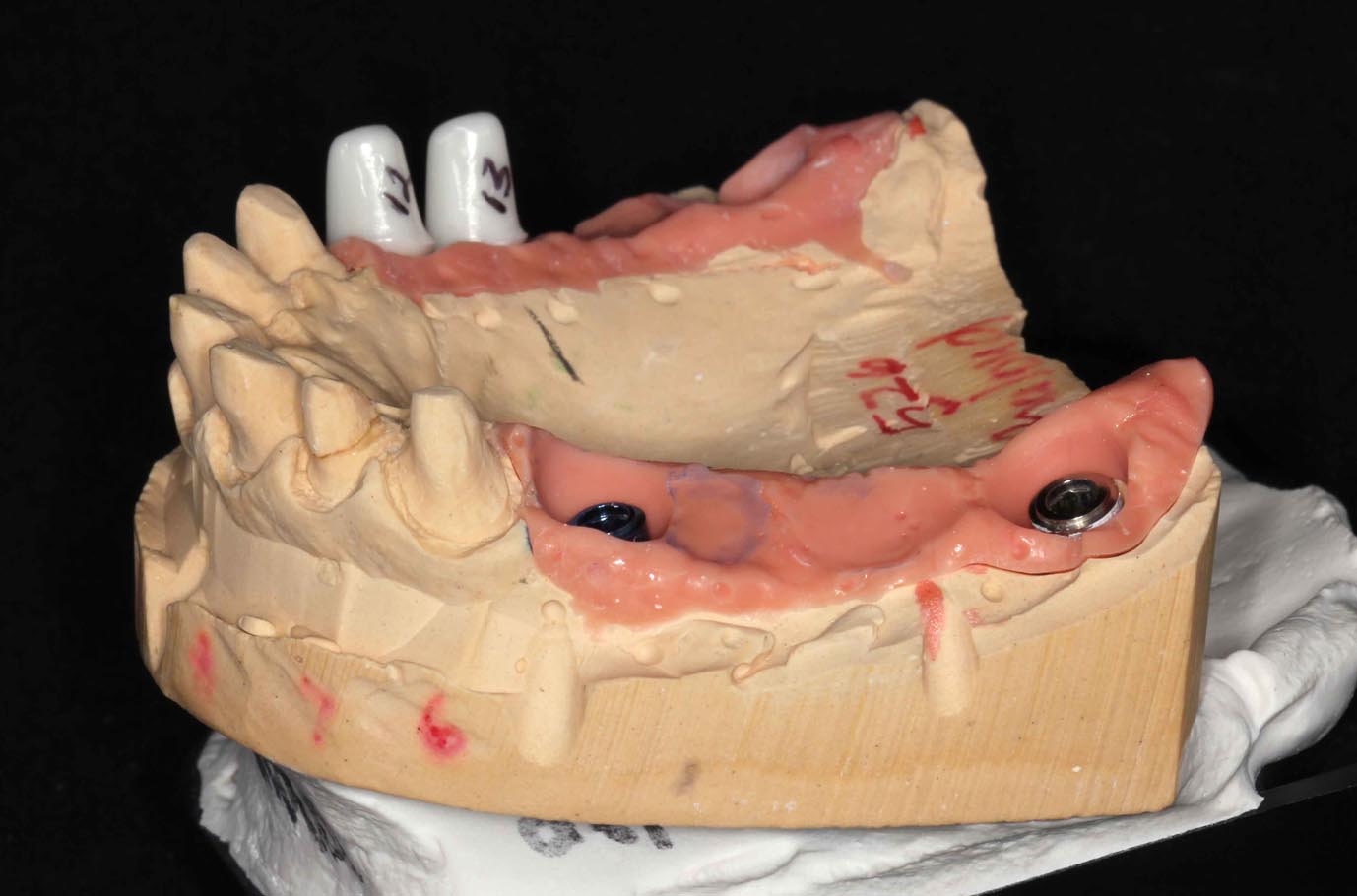
Upper master cast left side view with custom abutments
Upper master cast right side view
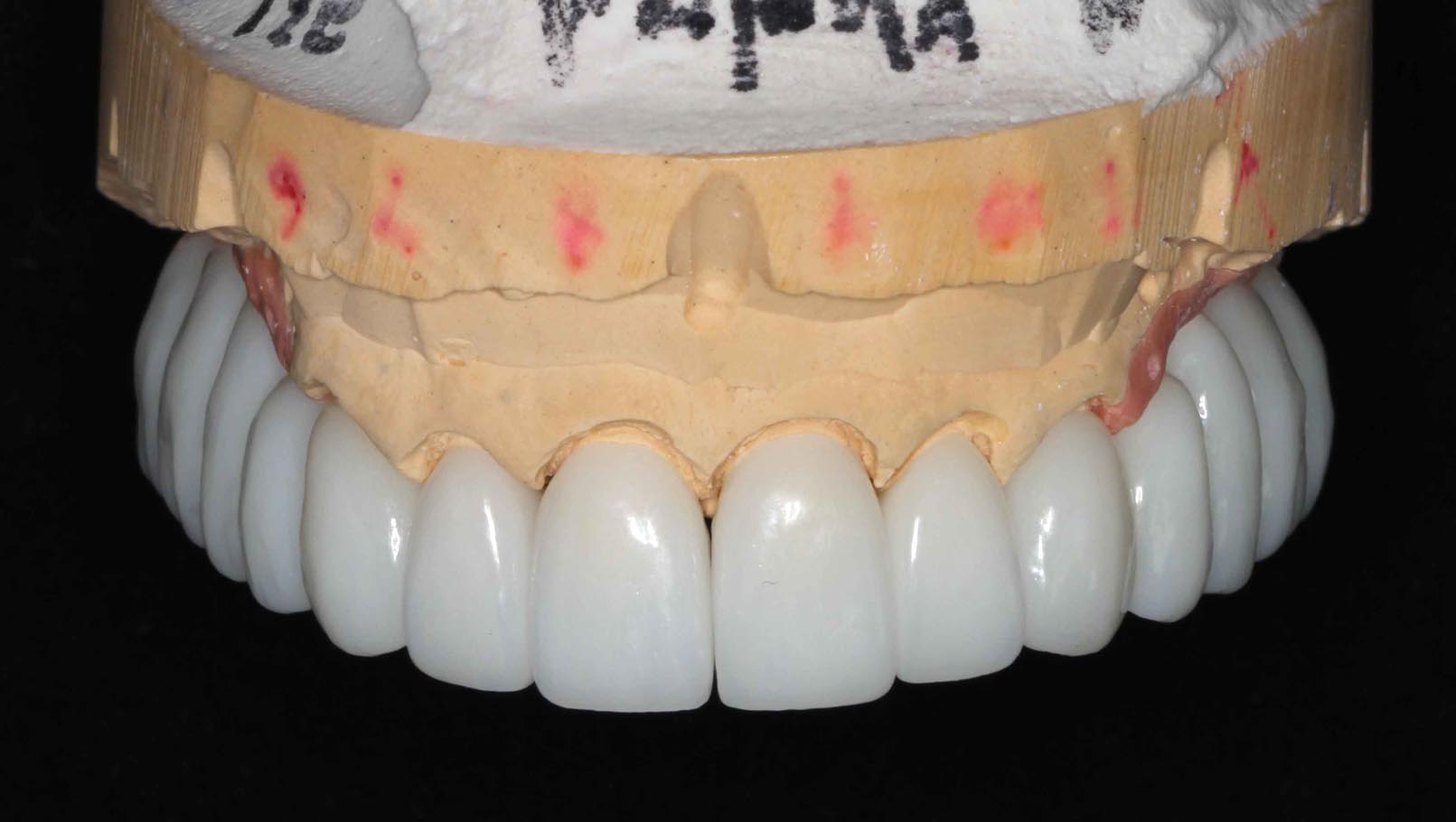
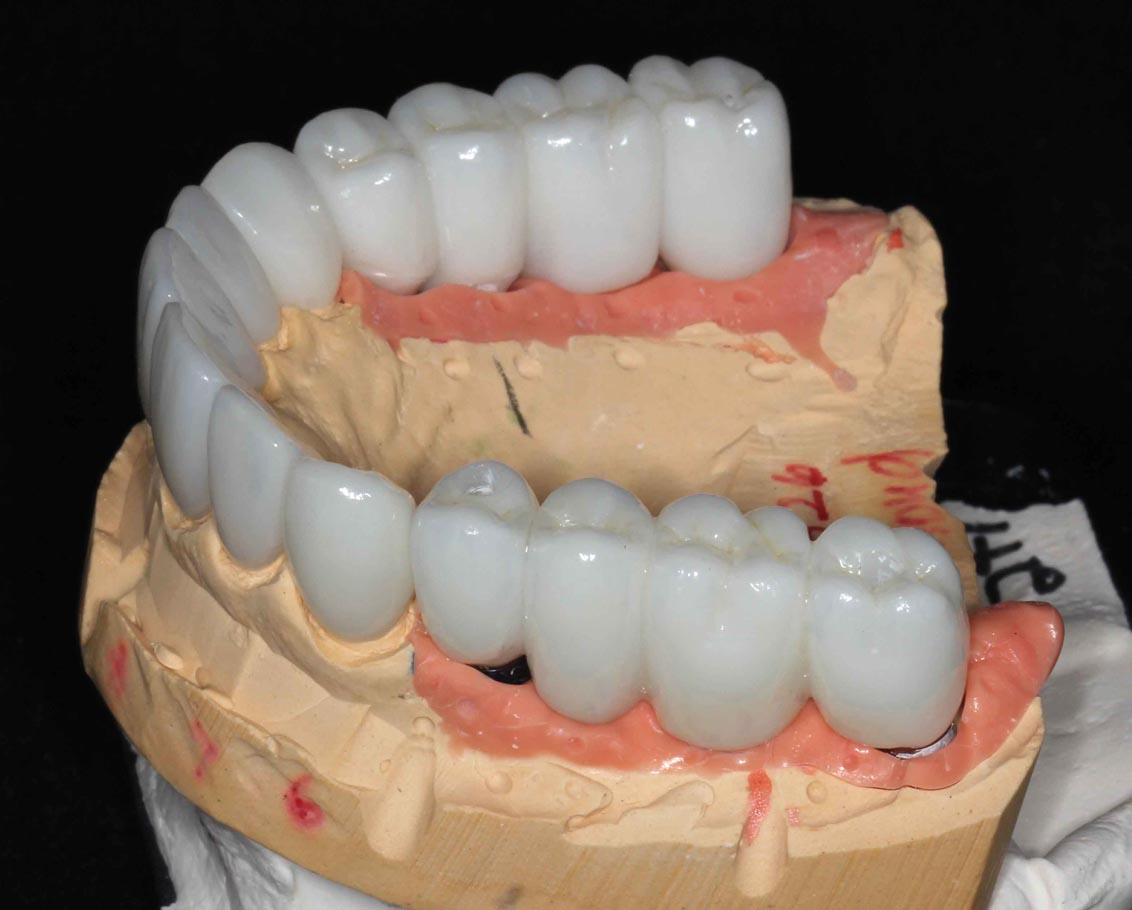
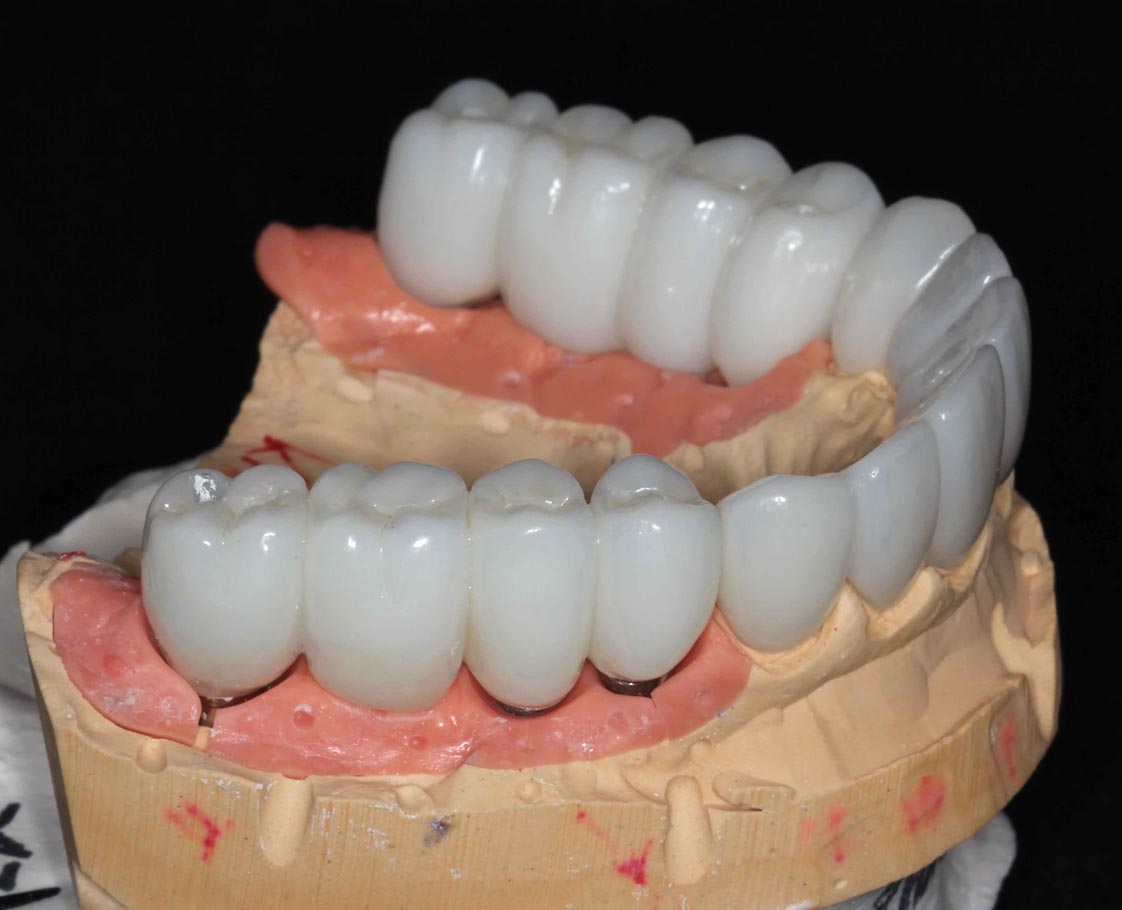
Upper master cast with definitive restorations, frontal view
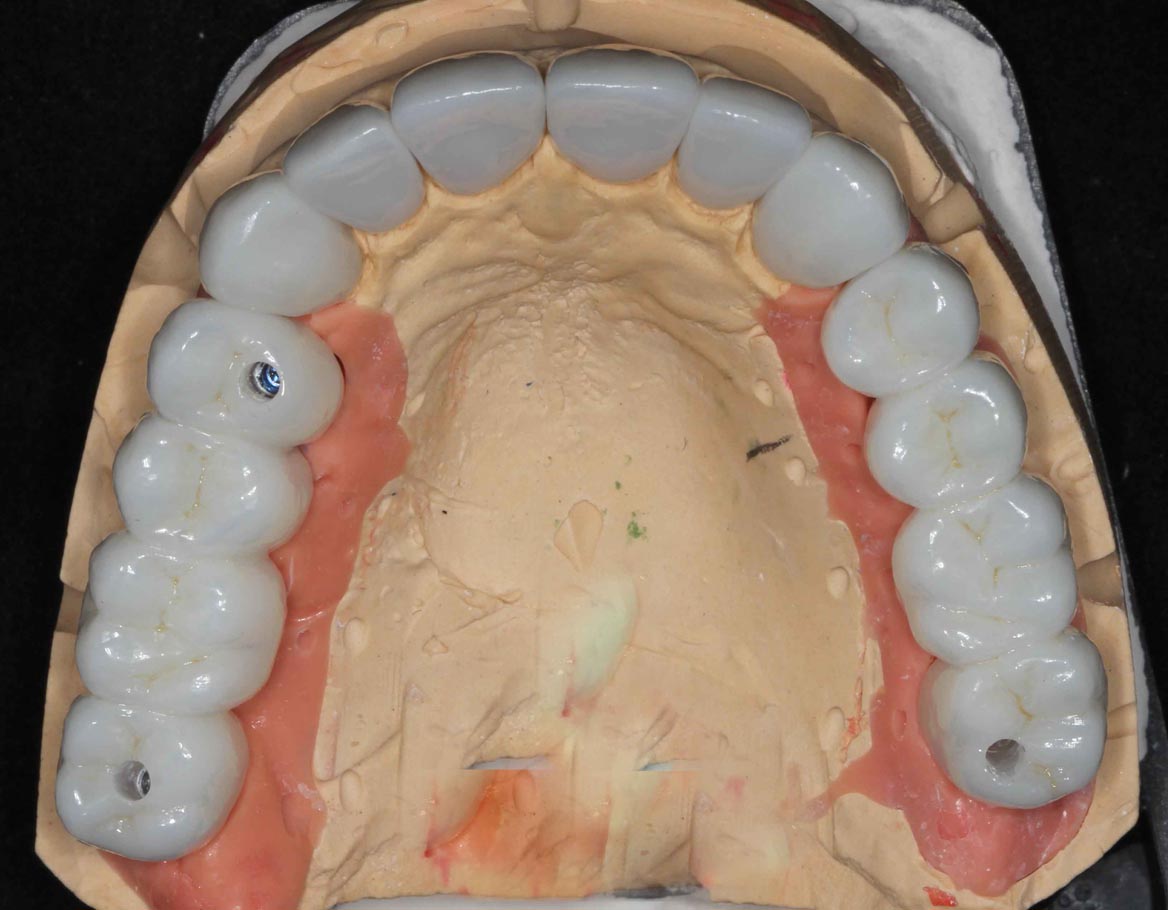
Upper master cast with definitive restorations, occlusal view
Upper master cast with definitive restorations, right side view
Upper master cast with definitive restorations, left side view
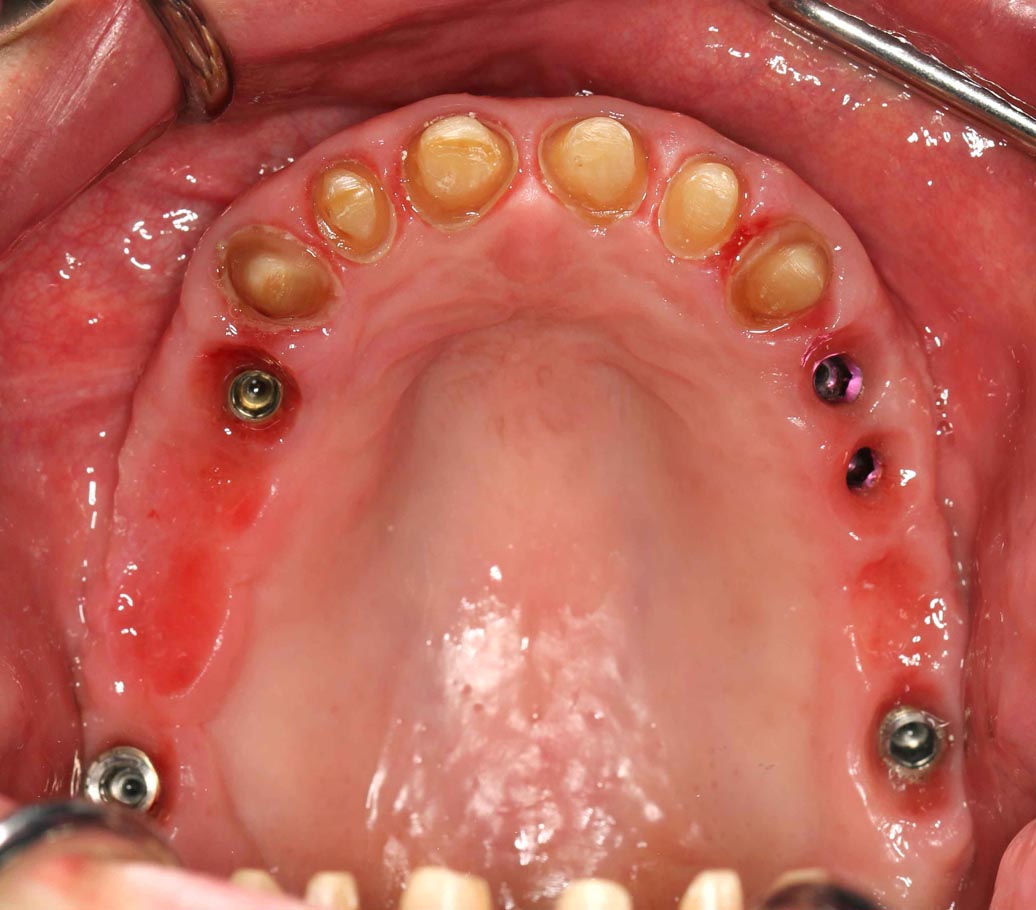
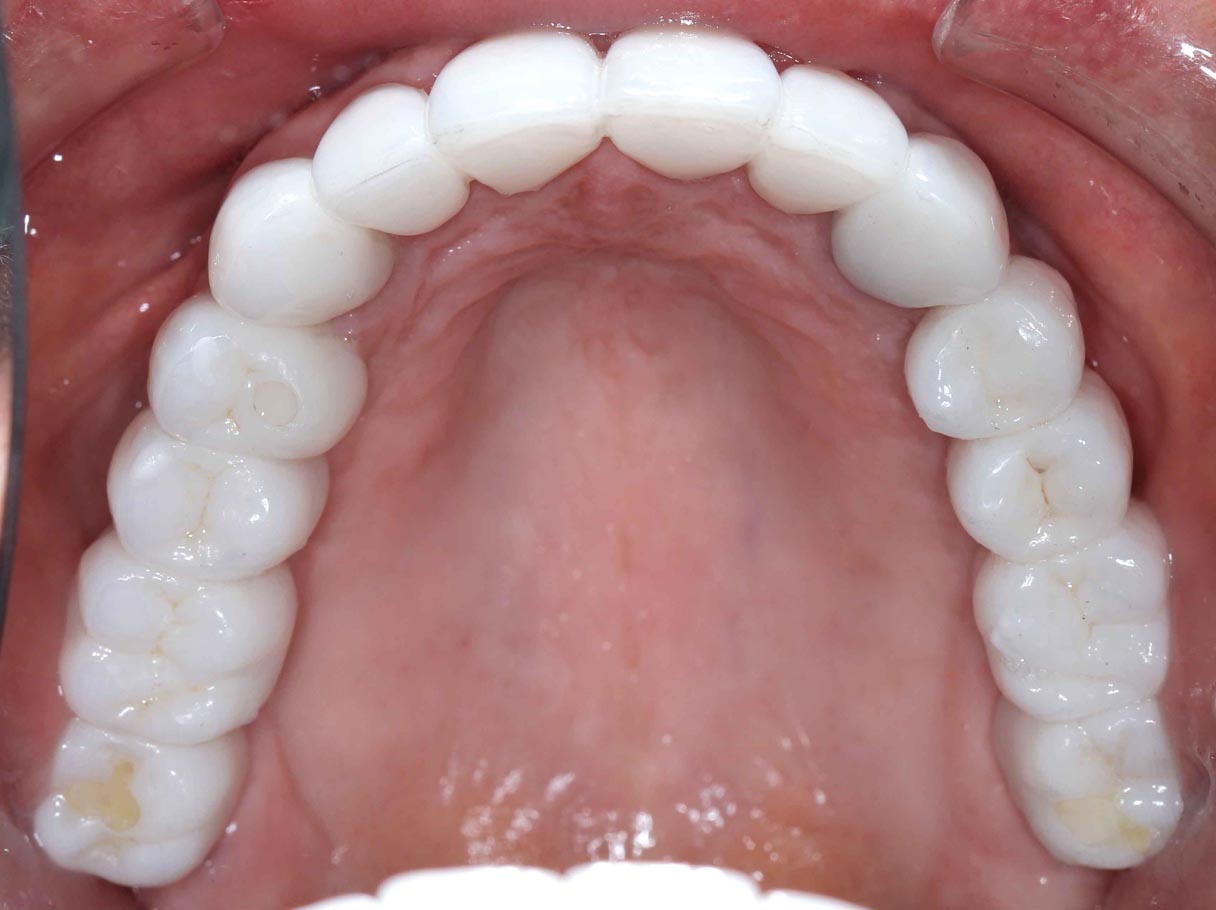
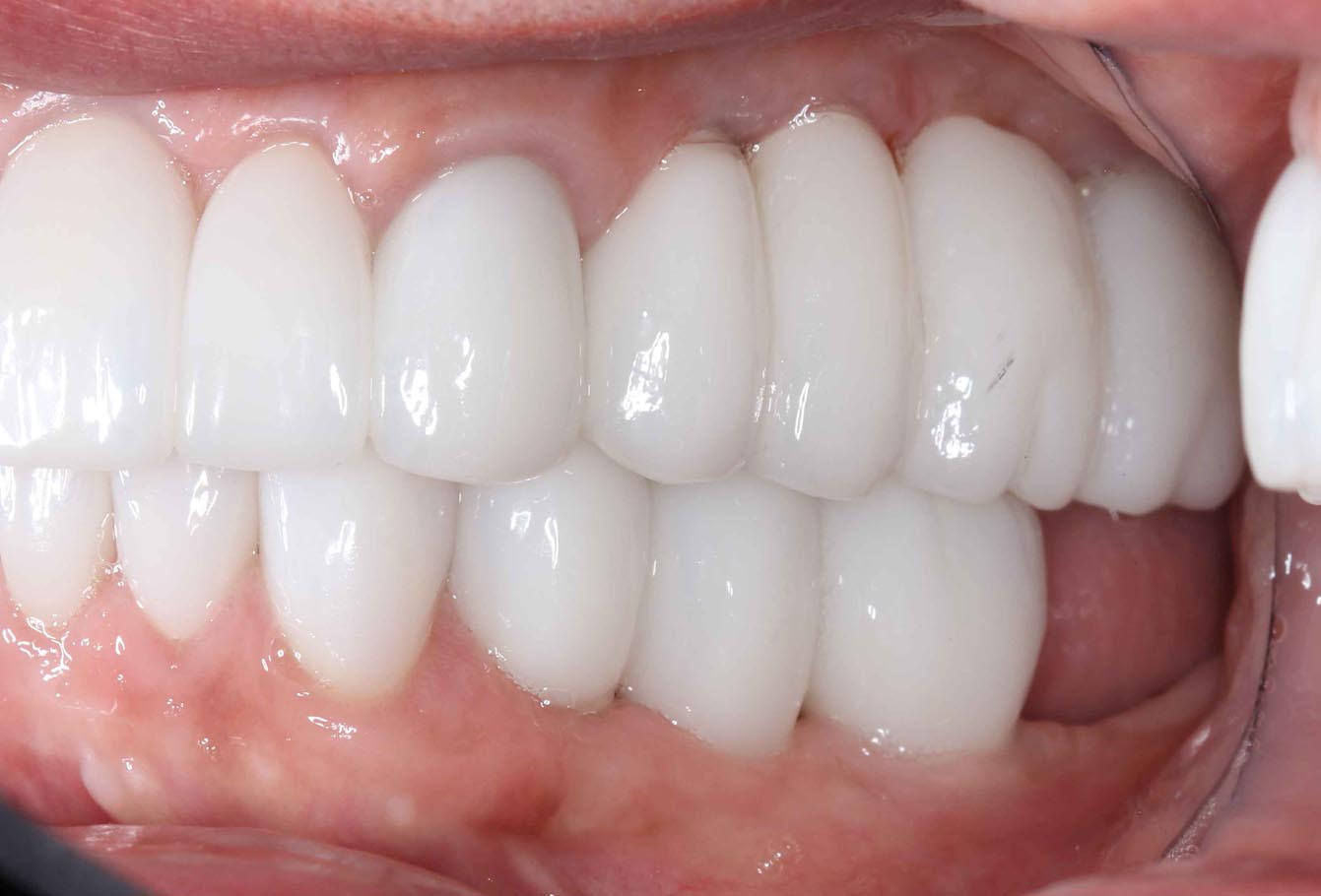
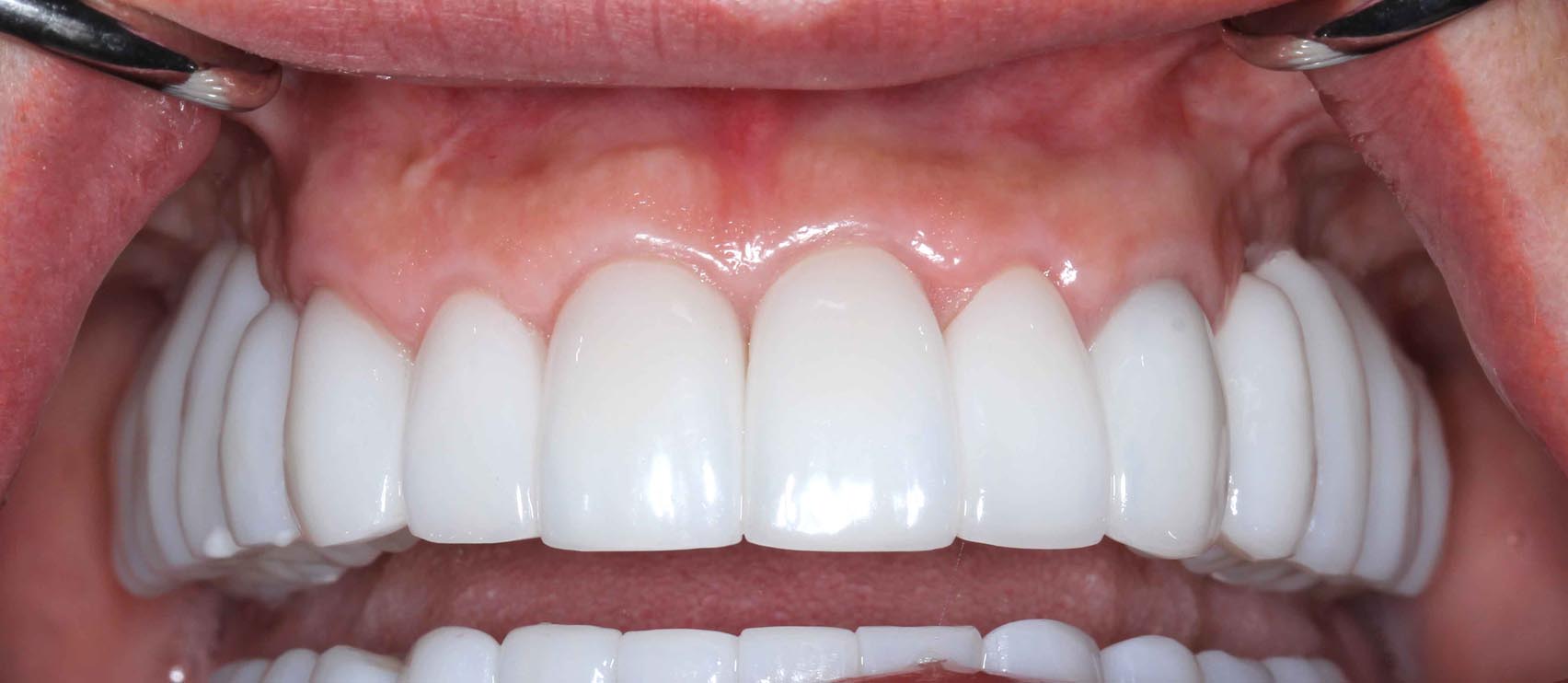
Upper arch on the day of delivery, occlusal view. Note: the broad bony ridge width after bone grafting and the healthy soft tissues after wearing provisional restorations for three months.
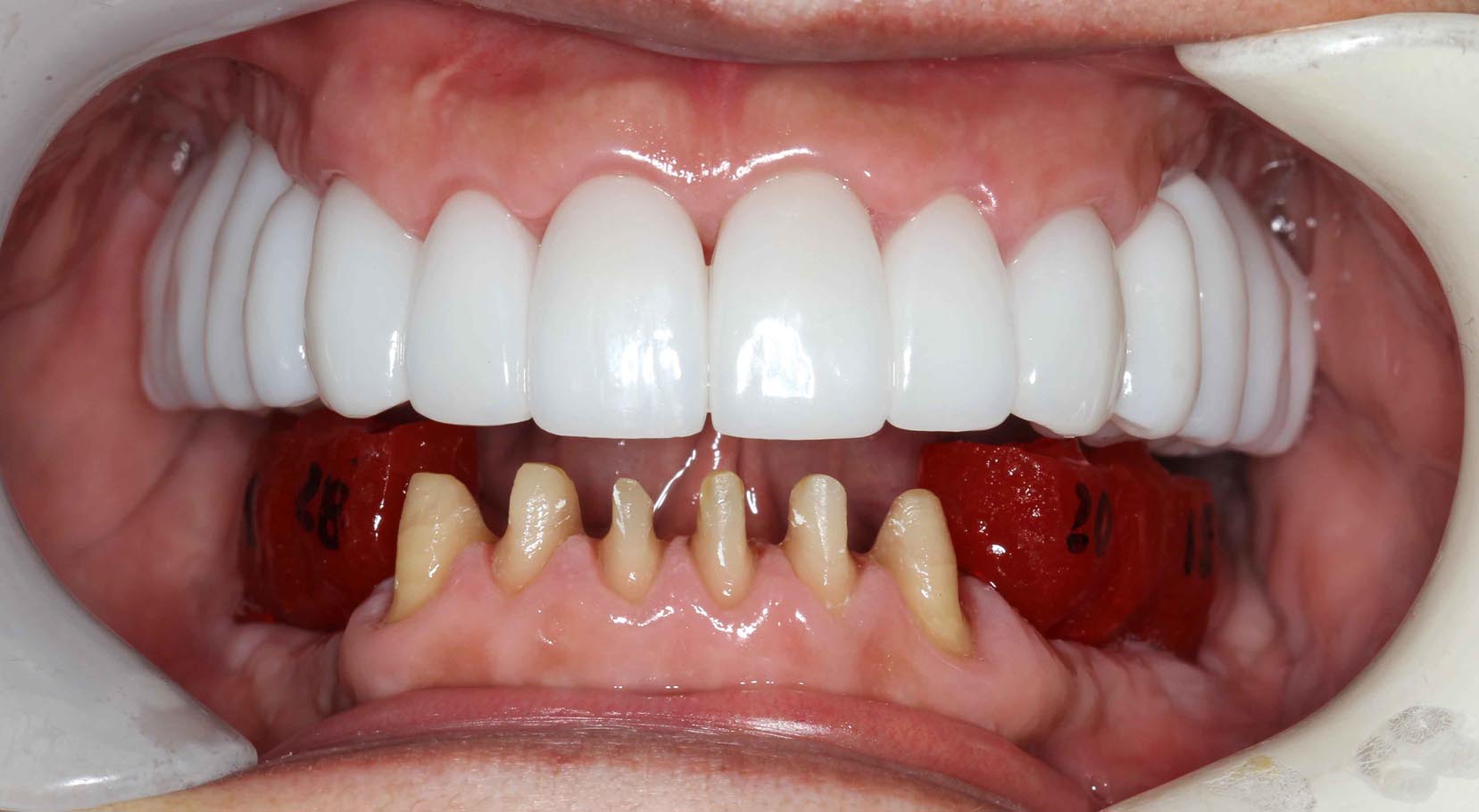
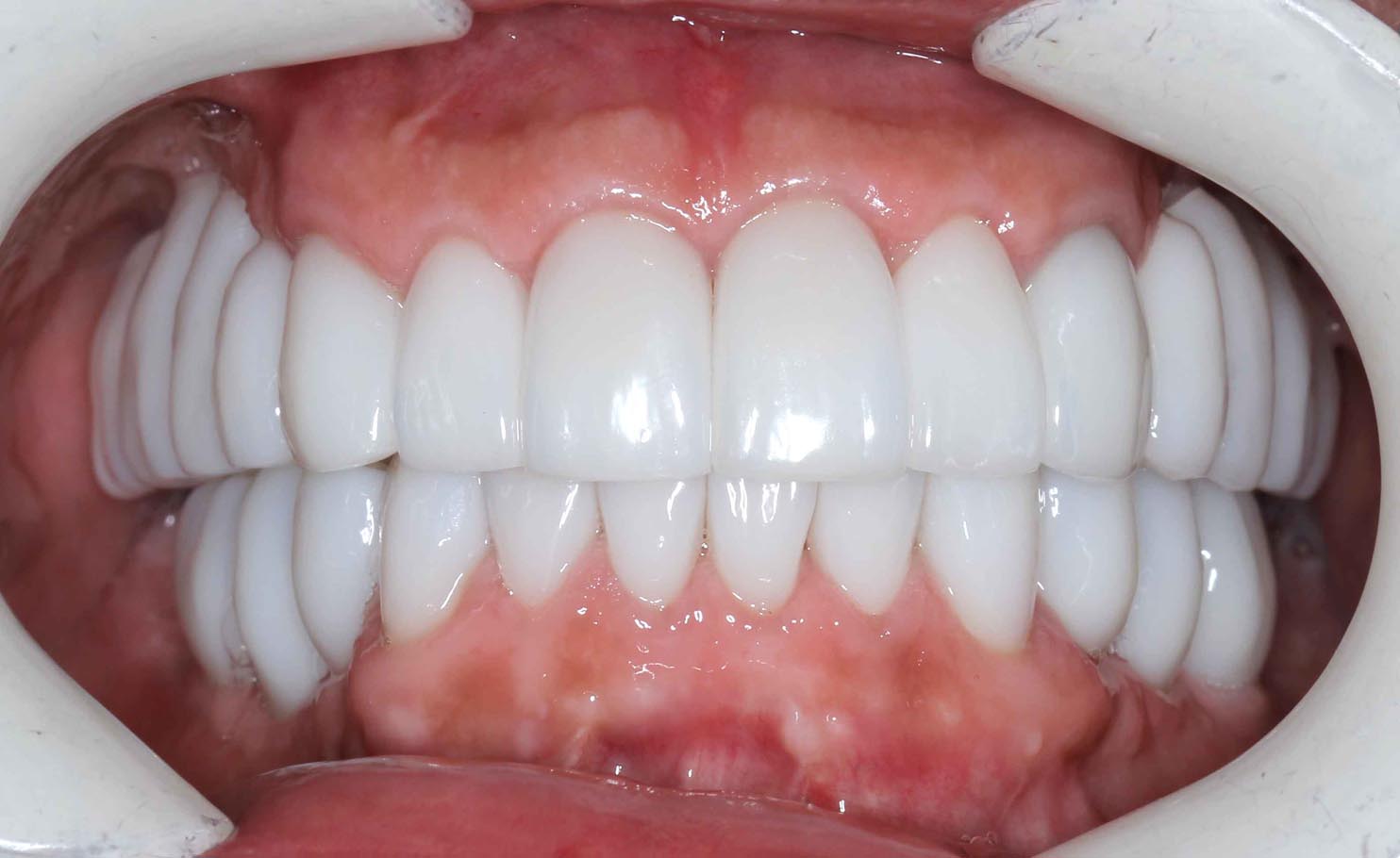
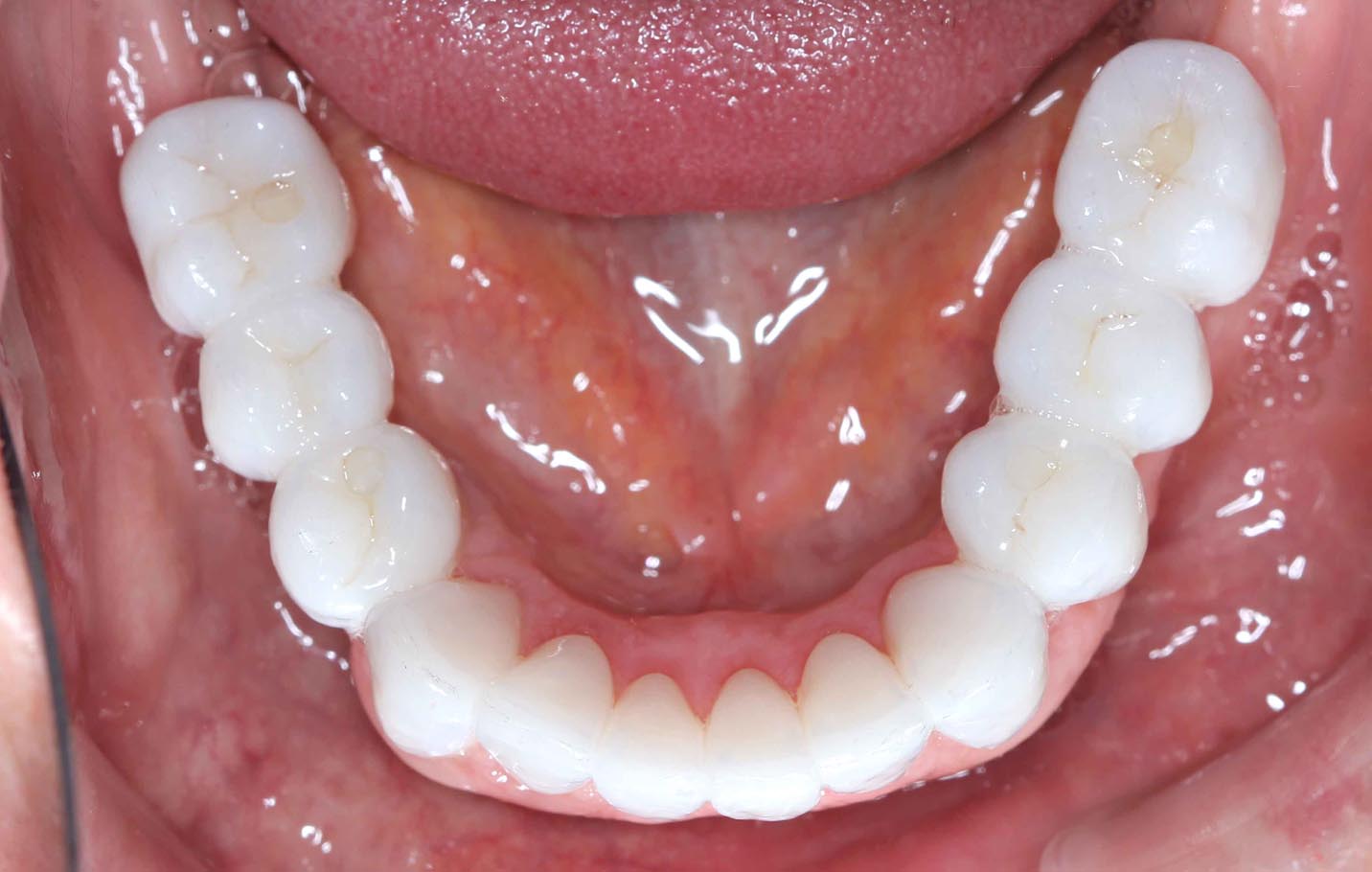
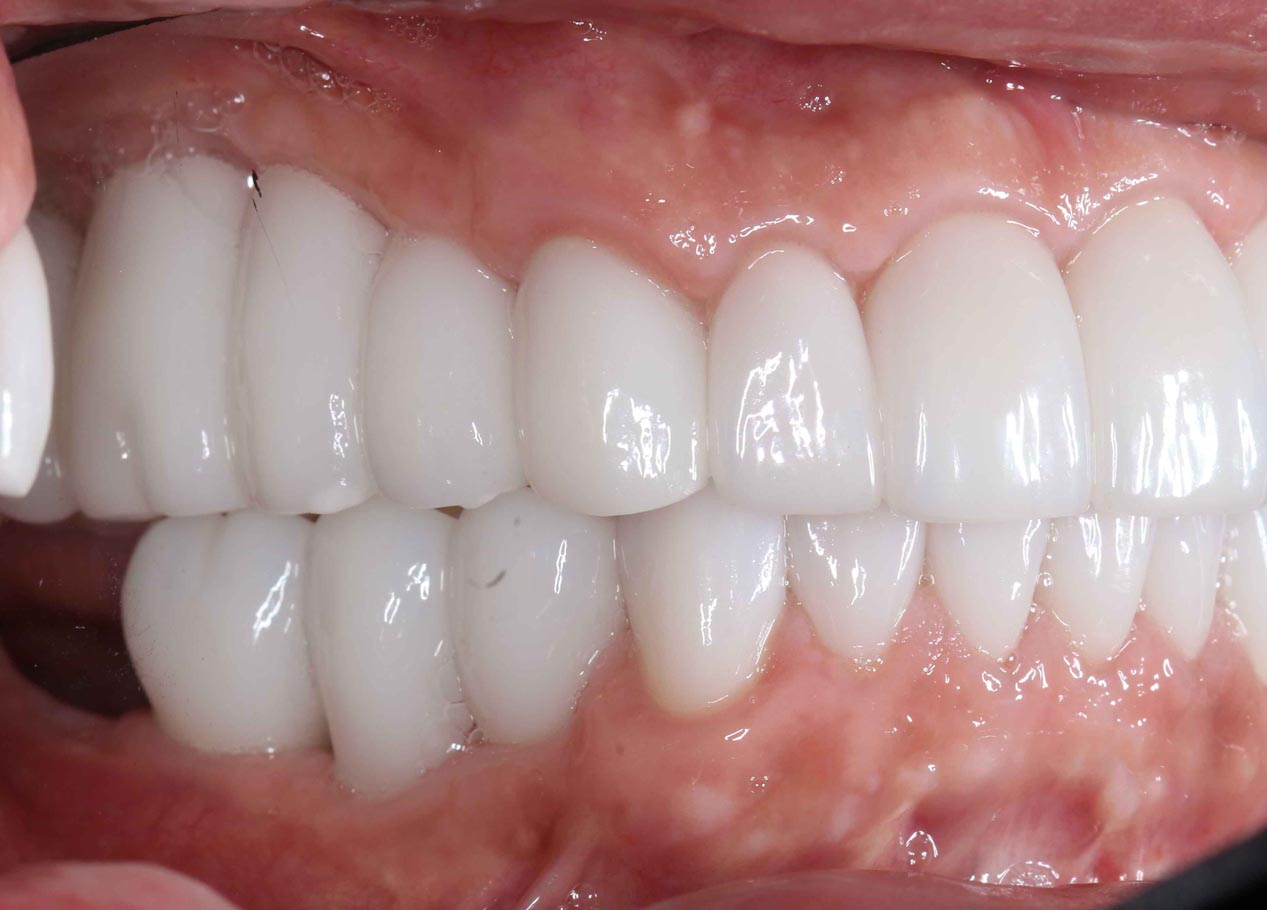
Upper definitive restorations in place, lower preparations and verification jig ready for inter-occlusal record (bite record), frontal view. Using these jigs allows us to make the bite record at the Vertical Dimension of Occlusion (VDO) which improves accuracy. We do not like to grind on final restorations to get them to fit!