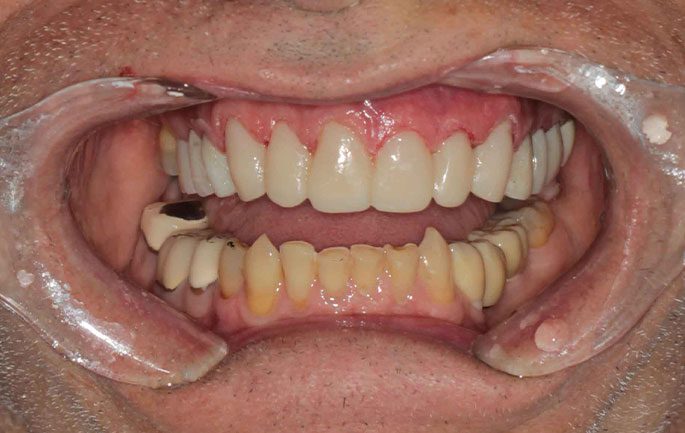
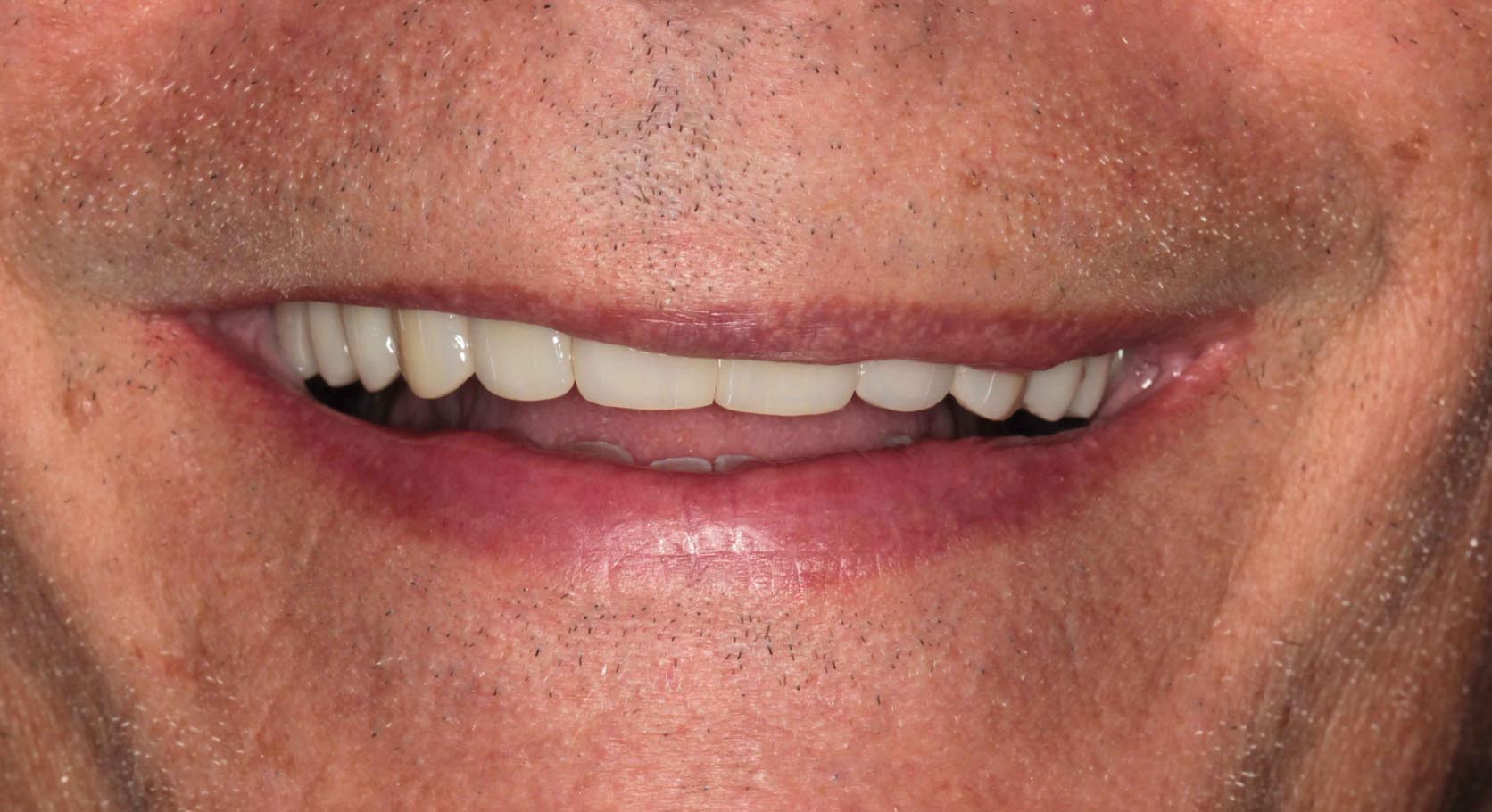
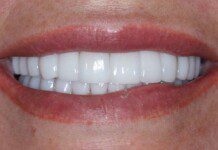
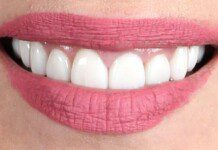
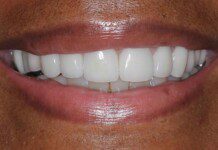
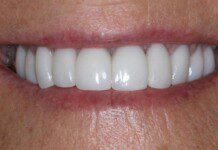
Post-operative smile. Patient is still slightly numb.
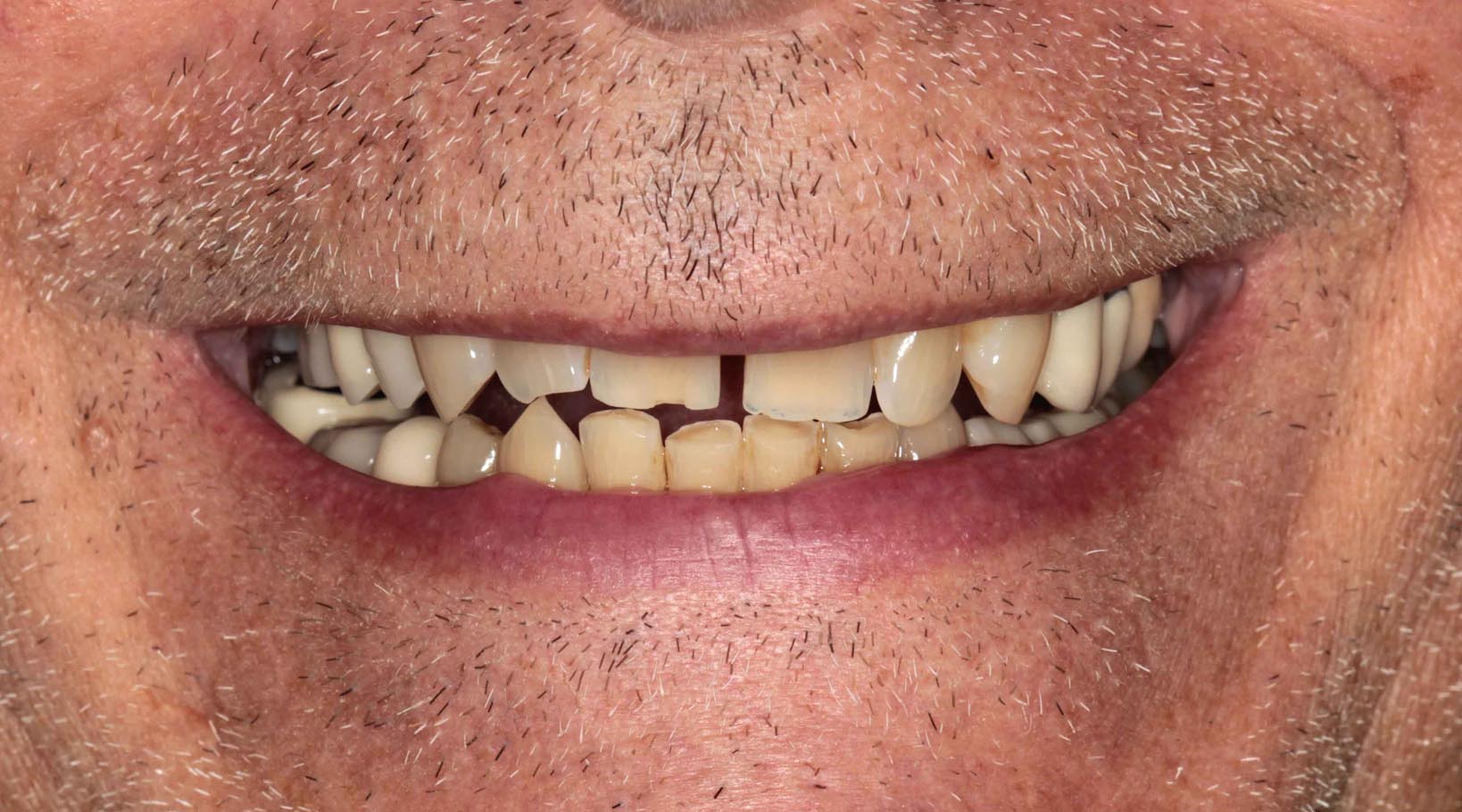
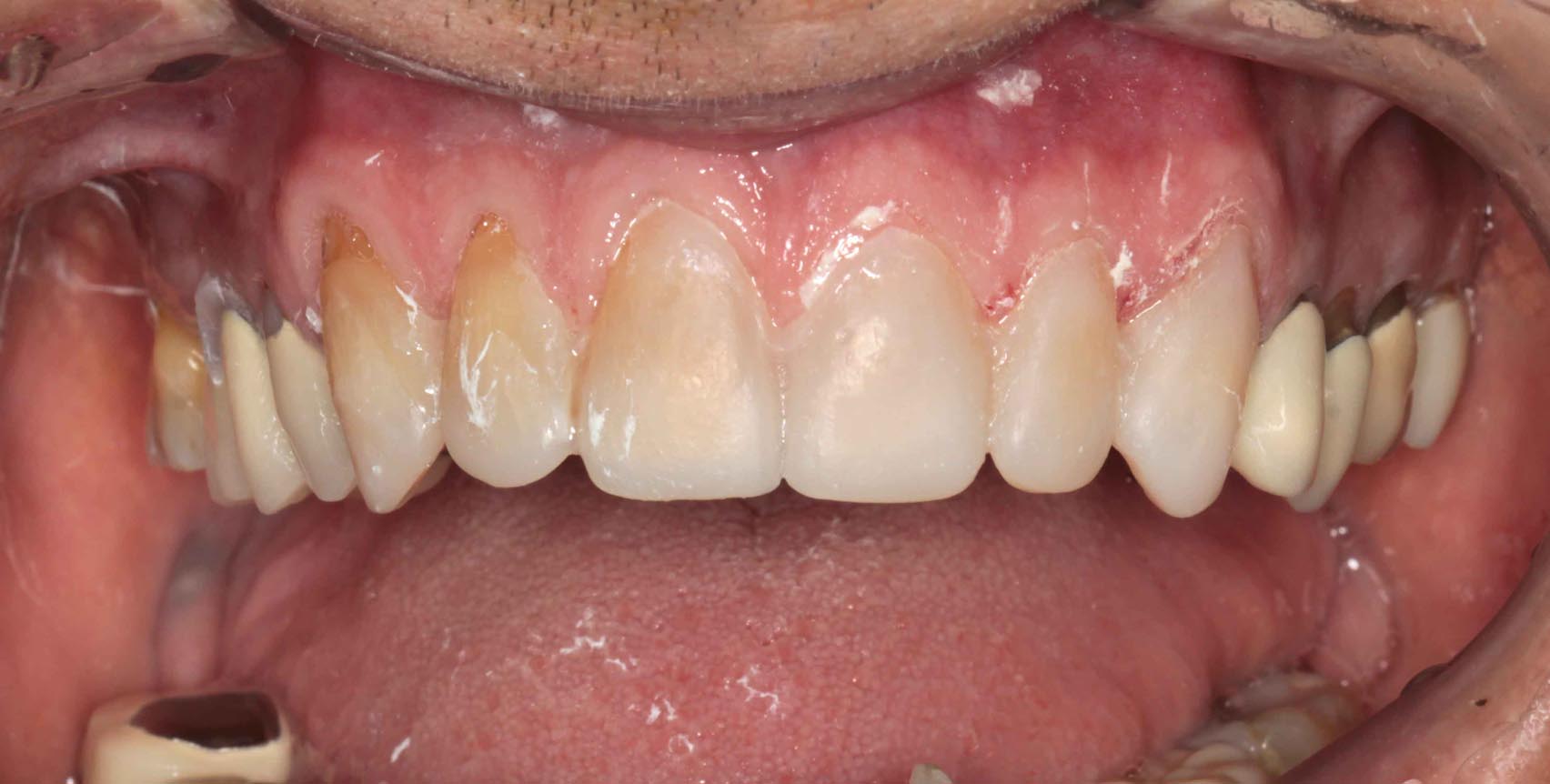
70-year-old male with poor aesthetics, diastema (spaces), worn teeth from grinding, four crowns + six veneers.
1 of 14
Pre-operative smile
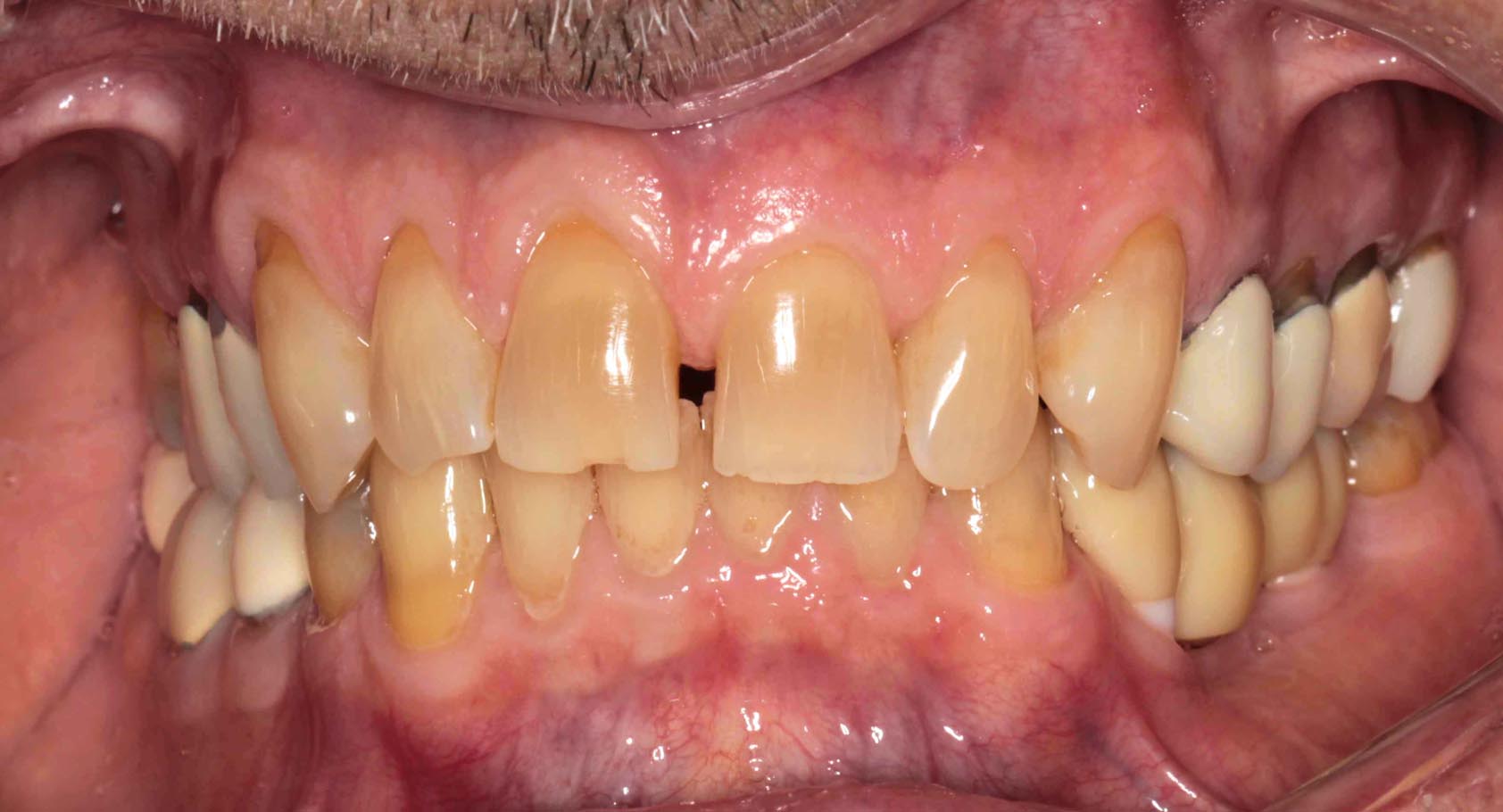
Pre-operative, lips retracted (Note: there were adjunctive procedures that could have improved the outcome, ex: crown lengthening to make gums equal, orthodontics to close spaces and improve bite). The patient declined those procedures as we discussed that his maximum smile did not expose the gumline. He simply wanted his smile “improved”.
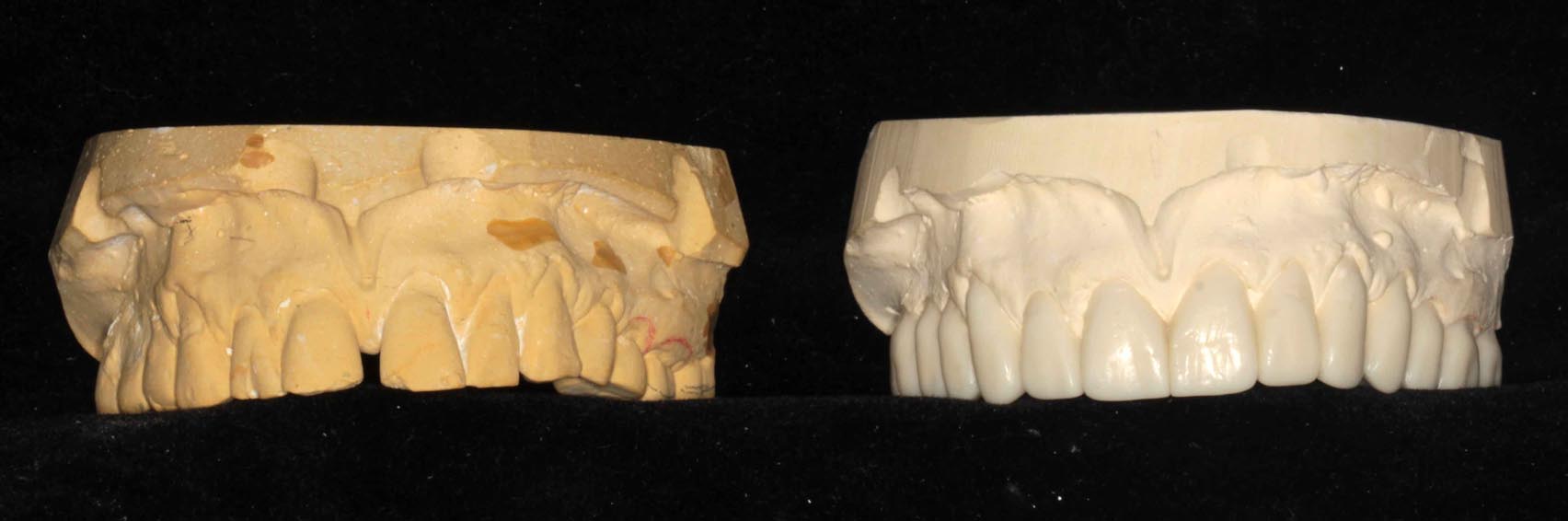
Diagnostic wax-up. We start with a mold/ model of the patient’s teeth. Either with laboratory wax (analog) or from a digital library (digital) an “ideal” set-up or prototype is completed. Patients are invited to view these prior to any final decision and/ or we can temporarily bond composite on to their teeth to give them a reversible “try-in” (below). This reduces the guesswork and allows patients one more layer of contemplation before we go to the irreversible step.
Temporary mock-up with composite resin so patient and loosely view what his new smile would look like. We do this from a diagnostic wax-up (above).
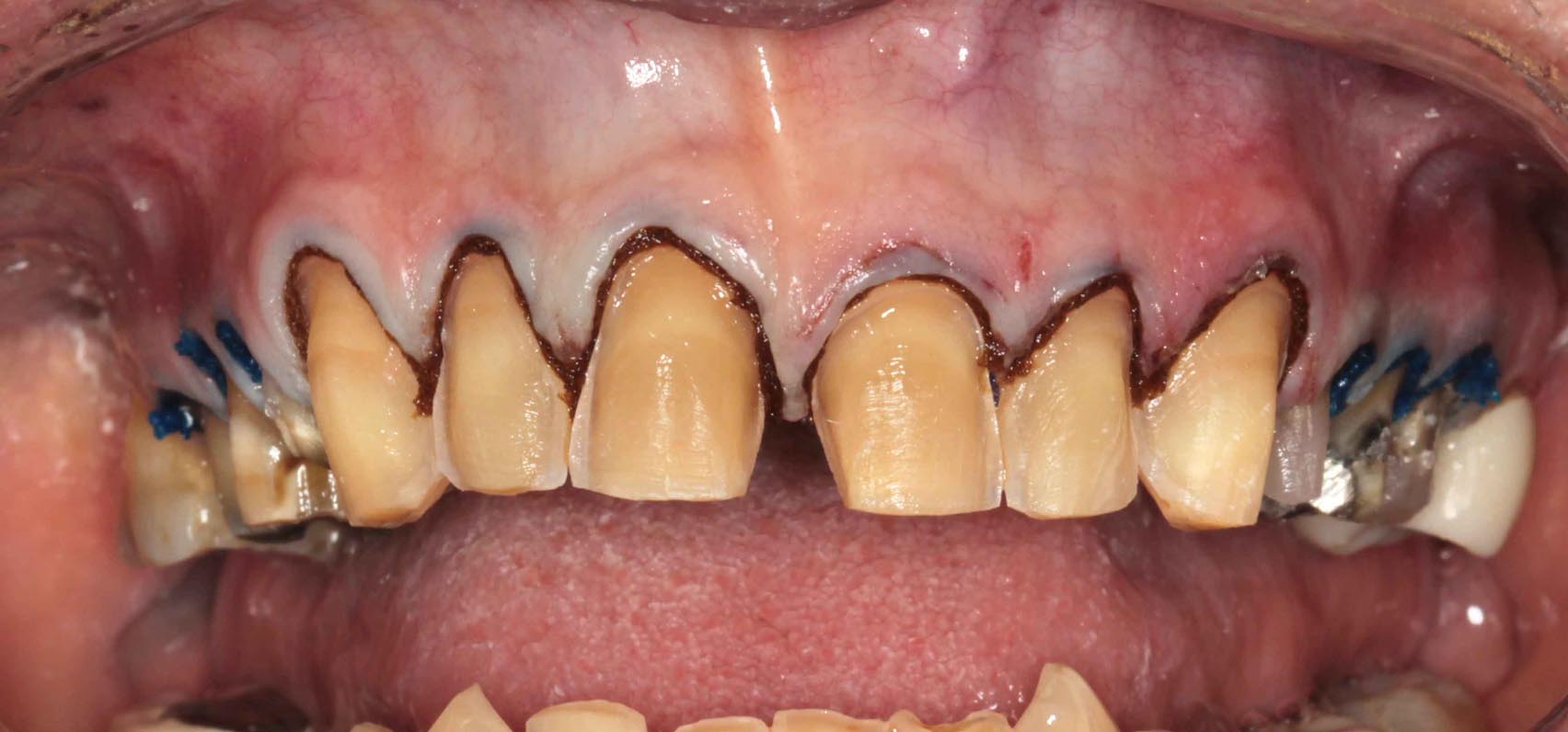
Tooth preparation for the crowns on premolars and the veneers on the six front teeth. Many patients ask about “no prep veneers” but we believe these to be too bulky and when closing spaces, we must prepare between the teeth.
Bonded, temporary crowns and veneers. These pretty temporary restorations will give the patient another chance to evaluate the size, length, color and overall appeal of the new teeth. Any changes or dislikes can be communicated to the lab for modification.
We take full face pictures to share with the lab. The more information given to the lab, the better able they are to match or modify the temporaries.
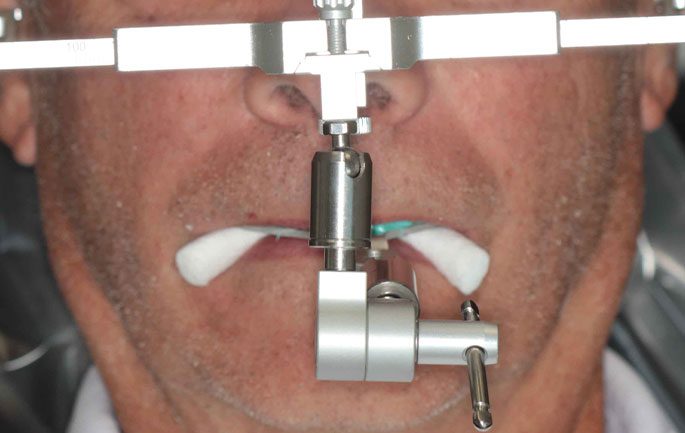
Facebow transfer. This device, invented in 1907 by Dr. Snow, gives vital information about the midline and the “occlusal plane” (the horizontal plane of all the edges of the teeth) so that we can match the inter-pupillary plane (the horizontal plane that passes through the pupils). In the vast majority of patients, these two planes should be parallel.
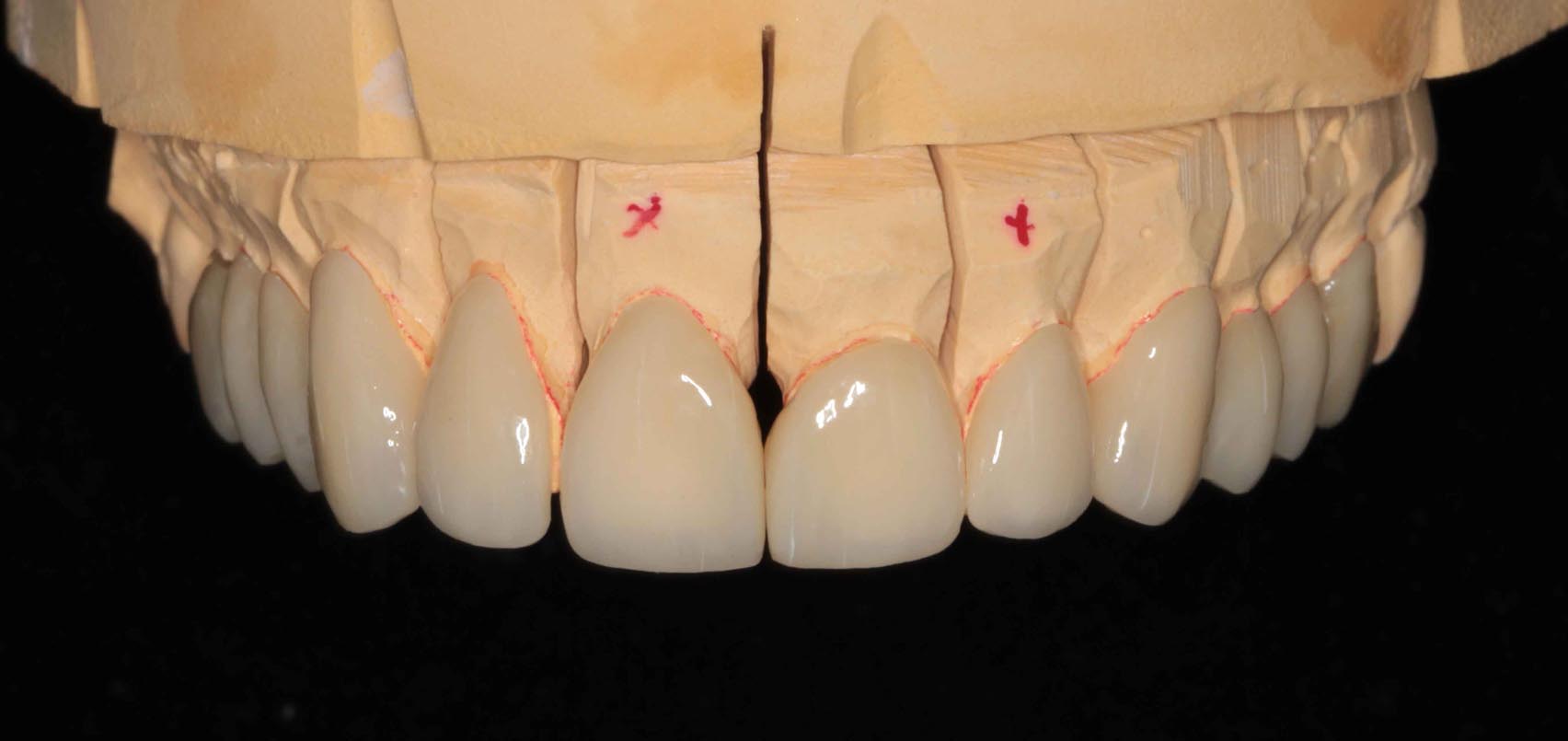
Master cast, frontal view with EMAX (Lithium disilicate)* crowns and veneers. -
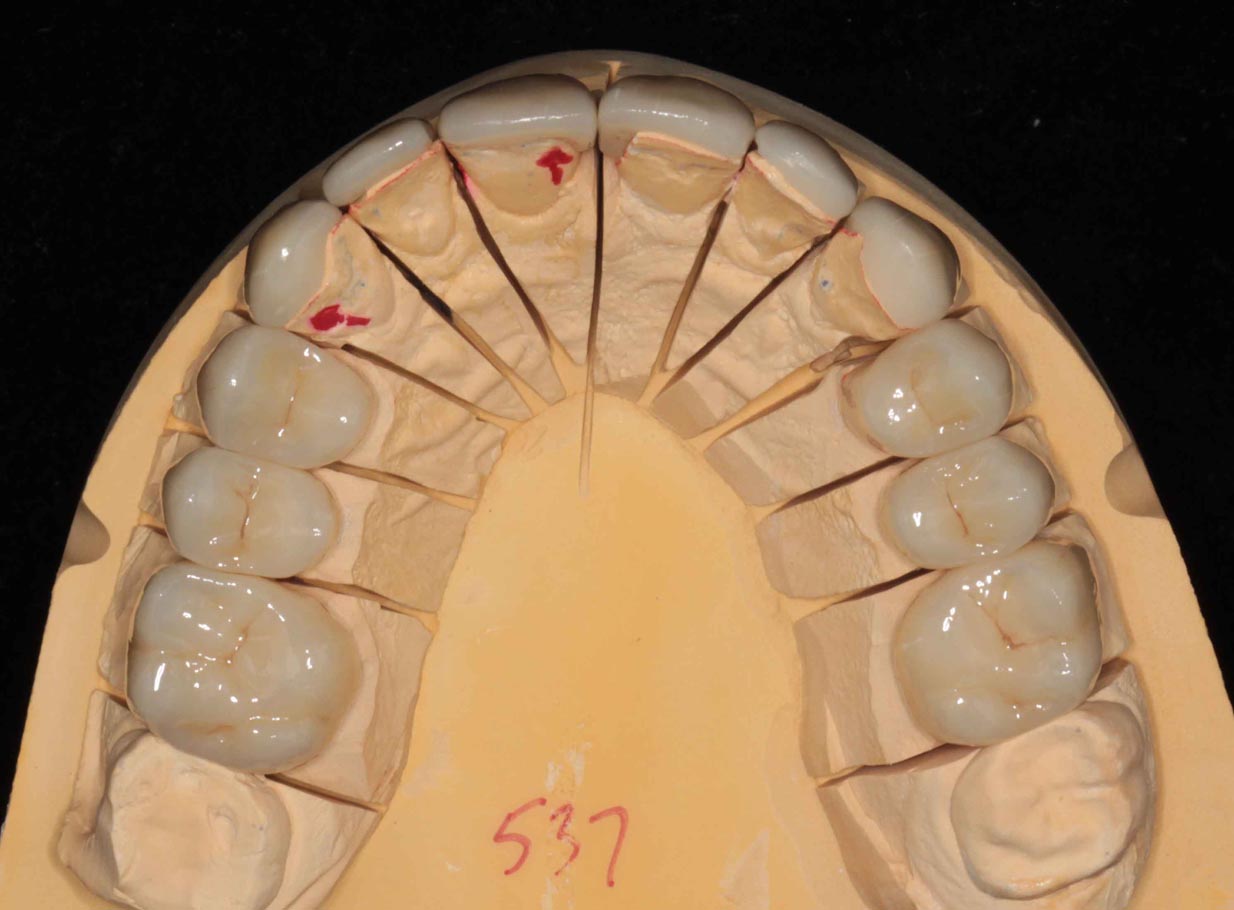
* - modern day crowns are rarely ever “porcelain”. Porcelain has been replaced by Zirconia or Lithium disilicate. These materials can be “pressed” or “milled” instead of layered and fired. They tend to be stronger and easier to fabricate.
Master cast, occlusal view EMAX (Lithium disilicate)* crowns and veneers.
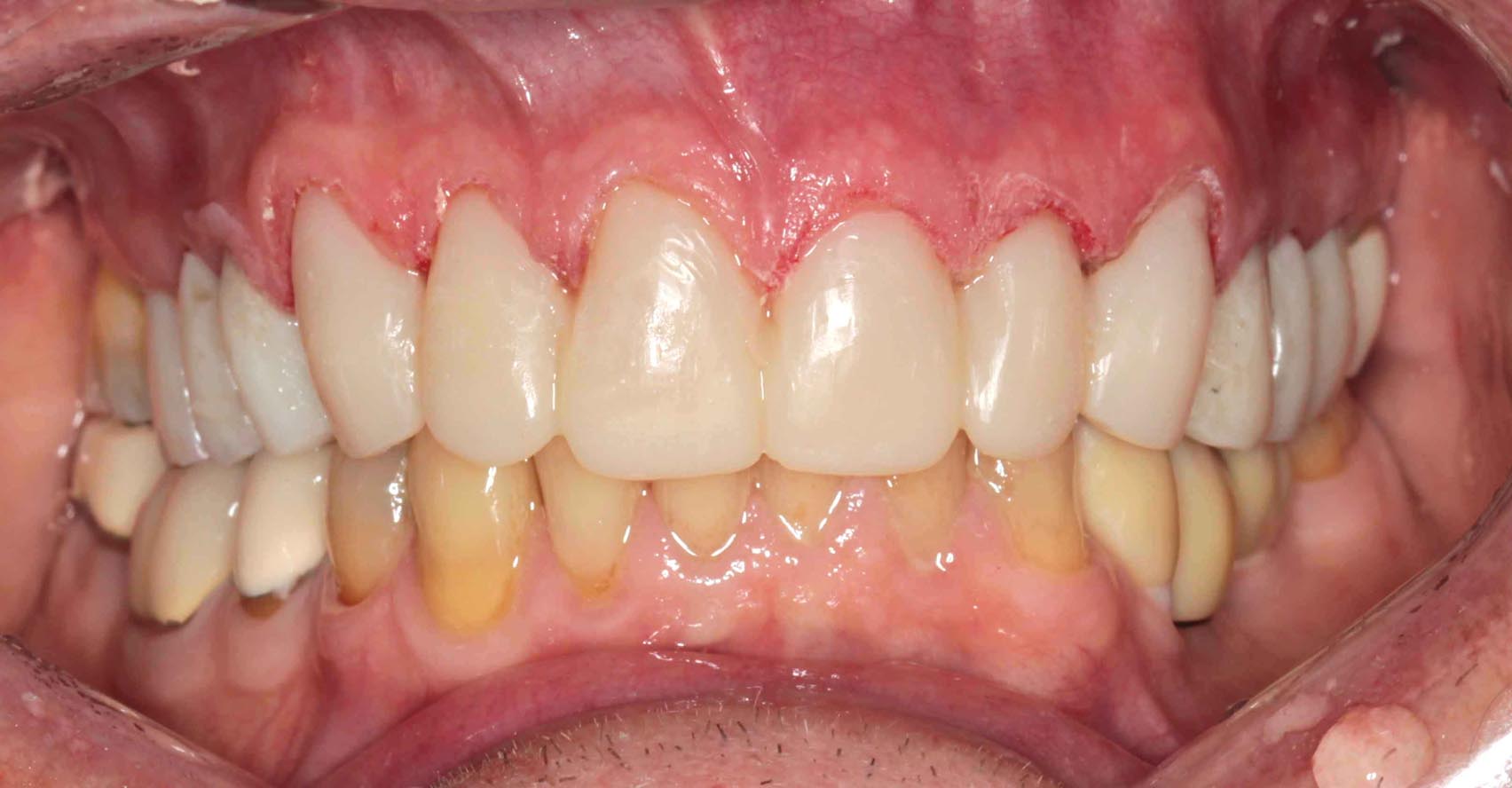
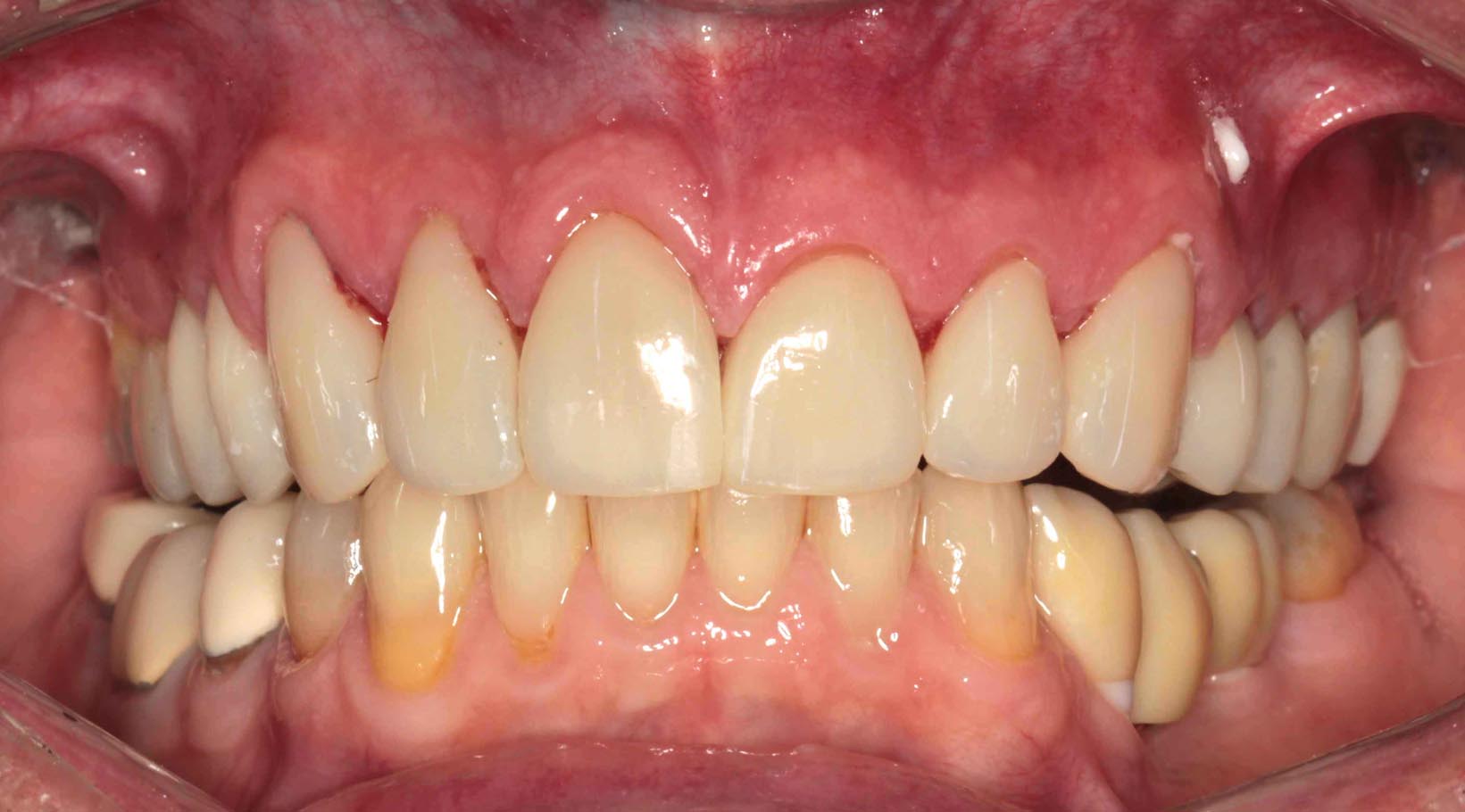
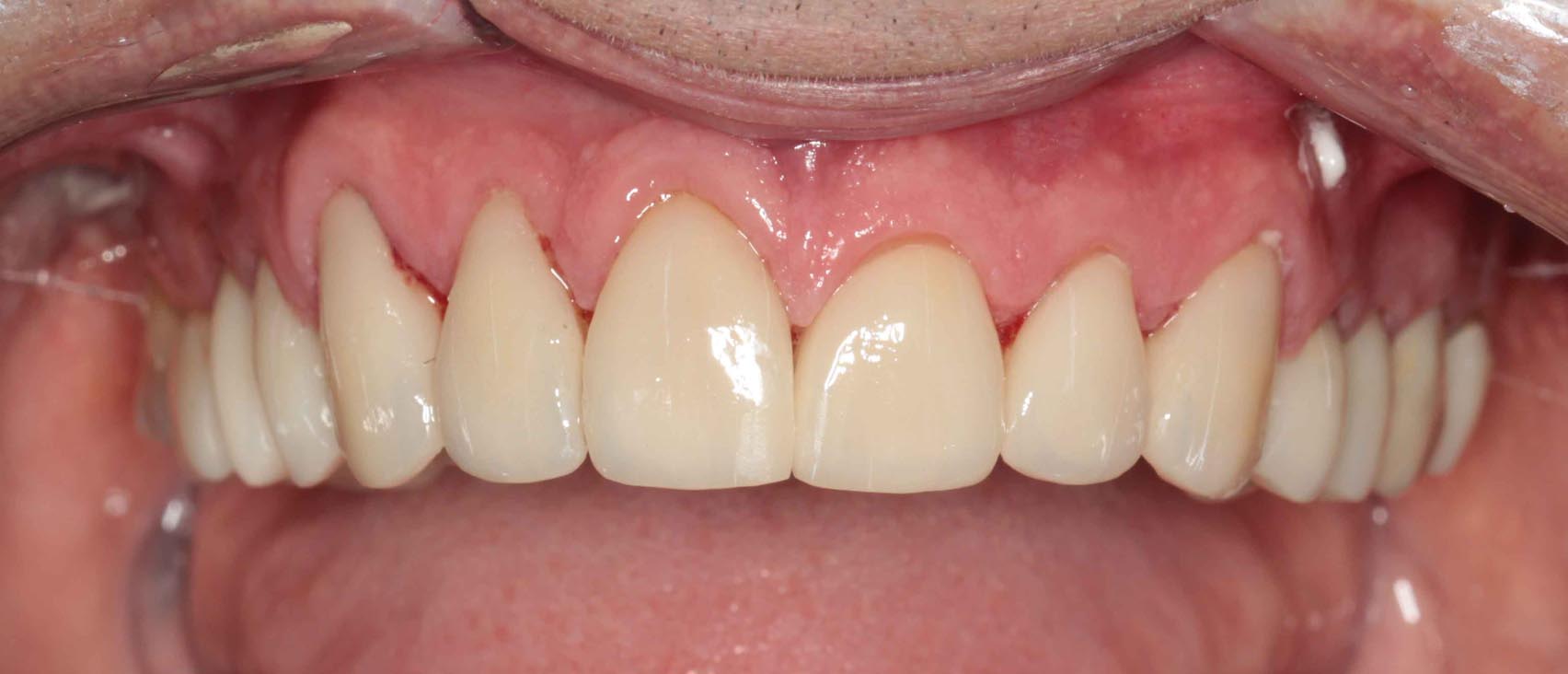
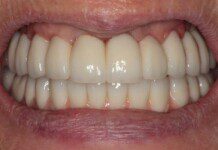
Definitive crowns/ veneers bonded permanently, lips retracted, both arches.
Post-operative smile. Patient is still slightly numb.
Lips retracted before and after. This patient came to us from Florida. The lower picture was taken on the day we delivered his new teeth. The tissues are still a little traumatized from the procedure. This resolves in 24 hours. He has not been back for post-op photos.