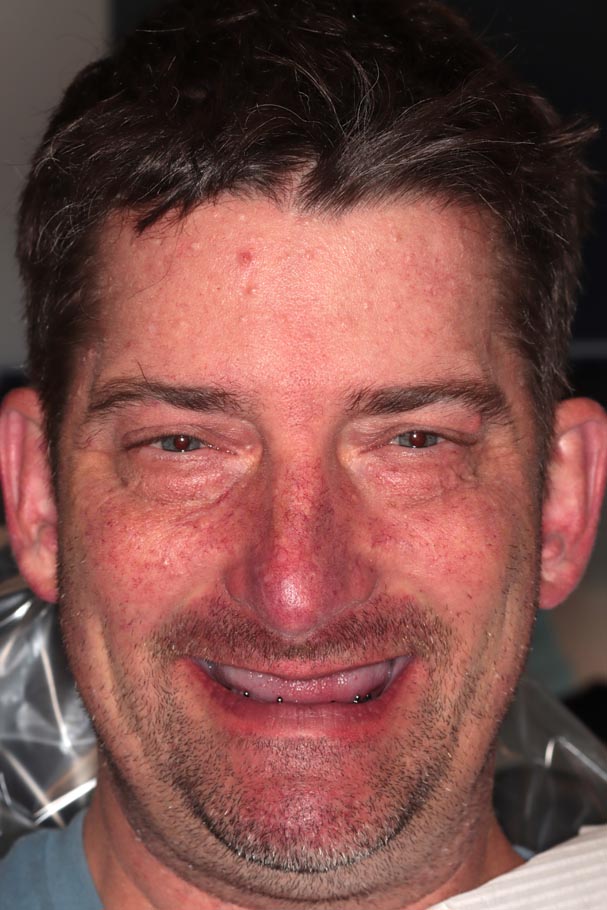
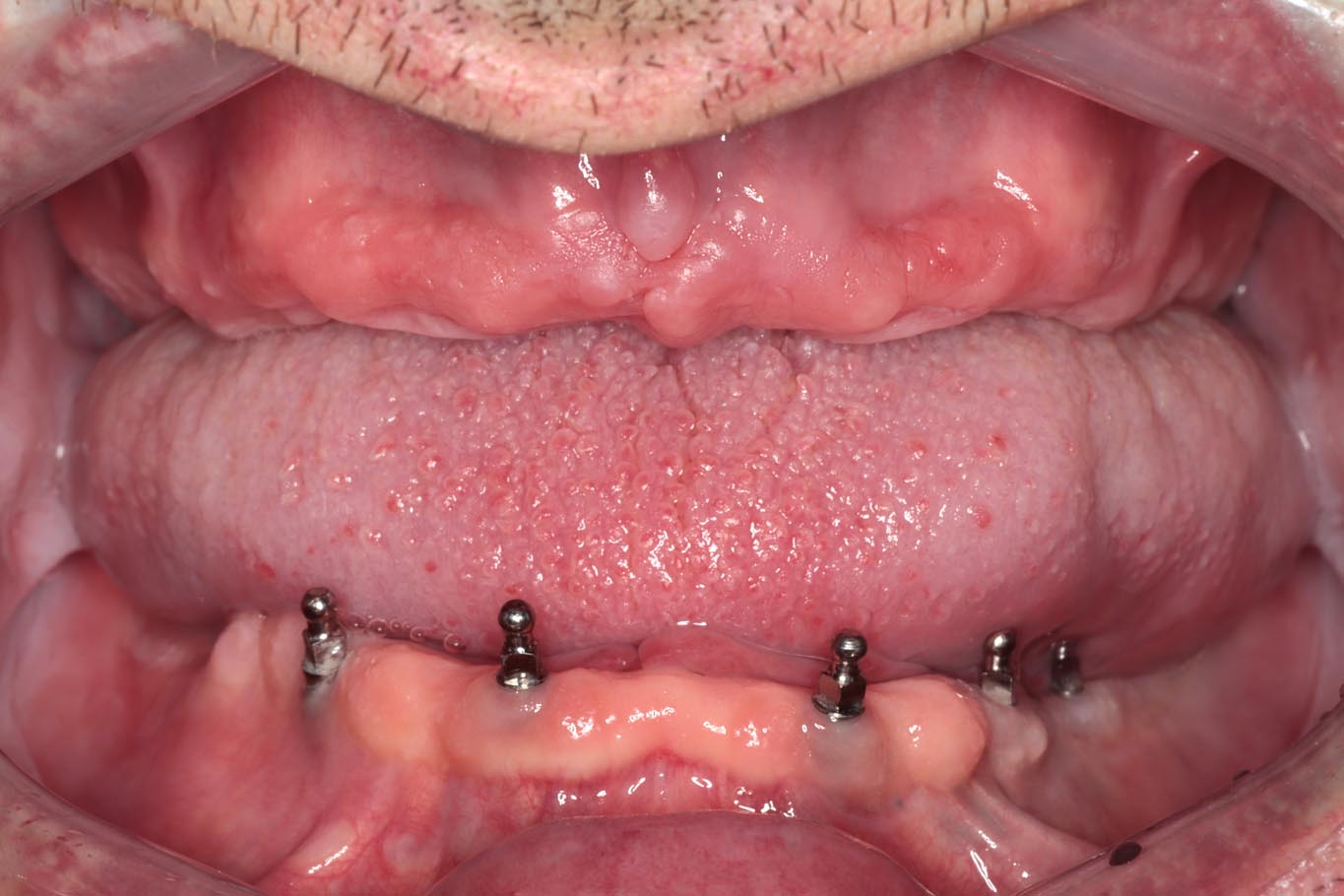
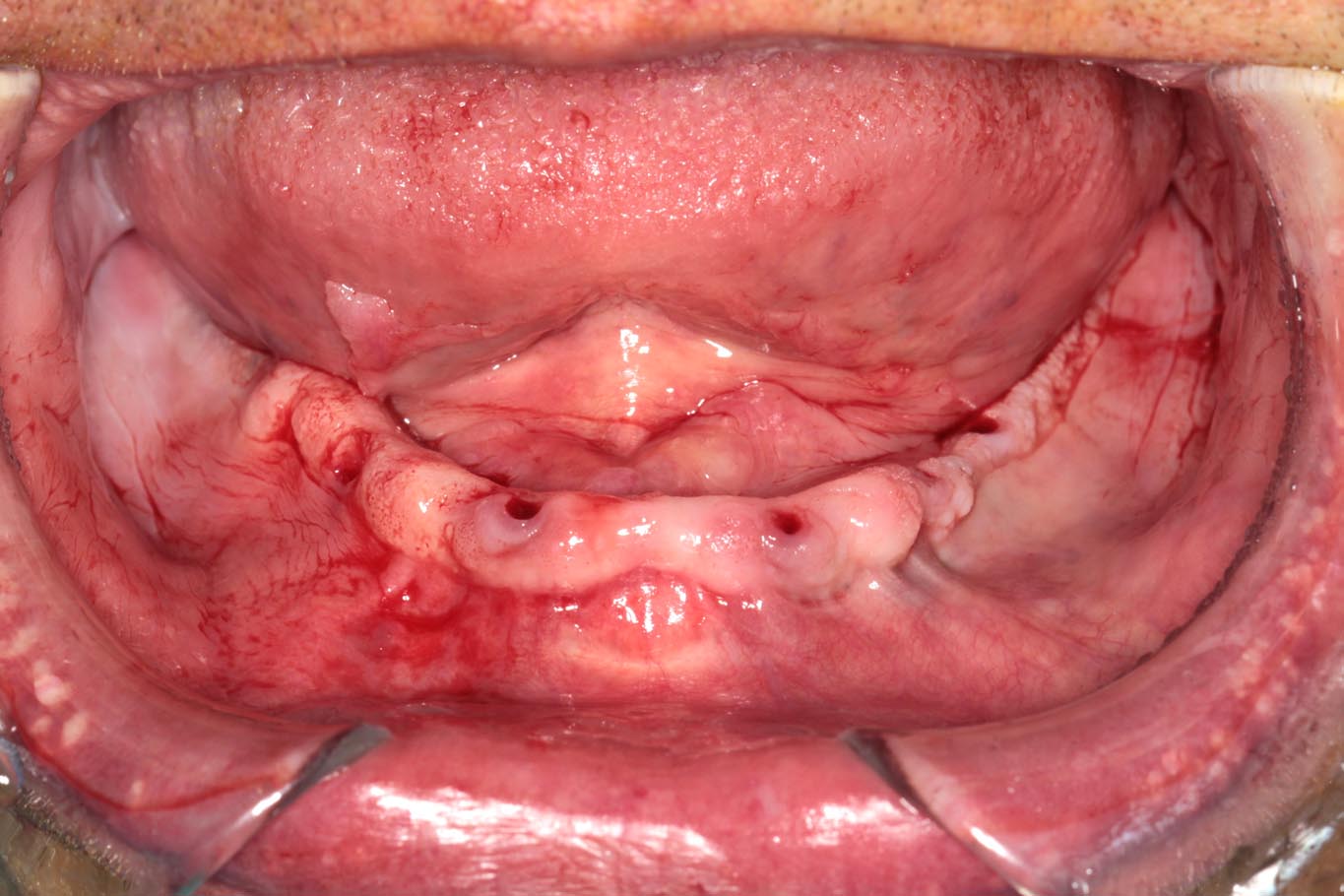
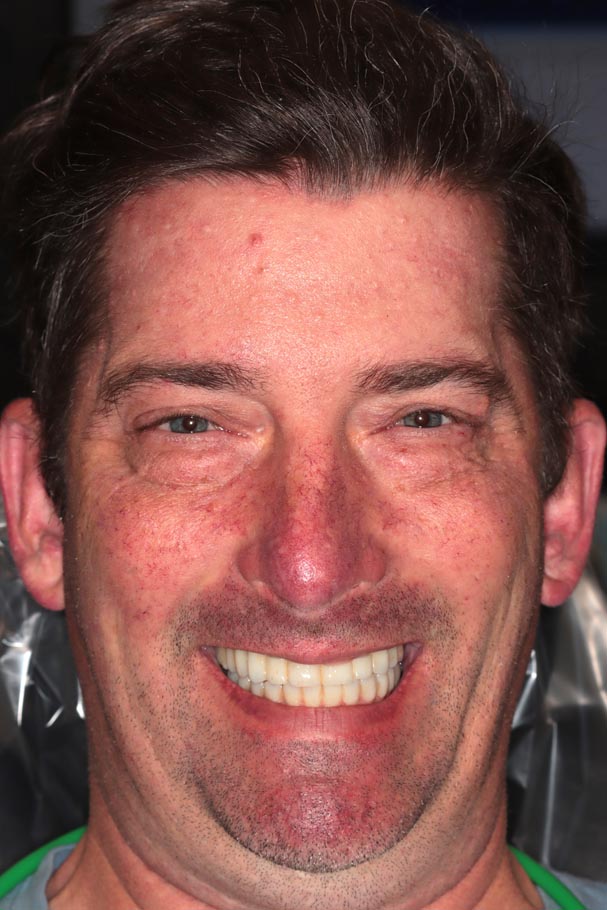
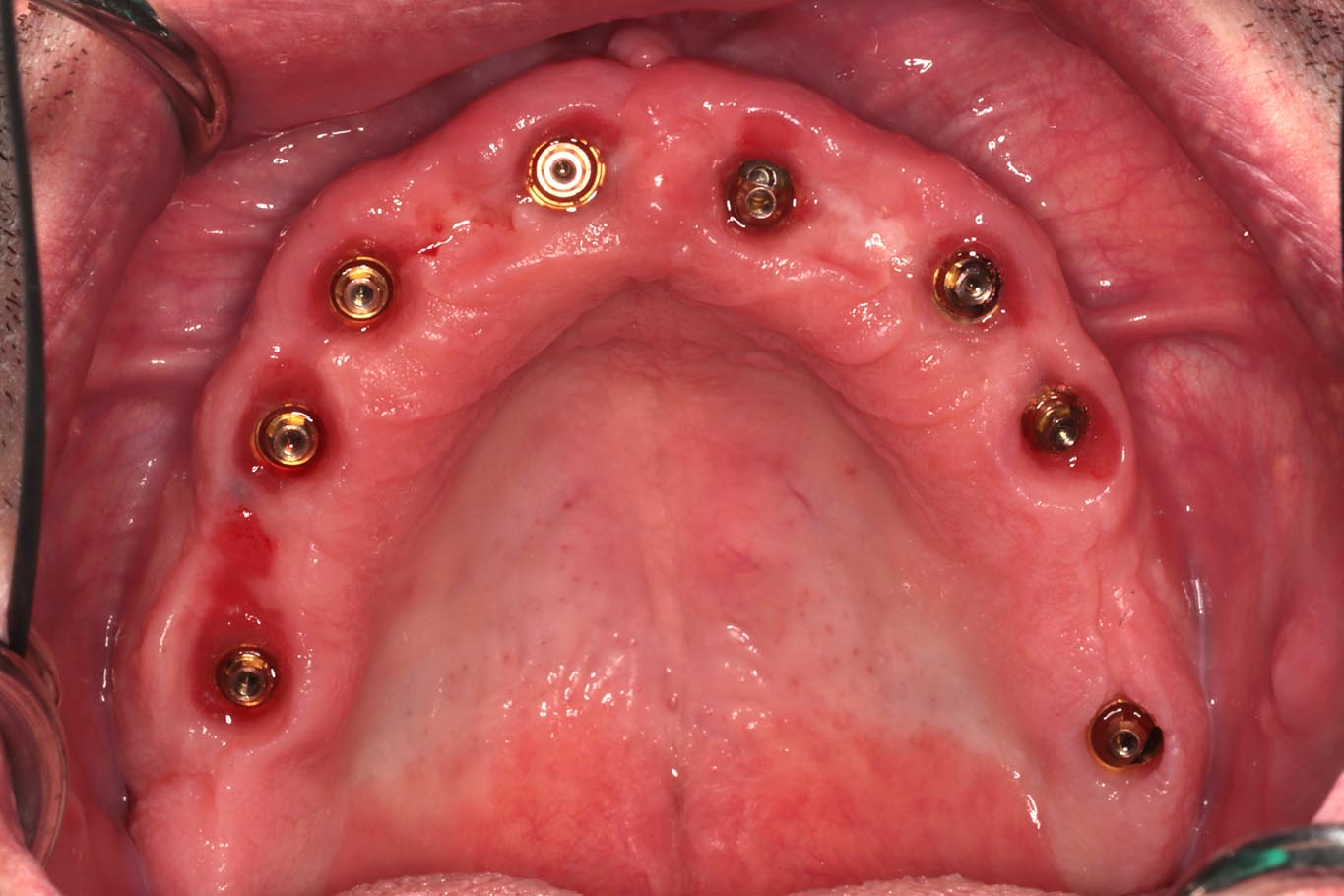
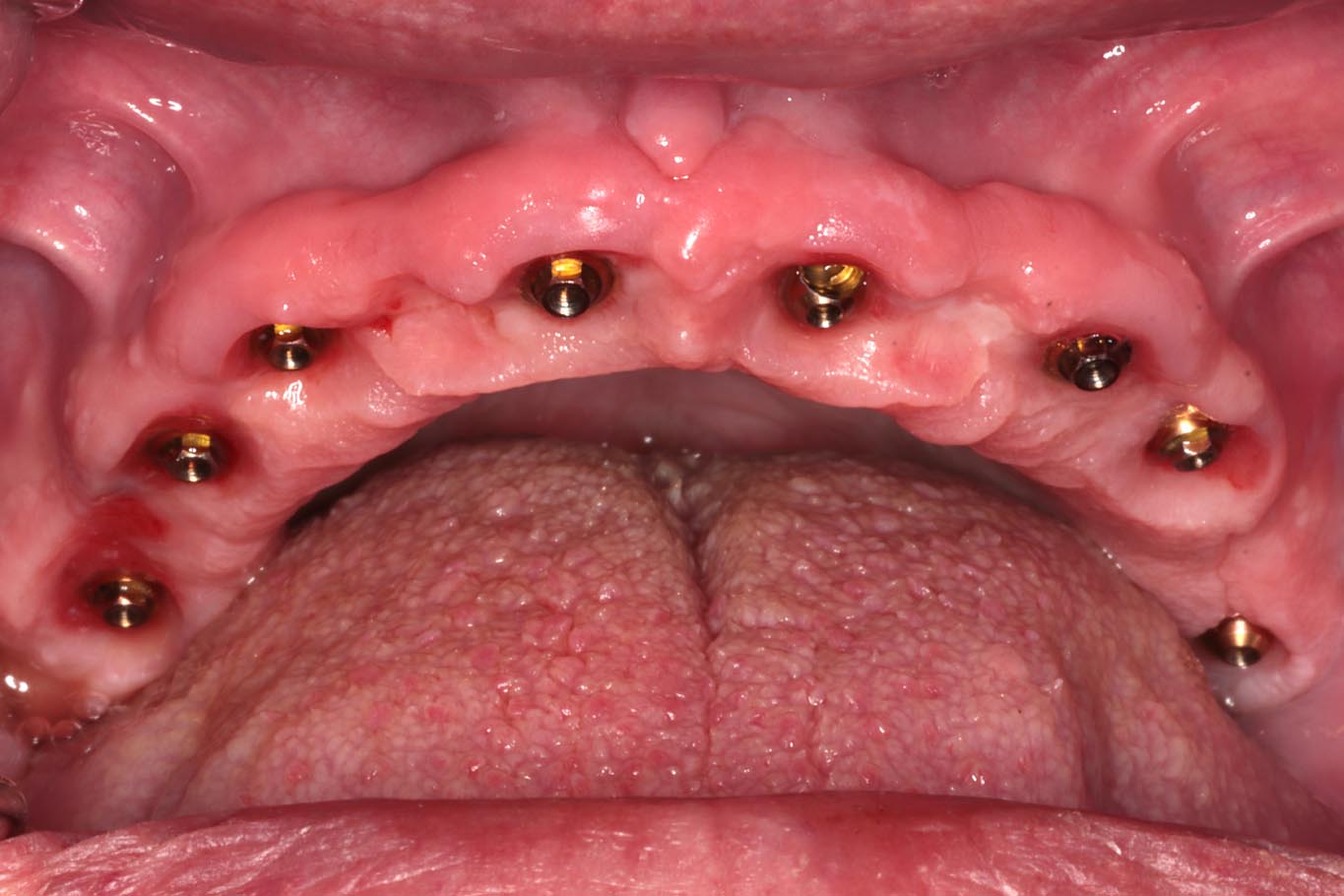
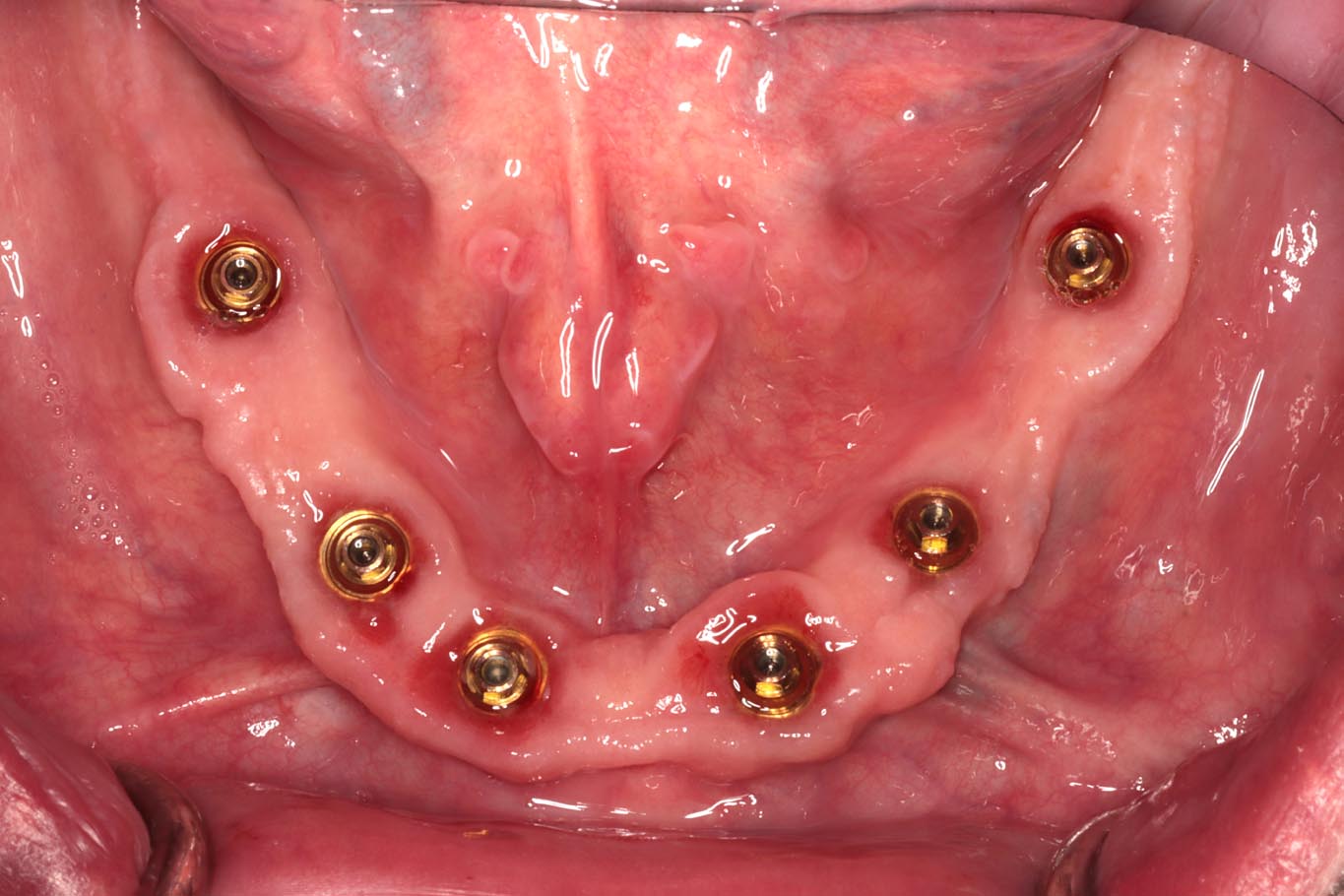
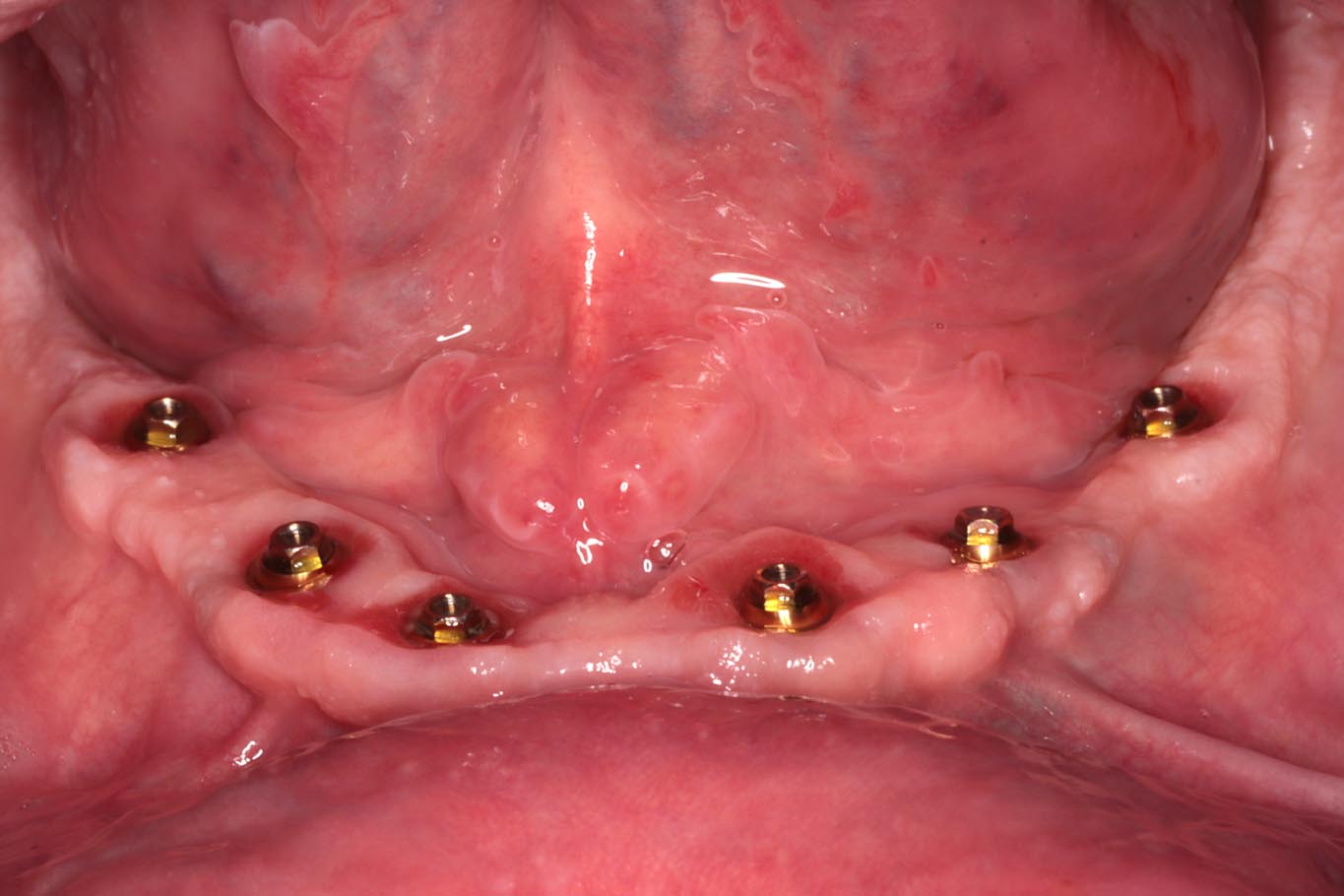
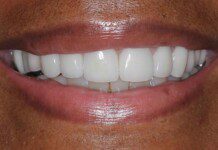
This patient had his teeth extracted at another office. Mini implants were placed in his lower jaw and he was provided with a set of complete dentures. He was dissatisfied with the dentures and came to our office to seek other options. Fortunately, he still had a good amount of bone left behind and that allowed us to explore the option of having fixed implant treatment.
This patient had his teeth extracted at another office. Mini implants were placed in his lower jaw and he was provided with a set of complete dentures. He was dissatisfied with the dentures and came to our office to seek other options. Fortunately, he still had a good amount of bone left behind and that allowed us to explore the option of having fixed implant treatment.
This patient had his teeth extracted at another office. Mini implants were placed in his lower jaw and he was provided with a set of complete dentures. He was dissatisfied with the dentures and came to our office to seek other options. Fortunately, he still had a good amount of bone left behind and that allowed us to explore the option of having fixed implant treatment.
This patient had his teeth extracted at another office. Mini implants were placed in his lower jaw and he was provided with a set of complete dentures. He was dissatisfied with the dentures and came to our office to seek other options. Fortunately, he still had a good amount of bone left behind and that allowed us to explore the option of having fixed implant treatment.
The initial panoramic radiograph shows 6 mini implants in the lower jaw. There was a good amount of bone remaining in both arches. This allowed us to plan for additional implants and fixed restorations.
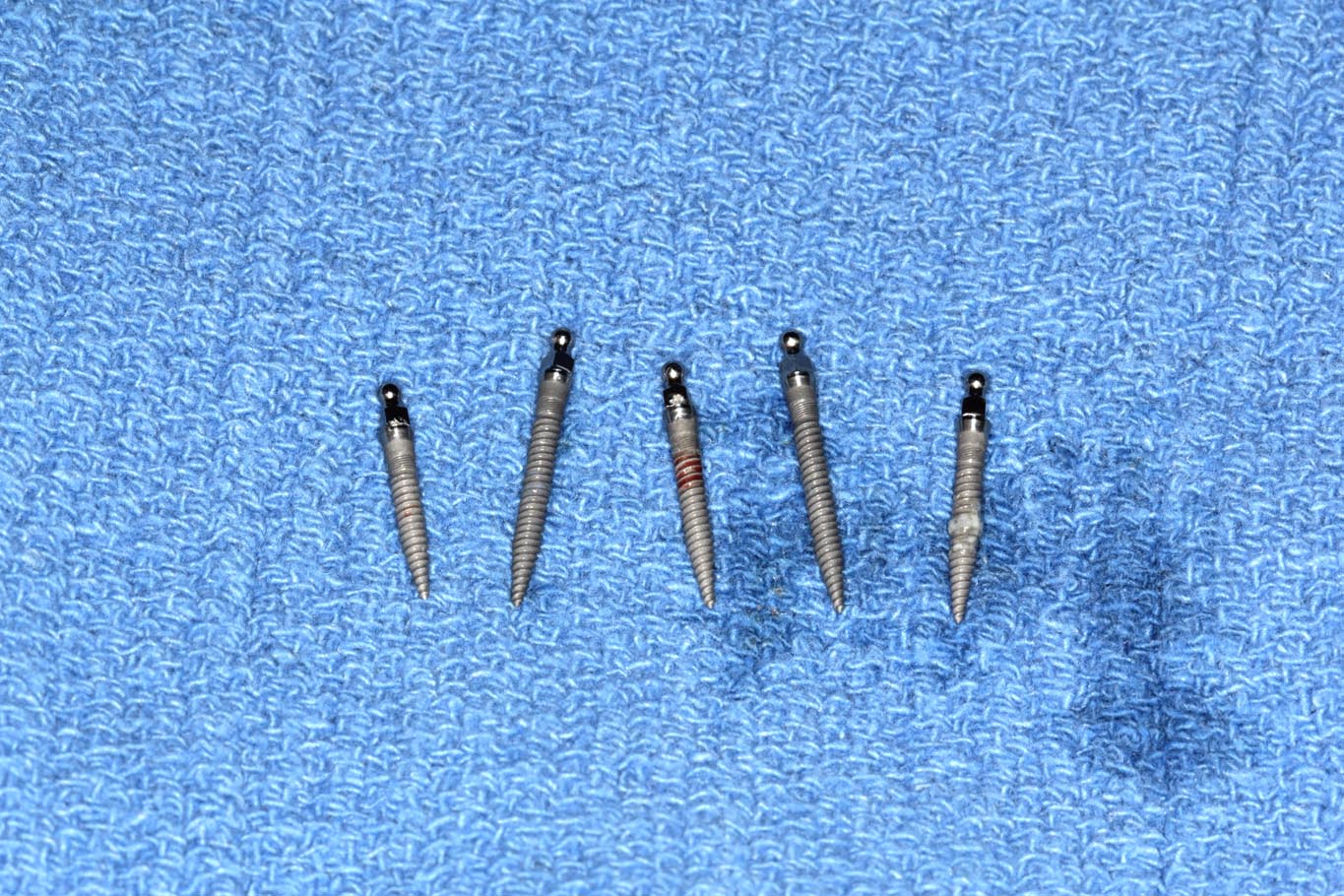
The first surgical procedure was removal of the existing mini implants as they would not be able to support a full-arch fixed restoration adequately.
Mini implants generally do not integrate well in bone so they were removed very cleanly and easily.
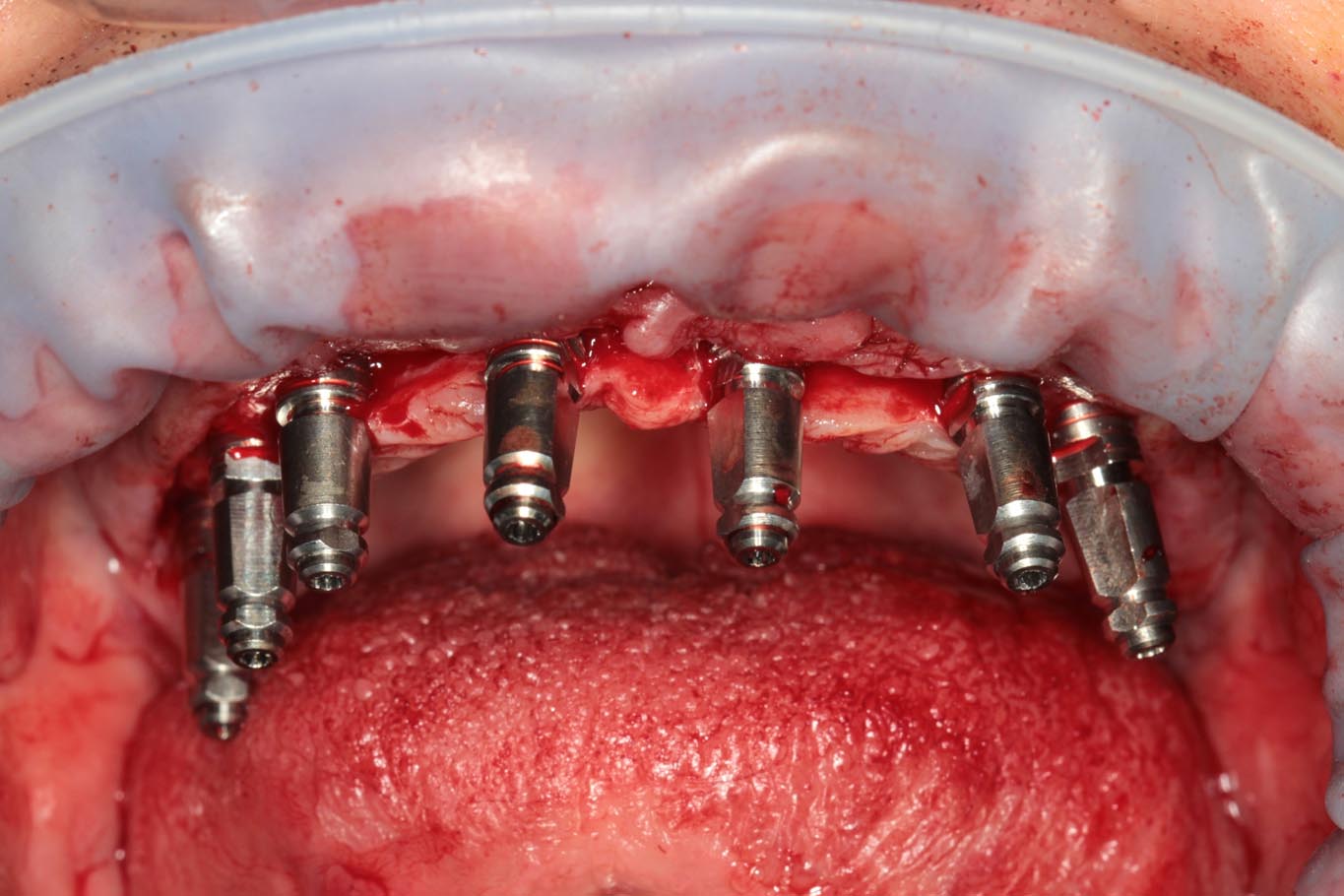
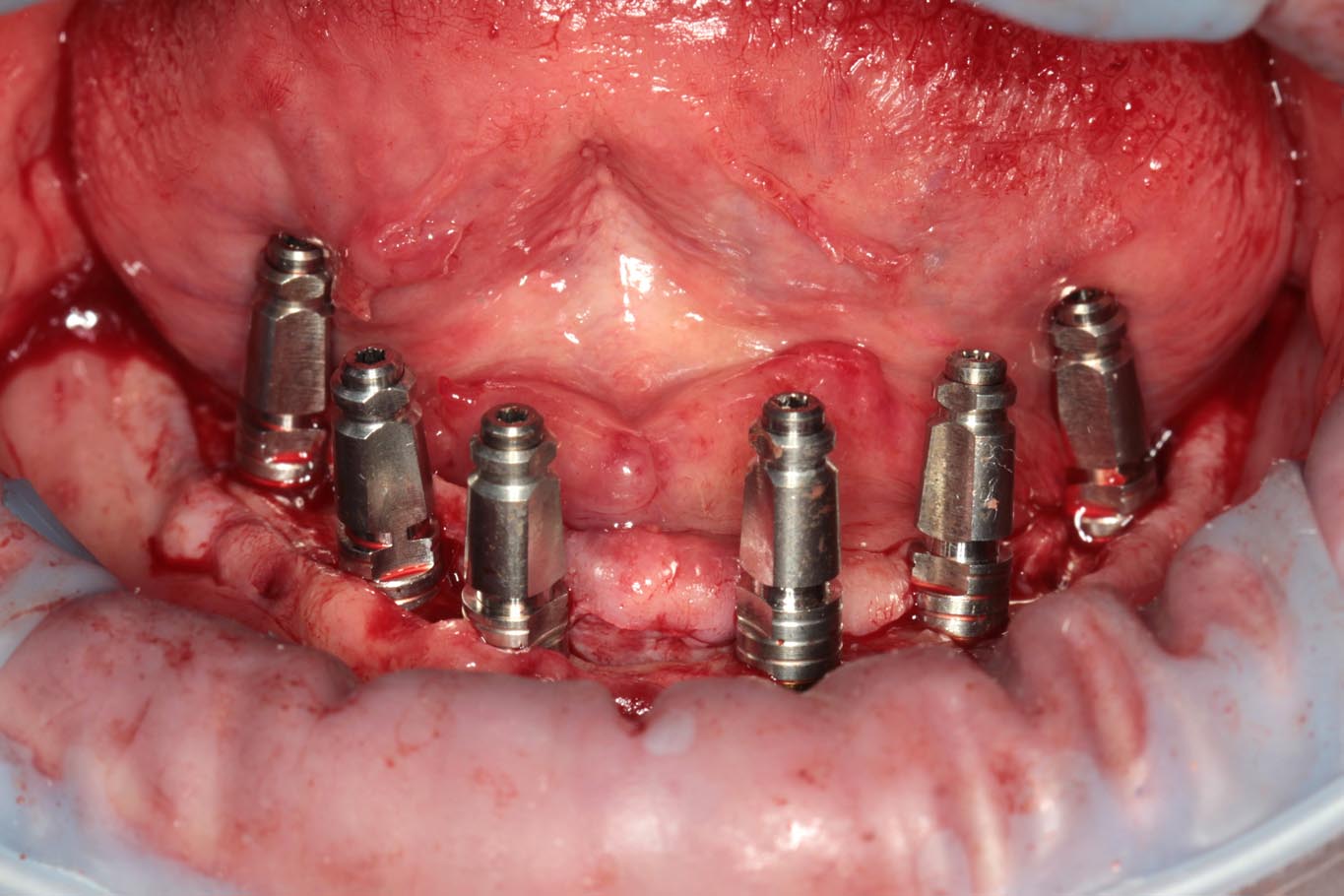
Implants were placed in the upper and lower jaws. Since the majority of them were stable at the time of placement, we decided to use all the implants to support a fixed provisional restoration.
Implants were placed in the upper and lower jaws. Since the majority of them were stable at the time of placement, we decided to use all the implants to support a fixed provisional restoration.
Provisionals were made right here in our dental office on the day of surgery. Cleansable, convex forms were used to ensure the tissues were shaped for maximum health and esthetics.
Provisionals were made right here in our dental office on the day of surgery. Cleansable, convex forms were used to ensure the tissues were shaped for maximum health and esthetics.
The provisionals were screwed onto the dental implants. A special suturing technique was used to encourage soft tissue growth under the provisionals.
A post operative radiograph shows well-placed dental implants. One of the implants (on the upper left had side) was not as stable as the others so it was not used to support the provisional.
The patient returned from out of town 3 months after surgery. At this point, he was ready to begin fabricating definitive restorations.
The patient returned from out of town 3 months after surgery. At this point, he was ready to begin fabricating definitive restorations.
The retracted view shows tissues that have healed beautifully. The provisionals were a little stained but they were able to sculpt and support the tissues in preparation for this phase of treatment.
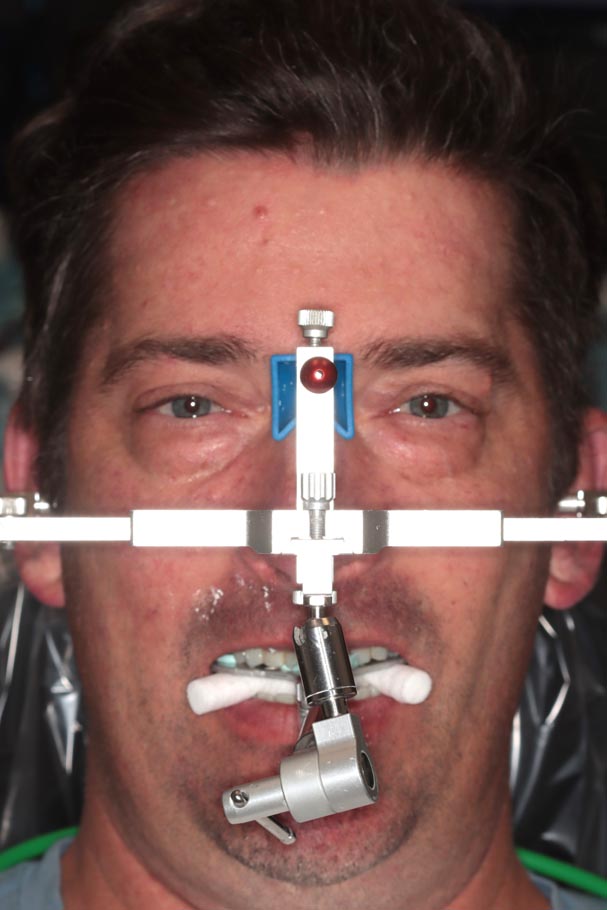
Detailed records were made at this phase. A facebow was used to record the relationship of the upper jaw to the rest of the face so the laboratory had accurate references to follow.
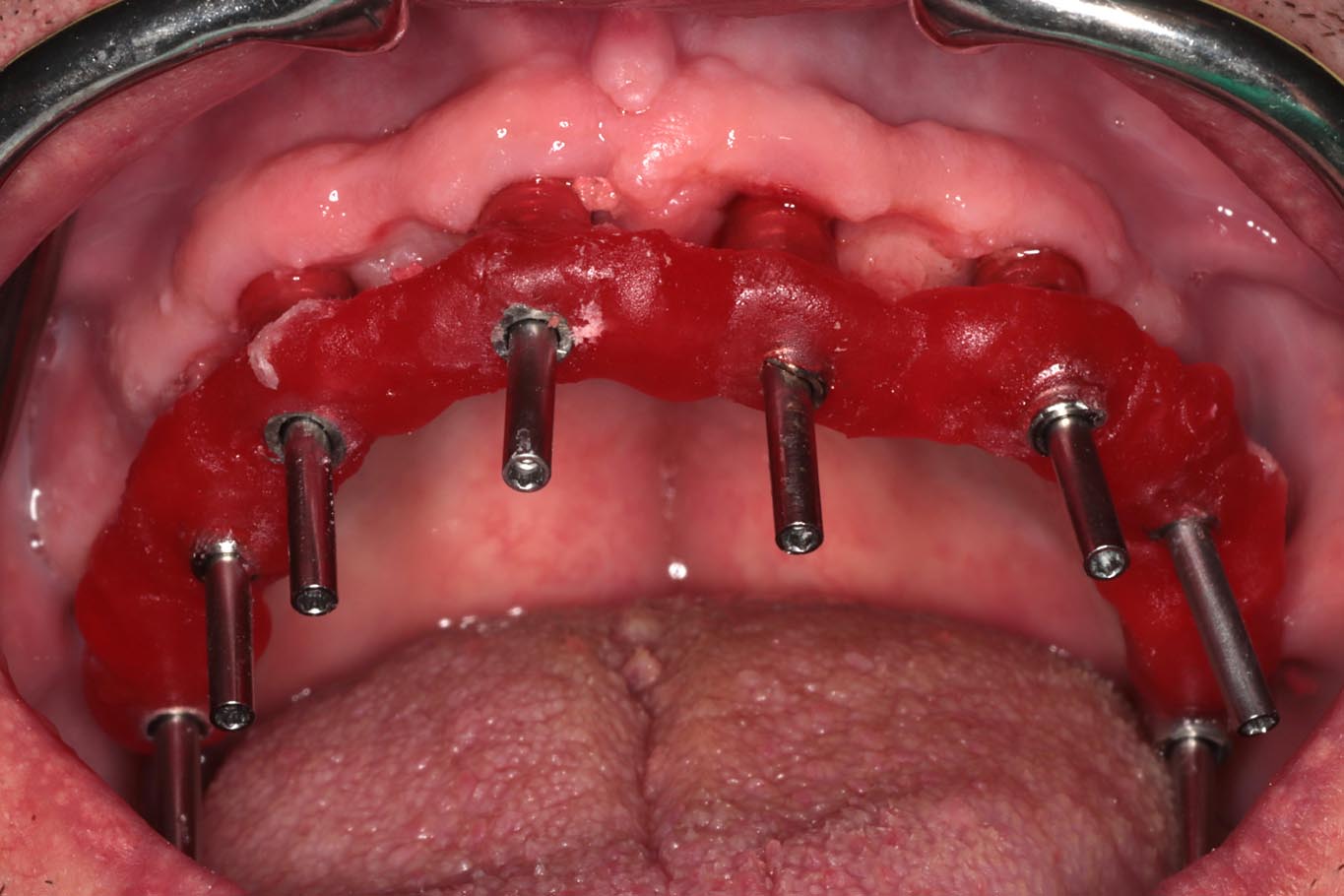
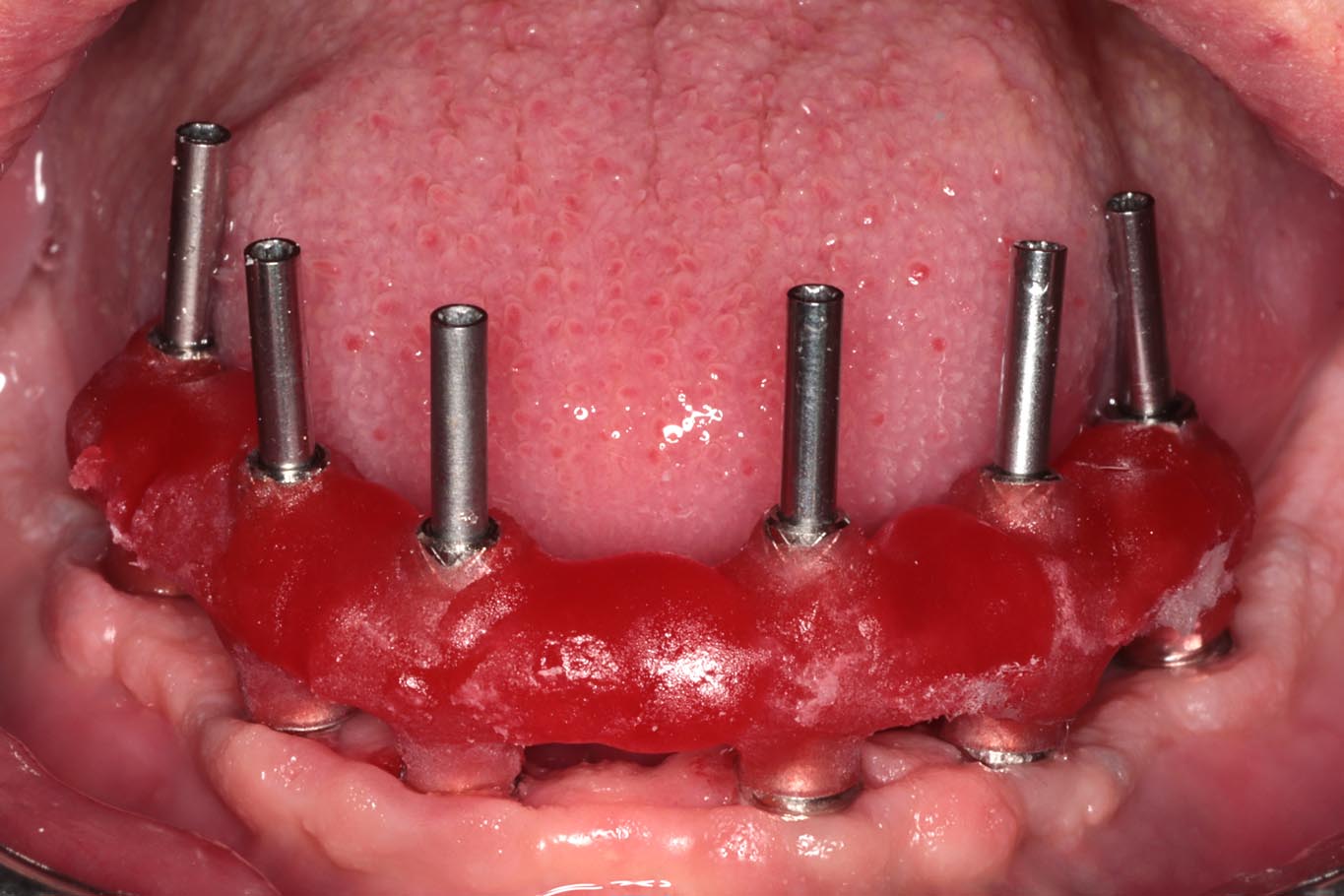
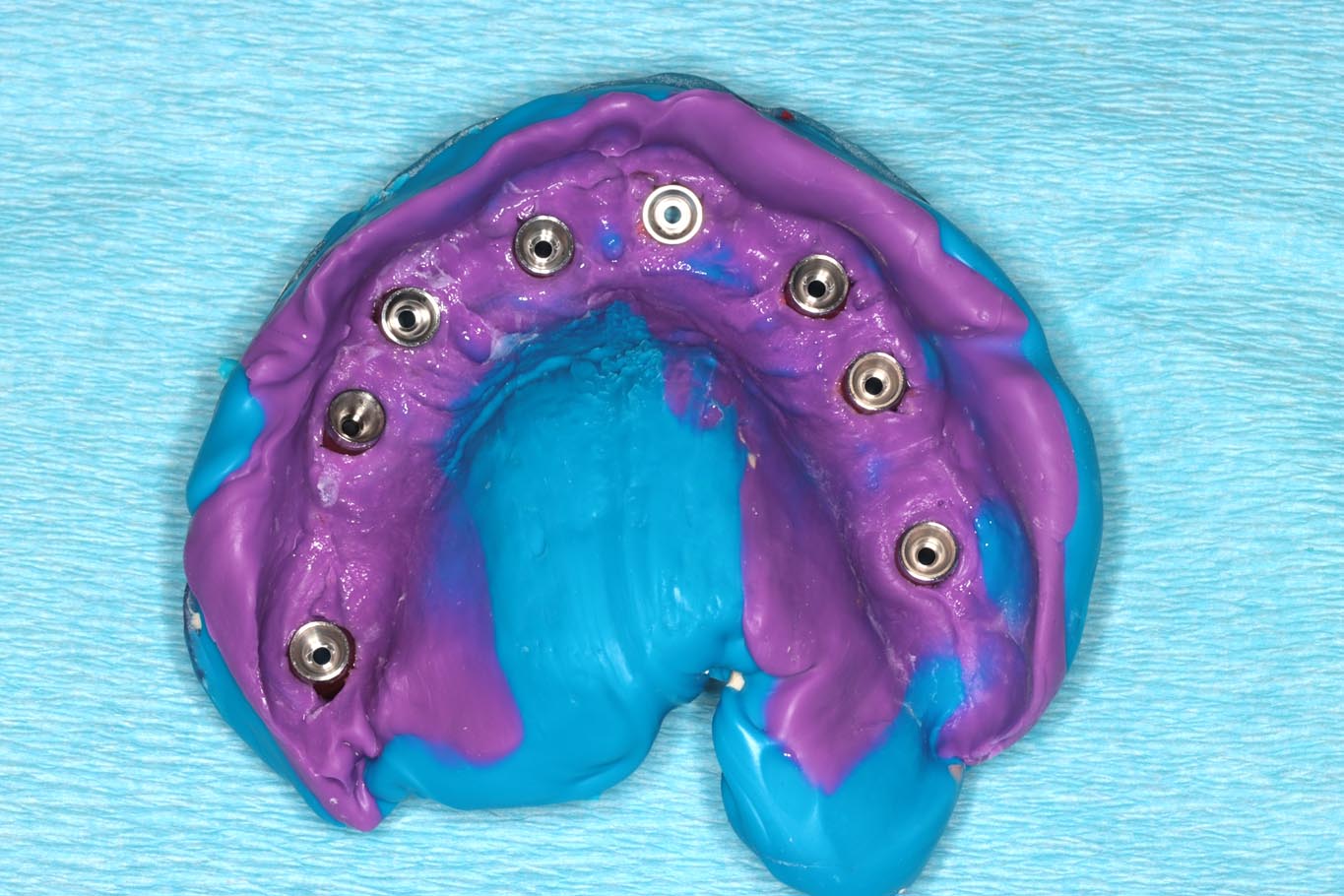
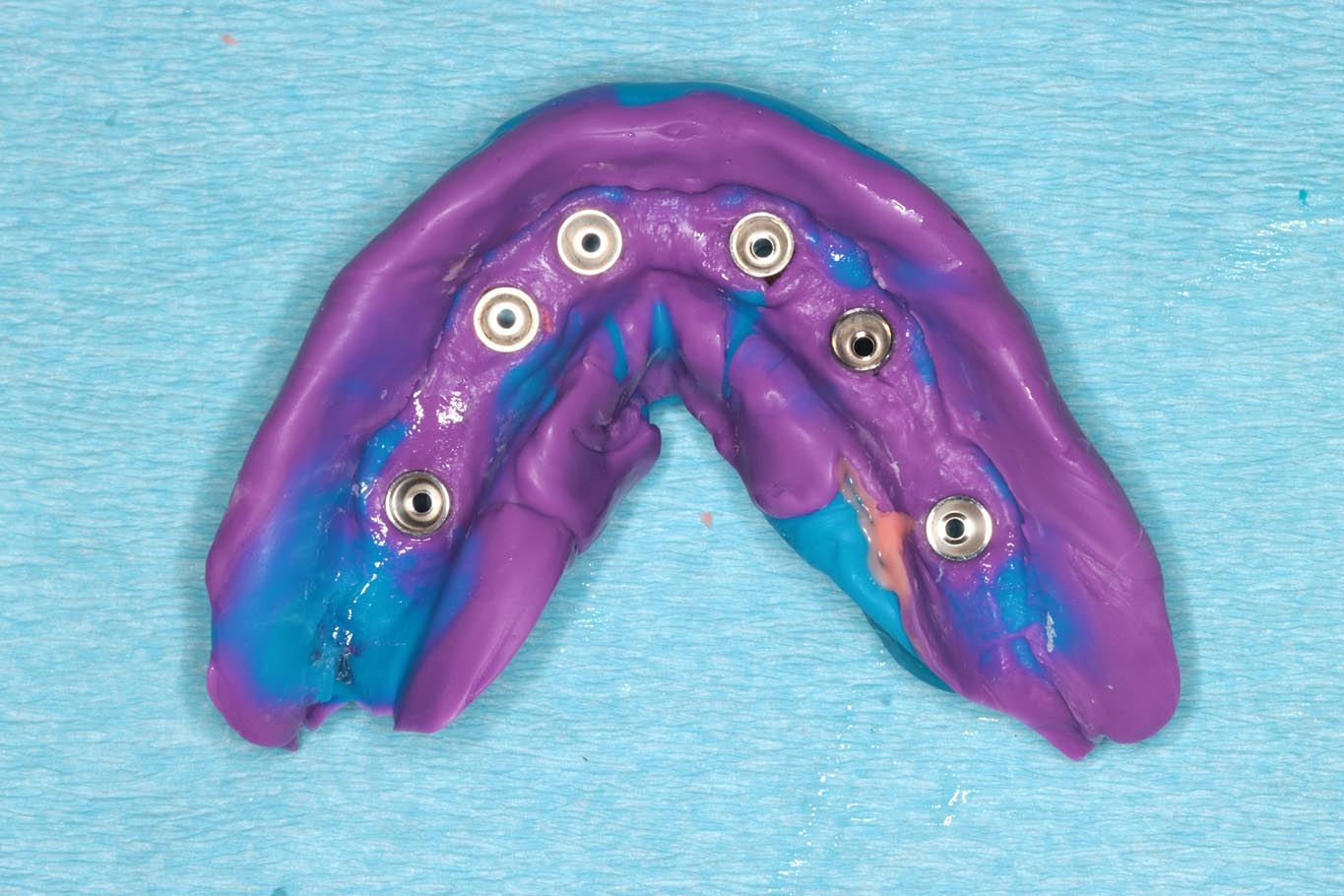
Splinted impressions were made for maximum accuracy. Records were completed and sent to our partner lab so they could start creating wax prototypes for us to test.
Splinted impressions were made for maximum accuracy. Records were completed and sent to our partner lab so they could start creating wax prototypes for us to test.
Splinted impressions were made for maximum accuracy. Records were completed and sent to our partner lab so they could start creating wax prototypes for us to test.
Splinted impressions were made for maximum accuracy. Records were completed and sent to our partner lab so they could start creating wax prototypes for us to test.
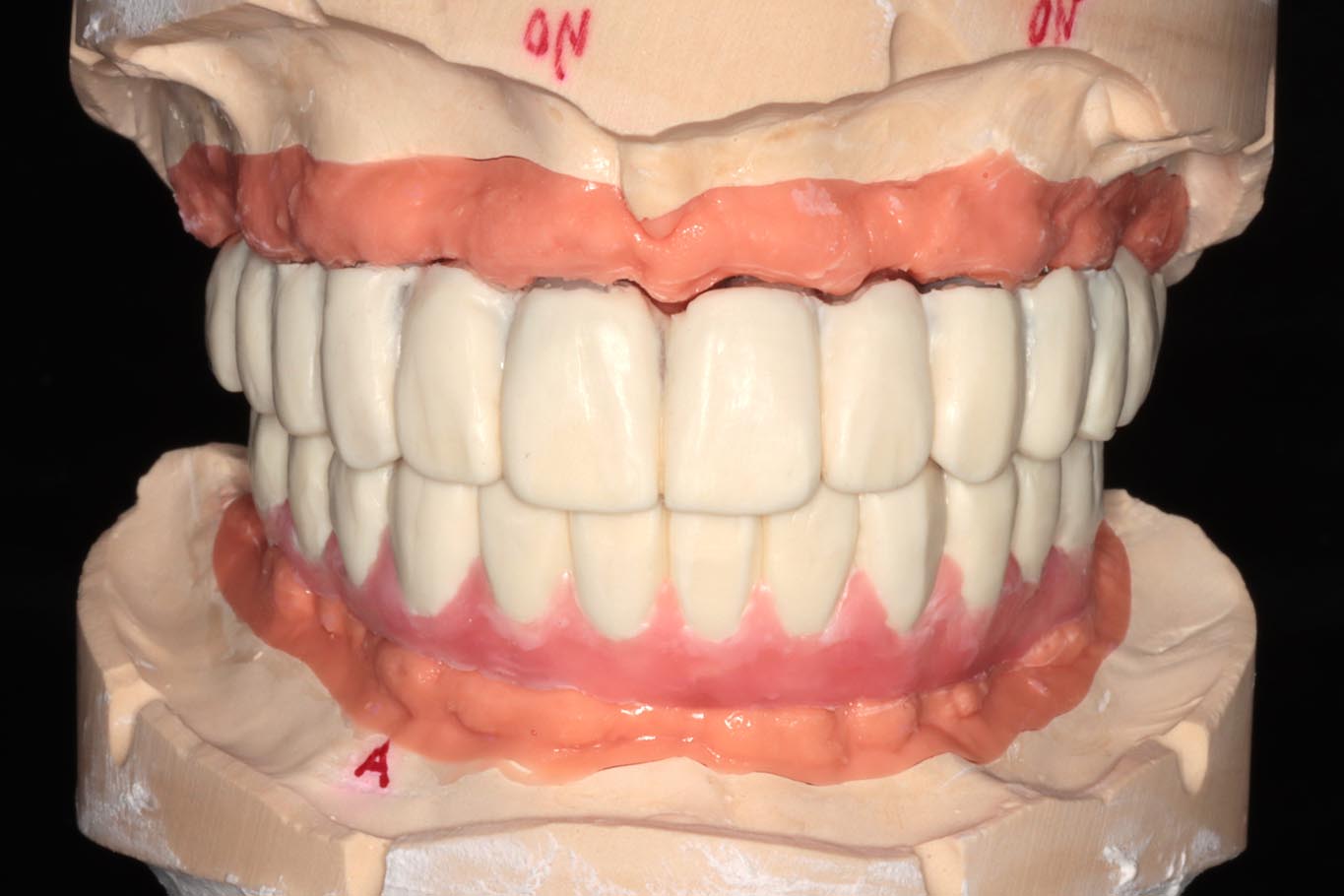
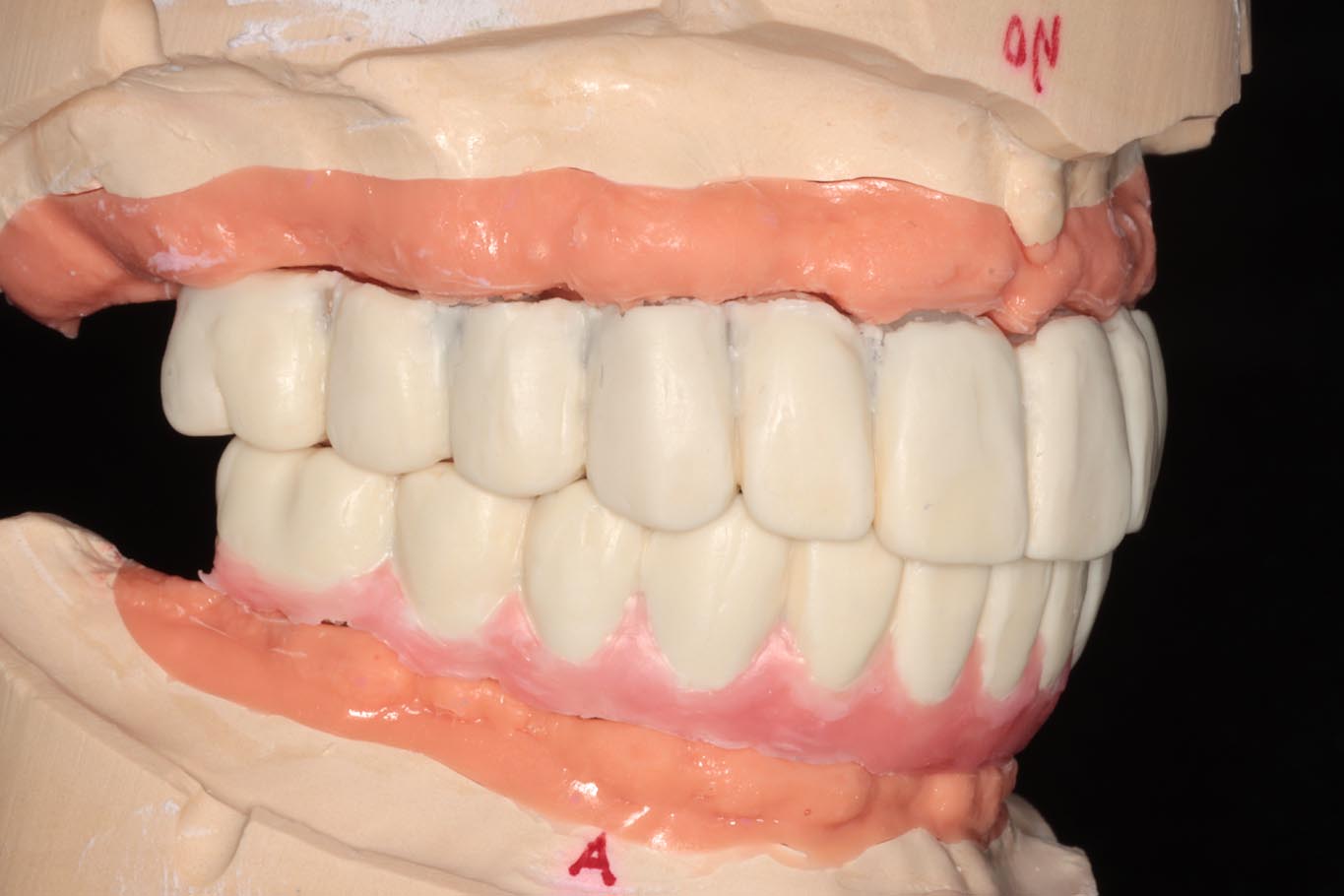
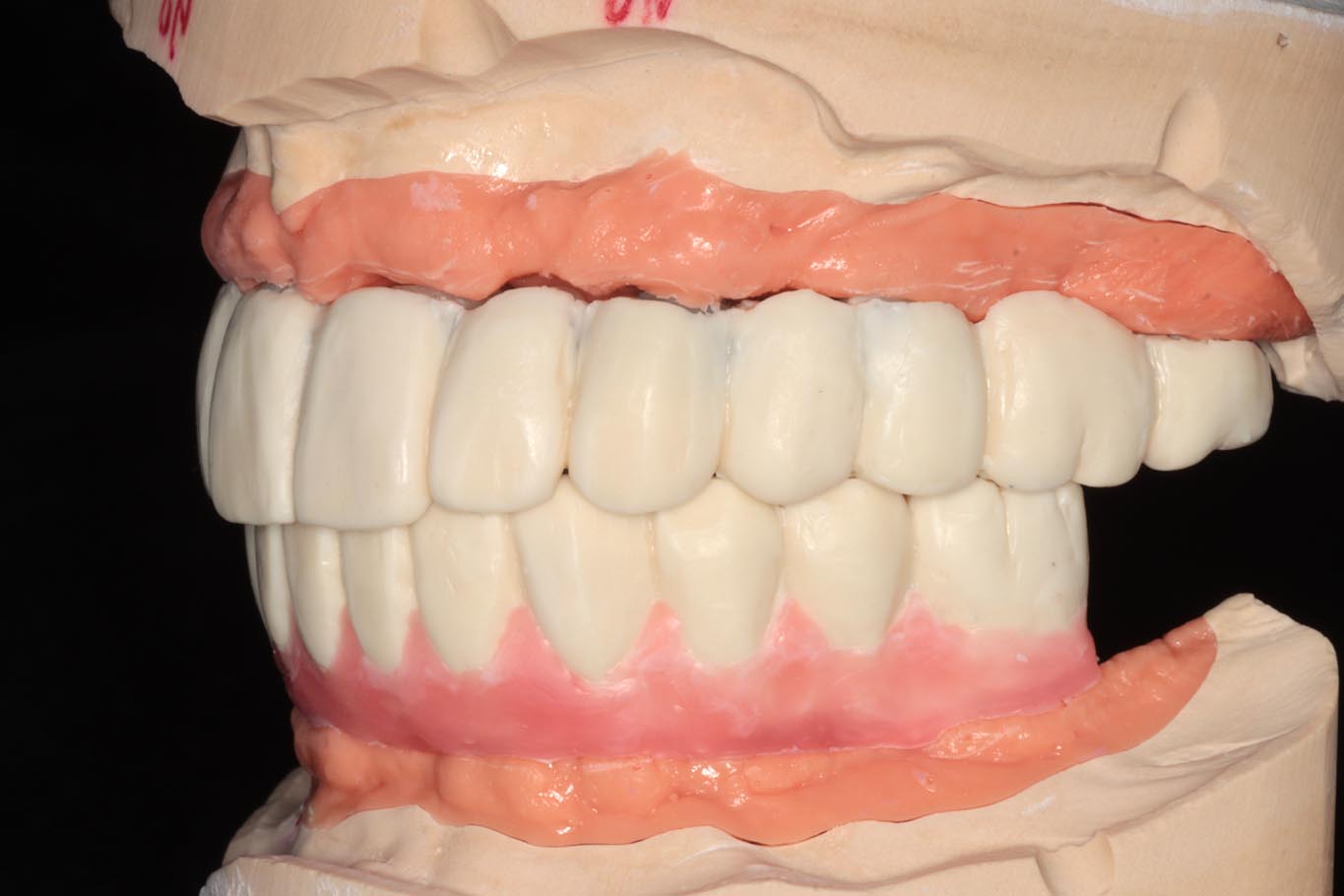
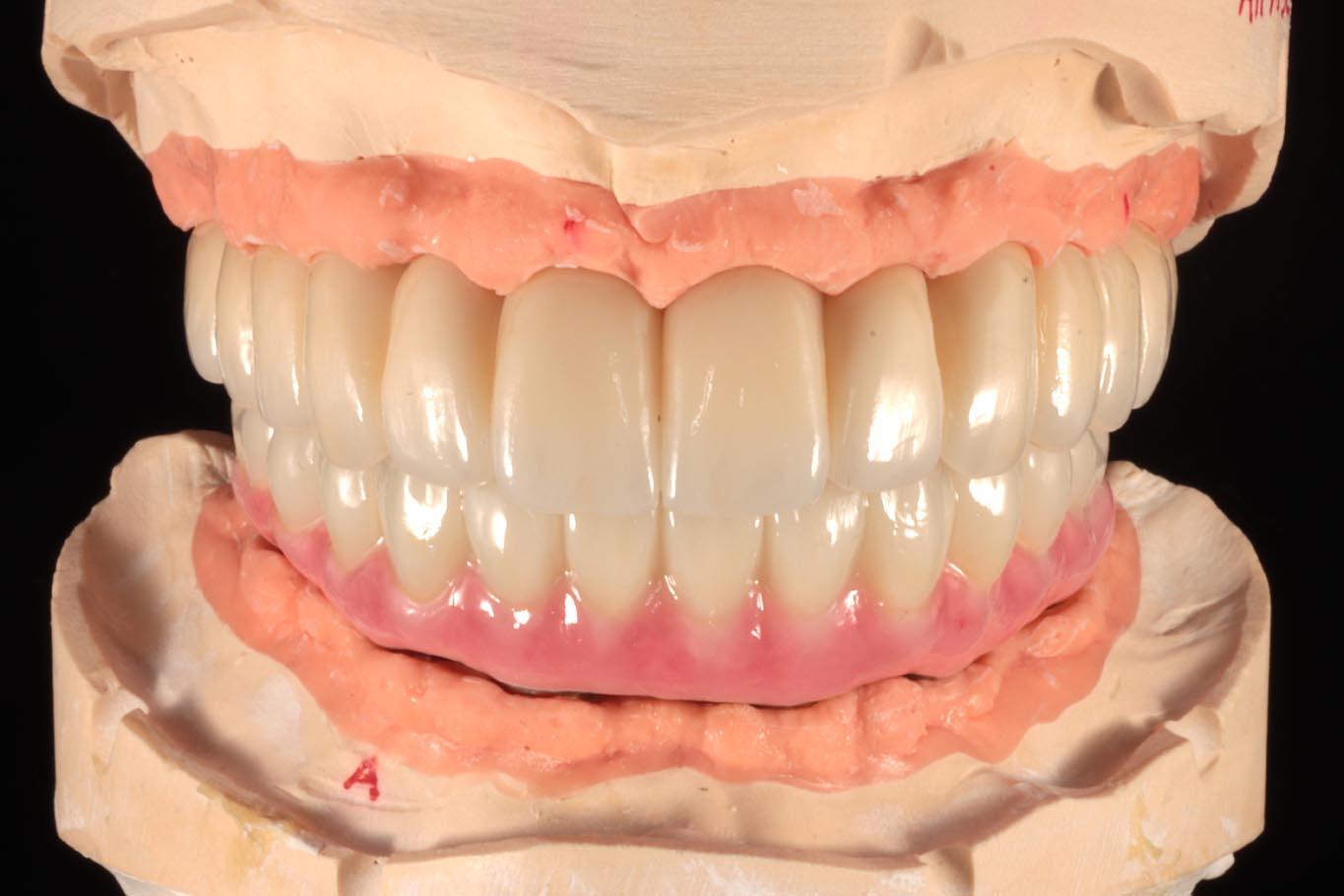
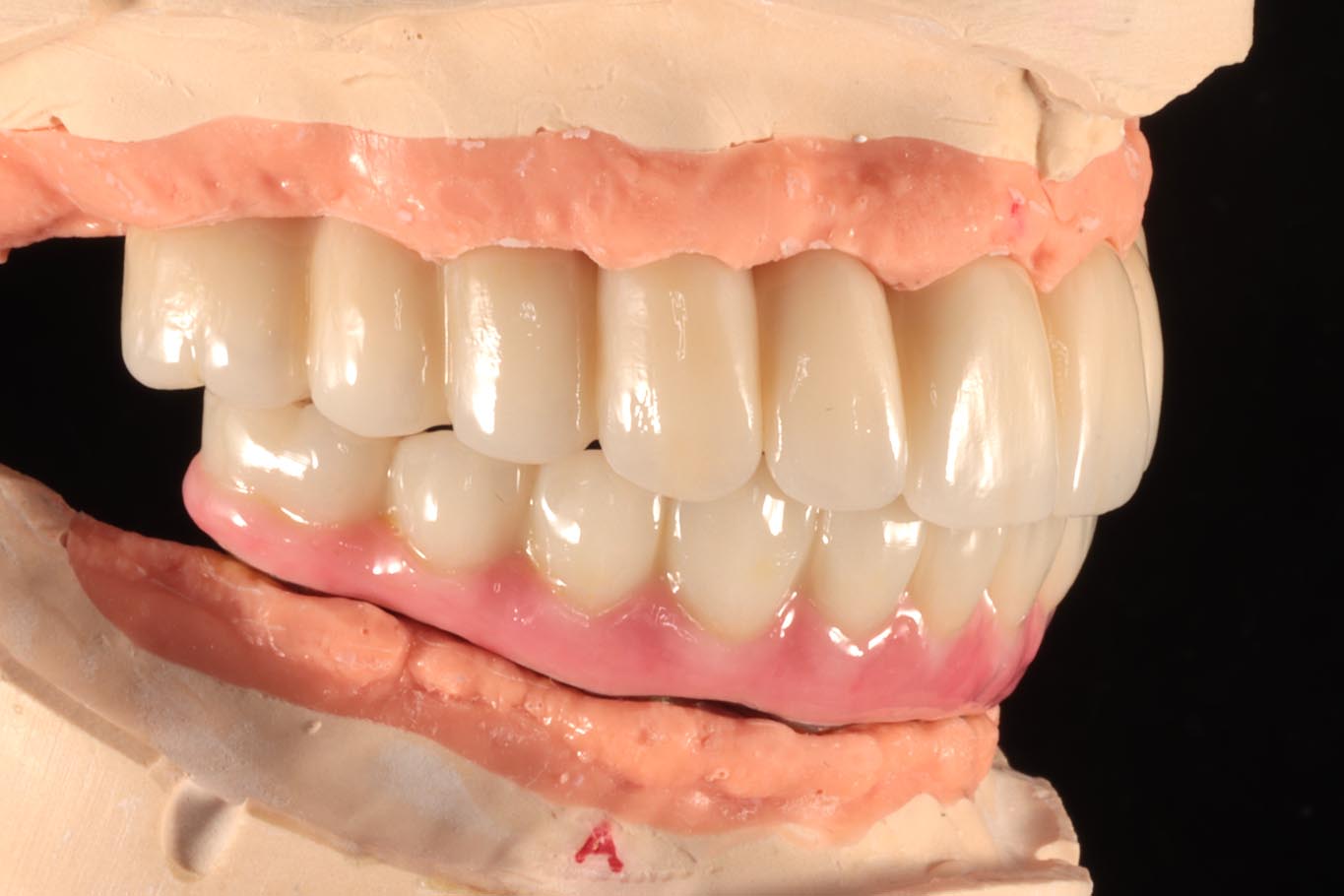
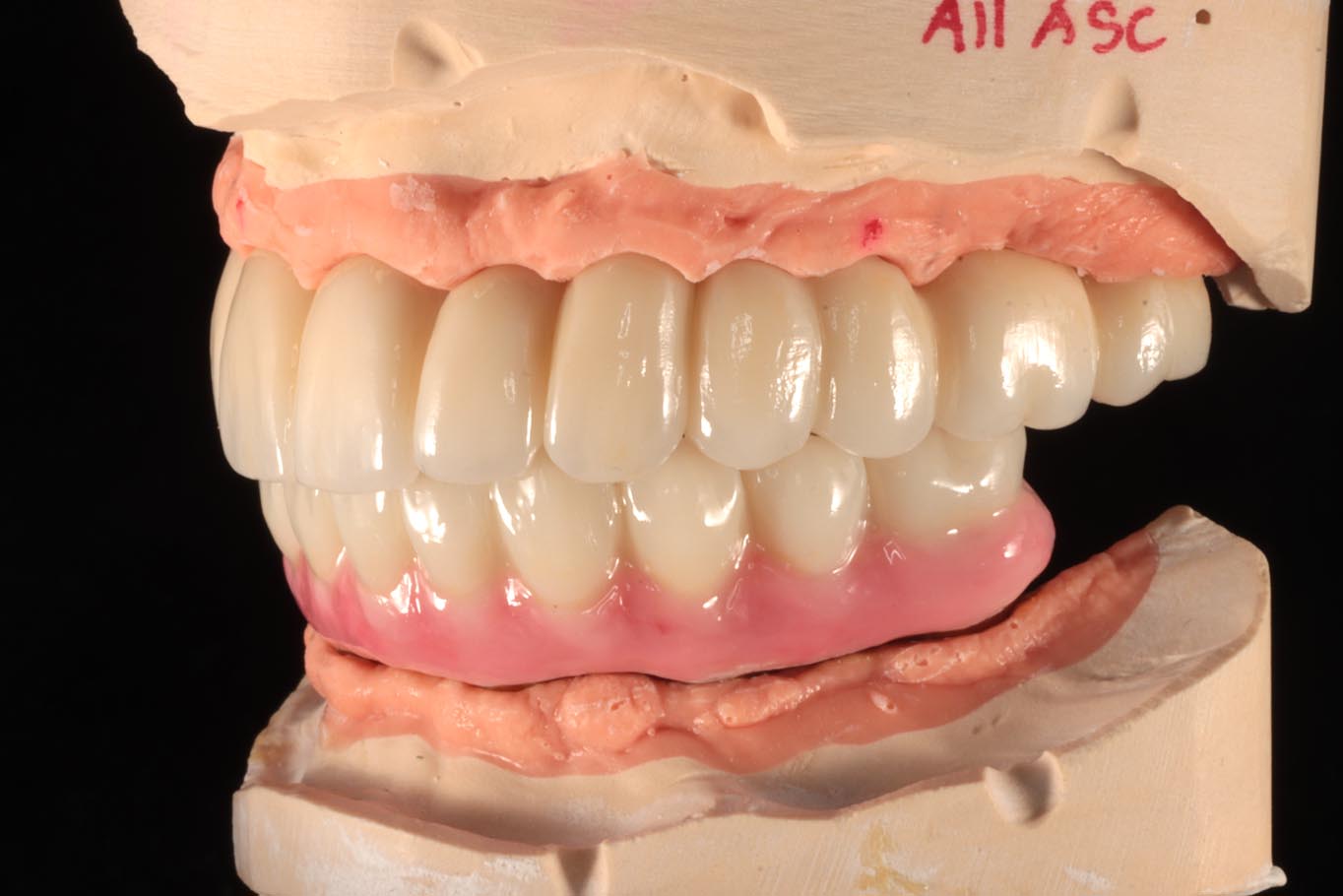
Prototypes were design and fabricated in wax. This allowed us to dial in the esthetics at this stage.
Prototypes were design and fabricated in wax. This allowed us to dial in the esthetics at this stage.
Prototypes were design and fabricated in wax. This allowed us to dial in the esthetics at this stage.
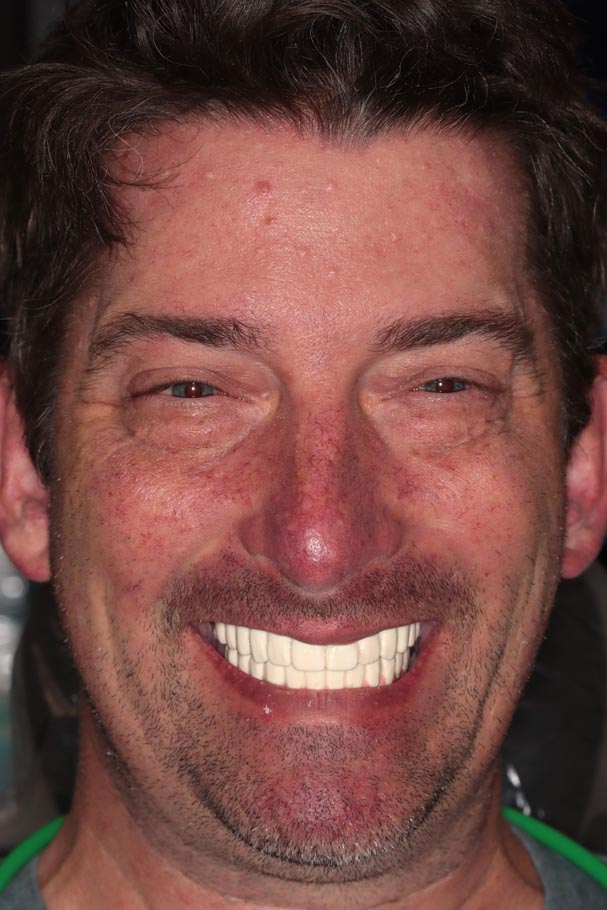
The prototypes were tested in the mouth to ensure we all loved the size, shape, and position of the teeth.
The prototypes were tested in the mouth to ensure we all loved the size, shape, and position of the teeth.
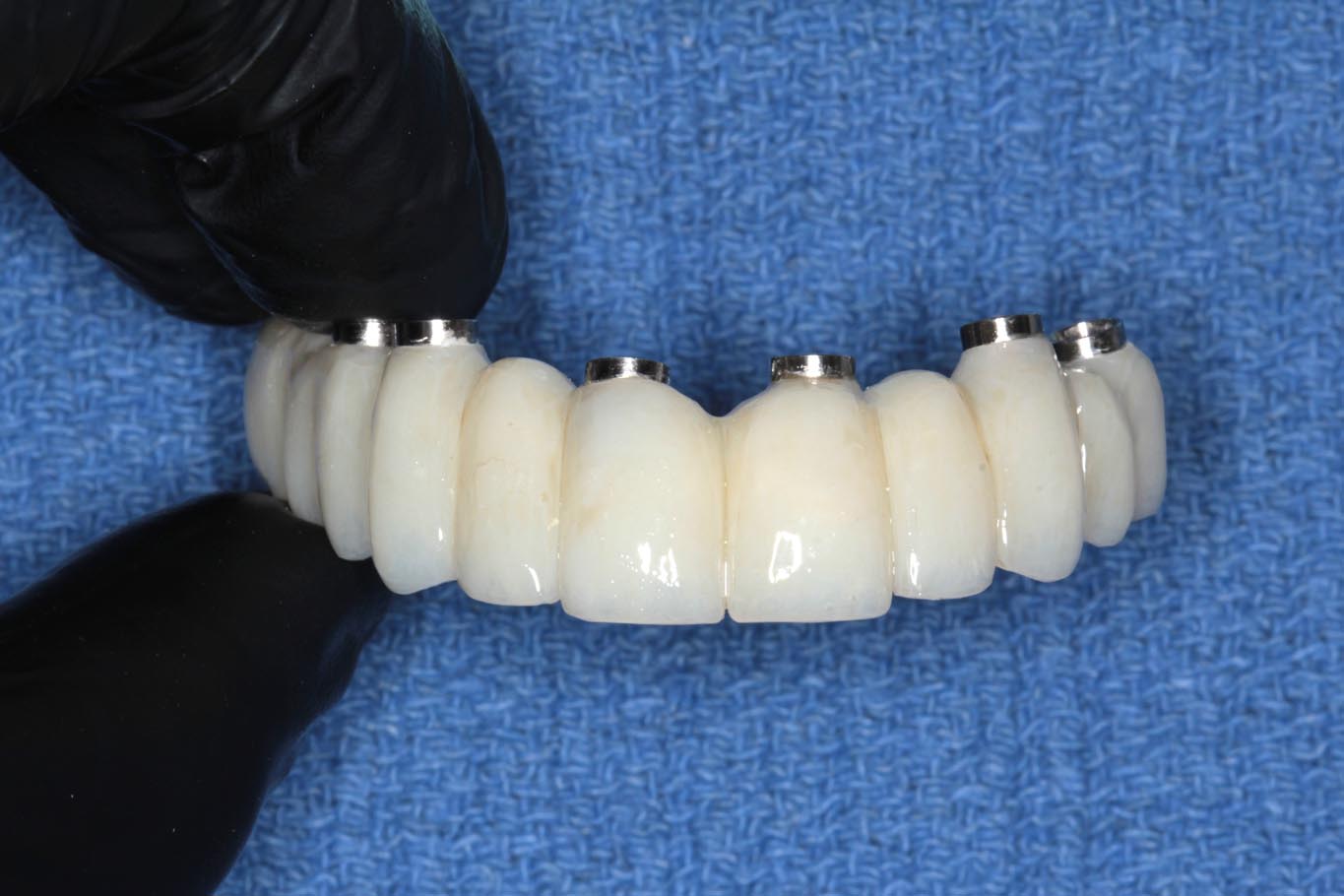
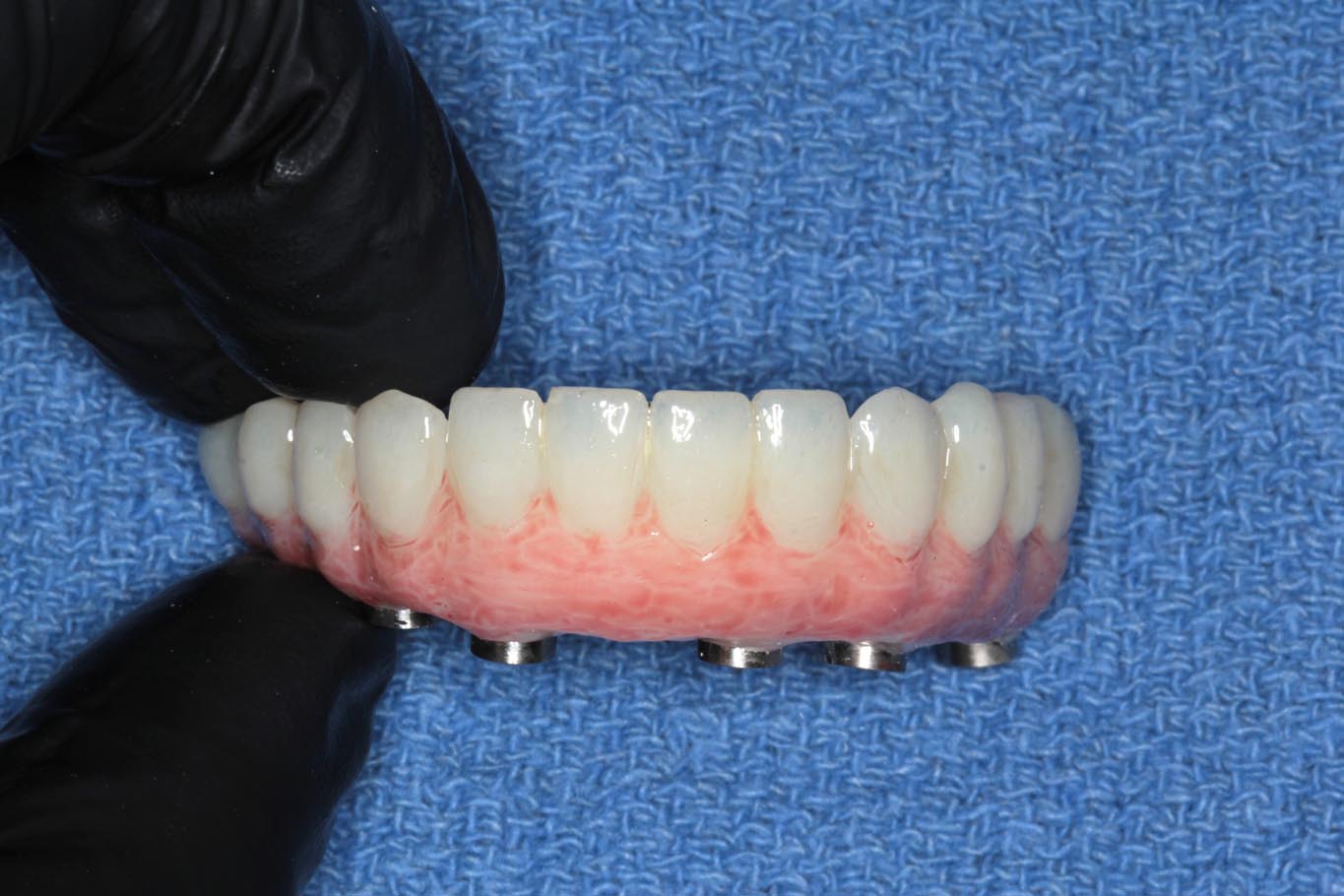
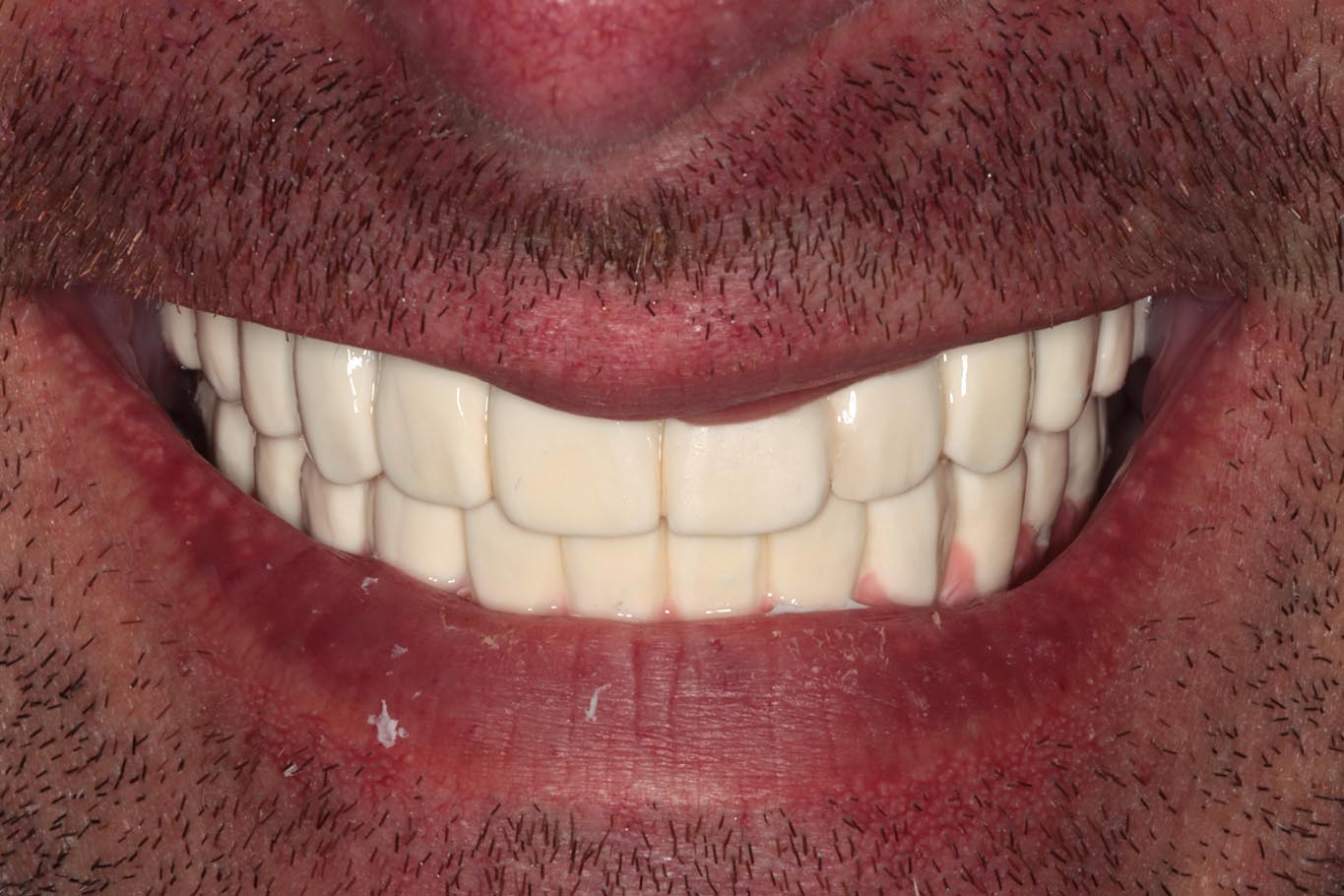
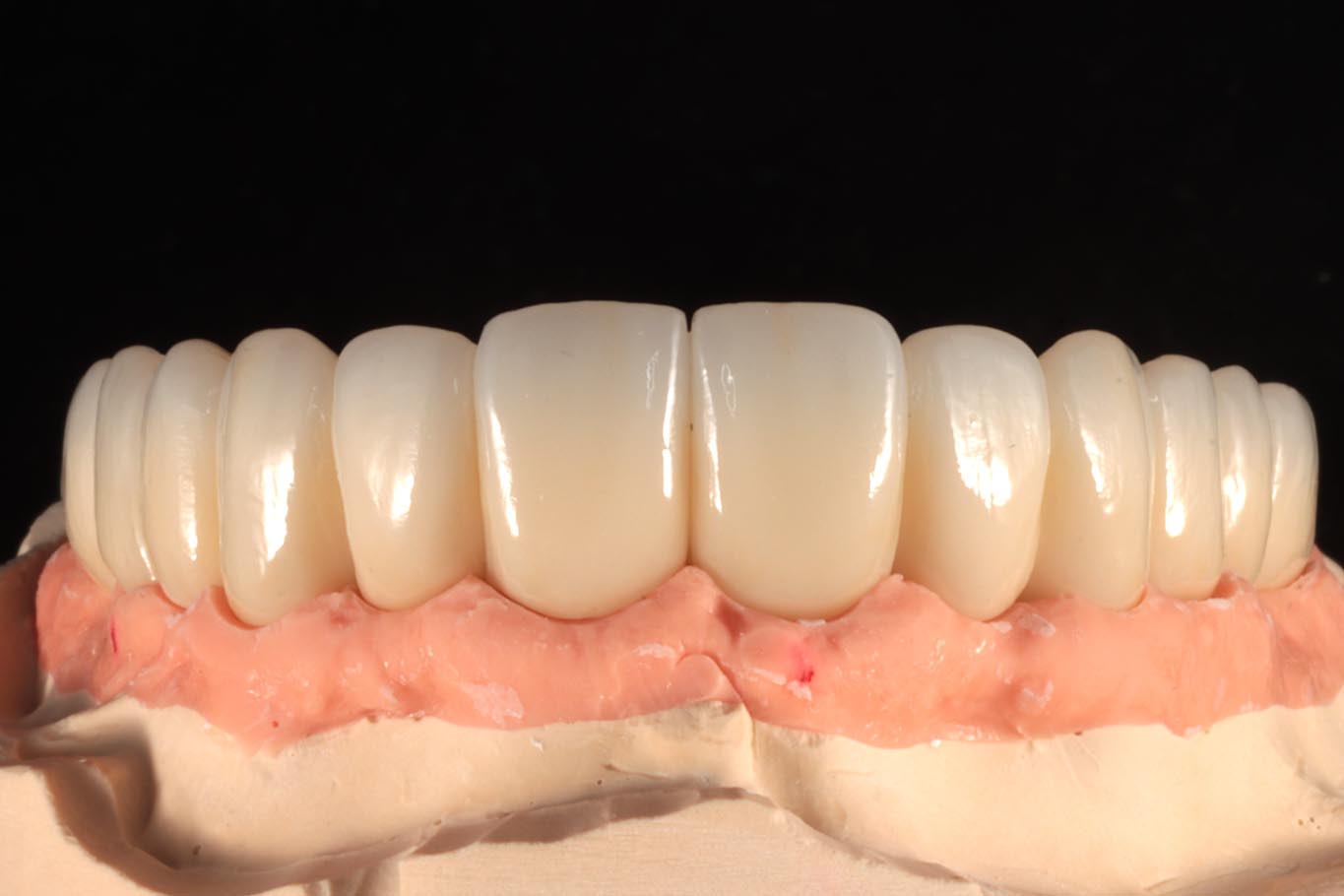
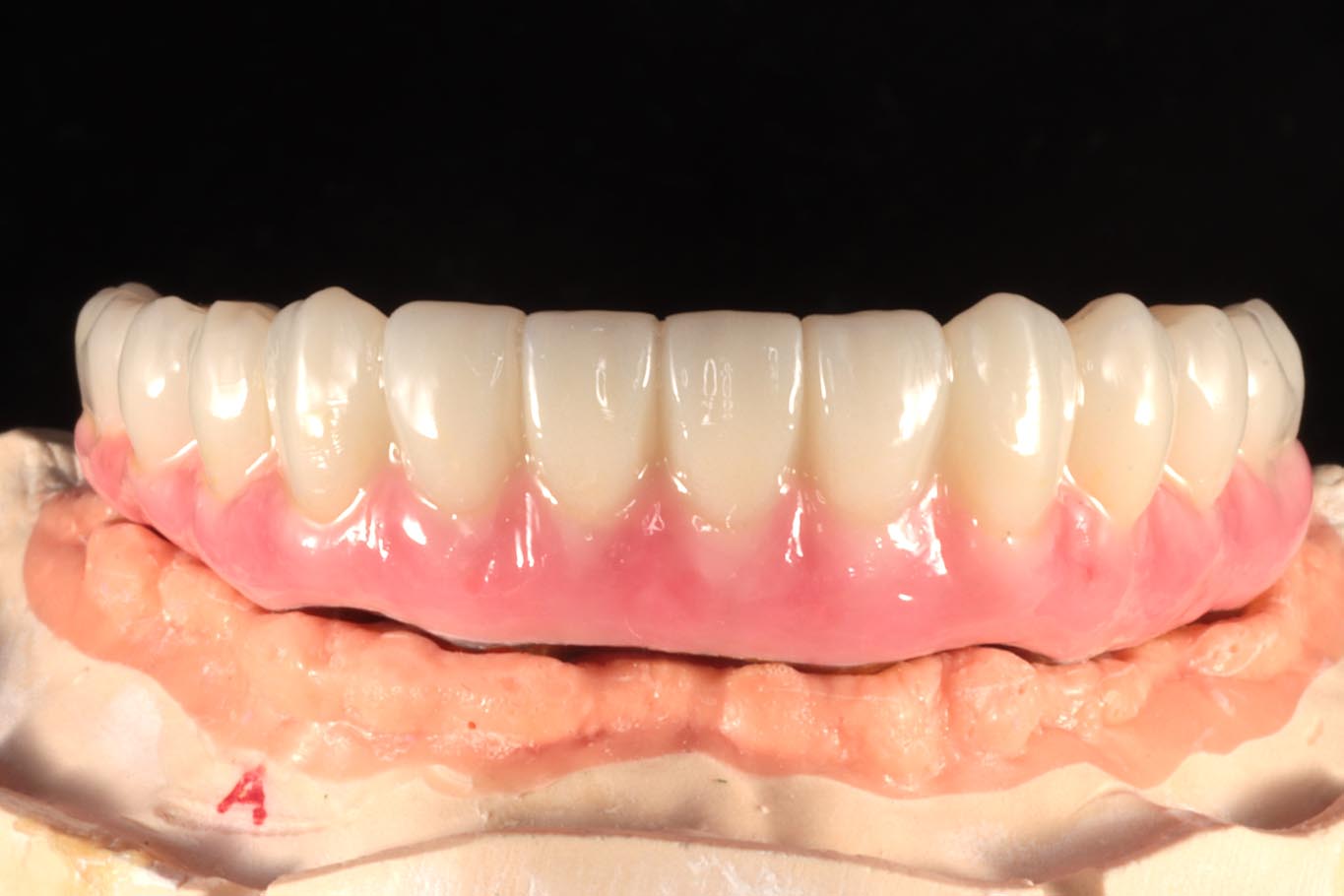
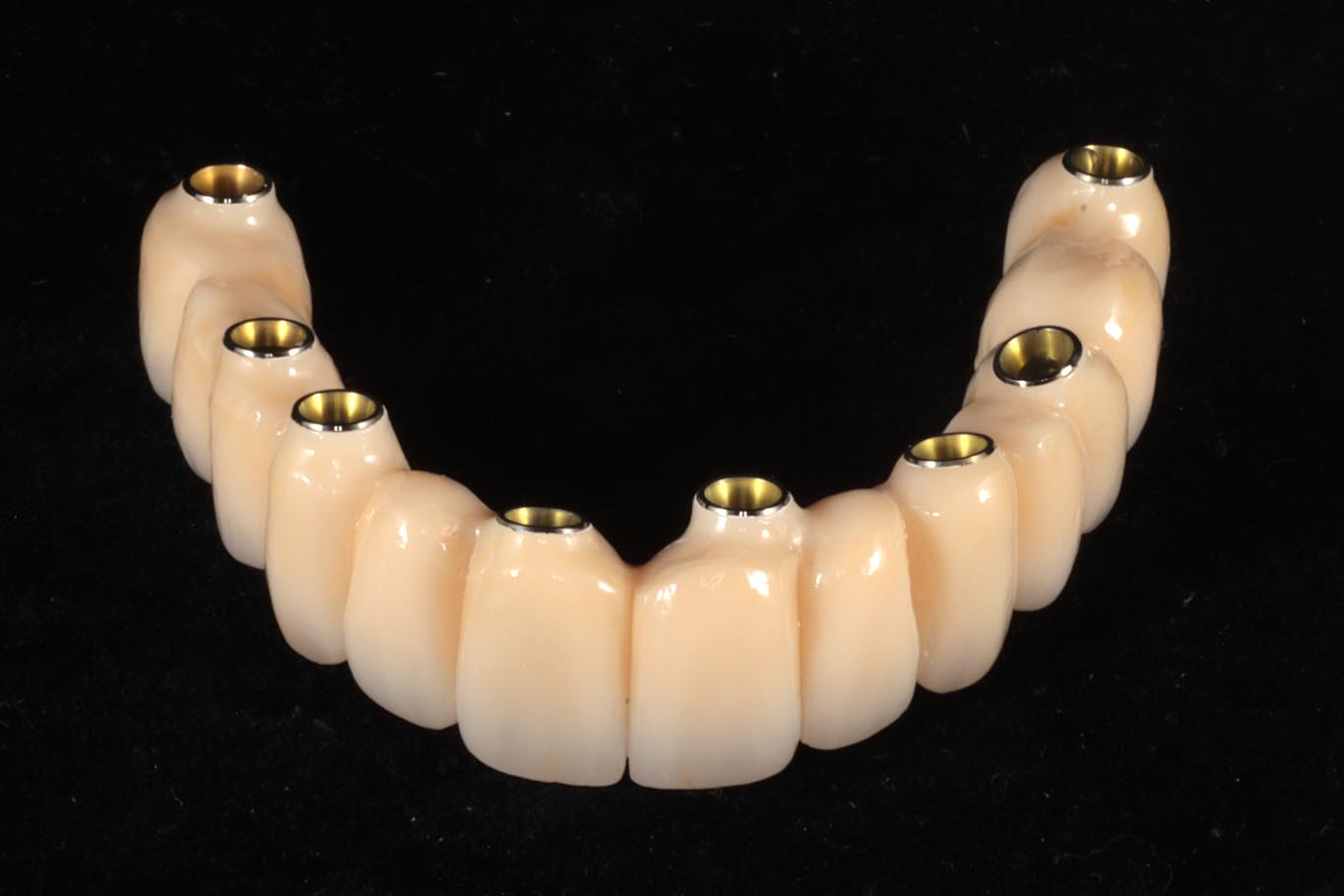
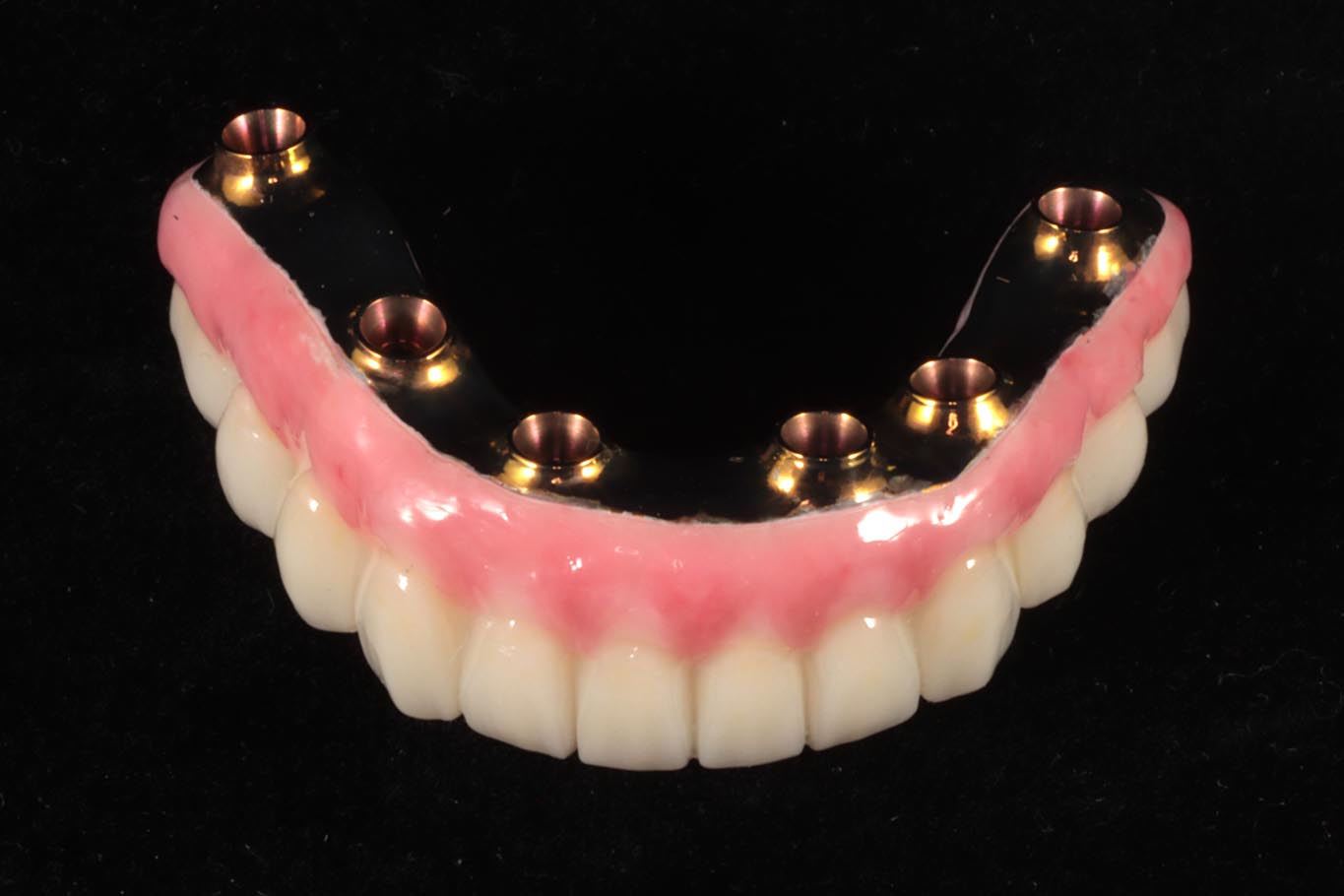
Once the final design was approved, the lab fabricated the definitive restorations. They were able to add a lot more character and definition at this stage, resulting in restorations that are beautiful and realistic.
Once the final design was approved, the lab fabricated the definitive restorations. They were able to add a lot more character and definition at this stage, resulting in restorations that are beautiful and realistic.
Once the final design was approved, the lab fabricated the definitive restorations. They were able to add a lot more character and definition at this stage, resulting in restorations that are beautiful and realistic.
Once the final design was approved, the lab fabricated the definitive restorations. They were able to add a lot more character and definition at this stage, resulting in restorations that are beautiful and realistic.
Once the final design was approved, the lab fabricated the definitive restorations. They were able to add a lot more character and definition at this stage, resulting in restorations that are beautiful and realistic.
Special care was taken to ensure the tissue-fitting surfaces are smooth and convex. This ensures that any plaque that builds up here is easily removed with regular brushing and water-picking. Hygiene is important for long-term tissue health and implant success.
Special care was taken to ensure the tissue-fitting surfaces are smooth and convex. This ensures that any plaque that builds up here is easily removed with regular brushing and water-picking. Hygiene is important for long-term tissue health and implant success.
On the day of delivery, tissues were pink and healthy. The provisionals had helped to shape them perfectly to prepare them for the definitive restorations.
On the day of delivery, tissues were pink and healthy. The provisionals had helped to shape them perfectly to prepare them for the definitive restorations.
On the day of delivery, tissues were pink and healthy. The provisionals had helped to shape them perfectly to prepare them for the definitive restorations.
On the day of delivery, tissues were pink and healthy. The provisionals had helped to shape them perfectly to prepare them for the definitive restorations.
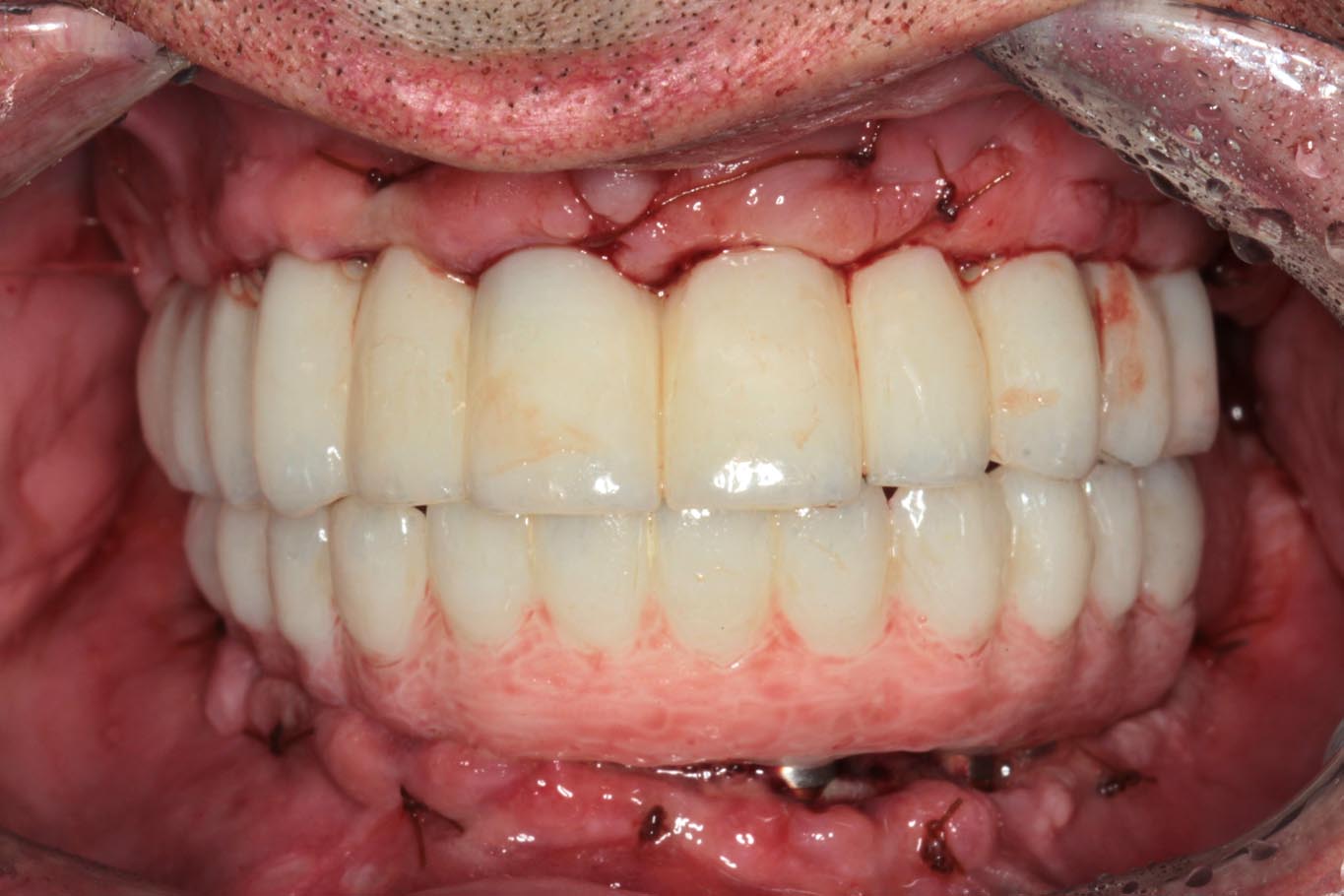
The tissues were sculpted to match the definitive restorations perfectly. The restorations sit in the indentations with positive tissue pressure. This prevents food from getting packed under the bridge or air from escaping around it when the patient speaks. At the same time, the convex profile of the surfaces in contact with the tissues ensure hygiene is a breeze.
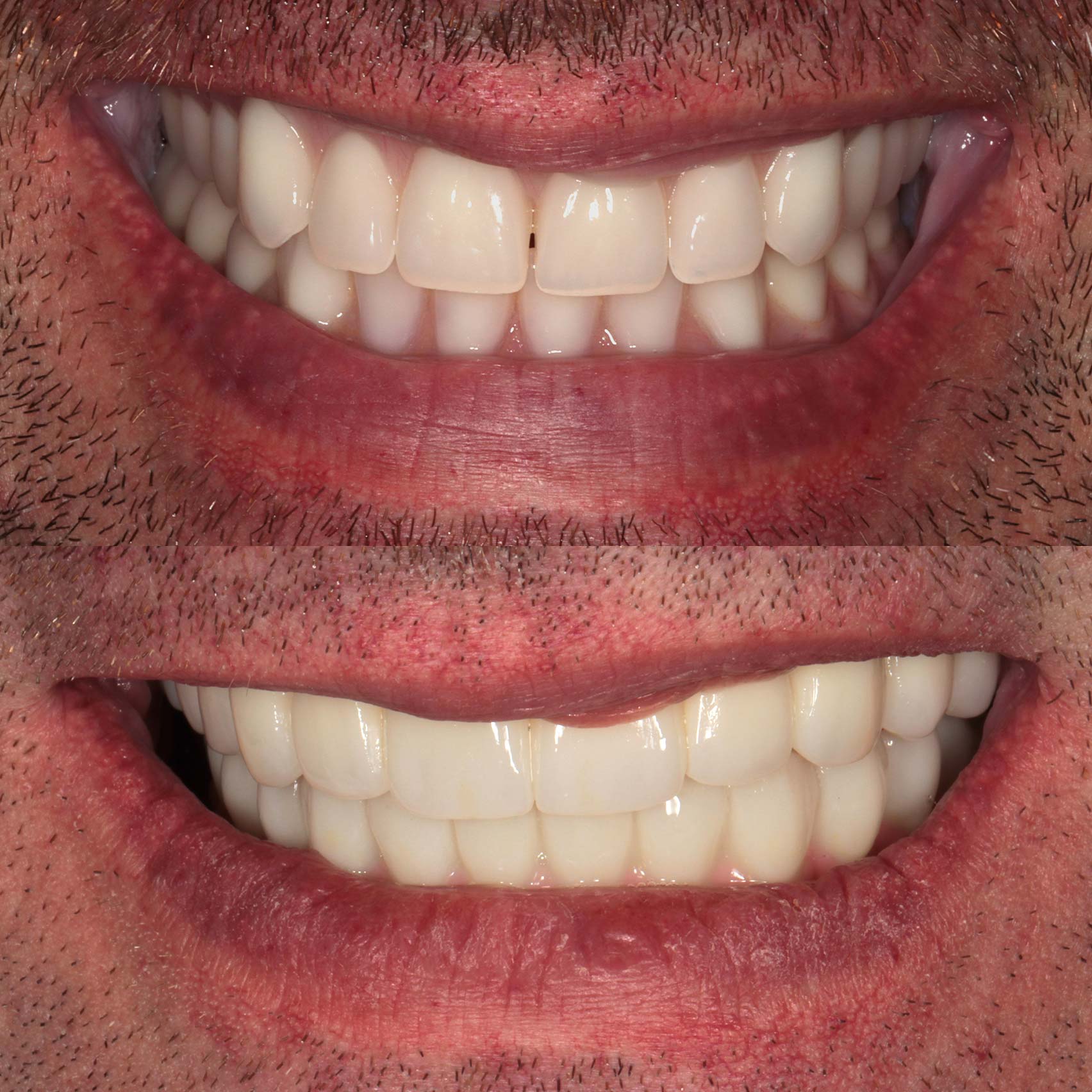
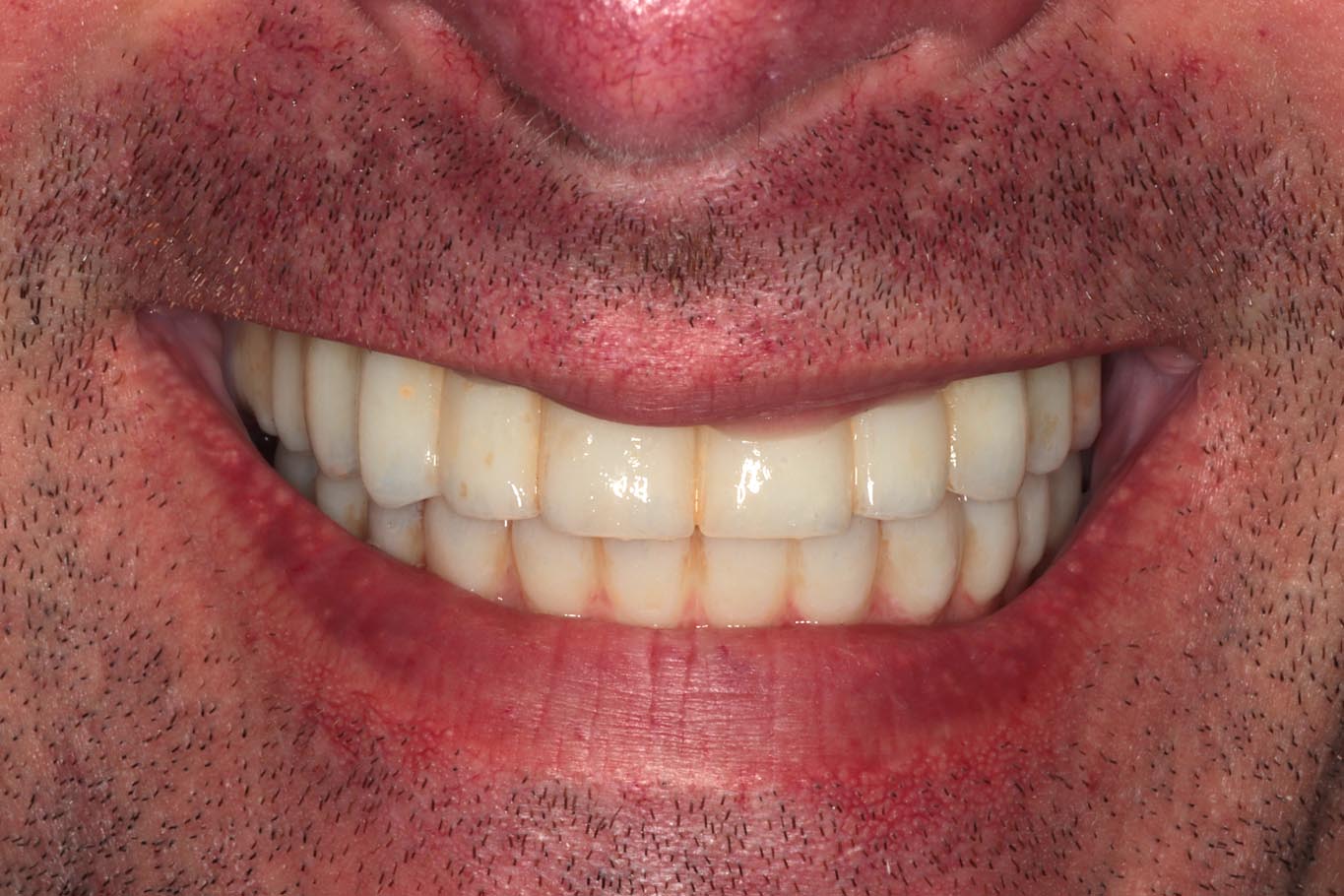
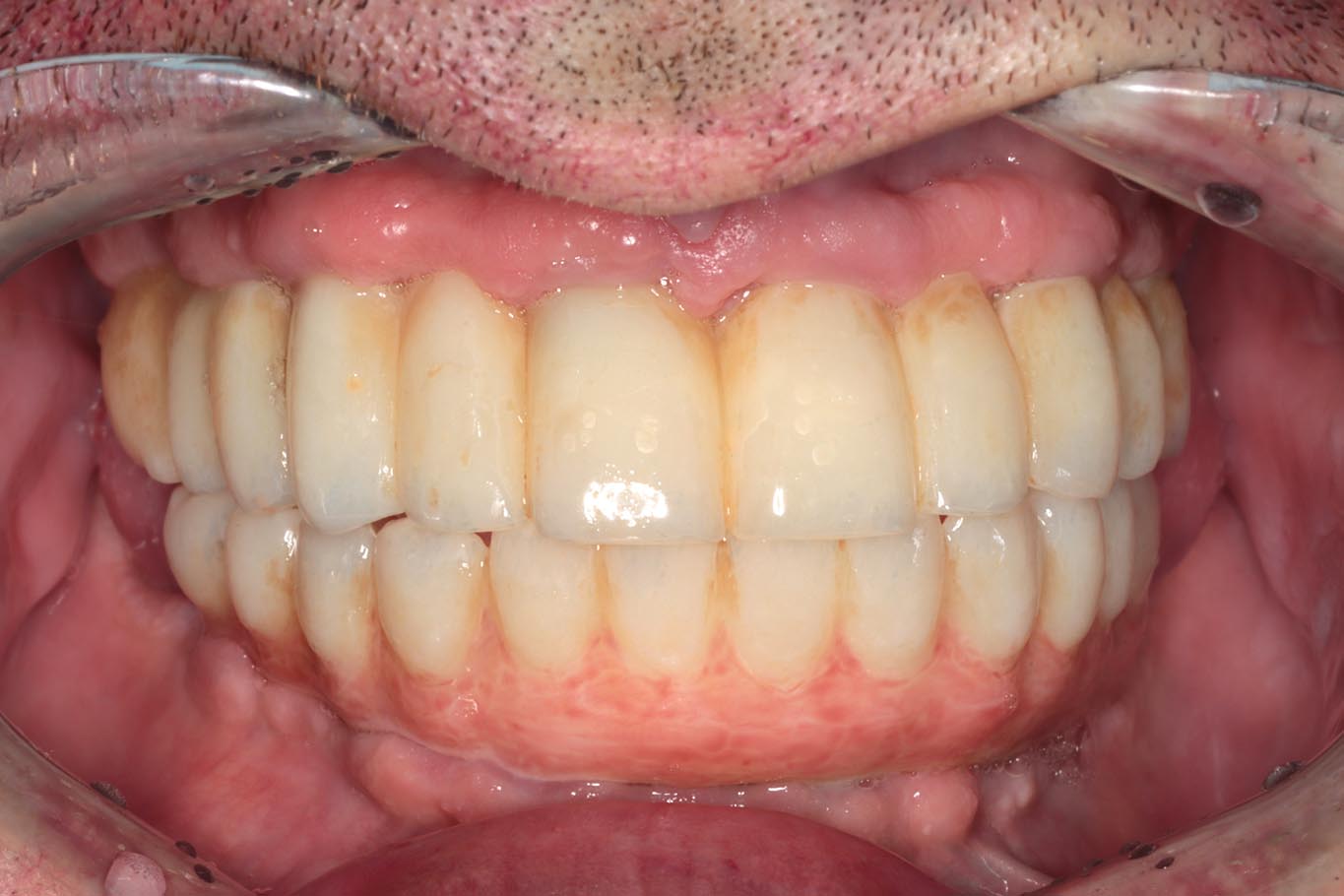
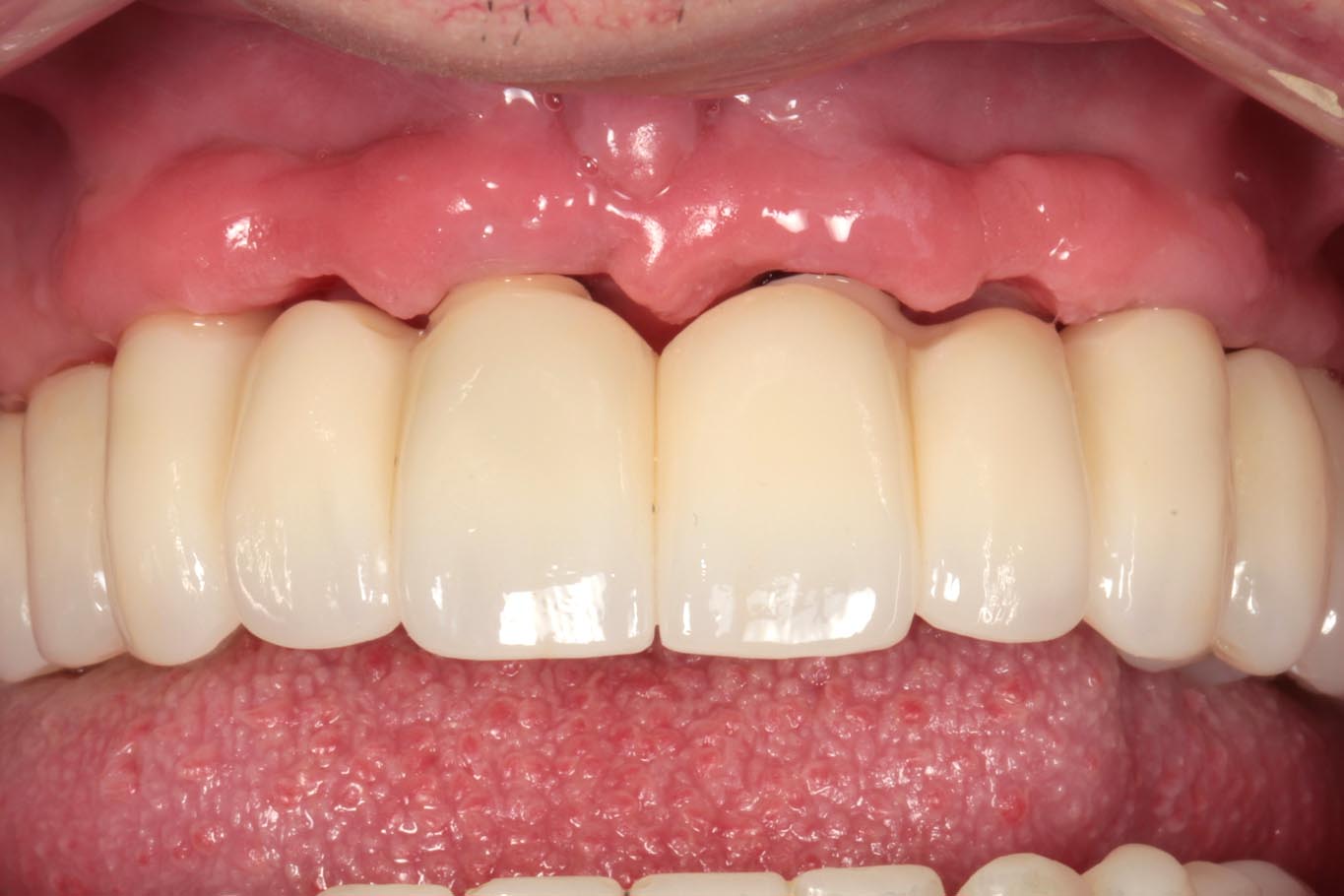
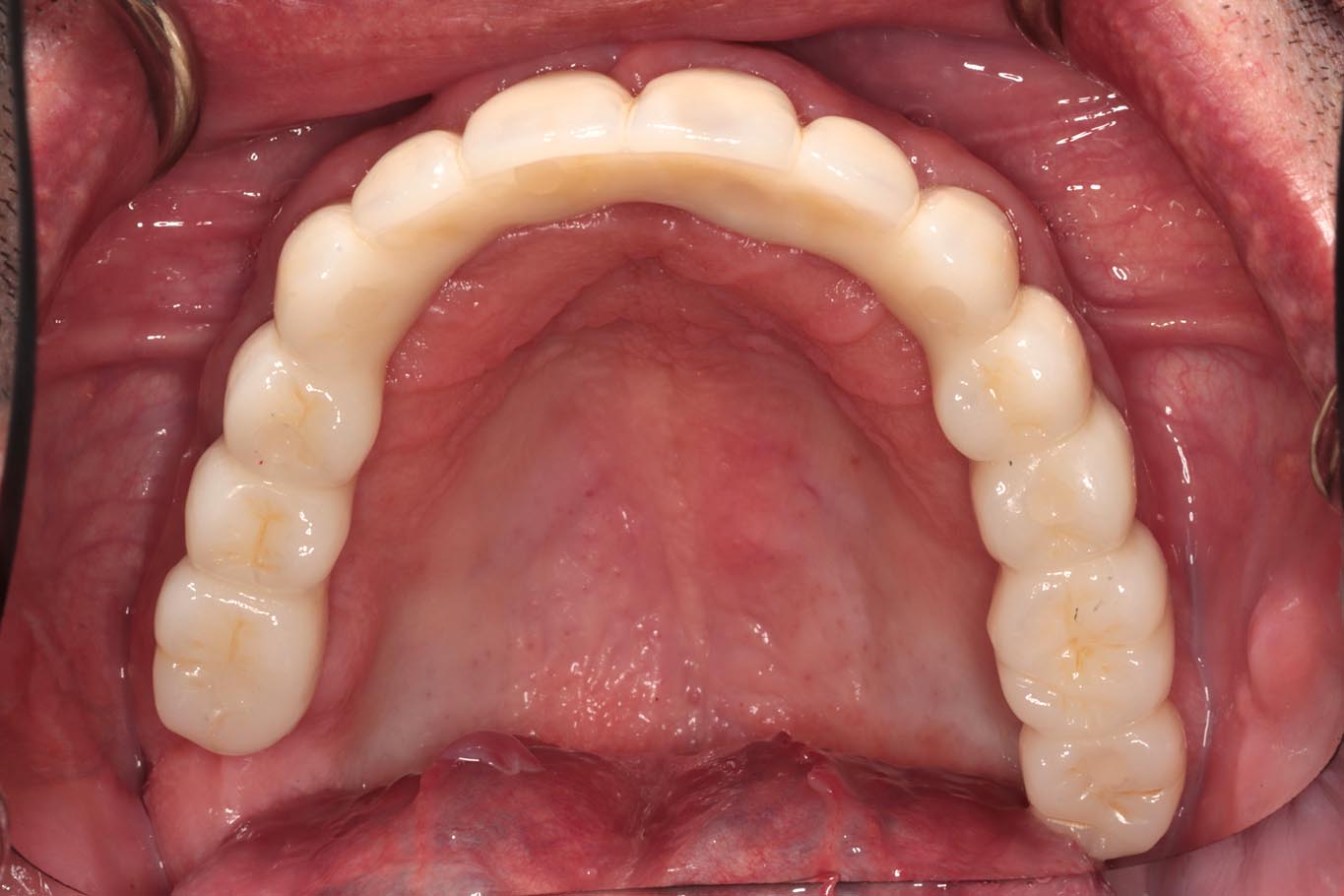
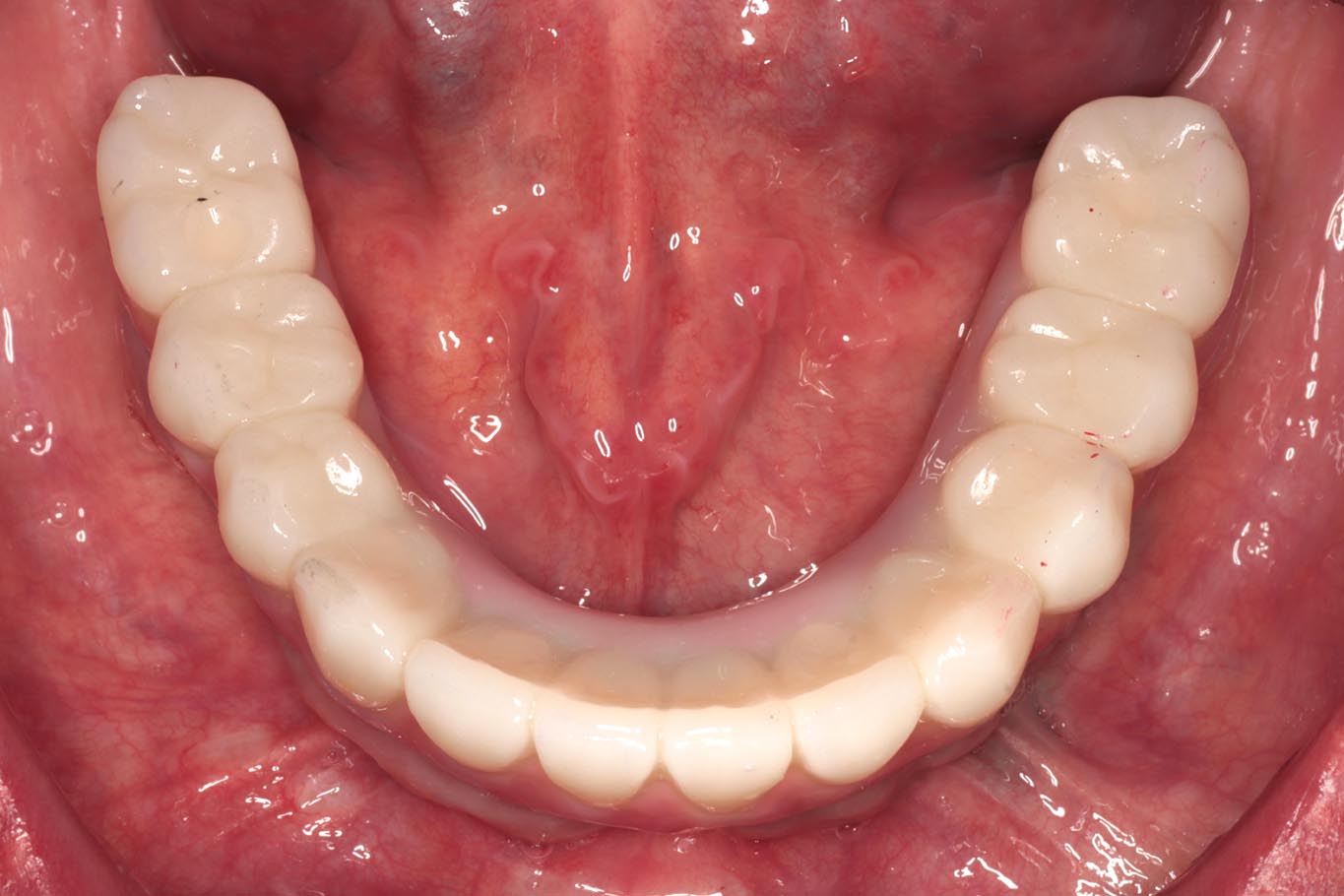
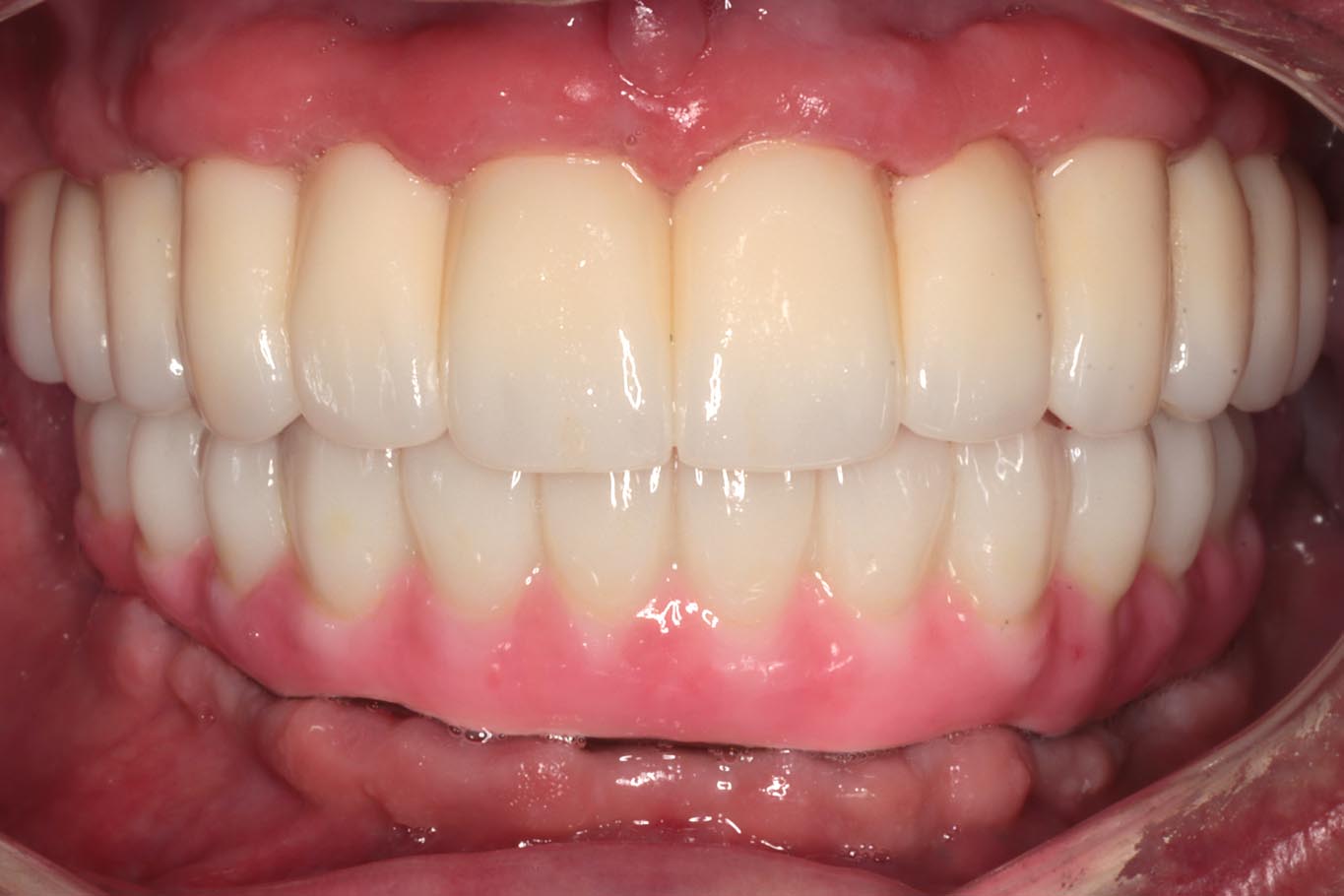
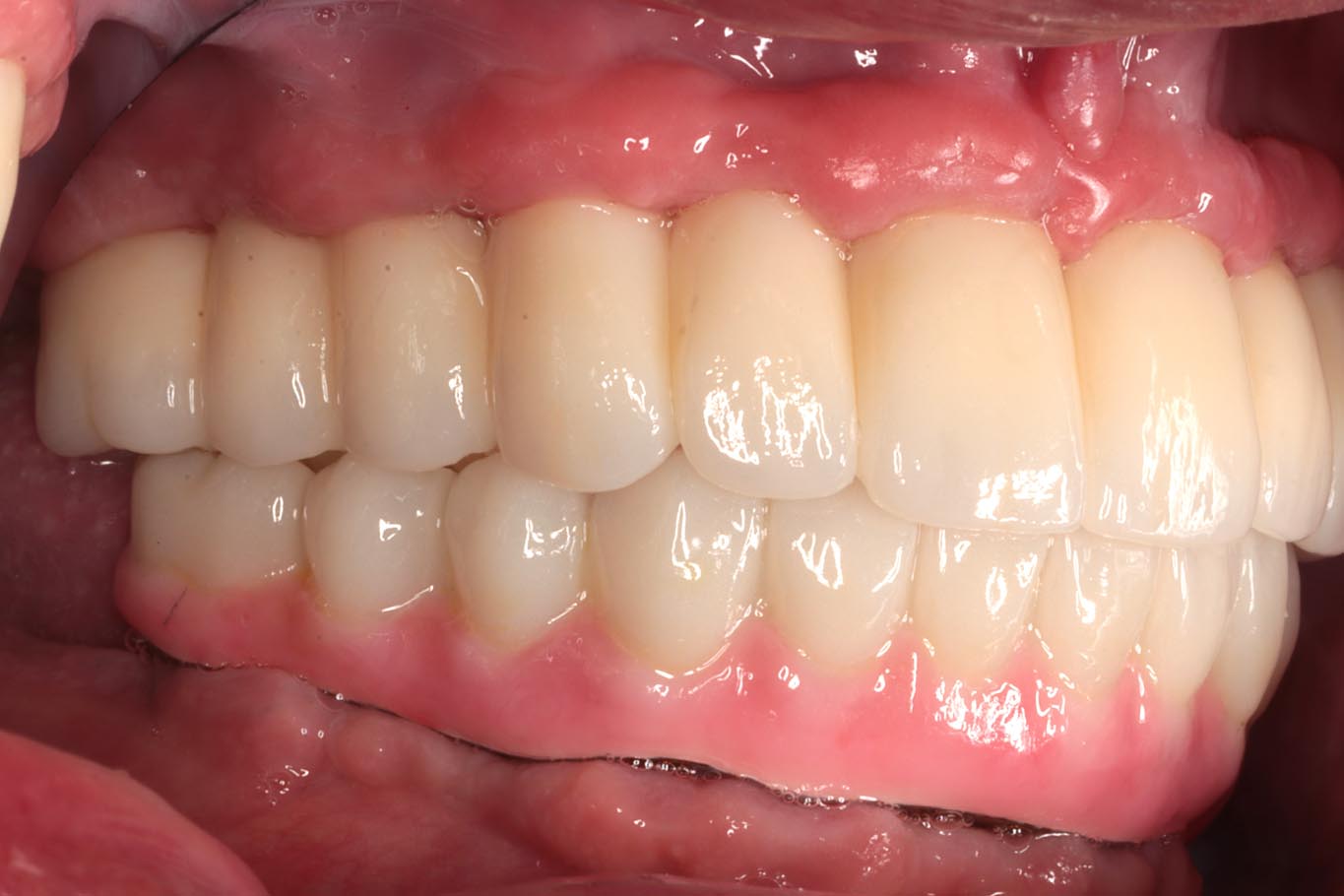
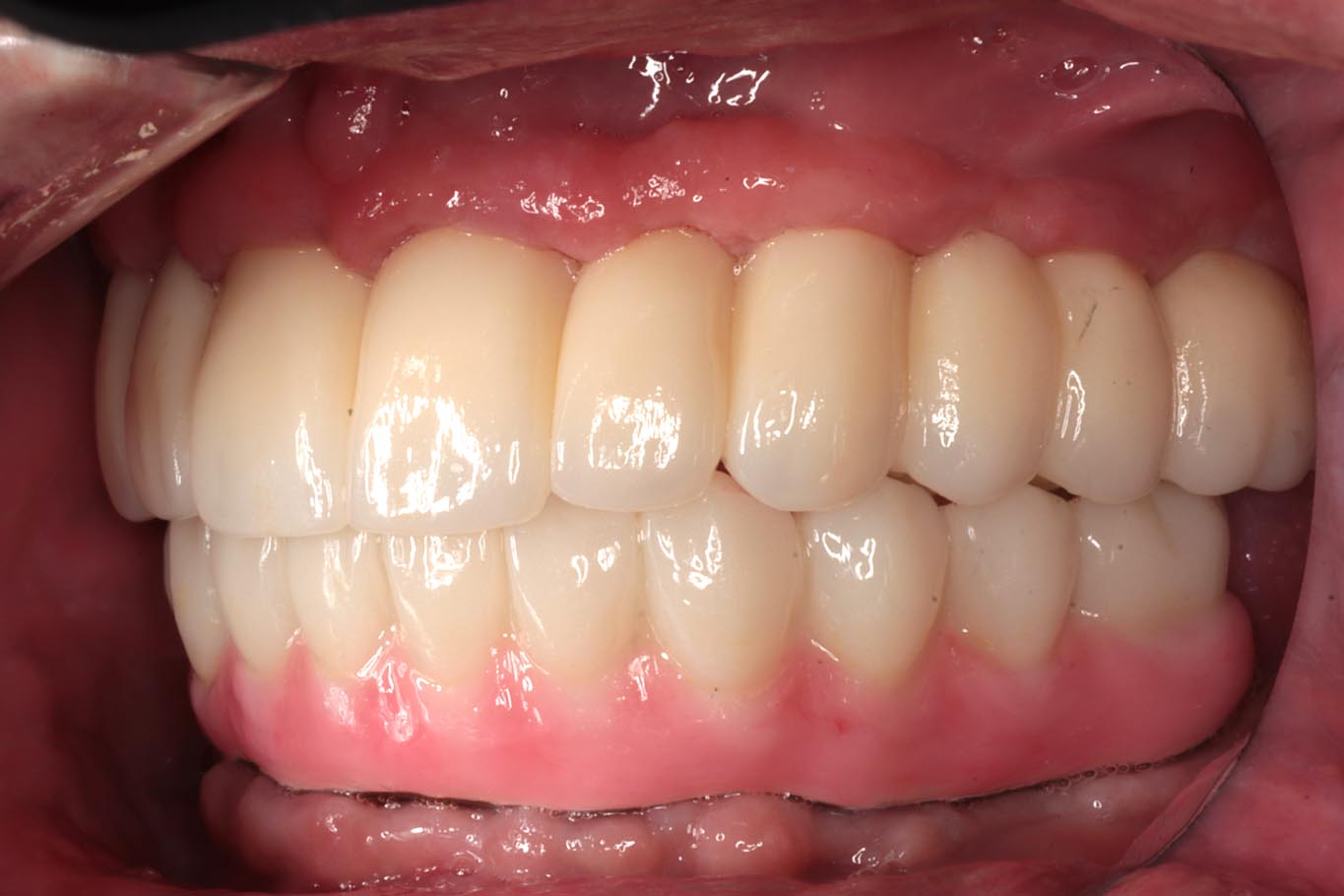
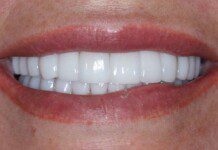
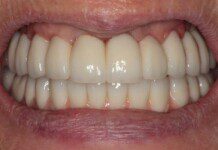
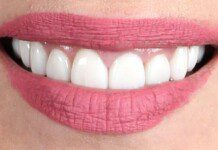
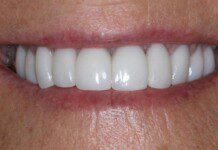
The definitive bridges were delivered, the bite was verified, and the screws were torqued down firmly. The final result is strong, functional, and esthetic restorations that will serve the patient well for years to come.
The definitive bridges were delivered, the bite was verified, and the screws were torqued down firmly. The final result is strong, functional, and esthetic restorations that will serve the patient well for years to come.
The definitive bridges were delivered, the bite was verified, and the screws were torqued down firmly. The final result is strong, functional, and esthetic restorations that will serve the patient well for years to come.
The definitive bridges were delivered, the bite was verified, and the screws were torqued down firmly. The final result is strong, functional, and esthetic restorations that will serve the patient well for years to come.
The definitive bridges were delivered, the bite was verified, and the screws were torqued down firmly. The final result is strong, functional, and esthetic restorations that will serve the patient well for years to come.
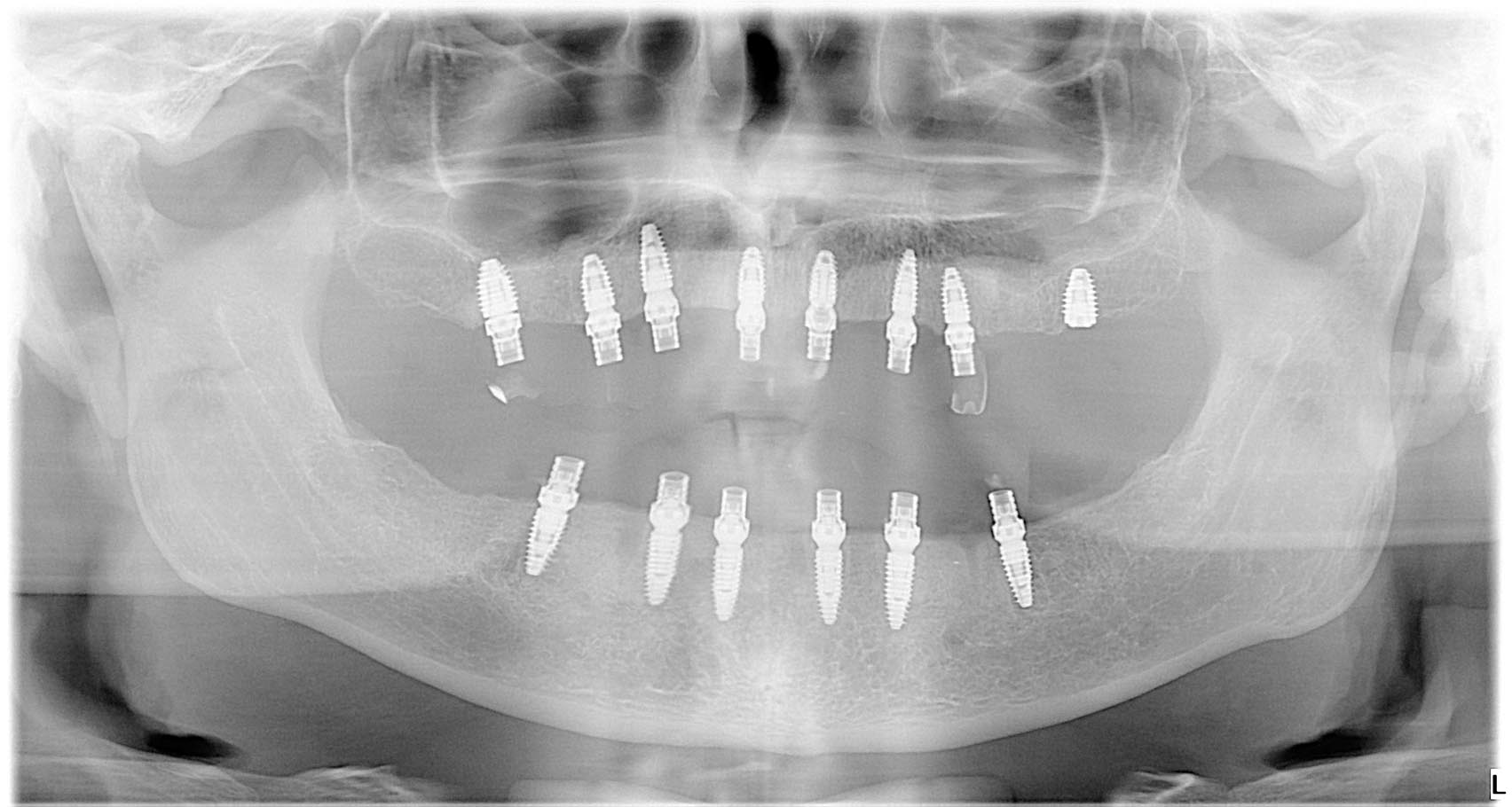
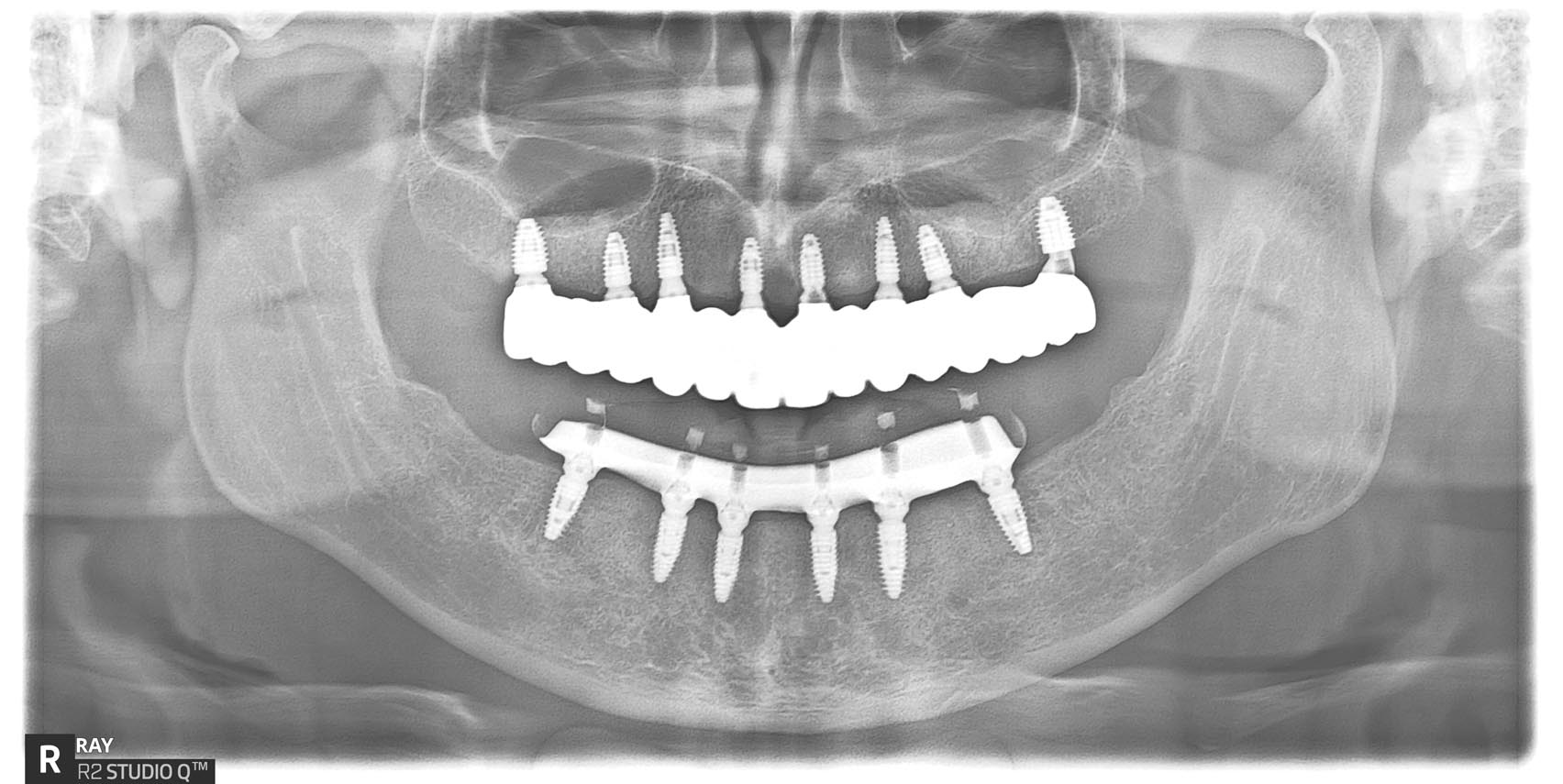
The final radiograph shows well-placed implants with good bone levels. The upper jaw has been restored with a full-arch zirconia restoration while the lower jaw has a titanium-acrylic restoration.