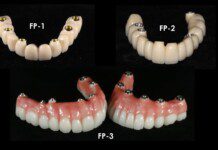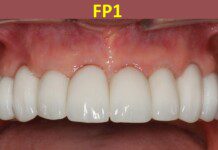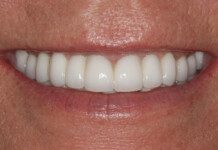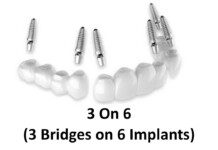
Full mouth reconstruction is not one procedure or a standard implant package. It is a coordinated treatment plan that rebuilds and/or replaces teeth so oral health, function, comfort, and appearance work together. Before treatment, you will need to decide what you want to improve, which natural teeth can be preserved, whether dental implants are appropriate, whether replacement teeth should be fixed or removable, whether one or both arches require treatment, how the smile should be designed, who should direct your care, and what timeline, cost, risks, and maintenance responsibilities you can accept.
The American College of Prosthodontists defines full mouth reconstruction as rebuilding or replacing all the teeth and combining esthetics with restorative science to improve oral health, function, and appearance. The right treatment therefore begins with a diagnosis and long-term prognosis—not with selecting a branded procedure from a menu.
-
WHAT DO YOU WANT FULL MOUTH RECONSTRUCTION TO ACCOMPLISH?
Your goals should be specific enough to guide treatment decisions and realistic enough to evaluate the result. Most patients have a combination of functional, health, and esthetic goals.
- Functional goals may include chewing a broader range of foods, speaking more comfortably, stabilizing loose dentures, or correcting a damaged bite.
- Health goals may include treating extensive decay or periodontal disease and replacing teeth that cannot be maintained predictably.
- Esthetic goals may include improving tooth proportion, shade, position, symmetry, or the overall appearance of the smile.
Put these goals in priority order. A patient whose main concern is chewing may make different material and design decisions than a patient whose primary concern is a highly visible smile. Ask what each proposed treatment will improve, what it will not change, and whether a less extensive option could meet the same objectives.
-
DO YOU ACTUALLY NEED A FULL MOUTH RECONSTRUCTION?
Full mouth reconstruction is generally considered when dental problems are extensive, interconnected, and cannot be managed predictably one tooth at a time. Examples include numerous failing restorations, several missing or nonrestorable teeth, extensive decay, generalized tooth wear, multiple fractures, severe bite collapse, or certain congenital dental conditions. The American College of Prosthodontists identifies widespread missing teeth, failing large fillings, decay, broken teeth, and severe wear among the conditions that may require comprehensive treatment.
A limited concern does not automatically require full-mouth treatment. Orthodontics, periodontal therapy, a small number of crowns, selective implants, removable prostheses, or other focused treatments may be more conservative. A comprehensive examination should explain why the problem must be treated across the mouth and what is likely to happen if treatment is limited or postponed.
Related page: [Who is a good candidate for comprehensive dental implant treatment?]
-
WHICH NATURAL TEETH CAN BE PREDICTABLY PRESERVED?
The central question is not simply whether a tooth can be saved today, but whether it can remain healthy, functional, maintainable, and useful within the completed reconstruction. Each tooth should receive a prognosis based on periodontal support, decay, fractures, previous root canal treatment, remaining tooth structure, position, mobility, restorability, and its role in the overall design.
Preserving a natural tooth can be appropriate when its prognosis is favorable and it does not compromise the larger treatment plan. Extraction may be appropriate when a tooth has a poor long-term prognosis, cannot be restored predictably, or would undermine the stability, hygiene, or design of the reconstruction. The decision should be documented tooth by tooth. Ask the clinician to identify which teeth are favorable, questionable, or poor—and what additional treatment would be needed to retain each one. Prosthodontic care parameters emphasize connecting diagnosis, predicted prognosis, individualized planning, transitional treatment, definitive treatment, and supportive care.
-
ARE DENTAL IMPLANTS APPROPRIATE FOR YOUR HEALTH AND ANATOMY?
Age or one medical diagnosis rarely answers implant candidacy by itself; candidacy depends on the combined effects of oral anatomy, disease control, medications, healing capacity, habits, and the proposed procedure. The evaluation may include bone volume and quality, active periodontal disease, oral hygiene, smoking, diabetes control, cardiovascular conditions, bleeding risk, immune status, previous radiation, and medications affecting bone metabolism.
The distinctions matter. The American Dental Association notes that patients with well-controlled diabetes can usually be managed conventionally for most surgical procedures, while uncontrolled diabetes may impair wound healing and increase infection risk. The ADA also states that osteoporosis antiresorptive therapy does not automatically contraindicate implant placement, although the risks and benefits require discussion. Smoking can compromise healing and implant health, but it should be addressed as an important modifiable risk factor rather than described as an automatic disqualification.
-
WHICH RECONSTRUCTION PATHWAY FITS YOUR DIAGNOSIS?
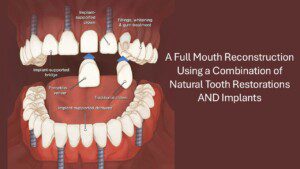
A full mouth reconstruction may preserve natural teeth, combine teeth with implants, or replace a failing dentition with implant-supported or removable prostheses. “Full mouth reconstruction” and “full mouth implants” are therefore not interchangeable terms.
| Treatment pathway | What it generally involves | Important trade-offs |
| Tooth-supported reconstruction | Restoring maintainable natural teeth with treatments such as crowns, onlays, selected bridges, endodontic care, or periodontal therapy | Preserves teeth but may require substantial treatment and long-term monitoring |
| Combined tooth-and-implant reconstruction | Retaining suitable teeth while replacing selected missing or non-restorable teeth with implants | Can be conservative but requires careful coordination between natural teeth and implant restorations |
| Fixed full-arch implant reconstruction | Replacing an arch with a restoration secured to multiple implants | Does not come out at home but requires sufficient surgical and restorative planning, hygiene access, and maintenance |
| Implant overdenture | A patient-removable prosthesis retained or supported by implants | Often easier to remove for cleaning, but still requires daily care, attachment maintenance, and professional follow-up |
Each option can be appropriate in the right circumstances. The decision should follow diagnosis, not an office’s preferred product or marketing package.
-
SHOULD YOUR REPLACEMENT TEETH BE FIXED OR REMOVABLE?
Fixed and removable implant restorations solve different problems, and neither design is universally superior. A fixed restoration stays attached during ordinary daily use and is removed only by a dental professional when clinically necessary. An implant overdenture can be removed by the patient for cleaning and sleeping, according to the prescribed care instructions.
A fixed restoration may appeal to patients who do not want to remove their teeth, but its contours must permit effective cleaning around the implants. A removable design can provide easier access for hygiene and may allow different approaches to lip or tissue support, but attachments and prosthetic components can wear and require maintenance. Discuss speech, cleaning ability, hand dexterity, restorative space, tissue support, material repair, anticipated maintenance, and what happens if a component fractures. The final choice should be based on the entire prosthetic design rather than the number of implants alone.
-
SHOULD ONE ARCH OR BOTH ARCHES BE TREATED?
Treating one arch can be appropriate, but it must be planned in relation to the teeth and restorations in the opposing arch. The upper and lower teeth function together. Tooth position, bite forces, available restorative space, jaw relationship, and the condition of the opposing teeth all influence design.
Staged treatment may help accommodate medical needs, healing, scheduling, or financial planning. However, “trying out” one arch should not substitute for a complete diagnosis of both arches. Before beginning, the clinician should explain whether the untreated arch is stable, whether it will need treatment later, and whether future changes could affect the first restoration. In complex tooth-wear and occlusal reconstruction cases, accurate transfer of jaw relationships and restorative space through the provisional and definitive stages is considered essential to the final outcome.
-
HOW SHOULD YOUR RECONSTRUCTED SMILE LOOK AND FUNCTION?
A successful smile design must satisfy esthetic preferences while remaining compatible with speech, lip support, facial proportions, bite, hygiene, and the available anatomy. New teeth should not simply be made “as white, long, or large as possible.” Excessive tooth length, unsuitable shade, poor midline position, or inadequate lip support can make an otherwise technically sound restoration feel unnatural.
Discuss tooth display at rest and while smiling, smile line, shade, shape, incisal edge position, lip movement, phonetics, facial symmetry, and the transition between the prosthesis and natural tissue. Historical photographs can help show previous tooth position or facial support. A diagnostic wax-up, digital smile design, trial denture, mock-up, or provisional restoration may allow you to evaluate the planned appearance and function before the definitive restoration is completed. Ask which elements can still be changed during the provisional phase and which become difficult to alter later.
-
WHICH RESTORATIVE MATERIAL SHOULD YOU CHOOSE?
Material selection should follow the design requirements of your case rather than a simple assumption that the most expensive or hardest material is automatically best. Depending on the treatment, restorative materials may include dental ceramics, zirconia, metal-ceramic combinations, titanium frameworks, acrylic or resin components, and other systems selected by the clinical and laboratory team.
The choice can affect esthetics, strength, weight, restorative thickness, sound during tooth contact, repairability, wear on opposing teeth, laboratory requirements, and cost. Full-arch implant restorations can be fabricated from multiple material combinations, each with distinct advantages and disadvantages.
Ask why the recommended material suits your bite and anatomy, how it is expected to wear, whether it can be repaired without remaking the entire prosthesis, and what components may require replacement. The answer should connect the material to your specific design—not rely on a broad claim that one material is always superior.
-
WHO SHOULD PLAN AND PERFORM YOUR RECONSTRUCTION?
For complex reconstruction, evaluate the qualifications of the individual clinicians who will diagnose, plan, perform, restore, and maintain the treatment—not only the name of the dental office. Ask who will make the final prosthetic decisions, who will perform surgery, whether care is divided among providers, and how responsibility is coordinated when complications or adjustments occur.
Prosthodontists receive advanced specialty training in restoring oral function and appearance with treatments including implants, dentures, crowns, and complex prostheses. Dr. David McFadden is board-certified by the American Board of Prosthodontics and the American Board of Oral Implantology. Currently, fewer than 14 American dentists hold both board certifications. The Dental Implant Center uses a prosthodontic team structure integrating surgical and restorative care for adults with advanced dental needs.
Verify board status independently and ask to see examples of comparable cases, laboratory relationships, provisional treatment, complication management, and long-term maintenance.
Related page: [How Do I Check Credentials?]
-
WHAT TIMELINE AND FINANCIAL COMMITMENT SHOULD YOU EXPECT?
A useful estimate should explain both the full anticipated cost and the clinical sequence behind that cost. Full mouth reconstruction may include diagnostic records, imaging, disease control, extractions, bone grafting, implant placement, provisional teeth, healing, laboratory fabrication, definitive restorations, adjustments, and maintenance. Not every patient requires every phase.
The estimate you receive should identify what is included, what is optional, what could change after treatment begins, and who is responsible for future repairs or maintenance. It should also distinguish temporary from definitive restorations and explain whether the treatment is expected to occur in one phase or several.
When financing is involved, review interest, deferred-interest provisions, payment timing, cancellation terms, and refund policies before signing.
[Suggested link: Full Mouth Reconstruction Cost]
-
WHAT RISKS AND LONG-TERM MAINTENANCE RESPONSIBILITIES ARE YOU ACCEPTING?
Full mouth reconstruction replaces one set of dental problems with a new set of structures that still require cleaning, monitoring, repair, and professional maintenance. Tooth-supported restorations remain vulnerable to recurrent decay, periodontal disease, fracture, wear, endodontic complications, or loss of supporting tooth structure. Implant treatment can involve surgical complications, infection, implant loss, peri-implant inflammation, bone loss, screw or component problems, prosthetic fracture, and hygiene difficulties.
Full mouth reconstruction should not be presented as a general cure for temporomandibular disorders. The National Institute of Dental and Craniofacial Research reports that irreversible treatments that alter the teeth or bite have not been shown to work for TMD and may make the condition worse.
Maintenance is lifelong. American College of Prosthodontists guidance recommends professional examination every six months as a lifelong regimen for complex tooth- and implant-borne restorations, with more frequent care for higher-risk patients.
Printable Checklist: Questions to Ask at a Full Mouth Reconstruction Consultation
WHAT SHOULD YOU ASK AT YOUR CONSULTATION?
A high-quality consultation should leave you with a diagnosis, alternatives, prognosis, sequence, financial estimate, and maintenance plan—not merely the name of a procedure.
Bring this checklist:
- What is the diagnosis and prognosis for each remaining tooth?
- Which teeth can be maintained predictably, and for how long?
- What are the reasonable alternatives to the proposed treatment?
- Why is the recommended design better for my circumstances?
- Who will perform each surgical and restorative phase?
- What temporary teeth will I have during treatment?
- What medical conditions or medications change my risks?
- What is included in the written estimate?
- What complications, repairs, or replacement costs are not included?
- How will I clean the final restoration, and how frequently will I need professional maintenance?
- What parts of the plan can still be changed after I see the provisional result?
- What are the consequences of delaying treatment or choosing a less extensive alternative?
Full mouth reconstruction is a significant, often irreversible investment. Taking time to understand the diagnosis and trade-offs is part of good treatment—not an obstacle to it.